
“Carrie” and the Remake Apocalypse: Why Fans Are Rebelling Against Amazon’s New Adaptation
Stephen King Has Over 60 Books Published! But Sure, Let's Make Another Remake for Carrie!

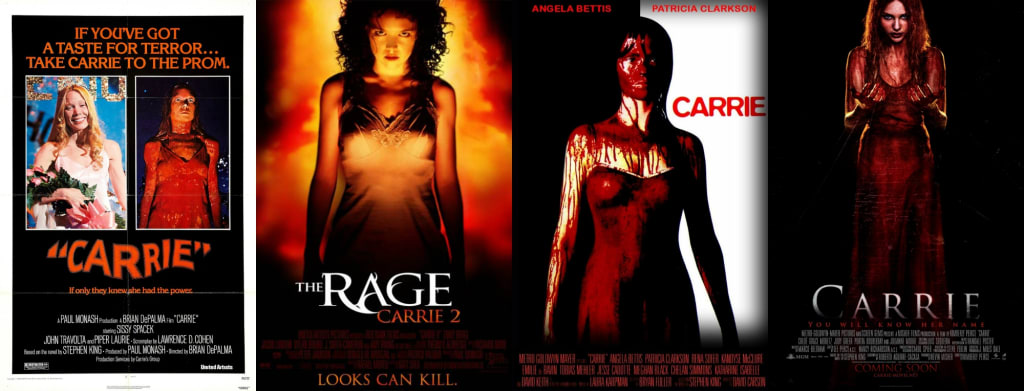
In a move that has sparked heated debate across social media and horror fandoms, Amazon recently announced plans to adapt Stephen King's *Carrie* into a television series. The backlash was swift, with fans expressing frustration about yet another retelling of the classic horror story. Many see this as part of the "remake apocalypse," a trend where iconic films and books are repeatedly reimagined, often straying far from their sources. The question on everyone's mind is: Does the world really need another *Carrie* adaptation?
A History of Carrie's Adaptations
Stephen King's *Carrie*, first published in 1974, has had no shortage of adaptations. Each retelling has put a unique spin on King's tale of a bullied high school girl with telekinetic powers. Still, fans argue that each iteration has drifted further from the novel's dark, psychological roots. Below is a breakdown of all the major adaptations so far:
1. **Carrie (1976)** - Directed by Brian De Palma, this remains the most iconic adaptation. Sissy Spacek's portrayal of Carrie White is often considered definitive, and the film stayed relatively faithful to King's novel, though with some cinematic exaggeration and heightened suspense. Fans largely consider this the *Carrie* adaptation to beat.
2. **Carrie: The Musical (1988 and 2012)**-Perhaps the most surprising adaptation of Carrie was its ill-fated Broadway musical debut in 1988. The show closed after only five performances due to negative reception, but it was revived in 2012 with a more serious tone. Both versions took creative liberties with the tone and story, adding a melodramatic, almost campy layer to King's horror tale.
3. **The Rage: Carrie 2 (1999)** - This loose sequel failed to capture the essence of King's original. It introduced a new protagonist, Rachel Lang, with similar telekinetic abilities but was disconnected from the source material both thematically and narratively. It was dismissed as an attempt to cash in on the success of De Palma's film rather than a meaningful extension of the story.
4. **Carrie (2002)** - This made-for-TV adaptation was marketed as being closer to the novel, but despite some added scenes from King's book, it lacked the tension and atmosphere that made the original work. Angela Bettis's portrayal of Carrie was well-received, but the production was criticized as forgettable and flat.
5. **Carrie (2013)** - Directed by Kimberly Peirce, this was a modern retelling of the 1976 film rather than a fresh adaptation of the book. Chloë Grace Moretz starred as Carrie, and while it incorporated modern elements like cyberbullying, critics and audiences alike felt it was unnecessary and lacked the emotional depth of the original.
6. **Carrie (Amazon, 2024)**-Amazon's latest iteration promises to be a series adaptation, sparking outrage among fans tired of seeing the same stories retold. Given the history of remakes, there's understandable skepticism about whether this version will honor the original material.
Deviation from King's Original Vision
One of the main criticisms of the numerous *Carrie* adaptations is how far they have strayed from King's 1974 novel. The book is not just a supernatural horror story but a deep exploration of teenage isolation, religious fanaticism, and the destructive power of repression. Much of the novel takes the form of fictional newspaper articles, academic reports, and witness interviews that detail the aftermath of Carrie's prom-night rampage. This non-linear narrative style adds depth to the story, but most adaptations have chosen to simplify or outright abandon these elements, opting instead for a more straightforward, sensationalized horror approach.
Additionally, many adaptations shift the focus from psychological horror to visual spectacle. Carrie's telekinesis, while central to the novel, is more of a metaphor for her burgeoning power and independence. However, adaptations have often turned it into the focal point, emphasizing special effects and shock value over character development and emotional complexity.
The "Woke" Debate: Concerns for the New Series
A major point of contention among fans is the fear that the new *Carrie* series will be altered to fit into the mold of contemporary, "woke" storytelling. Hollywood has made a concerted effort to diversify casts and stories in recent years, often updating older material to reflect modern social issues like race, gender, and LGBTQ+ representation. While this shift is welcomed by many as a way to increase inclusivity, there is a concern that such changes could feel forced or tokenistic if not handled with care.
The heart of *Carrie* lies in its exploration of abuse, isolation, and vengeance. Critics of the upcoming series argue that over-modernizing the story to incorporate current socio-political themes, such as cyberbullying or shifting Carrie's struggles to focus on more contemporary identity issues, could detract from the original narrative. There's also a fear that the focus on political correctness could lead to a sanitization of the brutal, raw edges that define King's story.
Will the New Series Survive the "Remake Apocalypse"?
With so many adaptations and remakes, each deviating from Stephen King's original vision, fans are understandably wary of yet another *Carrie*. Amazon's new series faces a monumental challenge: to prove that it can bring something fresh to the table while staying true to the novel's essence. If it can do that, the series might avoid the "remake apocalypse" curse.
However, if it fails to respect the core themes of alienation, repression, and revenge that define *Carrie*, it risks becoming just another hollow remake - an entry in a long line of unnecessary adaptations that leave fans asking, *Why do we need this again?*
In the end, the success or failure of this new series will likely hinge on whether it can strike the delicate balance between innovation and fidelity to King's powerful narrative. Fans are watching closely, and their patience is wearing thin.
About the Creator
Nazgol Rasoolpour
An emerging researcher with a passion for horror narrative. My focus revolves around the captivating subgenres of religious horror and techno horror.
Reader insights
Nice work
Very well written. Keep up the good work!
Top insights
Easy to read and follow
Well-structured & engaging content
Compelling and original writing
Creative use of language & vocab
Expert insights and opinions
Arguments were carefully researched and presented
Eye opening
Niche topic & fresh perspectives
Keep reading
More stories from Nazgol Rasoolpour and writers in Geeks and other communities.
How Everyone Misunderstood Joker: Folie à Deux and the Ideology Behind the Joker
Since its announcement, *Joker: Folie à Deux*, the sequel to Todd Phillips’ critically acclaimed *Joker* (2019), has generated controversy and debate among fans and critics alike. Much of the backlash centers around rumors that the film might “erase” the first movie or shift the iconic role of the Joker to someone else by its conclusion. These anxieties seem to stem from a misunderstanding of the Joker as a character, as well as from expectations based on conventional comic book and superhero narratives. However, viewing *Joker: Folie à Deux* through the lens of ideology, rather than a simplistic continuation of a single character’s journey, allows for a deeper and more nuanced appreciation of its potential thematic direction.
By Nazgol Rasoolpourabout a year ago in Geeks
The Rachels - 2025
Much to my surprise, I have kept a list of the films I‘ve seen this year. I daresay it isn’t complete. There will be films that snuck in on a late night in front of the TV that I would’ve forgotten to note. Or others, that I went to watch at the cinema, but then had a red wine and promptly forgotten about. But it’s not a bad approximation of the films I’ve seen this year. In total, there are 53 films listed, so an average of one a week and one for good luck.
By Rachel Robbins25 days ago in Geeks
Super Bowl in Canada: How to Watch
Super Bowl, one of the most exciting sporting nights of the year, is now less than a month away and the excitement is already palpable. Scheduled on February 8, 2026 at Levi’s Stadium in Santa Clara, California, this will be the third Super Bowl held in the San Francisco Bay Area.
By David Cooka day ago in Geeks

Comments (1)
Oh wow! I have never heard of the musical!