
Spike Lee vs. Quentin Tarantino: Two Rebels of American Cinema
How Spike Lee and Quentin Tarantino Changed American Film Forever—in Very Different Ways
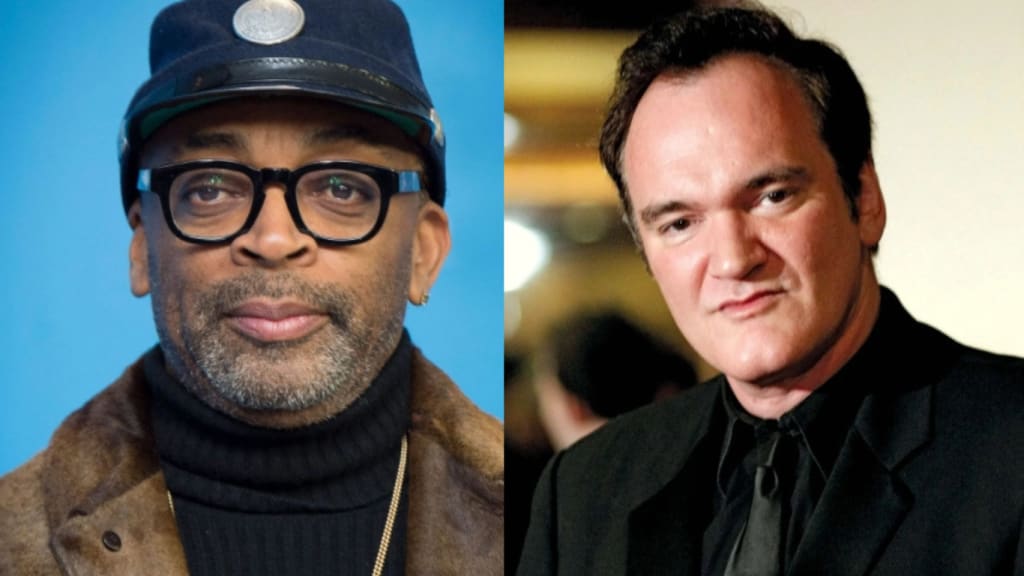
When it comes to bold, fearless filmmaking in Hollywood, two names often rise to the top: Spike Lee and Quentin Tarantino. Both directors have carved out iconic careers by breaking rules, challenging conventions, and bringing explosive, provocative narratives to the big screen. While they share some similarities, their differences in style, philosophy, and approach to storytelling have fueled decades of debate among cinephiles.
Spike Lee: A Voice for the Marginalized
Spike Lee burst onto the scene with his groundbreaking 1986 film She's Gotta Have It, and has since become one of the most influential African American directors in history. His work is unapologetically political, often centered on race, identity, and systemic injustice. Films like Do the Right Thing, Malcolm X, and Da 5 Bloods not only entertain but also educate and spark conversation.
Lee's signature style is marked by direct-to-camera monologues, dynamic dolly shots, and vibrant color palettes. But it is his commitment to telling the truth—especially the uncomfortable truth—that makes him stand out. He doesn't shy away from the rawness of reality, making his movies a reflection of the socio-political climate of their time.
Quentin Tarantino: Master of Stylish Mayhem
Quentin Tarantino, on the other hand, is the king of cinematic swagger. Ever since Reservoir Dogs and Pulp Fiction redefined indie cinema in the '90s, Tarantino has been known for his nonlinear narratives, ultra-violence, and encyclopedic knowledge of pop culture. His films, like Kill Bill, Inglourious Basterds, and Once Upon a Time in Hollywood, are genre mashups laced with sharp dialogue and unforgettable characters.
Tarantino's work is less about politics and more about the art of film itself. He's a fanboy turned auteur, and his movies are love letters to cinema history. He blends grindhouse aesthetics with high-art storytelling, making films that are both pulpy and profound.
Philosophical Divide: Art vs. Activism
The tension between Spike Lee and Quentin Tarantino goes beyond style; it is rooted in their philosophies. Lee believes that cinema should be a force for change. His films are vehicles for activism, meant to challenge audiences and provoke thought. Tarantino, meanwhile, argues that movies are meant to entertain. He often defends his use of violence and racially charged language as authentic to the story and characters.
Their clash became particularly public when Lee criticized Tarantino's frequent use of the N-word in Django Unchained. Lee called it "disrespectful to my ancestors," while Tarantino defended his script as historically accurate. This debate highlighted the broader question: What responsibility does a filmmaker have when dealing with sensitive cultural and racial issues?
Influence and Legacy
Both directors have left an indelible mark on American cinema. Spike Lee paved the way for Black filmmakers and continues to push for representation and diversity in Hollywood. His production company, 40 Acres and a Mule Filmworks, has nurtured a generation of new talent.
Tarantino has inspired a legion of filmmakers who emulate his genre-blending style and dialogue-driven scripts. His work has become a cultural phenomenon, quoted, parodied, and referenced across media.
Awards and Recognition
In terms of accolades, both have enjoyed critical success. Spike Lee finally won an Academy Award for Best Adapted Screenplay for BlacKkKlansman in 2019, after decades of being overlooked. Tarantino has won two Oscars for Best Original Screenplay (Pulp Fiction and Django Unchained), and several of his films have earned Best Picture nominations.
Final Verdict: Different Roads to Greatness
Comparing Spike Lee vs. Quentin Tarantino is like comparing jazz to rock—both are powerful, expressive art forms, but they come from different places and aim to achieve different things. Lee uses cinema as a tool for social justice, while Tarantino uses it as a playground for stylistic innovation.
Their careers are a testament to the diversity of voices that make American cinema so rich. Whether you're drawn to Spike Lee's fearless truth-telling or Tarantino's stylistic bravado, one thing is clear: both men are rebels in their own right, and cinema is better for it.
About the Creator
Keep reading
More stories from Sangita Nandi and writers in Geeks and other communities.
Is Liam Neeson the Right Choice for ‘The Naked Gun’?
The ‘Naked Gun’ series is one of the most beloved comedy franchises of all time. Starring the legendary Leslie Nielsen as the clueless yet determined detective Frank Drebin, the films were packed with slapstick humor, witty one-liners, and over-the-top action. Now, Hollywood is bringing back ‘The Naked Gun,’ and Liam Neeson is stepping into the lead role. But is he the right choice?
By Sangita Nandi10 months ago in Geeks
Silver Screen Magic with Mae West
American actress and singer Mae West became a popular film actress during the Great Depression. She started entertaining in vaudeville, then performed on Broadway, and finally went to Hollywood. She signed up with Paramount Pictures and made her debut in the 1932 film “Night After Night.” She also starred in musicals, comedies, and crime dramas. The American Film Institute named her one of the best classic Hollywood actresses.
By Rasma Raisters6 days ago in Geeks
Book Review: "The Queen" by Andrew Morton
You're probably wondering why on earth I would read this book. It was free and it was a fair length. That was basically it at first. But another reason is because I enjoyed the show The Crown and so, it only makes sense to read a book that goes through separating facts from fictions - and to be fair, there aren't a lot of fictions about the show it seems. From the birth of the little princess and the way in which her father was reluctantly to become the king, all the way to meeting and marrying the veteran prince, Duke of Edinburgh and even down to the death of her father, queendom and beyond, this book actually gives us a lot about a woman who basically embodied the greatness and modernisation of the British 20th Century.
By Annie Kapurabout 10 hours ago in Geeks


Comments
There are no comments for this story
Be the first to respond and start the conversation.