
Shakespeare's Language of War
Rhetoric, Power and Propaganda

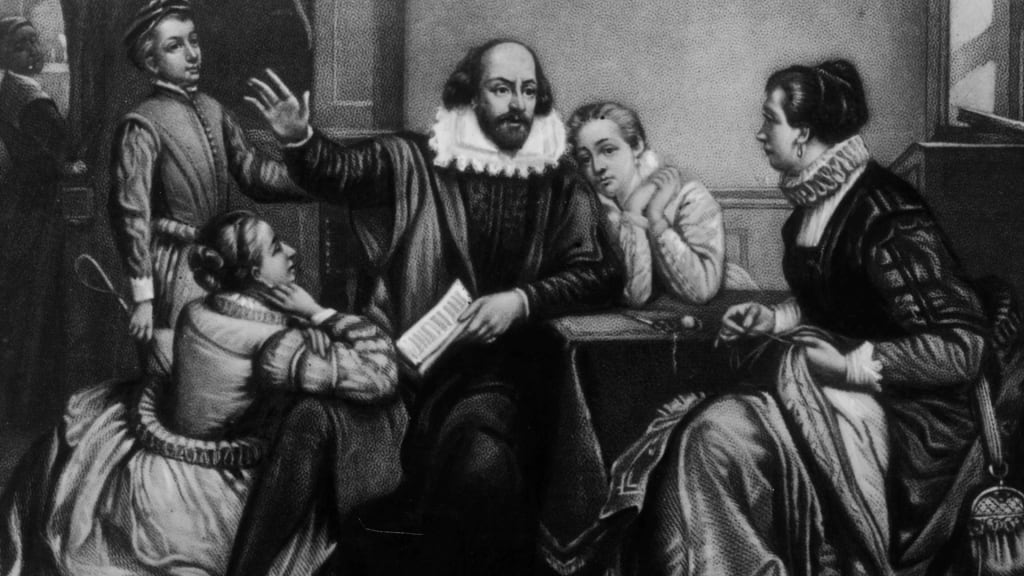
Note: Yes, I'm finding a lot of random notes I have from years back when I was studying for my degrees. These ideas didn't turn into essays but, as I have been going through them, I'd like to try to turn them into something. This one is about Shakespeare and War - the notes are from the second year of my undergraduate degree - which is a while back now. But I'm glad I was able to turn it into something. A great book in the secondary reading is called "Radical Tragedy" by Jonathan Dollimore. I must have read it three times cover to cover many years back, and my copy is coated in notes and doodles. I highly recommend this reading. Soon, I'm going to do a deep-dive into it - so look out for it if you're interested. Now, on to the article...
Shakespeare's Language of War
War is a recurring theme in William Shakespeare’s plays, reflecting the political turmoil and military conflicts of his time. Shakespeare does not merely present war as a backdrop for action; instead, he weaves its language intricately into the fabric of his characters, their motivations, and the broader themes of power, honour, and morality. His portrayal of war extends beyond the battlefield, permeating the psychological struggles of his protagonists, the persuasive rhetoric of his leaders, and the political machinations that shape their fates. From the triumphant nationalism of Henry V to the brutal ambition of Macbeth and the strategic cunning of Julius Caesar, Shakespeare’s war language captures the complexity of human nature in times of conflict.
Shakespeare’s exploration of war is deeply tied to the power of rhetoric. In Henry V, the eponymous king’s famous speech before the Battle of Agincourt exemplifies how language can be weaponised to inspire loyalty and bravery. “Once more unto the breach, dear friends, once more” (Shakespeare, 2008, 3.1.1) is not merely a call to arms but a carefully constructed appeal to camaraderie and national identity. Similarly, in Julius Caesar, Mark Antony’s funeral oration employs the language of conflict to incite rebellion, shifting the tide of public opinion through calculated persuasion. The effectiveness of war rhetoric in these plays highlights Shakespeare’s understanding of how words can be as potent as swords in determining the outcomes of battles.
Beyond persuasion, Shakespeare’s war language also serves to explore psychological conflict. In Macbeth, the protagonist’s descent into tyranny is marked by increasingly violent imagery, with his ambition framed as an internal battle. He speaks of “bloody instructions” and “vaulting ambition” (Shakespeare, 2008, 1.7.9-27), indicating his awareness of the moral implications of his actions. This internal warfare is not unique to Macbeth; in Richard III, the titular character’s manipulative use of war language to justify his conquests mirrors the external chaos he creates. Shakespeare’s depiction of war, therefore, extends beyond physical combat to encompass the struggles within the human mind.
Politically, Shakespeare’s plays offer differing reflections on the justification and consequences of war. While Henry V presents war as a means to unify a nation, Coriolanus offers a more cynical perspective, portraying a warrior whose martial prowess becomes a liability in the political sphere. Coriolanus, who excels in battle, fails in diplomacy, demonstrating the limitations of war language when removed from the battlefield. Similarly, in Othello, Shakespeare explores the intersection of military identity and personal insecurity, as the Moor’s trust in the strategic language of war leaves him vulnerable to Iago’s manipulation. These plays reveal Shakespeare’s engagement with contemporary debates on war and leadership, reflecting the anxieties of an England that had experienced both the glories and devastations of military conflict.
Shakespeare’s use of war is multifaceted, shaping not only the depiction of battles but also the psychology of his characters and the political landscapes they navigate. By examining his portrayal of war across multiple plays, it becomes evident that Shakespeare was less concerned with glorifying military conquest than with probing its ethical and psychological repercussions.
The Rhetoric of War
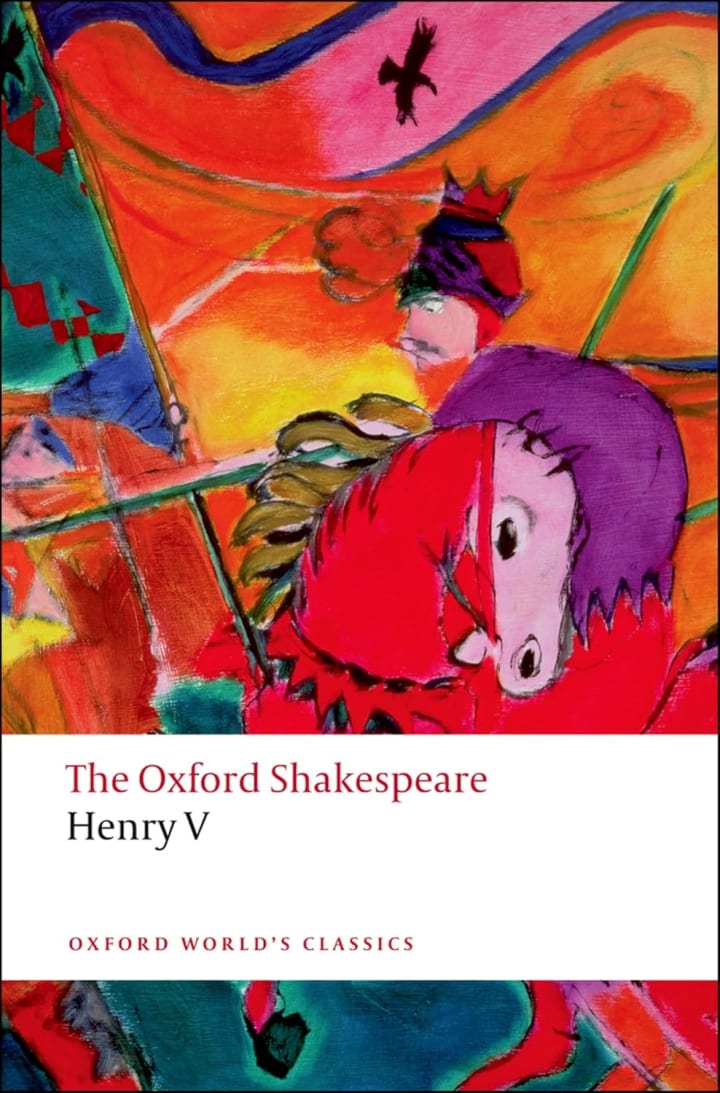
Shakespeare’s use of war rhetoric is one of the most powerful tools in his dramatic arsenal, allowing characters to manipulate, persuade, and inspire. His war imagery is not merely ornamental but serves as a strategic instrument for leadership, deception, and political manoeuvring. Shakespeare’s characters wield war rhetoric to shape public perception, galvanise their followers, and, in some cases, justify morally dubious actions. Whether in the rousing speeches of Henry V, the manipulative oratory of Julius Caesar, or the psychological battles in Coriolanus, Shakespeare demonstrates a profound understanding of how language can be weaponised in the context of war.
War Rhetoric as Inspiration
One of the most famous examples of war rhetoric in Shakespeare’s works is Henry V’s speech before the Battle of Agincourt in Henry V. Faced with overwhelming odds, Henry employs powerful imagery and evocative language to unify his men, transforming their fear into patriotic duty. His famous “Once more unto the breach” (Shakespeare, 2008, 3.1.1) speech exemplifies how rhetoric can shape the perception of war, not as destruction, but as an opportunity for glory and honour. Similarly, his St Crispin’s Day speech reframes the English army’s numerical disadvantage as a privilege, elevating the battle from a mere military conflict to a defining moment in national history:
“We few, we happy few, we band of brothers”
(Shakespeare, 2008, 4.3.60).
Henry’s rhetoric not only boosts morale but also fosters a sense of unity, making war a means of reinforcing English national identity. Scholars such as Norman Rabkin (1990) have argued that Henry’s language is deliberately ambiguous, blending genuine heroism with calculated manipulation. His speeches do not merely inspire; they also reinforce the notion of divine right and national destiny, positioning Henry as an almost mythic leader (Rabkin, 1990). This duality, wherein war rhetoric is both motivational and propagandistic, highlights Shakespeare’s nuanced treatment of wartime speech.
War Rhetoric as Manipulation
In Julius Caesar, war rhetoric is less about inspiration and more about control. The play presents a stark contrast between two rhetorical styles: Brutus’ rational appeal to republican values and Mark Antony’s emotionally charged manipulation of the Roman populace. Brutus, justifying Caesar’s assassination, presents a logical argument:
“Not that I loved Caesar less, but that I loved Rome more”
(Shakespeare, 2008, 3.2.21-22).
However, his measured tone and reliance on reason fail to stir the emotions of the crowd. In contrast, Antony’s speech exploits imagery of violence and betrayal, turning public sentiment against the conspirators. His repetition of “Brutus is an honourable man” (Shakespeare, 2008, 3.2.84) gradually transforms the phrase into irony, undermining Brutus’ credibility. Antony’s calculated use of rhetorical devices demonstrates the destructive potential of war language when wielded for personal or political gain (Watson, 2002). As Jonathan Dollimore (1984) notes, Shakespeare presents rhetoric as a weapon in itself, one capable of shaping political realities as much as any sword.
The Psychological Impact of War Rhetoric
In Coriolanus, Shakespeare explores the limitations of war rhetoric when removed from the battlefield. Unlike Henry V, who masterfully adapts his language to different audiences, Coriolanus remains rigid in his martial identity, failing to moderate his speech when engaging with civilians. His contempt for the Roman plebeians alienates him, as seen in his outburst:
“You common cry of curs! Whose breath I hate / As reek o’ the rotten fens”
(Shakespeare, 2008, 3.3.120-121).
Here, war rhetoric does not inspire but divides, illustrating how the language of combat can be detrimental in political contexts. Scholars such as Janet Adelman (1980) have argued that Coriolanus’ failure is rooted in his inability to separate his military persona from his civic duties, reinforcing Shakespeare’s critique of unchecked martial rhetoric.
Shakespeare’s use of war rhetoric across his plays demonstrates its multifaceted nature: a tool for leadership, persuasion, and self-destruction. While Henry V employs it to unite and inspire, Antony wields it as a manipulative force, and Coriolanus’ failure to adapt ultimately leads to his downfall. These examples underscore Shakespeare’s deep engagement with the power of language in war, revealing its capacity to shape not only battles but also the very structure of society and politics.
The Psychological and Moral Weight of War
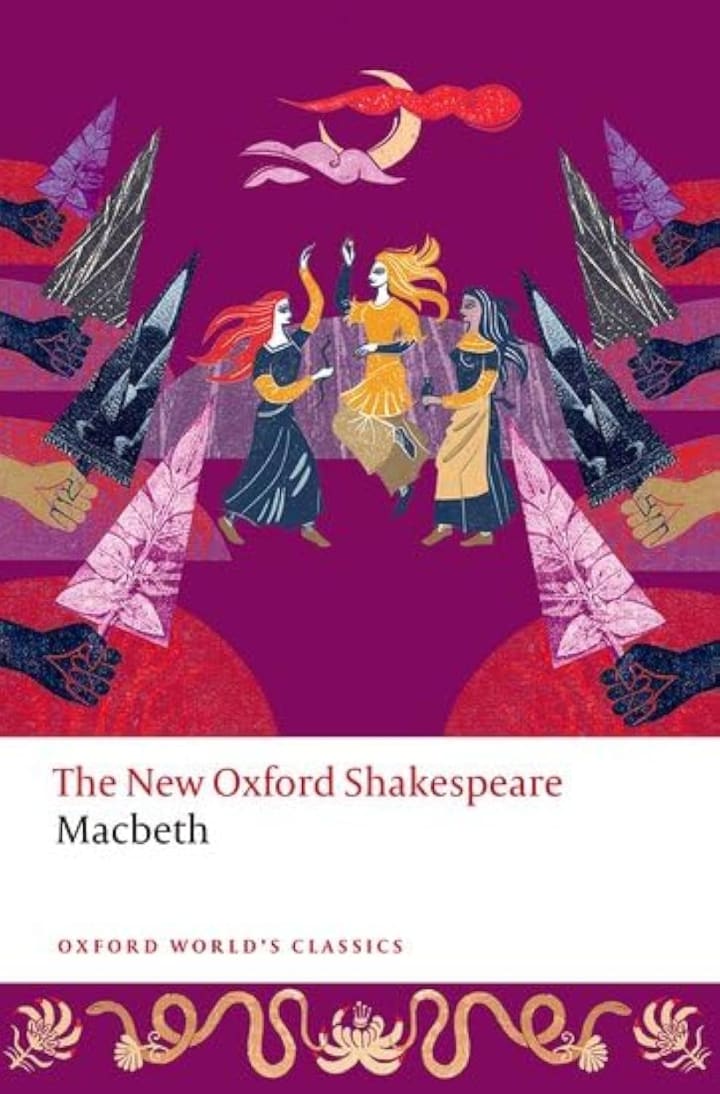
Shakespeare’s use of war imagery extends beyond the battlefield, penetrating the psychological depths of his characters and exposing the moral dilemmas they face. War in Shakespeare’s plays is not only a physical struggle but also an internal conflict, where characters wrestle with guilt, ambition, and the consequences of violence. This psychological and moral weight is particularly evident in Macbeth and Richard III, where the language of war serves as a lens through which we understand their descent into tyranny and moral corruption.
Macbeth: The Psychological Disintegration of a Warrior
From the outset of Macbeth, the protagonist is introduced as a valiant warrior, praised for his brutal efficiency in battle:
“Disdaining fortune, with his brandish’d steel, / Which smoked with bloody execution”
(Shakespeare, 2008, 1.2.17-18).
The phrase “bloody execution” presents Macbeth as a man whose identity is intrinsically linked to war and violence. However, as he transitions from the battlefield to the political sphere, his reliance on violence as a means of control leads to profound psychological turmoil. His infamous soliloquy before murdering Duncan: “Is this a dagger which I see before me?” (Shakespeare, 2008, 2.1.33), illustrates his fracturing mind, as war imagery becomes a manifestation of his internal conflict. The hallucination of the dagger reflects his deep-seated anxieties, symbolising his descent into moral corruption.
According to Janet Adelman (1987), Macbeth’s war-driven mindset renders him incapable of processing guilt in a conventional way; instead, he externalises his fears, seeing enemies everywhere and resorting to further bloodshed to maintain his power. His psychological deterioration is marked by an increasing detachment from reality, culminating in his belief in his own invincibility:
“Till Birnam Wood remove to Dunsinane, / I cannot taint with fear”
(Shakespeare, 2008, 5.3.2-3).
Shakespeare thus uses war rhetoric to illustrate Macbeth’s tragic trajectory from warrior-hero to paranoid despot, showing how the language of battle shapes his understanding of power and control, ultimately leading to his downfall.
Richard III: War as a Tool for Manipulation and Justification
Unlike Macbeth, who begins as a noble warrior and succumbs to psychological disintegration, Richard III embraces war as a political weapon from the start. His opening soliloquy:
“Now is the winter of our discontent / Made glorious summer by this sun of York”
(Shakespeare, 2008, 1.1.1-2)
frames his rise to power in martial terms. The contrast between “winter” and “summer” reflects the transition from wartime instability to what he presents as a period of order, yet Richard thrives in war and sees peace as an obstacle to his ambitions.
Richard manipulates others using war rhetoric, framing his political manoeuvres as acts of necessity rather than self-serving ambition. His ability to justify bloodshed is evident in his reflection on conscience:
“Conscience is but a word that cowards use, / Devised at first to keep the strong in awe”
(Shakespeare, 2008, 5.3.309-310).
Here, Shakespeare presents Richard as a man who rejects moral restraint, wielding the language of war to excuse his tyranny. Scholars such as James Siemon (2009) argue that Richard’s warlike persona is not merely a reflection of his ambition but a performance, carefully constructed to manipulate those around him. However, as the ghosts of his victims haunt him on the eve of battle, his psychological barriers crumble, revealing the weight of his crimes:
“O coward conscience, how dost thou afflict me!”
(Shakespeare, 2008, 5.3.179).
This moment signifies the ultimate collapse of Richard’s war-driven ideology; once fearless, he is now tormented by the consequences of his ruthless pursuit of power.
Through Macbeth and Richard III, Shakespeare demonstrates how war is not only a physical act but also a psychological and moral battleground. Macbeth, a soldier who cannot transition to peace, succumbs to paranoia and self-destruction, while Richard III weaponises war rhetoric for personal gain, only to be consumed by his own manipulative strategies. Shakespeare’s use of war imagery reveals the devastating effects of violence on the human psyche, reinforcing the idea that war extends far beyond the battlefield; it shapes identities, moral choices, and ultimately, fates.
War as Political Propaganda in Shakespeare’s Plays
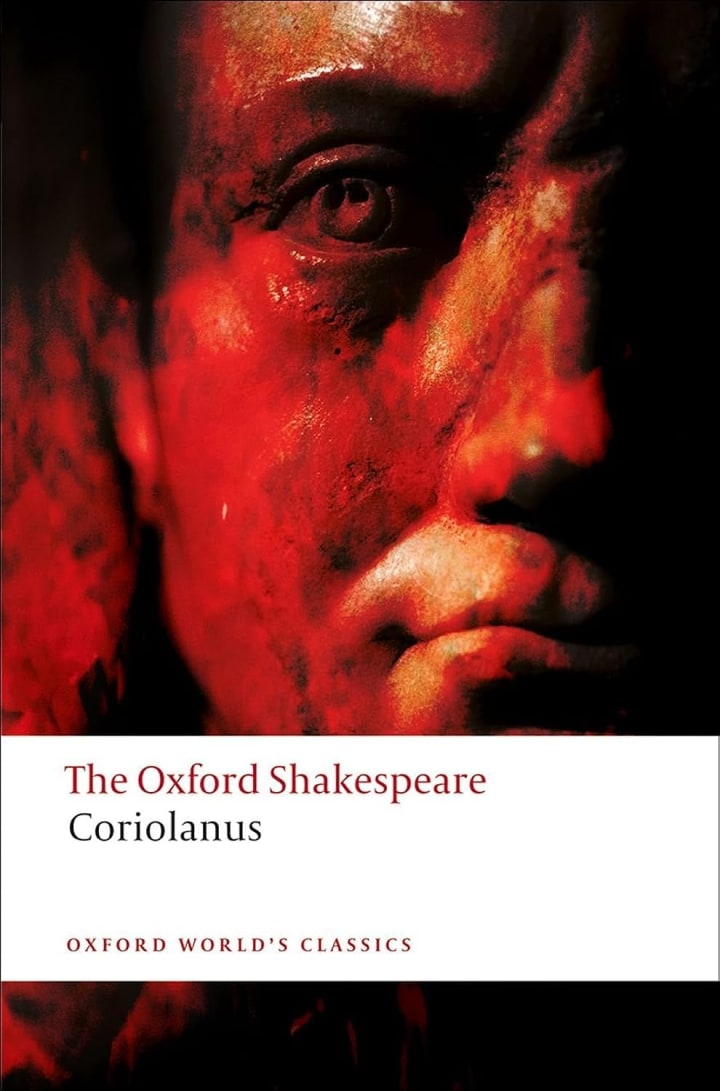
Shakespeare’s depiction of war transcends mere battles or military strategy. His works delve deeply into the intricate relationship between war, political power, manipulation, and ideology. In his plays, Shakespeare explores how rulers utilise the language of war to justify their actions, inspire their subjects, and construct their political image. War can be framed as both a necessary tool for maintaining order and authority, as well as a force that exposes the corruption and instability at the heart of political leadership. Shakespeare’s works reveal the ways in which political figures can manipulate the imagery of conflict, using it not only to rally their forces but also to sway public opinion. This analysis highlights how Shakespeare uses war as a political instrument, focusing on Henry V, Coriolanus, and Othello, each offering unique perspectives on the intersection of warfare and political rhetoric.
War as Heroic Necessity in Henry V
One of the most famous examples of war as political propaganda is Shakespeare’s Henry V. In this play, Shakespeare presents a king who expertly wields war rhetoric to justify his actions and galvanize his soldiers. The speeches of Henry, particularly the “Once more unto the breach” (Shakespeare, 2008, 3.1.1) and the iconic “St. Crispin’s Day” (Shakespeare, 2008, 4.3.60–67) speeches, frame the war against France not only as a necessary military campaign but as a noble, almost divine mission. In his “St. Crispin’s Day” speech, Henry elevates his soldiers’ roles, transforming them from mere combatants into heroes of historical significance, proclaiming: “We few, we happy few, we band of brothers” (Shakespeare, 2008, 4.3.60). This stirring rhetoric serves a dual purpose: it strengthens the soldiers' resolve, uniting them in their shared cause, while simultaneously constructing Henry as a heroic and legitimate ruler worthy of reverence.
Greenblatt (1980) suggests that Henry V engages with Elizabethan anxieties about leadership, illustrating how war can be a tool for political consolidation. The imagery of unity, sacrifice, and brotherhood in Henry's speeches positions the king as not only a military leader but also a paternal figure capable of inspiring loyalty and devotion. His strategic use of war rhetoric reinforces his authority and legitimacy, as the soldiers are encouraged to see themselves as part of a greater national cause, lending moral justification to the war. Thus, Shakespeare presents war as a political tool, transforming a military campaign into an avenue for securing and consolidating power.
The Destructive Force of War in Coriolanus
In stark contrast, Shakespeare’s Coriolanus presents a much darker view of war and its relationship to political authority. War in this play is depicted not as a heroic necessity but as a destabilizing and destructive force that ultimately exposes the fragility of political leadership. Coriolanus, an exceptional warrior, is unable to navigate the political and rhetorical aspects of governance. His tragic flaw is his inability to use war language to manipulate public opinion and gain popular support. As he states in Act 2, Scene 3:
“I cannot bring / My tongue to such a pace”
(Shakespeare, 2008, 2.3.49–50)
revealing his disdain for the political games that require him to charm the masses.
Coriolanus’ downfall is deeply tied to his rejection of the manipulative, calculated rhetoric that accompanies political leadership. He fails to adapt his military persona to the realm of politics, and as a result, he alienates the very people whose support is crucial for his success. Sinfield (1992) argues that Coriolanus reflects Shakespeare’s concerns about the dangers of militarism in political life, particularly the dangers posed by rulers who view war as a personal, heroic endeavor rather than a tool for political governance. Coriolanus’ failure to merge the language of war with political pragmatism underscores the play's critique of unchecked militarism and the instability it can breed in a society.
In Coriolanus, war is not a means of uniting people under a common cause but a force that deepens social divisions and weakens political structures. Shakespeare portrays the military as a separate, insular world that cannot easily be integrated into the world of politics, suggesting that a purely martial approach to leadership is doomed to fail.
Manipulation Through War Imagery in Othello
Shakespeare also explores the ways in which the language of war can be repurposed for manipulation and deceit, particularly through the character of Iago in Othello. Iago frequently employs military metaphors and imagery to manipulate the thoughts and actions of others, using the same language that warriors would use in battle to sow discord and distrust. For example, when speaking of Cassio’s promotion, Iago dismisses it as “mere prattle without practice” (Shakespeare, 2008, 1.1.27), suggesting that, unlike Othello, Cassio does not truly understand the nature of warfare and leadership. By framing interpersonal conflict in terms of battle, Iago draws on the mindset of war, making Othello believe that Desdemona’s supposed infidelity is an act of betrayal akin to a military attack.
Kahn (1997) observes that Shakespeare uses Iago’s manipulation to demonstrate how war rhetoric can be appropriated to serve political and psychological purposes, outside of the battlefield. Iago's use of war imagery underscores the destructive power of conflict, not just on the physical battlefield but in the emotional and psychological arenas as well. Othello, trained in the art of war, becomes ensnared by Iago’s manipulation, as the general’s experience in military strategy blinds him to the more subtle battles of the heart and mind. This suggests that the language of war, which is meant to provide clarity and direction in battle, can be twisted to create confusion and destruction in other areas of life.
The Political Power of War Rhetoric
Ultimately, Shakespeare’s portrayal of war in these plays reveals the extent to which war, and the rhetoric surrounding it, is deeply embedded in political discourse. Whether used to justify a ruler’s authority, expose the fragility of political structures, or manipulate individuals, the language of war serves as a powerful tool for those who seek to wield power. Henry’s speeches frame war as a heroic and unifying force, while Coriolanus’ downfall exposes the dangers of militarism and inflexibility in political leadership. Iago’s manipulation in Othello highlights the way in which the language of conflict can be repurposed for personal gain and psychological warfare. Shakespeare's nuanced approach to war propaganda suggests a deep awareness of both its potential for heroism and its capacity for destruction, making it a highly relevant theme in both Elizabethan and modern political rhetoric.
Therefore, Shakespeare’s treatment of war as political propaganda invites the audience to reflect on the complex ways in which language can shape perceptions of power and authority. The imagery of war is not merely a reflection of battle but a tool that can be wielded for ideological purposes, influencing the way individuals and societies view leadership, loyalty, and legitimacy.
The Language of War and the Human Condition
Shakespeare's exploration of war imagery extends far beyond the literal depiction of battlefields. He uses war as a metaphor to delve into broader human themes such as ambition, betrayal, power, and fate. Through his characters' internal and external struggles, Shakespeare reveals how the language of war becomes a tool to explore the complexities of the human condition. War, in Shakespeare's works, serves not only as a physical conflict but also as a psychological and emotional battlefield where personal desires, moral dilemmas, and existential questions are fought and resolved.
War and Ambition in Macbeth and Julius Caesar
In Macbeth, war is not just a political and military contest but also a personal one, driven by ambition and the desire for power. The play opens with Macbeth's heroic role in a war against the Norwegians, and as the plot unfolds, the imagery of battle is closely tied to his internal conflict and moral descent. Macbeth himself equates his personal desires with battle, particularly in his soliloquy in Act 1, Scene 7, where he acknowledges that his ambition, like a "vaulting ambition, which o'er-leaps itself" (Shakespeare, 2008, 1.7.27), drives him to commit murder. The metaphor of war as an internal conflict is underscored by Macbeth’s struggle with his conscience, as he wrestles with the consequences of his ambition.
Shakespeare uses war imagery to show how Macbeth's insatiable ambition leads him to betray his king, Duncan, and his own moral code. His internal war is waged on the battlefield of his mind, where he contemplates the moral implications of regicide and the inevitable consequences of his actions. This personal war intensifies as he spirals into paranoia and violence, unable to reconcile his ambitions with his moral integrity. His descent into tyranny illustrates the destructive potential of unchecked ambition and the moral decay that follows when one is consumed by the drive for power. As Macduff notes, Macbeth is "not born of woman" (Shakespeare, 2008, 5.8.16), symbolizing how Macbeth's internal war against fate and guilt ultimately leads to his tragic demise. The destructive potential of his ambition speaks to broader questions of the corrupting influence of power and unchecked ambition (Bloom, 1998).
Similarly, in Julius Caesar, war is a powerful metaphor for the political and personal battles fought by the play's central characters. Brutus, driven by a belief in the greater good, becomes a figure caught in a moral and psychological conflict between loyalty to Caesar and his commitment to the Roman Republic. The metaphor of civil war is used to explore Brutus' inner turmoil as he wrestles with the idea of betraying a friend for what he perceives as the preservation of the state. As Brutus says in Act 2, Scene 1:
“Not that I loved Caesar less, but that I loved Rome more”
(Shakespeare, 2008, 2.1.34–35).
This statement reveals how war, both external and internal, becomes the ultimate test of one’s values and loyalties. Brutus’ actions lead to the assassination of Caesar, and the civil war that follows becomes a metaphor for the destruction of trust, friendship, and personal honor. As Zimmerman (2005) argues, Brutus represents the tragic figure caught between personal loyalty and political duty, where war becomes an expression of both loyalty and betrayal.
Betrayal and the War Within the Mind in Hamlet and Othello
In Hamlet, war is both literal and metaphorical, representing the internal conflict of the protagonist. Hamlet is a prince at war with his own emotions, struggling to reconcile his desire for revenge with his intellectual hesitation and moral dilemmas. His famous soliloquy in Act 3, Scene 1, “To be or not to be” (Shakespeare, 2008, 3.1.56), reflects his existential battle, where the war is not fought on a battlefield but within his own mind. The imagery of war surfaces repeatedly in Hamlet’s reflections on death, fate, and duty, with his inaction and internal struggle echoing the paralysis of war. His delay in avenging his father’s death becomes a metaphorical battle between reason and emotion, with Hamlet constantly at war with his own thoughts. His tragic end, resulting from his inability to resolve this internal conflict, demonstrates how war within the mind can lead to self-destruction.
Similarly, in Othello, war is also used to explore psychological and emotional turmoil. Iago’s manipulation of Othello involves a psychological warfare that pits Othello against his own thoughts and emotions. Iago, with his deceptive rhetoric, exploits Othello’s insecurities and jealousy, framing the emotional conflict as a literal battle in Othello’s mind. Iago refers to Othello’s jealousy as a “green-eyed monster” (Shakespeare, 2008, 3.3.165), likening it to a dangerous and uncontrollable force, further blurring the lines between mental and physical conflict. Othello’s psychological war ultimately leads to his tragic downfall, as the manipulation of his mind and emotions drives him to commit murder. According to Kahn (1997), Iago’s use of military metaphors highlights the destructive power of language in manipulating Othello’s perception of reality, turning love into a battleground.
War, Fate, and the Human Condition in Macbeth and Hamlet
In both Macbeth and Hamlet, Shakespeare also uses war imagery to explore the broader theme of fate. In Macbeth, the protagonist's ambition leads him into a destructive war against both external enemies and his own fate. Macbeth’s belief in the witches’ prophecy, in which he is told that he will be king, sets him on a path of violence and murder. However, the war Macbeth wages against fate is one he cannot win. The witches’ cryptic statements:
“None of woman born / Shall harm Macbeth”
(Shakespeare, 2008, 4.1.79–80)
create an illusion of invulnerability, but ultimately Macbeth is defeated, revealing how the language of war is intertwined with the inevitability of fate. His internal war, driven by ambition, leads him to make choices that seal his doom, demonstrating Shakespeare’s exploration of the tension between free will and fate. As Garfield (2003) explains, Macbeth’s struggle against fate represents the tragic consequences of a character’s inability to accept the limits of human agency.
In Hamlet, the theme of fate is also central to the internal wars of the characters. Hamlet’s indecision and his struggle to reconcile his duties with his personal desires lead to a tragic confrontation with destiny. His famous line:
“The time is out of joint: O cursed spite, / That ever I was born to set it right!”
(Shakespeare, 2008, 1.5.189–190)
reflects Hamlet’s awareness of the weight of fate upon his shoulders and his reluctance to engage in the war of revenge that has been thrust upon him. His fatalism and inability to act, however, ultimately lead to the tragic end of the play, where Hamlet and nearly all the principal characters die. The battle with fate in Hamlet is portrayed as a mental and emotional war, one that no individual can truly control. According to McDonald (2005), Hamlet's failure to act upon his knowledge of fate leads to the tragic collapse of his world, demonstrating how the language of war is used to describe the individual's fight against the inexorable forces of destiny.
Therefore, in Shakespeare’s works, war is much more than a depiction of physical conflict, it becomes a powerful metaphor for the human condition. Through his use of war imagery, Shakespeare explores themes of ambition, betrayal, power, and fate, using the language of battle to illuminate the inner struggles and conflicts that define his characters. Whether in the external wars of Macbeth and Julius Caesar, the psychological battles of Hamlet and Othello, or the fatal confrontations with destiny, Shakespeare’s plays reveal how war is not only fought on the battlefield but also within the mind and soul. These internal wars fought between personal desires, moral choices, and existential dilemmas, are as devastating as any external conflict.
Conclusion

Shakespeare’s use of war-based language serves multiple functions, revealing his deep understanding of human nature and politics. War, for Shakespeare, extends beyond physical conflict to represent psychological struggles, political power, and philosophical reflection. Through war imagery, characters like: Macbeth, Hamlet, and Othello illustrate how internal battles are as significant as external ones, highlighting the destructive power of ambition, fate, and emotion.
Shakespeare also uses war to explore political themes, as seen in Julius Caesar and Macbeth, where battle metaphors comment on power, betrayal, and ambition. His characters often engage in rhetorical wars, showing how language can shape outcomes. Philosophically, his portrayal of war reflects on fate, morality, and human agency, illustrating the fragility of the human condition.
Therefore, Shakespeare’s language of war remains relevant in all conflicts and political rhetoric, highlighting its lasting ability to explore personal struggles, and offering a lens through which to understand the complexities of human experience.
Works Cited:
- Adelman, J. (1987) Suffocating Mothers: Fantasies of Maternal Origin in Shakespeare’s Plays. New York: Routledge.
- Adelman, J. (1980) The Common Liar: An Essay on Antony and Cleopatra. New Haven: Yale University Press.
- Bloom, H. (1998). Macbeth (2nd ed.). New York: Chelsea House Publishers.
- Dollimore, J. (1984) Radical Tragedy: Religion, Ideology and Power in the Drama of Shakespeare and his Contemporaries. Brighton: Harvester Press.
- Garfield, J. (2003). Shakespeare's Tragic Vision of Fate. London: Routledge.
- Greenblatt, S. (1980). Renaissance Self-Fashioning: From More to Shakespeare. Chicago: University of Chicago Press.
- Kahn, C. (1997). Man’s Estate: Masculine Identity in Shakespeare. Berkeley: University of California Press.
- McDonald, R. (2005). Shakespeare and the Problem of Fate. New York: Palgrave Macmillan.
- Rabkin, N. (1990) Shakespeare and the Common Understanding. Chicago: University of Chicago Press.
- Shakespeare, W., (2008). 'Coriolanus'. In: W. Shakespeare, The Complete Works. London: Wordsworth Editions.
- Shakespeare, W., (2008). 'Henry V'. In: W. Shakespeare, The Complete Works. London: Wordsworth Editions.
- Shakespeare, W., (2008). 'Julius Caesar'. In: W. Shakespeare, The Complete Works. London: Wordsworth Editions.
- Shakespeare, W., (2008). 'Macbeth'. In: W. Shakespeare, The Complete Works. London: Wordsworth Editions.
- Siemon, J. (2009) Shakespearean Tragedy and the Cold War. Oxford: Oxford University
- Sinfield, A. (1992). Faultlines: Cultural Materialism and the Politics of Dissident Reading. Oxford: Oxford University Press.
- Watson, R. (2002) Shakespeare and the Hazards of Ambition. Cambridge: Harvard University Press.
- Zimmerman, D. (2005). Political Betrayal in Shakespeare’s Julius Caesar. New York: Cambridge University Press.
About the Creator
Annie Kapur
I am:
🙋🏽♀️ Annie
📚 Avid Reader
📝 Reviewer and Commentator
🎓 Post-Grad Millennial (M.A)
***
I have:
📖 280K+ reads on Vocal
🫶🏼 Love for reading & research
🦋/X @AnnieWithBooks
***
🏡 UK
Keep reading
More stories from Annie Kapur and writers in Geeks and other communities.
Book Review: "Summoned to the Seance" ed. by Emily Vincent
Full Title = Summoned to the Seance: Spirit Tales from Beyond the Veil edited by Emily Vincent I think that you're probably sick and tired of reading about me being obsessed with the British Library's output of things like 'Tales of the Weird' or, in the past collections such as 'Crime Classics'. But, I think this is important because recently I have become a bit sketchy on whether these are the best of the output. Of course, we have had some great anthologies in the distant past and over the last few years. However, these ones that have come out in late 2024 and early 2025 have not lived up to their hype at all. Unfortunately, though this collection has some stand out stories, this can also be said of Summoned to the Seance.
By Annie Kapur10 months ago in Geeks
Silver Screen Magic with Mae West
American actress and singer Mae West became a popular film actress during the Great Depression. She started entertaining in vaudeville, then performed on Broadway, and finally went to Hollywood. She signed up with Paramount Pictures and made her debut in the 1932 film “Night After Night.” She also starred in musicals, comedies, and crime dramas. The American Film Institute named her one of the best classic Hollywood actresses.
By Rasma Raisters3 days ago in Geeks
The Tragic Heart of Tristan and Isolde: Revisiting the 2006 Movie
Plot Summary Set during the Dark Ages, Tristan & Isolde follows the story of Tristan, a loyal knight, and Isolde, an Irish princess whose marriage is meant to unite divided kingdoms. When fate brings them together, they fall in love, challenging loyalty, honor, and duty. Torn between passion and obligation, they must navigate political intrigue, betrayal and rigid expectations of their society.
By TheScreenAnalyst7 days ago in Geeks



Comments (2)
Excellent piece on Shakespeare's depth in writing. His tragedies remain ranked among my most favorite pieces of English Literature. Well done. Methinks the Bard would likely agree.
Thank you for this excellent in depth exploration of Shakespeare on conflict. I do love a lot of his work although sometimes a bit over wordy. Great article