
Self-Checkouts Development Model With Computer Vision
The retail industry has been dynamic, with self-checkout machines gaining more popularity today than before. One such advancement is integrating self-checkout systems with a computing vision system.
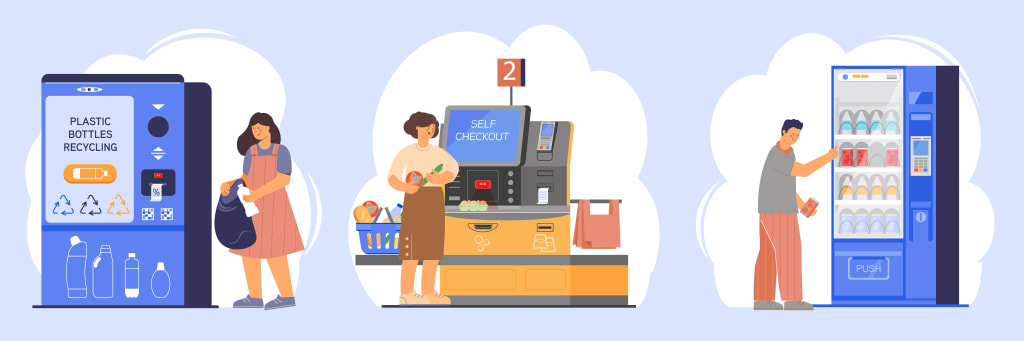
Long queues to wait in front of a cash counter and time-consuming scanning of barcodes on products are no longer a sign of the past. The retail industry has been dynamic, with self-checkout machines gaining more popularity today than before. One such advancement is integrating self-checkout systems with a computing vision system.
Such systems are even more effective when integrated with computer vision services as they make them accurate and minimize the chances of errors and piracy. The following is the development process of a comprehensive and dependable self-checkout system integrated with the state of the art computer vision technology.
1. Requirement Analysis
The first process involves analyzing the business environment and customers’ needs within the business. This entails defining areas of importance, including item detection, access interfaces, and security features. Awareness of these requirements helps align the system to fit the expectations and needs of the entire chain of stakeholders.
2. System Design and Architecture
Secondly, a general structure for the whole system must be created. This involves deciding on the type and models of cameras and sensors used and the structure and design of software that will enable computer vision to interact with the self-checkout system. The design phase guarantees that all components are integrated to produce a stable system that will perform the required tasks efficiently.
3. Data Acquisition and Preparation
Proper data collection and preprocessing should be done for the computer vision model's training. This includes taking pictures of products from different orientations and under different lighting. The data must be properly labeled for the model to be trained. This phase is crucial in building a suitable and accurate computer vision image analysis system.
4. Model Development and Training
The next step is to train the computer vision model described using machine learning algorithms. The model categorizes items based on the labeled set of images. This phase involves repeating the modeling process a number of times to correct any mistakes that are likely to have been made during the model development phase and enhance the model’s capability of identifying and recognizing products during the self-checkout phase.
5. System Integration
Successfully incorporate the computer vision model with the self-checkout kiosks on which it has been trained. This includes making sure that the model is able to relate well with other components, such as the graphical user interface and the backend servers. Integration succeeds when the system functions properly and the computer vision features improve the self-checkout process.
6. User Interface Design
Incorporate back-end technology to create a simple customer interface to help users navigate the self-checkout screens. A simple interface has to be employed so that users can interact with the system. This includes transparent instruction response touchscreens and real-time feedback. One of the fundamental principles that should be adopted while designing a system is that it has a good user interface.
7. Testing and Refinement
Run multiple exercises to check for problems hindering the system's use. This involves testing the prototype in simulated conditions and real situations. These tests provide feedback that is vital in improving the system, which requires fine-tuning to optimize its efficiency and effectiveness in providing accurate results with smooth usability.
8. Deployment and Maintenance
Lastly, after intensive testing has been conducted, the self-checkout system should be installed in stores. It should also be supervised regularly to ascertain its functioning according to the best expectations. Maintenance is often needed, and enhancements or enhancements must be made to bring efficiency to the system. This shows that self-checkout is well maintained and provides its services for a longer duration with efficiency.
This was the development model of self-checkouts built with computer vision. By following these steps of the development process, computer vision can be successfully and efficiently implemented. Now, let’s take an example and understand how self-checkouts development model can help grow any retail business.
Target's Implementation of Self-Checkout Systems with Computer Vision
Target has introduced self-checkout systems integrated with the computer vision solution and followed self-checkouts development model for implementation of computer vision into the system. This model guarantees proper item identification, saves time, increases security, and gives convenience to its customers, thus offering a pleasant shopping experience to its clientele. Using phased deployment and continuous update strategies, Target ensures the functionality and efficiency of self-checkout systems, thus proving itself as a company focused on technological advancement and customer benefits.
Conclusion
Constructing a self-checkout system is not an easy task. It is a complex process involving the use of hardware, including computers and software; the primary component would be the utilization of computer vision. By training algorithms to recognize and track products, these systems make shopping easier, quicker, and more efficient for the customer. From image capture to processing, data acquisition and handling, and connection to payment solutions, the self-checkouts development model requires excellence. Incorporating expert computer vision services offers the right blend of self-checkout success for retailers and shoppers.
About the Creator
Khushbu Somaiya
I'm passionate about how technology keeps changing the world around us. I am passionate about writing about web development and related technologies with easy understanding, and committed to share my knowledge with excellent content.
Keep reading
More stories from Khushbu Somaiya and writers in Geeks and other communities.
Innovative Use Cases and Strategies for Large Language Model in Finance
The financial sector is continuously evolving and incorporating brand-new methods with the help of a large language model. And what is Large Language Model (LLM)? It’s simply an enhanced version of the artificial intelligence model that was designed to understand, generate and manipulate humans based on extensive data. Now imagine a computer program that does all financial analysis after reading large amounts of financial news, reports and data. That is actually a large language model in finance!
By Khushbu Somaiya2 years ago in Geeks
10 Times Rotten Tomatoes and I Disagreed
***Disclaimer*** I will be ranking these movies in the following manner: The greater the divide between Rotten Tomatoes and I, the higher up on the list (and I am referring to the critic's score, not the audience score). I will also show Rotten Tomatoes' score on each one in addition to my score. I am curious to know what everyone thinks, please let me know in the comments below!
By Madison "Maddy" Newton3 days ago in Geeks
Book Review: "The Marshmallow Test" by Walter Mischel
In the introduction, it is clear that Mischel took his experiment very seriously. The entirety of the experiment boils down to one thing: delayed gratification. But is delayed gratification really an indicator of IQ, or status, class or whether someone will suffer certain health problems later in their life? Initially I thought the answer was no. I believed that there was correlation but no causation and yet, after reading this book my mind has been slightly changed. The Marshmallow Test is one of the most widely recognised psychological tests in the western world, but what is it and why is it so culturally important? Let's take a look...
By Annie Kapura day ago in Geeks




Comments
There are no comments for this story
Be the first to respond and start the conversation.