
Search engine optimization: The way to the TOP 10 of the SERPs (Ⅱ)
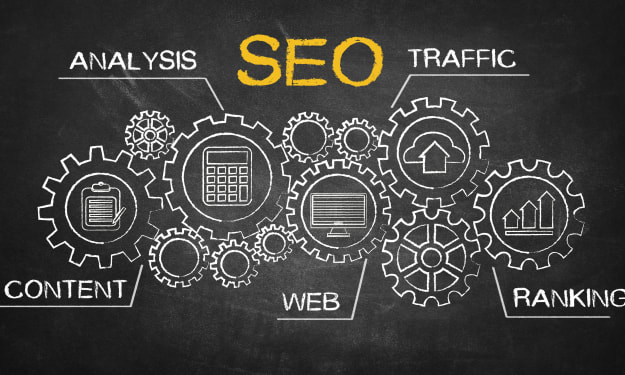
Search engine optimization, also called SEO, includes all measures that contribute to the visibility of your website and its content in the SERPs. Technical SEO is increasingly combined with content-related topics and user-friendliness. In order to rank at the top of search engine results, you should consider and implement all steps and measures for this. We clarify definition, relevance and list all measures that contribute to search engine optimization.

Table of contents
• What is search engine optimization?
• The relevance of SEO for your business
• Onpage and Offpage Optimization: The Two Basic Parts of SEO
What is Onpage Optimization?
What is Offpage Optimization?
• What are the measures?
Onpage optimization measures:
Offpage optimization measures
• White Hat and Black Hat - between morality and the edge of legality
• 9 steps of search engine optimization in practice
Step 1: Find keyword
Step 2: Check indexed URLs
Step 3: Design value-added content
Step 4: Customize metadata
Step 5: Make URLs understandable and clear
Step 6: Do link building
Step 7: Create security
Step 8: Optimize loading time
Step 9: Monitoring and controlling
• What are the goals of search engine optimization?
• Conclusion: Search Engine Optimization - A Process Worthwhile
---------------------------------------------------------------------------------
Onpage and Offpage Optimization: The Two Basic Parts of SEO
Part Ⅰ: What is Onpage Optimization?
Onpage describes everything that happens on your website. This includes technical and content factors as well as design factors. The focus is on the fact that users can use the site without problems and feel addressed by the content.
We divide Onpage Onpage into the following sub-areas:
1. Technology
Here we also talk about technical SEO. How can the structure and technical factors be optimized? This includes, for example, optimizing the metadata, improving the loading time, good accessibility, good internal linking and user-friendliness. The focus is often on improving the user experience. The goal of optimization is to convince users and search engines alike - this factor is often underestimated as a ranking factor.
2. Content
The ontent should also convince both the search engine and users. Even the best content for a keyword is of no use if it does not meet the interests and needs of the users. What is the quality of the content? Has the keyword been integrated sufficiently and meaningfully? This is about delivering unique content that is tailored to the expectations of users.
3. Design
The design of the website is an important factor for the user experience. What does the page look like? Does the navigation make sense? Are conversion elements present? Is the design appealing? These are all important questions you should consider to make the user experience positive.
Part Ⅱ: What is Offpage Optimization?
Offpage describes everything in the course of search engine optimization that takes place outside your website. The keyword here is: link building. That is, offpage deals with high-quality backlinks (external links that point to your website). Company mentions and brand building also count as offpage. Why offpage is important? External links generate trust among users and Google looks closely at how connected a site is on the web. This makes them a significant ranking factor. The principle: the higher the density of backlinks from pages with high authority, the more positive the effect on the ranking of a website.
Tip:
Link building is not something that is successfully implemented overnight. Building a stable and rich network takes time and continuity.
What are the measures?
To ensure that your content ranks as well as possible, there are many search engine optimization measures - both onpage and offpage:
Onpage optimization measures:
• Keyword research and keyword strategy development:
Which keyword should rank for which page?
• Topic research:
Which topics and content are relevant?
• Create information architecture:
Is the content on the website structured in such a way that users can navigate through it as intuitively and easily as possible?
• Ensure mobile user-friendliness (mobile SEO):
Is the content adapted and optimized for mobile internet use?
• Content optimization and creation:
Which content can be improved and which could you add?
• Avoid 404 pages:
Are there any erroneous pages that direct users away from the site in case of doubt?
• Adjust URL structures:
Are the URLs easy to read and do they reflect the directory structure?
• Improve page load speed:
Does the web page load longer than 3 seconds?
• Check internal links:
Is there enough linking of your own content to internal pages?
• Optimize metadata (page title, description, rich snippets):
Does the metadata correspond to the specified number of characters or pixel width? Does the focus keyword appear in the title and description?
• Video and images SEO:
Do you use videos and images to visually support your content? The keyword should appear in the filename, title and alt text of the images and videos.
• Content audits:
When was the last time you performed an analysis and preparation of existing content to check which content performs best?
• WDF*IDF analyses:
Is your content semantically optimized? WDF*IDF analyses indicate which terms should be used more frequently in addition to the main keyword and which terms are missing in order to create the best possible text.
• Content competition analysis:
For which keywords and in which position does your competition rank?
• Voice Search SEO:
Are the search queries that are spoken in complete sentences into the respective device also optimized?
• International SEO:
Do you want to become internationally visible? Then you can perform search engine optimization on a local, national and international level and make country-specific adjustments to the SEO strategy.
• SEO Monitoring:
Do you continuously monitor your SEO metrics?
• SEO Reporting:
Do you log your most important key figures clearly and understandably for third parties?
Offpage optimization measures
• Linkbuilding and seeding:
Building high-quality backlinks, which can be connected to thematically similar portals with the help of seeding.
• Search engine submission:
Submitting your URL to a search engine to be included in the search engine index.
• Social Media Optimization (SMO):
Optimizations to make it easier to get on social media.
• Accompaniment of linkbaits:
Accompaniment of your website's web content that serves to gain backlinks.
• Link Source Research:
Research for trustworthy sites that are suitable for linking.
• PR work:
Public Relation or Public Relations.
Search engine optimization measures are very broad and therefore overlap with other marketing disciplines such as content marketing and UX.



Comments
There are no comments for this story
Be the first to respond and start the conversation.