
Screams That Echo: The 60 Best Horror Movies of All Time
From silver screen legends to modern nightmares, here are the horror films that continue to define—and redefine—fear.
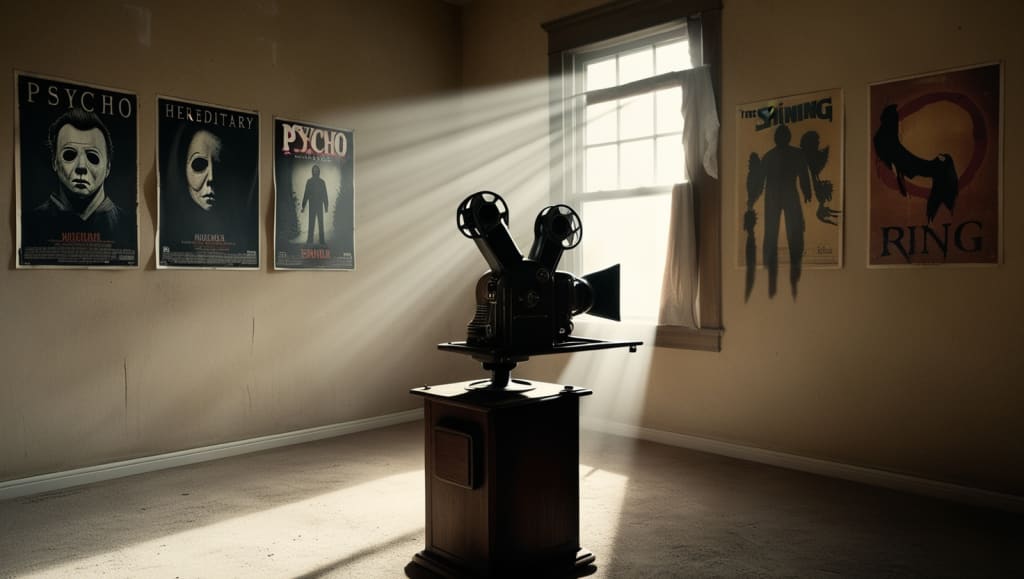
1. Foundations of Fear: Horror’s Pioneering Years (1920s–1960s)
Before horror had jump scares and CGI, it had atmosphere, myth, and performance. These early films laid the groundwork for what would become a globally beloved genre.
Nosferatu (1922) remains a shadowy, silent nightmare and the granddaddy of vampire cinema. Dracula (1931) introduced the world to Bela Lugosi’s hypnotic performance. Frankenstein (1931) explored man playing God in haunting style, while The Wolf Man (1941) became a tragic tale of transformation. Psycho (1960) broke all rules of storytelling and stabbed its way into cinematic history.
Peeping Tom (1960), controversial at release, was a voyeuristic psychological dive. Black Sunday (1960) gave us gothic Italian horror drenched in style. Eyes Without a Face (1960) blurred beauty and terror. The Haunting (1963) proved that not seeing the ghost can be scarier than the ghost itself. And Night of the Living Dead (1968) introduced zombies as a metaphor for societal collapse—with gut-wrenching realism.
2. The Slasher Surge & Supernatural Horror: 70s–80s Carnage and Icons
The 1970s and '80s weren’t just about masked killers—they were about building myths and monsters that felt real. The horror genre exploded, blending slasher violence with supernatural dread.
The Texas Chain Saw Massacre (1974) introduced raw terror with documentary-like grit. Jaws (1975) made people terrified of water. Carrie (1976) turned high school trauma into telekinetic vengeance. The Omen (1976) gave us Damien, the embodiment of evil as a child. With its chilling Gregorian score and shocking deaths, it became a religious horror landmark. The sequels—Damien: Omen II (1978) and Omen III: The Final Conflict (1981)—follow Damien’s rise from troubled youth to powerful political figure, delivering a terrifying what-if scenario of the Antichrist infiltrating real-world power.
Suspiria (1977) painted death in psychedelic colors and eerie whispers. Halloween (1978) defined the slasher blueprint with a blank-faced killer and iconic score. Alien (1979) turned the sci-fi genre into a claustrophobic nightmare. The Shining (1980) explored the disintegration of family and sanity. And Friday the 13th (1980) made campgrounds scary forever.
3. Flesh and Fear: Body Horror & Psychological Terrors
These horror films dive deep—into minds, bodies, and our darkest insecurities.
The Thing (1982) combined paranoia and grotesque effects in a snowy hellscape. A Nightmare on Elm Street (1984) weaponized dreams and delivered a villain for the ages. The Fly (1986) showed us what happens when science goes too far—one body part at a time. Hellraiser (1987) brought S&M demons and philosophical dread into our homes.
The Silence of the Lambs (1991) made Hannibal Lecter a household name—and your worst dinner guest. Candyman (1992) turned urban legends into social commentary. Audition (1999) lulled us into false comfort before a horrifying third act. The Sixth Sense (1999) pulled off one of the greatest twists in film history. The Blair Witch Project (1999) pioneered found footage with terrifying ambiguity. Final Destination (2000) reminded us that death doesn’t like to be cheated.
4. Ghost Stories and Paranormal Nightmares
Horror doesn’t always need blood—it thrives in whispers, shadows, and things that move without cause.
The Others (2001) chilled us with a mother’s devotion and a gut-punch twist. The Ring (2002) haunted us with a videotape and a curse that crawled out of the TV. 28 Days Later (2002) gave us fast zombies and emotional chaos. Saw (2004) offered brutal moral puzzles and birthed a twisted franchise.
The Descent (2005) gave us monsters and cave claustrophobia. Paranormal Activity (2007) stripped horror to its minimalist core—and succeeded. REC (2007) proved Spain could do found footage better than anyone. Let the Right One In (2008) told a quiet, snowy vampire love story. Insidious (2010) explored astral horror with eerie sound design. The Conjuring (2013) launched a whole haunted universe—with class and care.
5. Modern Masterpieces: Horror Grows Up
Recent years have brought "elevated horror"—where story and emotion meet nightmare fuel.
It Follows (2014) delivered slow-burning dread wrapped in metaphor. The Babadook (2014) dealt with grief through a children’s book monster. The Witch (2015) gave us 1600s religious dread and a very persuasive goat. Train to Busan (2016) made us cry for zombies—and cry we did.
Don’t Breathe (2016) flipped the predator/prey dynamic in chilling ways. Get Out (2017) was a genre-defining blend of social critique and psychological horror. Hereditary (2018) gave us decapitations, family trauma, and one of the most unsettling endings in history. A Quiet Place (2018) made silence its weapon. Midsommar (2019) took terror to broad daylight. The Lighthouse (2019) was pure madness in maritime form.
6. Horror's Future: The Now and Next
Horror isn’t dying—it’s evolving. These recent entries prove that fear will always adapt.
The Invisible Man (2020) turned gaslighting into a ghost story. Saint Maud (2020) gave us a psychological descent into holy madness. Relic (2020) showed how Alzheimer’s feels like possession. The Night House (2021) blurred grief and supernatural loops.
Titane (2021) redefined body horror with bizarre, award-winning boldness. Fresh (2022) was a dating nightmare with a cannibal twist. Barbarian (2022) flipped expectations at every corner. Smile (2022) made trauma look like a sinister grin. Talk to Me (2023) reinvented possession with Gen Z at the core. Skinamarink (2023) distilled pure childhood fear into a surreal, unsettling void.
Final Word:
These 60 films are more than just horror—they're cultural touchstones. They shocked us, made us think, and reminded us that fear, in all its forms, is universal. Whether it’s a whisper in the dark or a scream in the light, these movies prove that horror is cinema’s most timeless emotion.
About the Creator
Keep reading
More stories from Shahjahan Kabir Khan and writers in Geeks and other communities.
Hollywood’s New Obsession: Why Every Movie Is Suddenly a Sequel or a Reboot
Looking for trailers on sites like YouTube or Netflix means you're seeking something new and intriguing. Still, what do you see? Spin-off from Fast & Furious? Another Marvel origin tale? Or perhaps a remake of a long-ago 2000s comedy? This is not the invention of your mind.
By Shahjahan Kabir Khan7 months ago in Geeks
Silver Screen Magic with Mae West
American actress and singer Mae West became a popular film actress during the Great Depression. She started entertaining in vaudeville, then performed on Broadway, and finally went to Hollywood. She signed up with Paramount Pictures and made her debut in the 1932 film “Night After Night.” She also starred in musicals, comedies, and crime dramas. The American Film Institute named her one of the best classic Hollywood actresses.
By Rasma Raisters6 days ago in Geeks
Kartik Aaryan suffers first major setback after minor dating controversy
Kartik Aaryan recently suffered first major setback after getting caught in a controversy of dating a minor. It all started when the 35-year-old actor’s newly released film, Tu Meri Main Tera Main Tera Tu Meri, became a box office bomb.
By Dena Falken Esq2 days ago in Geeks



Comments
There are no comments for this story
Be the first to respond and start the conversation.