

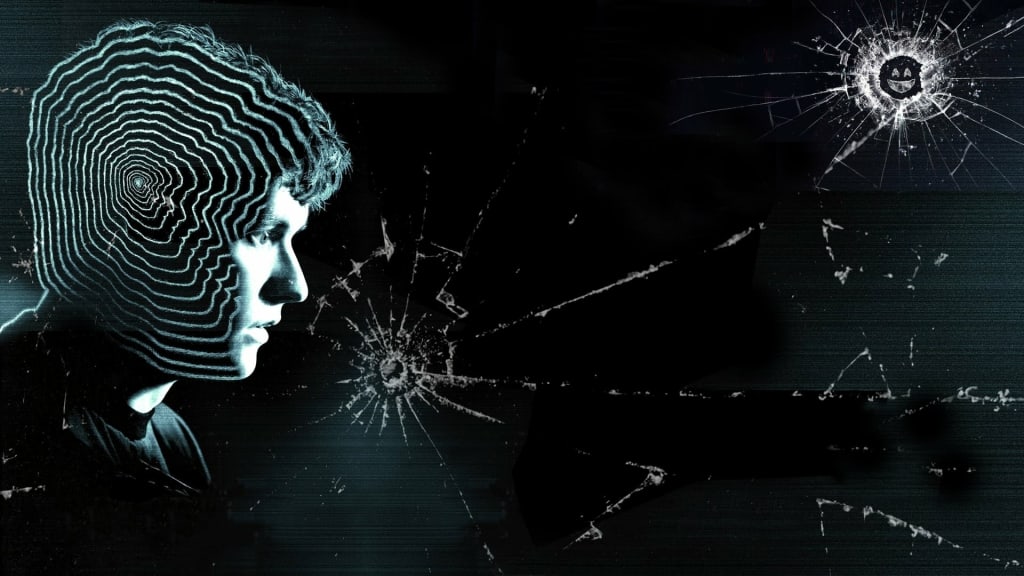
Are Interactive Films the Future or Just a Glitch in Time?
Have you ever wished you could rewrite the ending of a movie? In an era where the viewer craves agency and the traditional screen is no longer a passive experience, interactive films have emerged as a thrilling new way to experience storytelling. With the rise of streaming giants and the increasing sophistication of digital media, the film industry faces a crucial question: can interactive cinema bridge the gap between immersive gaming and traditional filmmaking? Or is it just a fleeting gimmick in a world hungry for innovation?
You’re sitting in your living room, remote in hand. On the screen, a character is faced with a decision. Go left, or go right? Eat the pills, or throw them away? For the first time in cinematic history, you decide. That’s the essence of an interactive film—where the viewer steps into the shoes of the director, editor, and even the screenwriter. It’s cinema, but evolved. And its rise might just be the key to preserving movie culture in an attention-fractured digital age.
The most iconic example is Netflix’s Black Mirror: Bandersnatch, a twisted, mind-bending experience that had viewers second-guessing every choice. What seemed like a simple story about a game developer spiraled into a labyrinth of consequences, meta-narratives, and psychological depth. But Bandersnatch wasn’t just a movie—it was a challenge to the very nature of storytelling. It proved that audiences are ready for something more engaging, more personal, and infinitely more replayable.
Why does this matter now? Because cinema is struggling. Theaters are emptying. Attention spans are shrinking. And the classic linear story arc is no longer enough. Interactive films offer an antidote: participation. They speak to a generation raised on video games, where choice is second nature and control is expected. Watching a movie becomes something closer to living it. You don’t just observe the hero’s journey—you shape it. And in doing so, you feel something deeper: responsibility.
At the same time, interactive storytelling opens creative doors for filmmakers. With branching narratives, character arcs that diverge, and dozens of potential endings, the writer’s room becomes a map of infinite possibilities. It’s no longer about the story, but your story. This democratization of narrative shifts the power dynamic from creator to audience, which is both exciting and terrifying for traditional studios. But maybe that’s the disruption cinema needs.
Let’s not forget the tech behind the magic. Today’s streaming platforms can seamlessly integrate decision points without interrupting the viewing experience. AI can even anticipate preferred story paths, offering personalized narrative suggestions. As these tools improve, interactive cinema won’t just be a novelty—it could become the standard. Imagine watching a thriller where your heart rate changes the pacing, or a romance where your emotional choices influence who falls in love. This isn’t sci-fi. It’s already being tested.
Still, the path ahead isn’t without obstacles. Not every viewer wants to be in control. Some crave the simplicity of being told a good story without having to decide anything. There’s also the artistic risk: does giving too much control dilute the filmmaker’s vision? And will audiences grow tired of constant engagement, or crave the escape of passivity once again?
Yet, in a digital world where content is king and interaction is currency, interactive films stand out. They invite you in. They challenge your perspective. They give you something cinema has rarely dared to offer before—power.
Interactive films might not save cinema alone, but they are a spark—igniting interest, inviting innovation, and reshaping the way we think about storytelling. They’re not here to replace traditional movies but to expand what we believe a movie can be.
In the end, perhaps the real question isn’t whether interactive films are the future of cinema, but whether they can help us rediscover what made cinema so magical to begin with: the ability to feel connected, to be surprised, and to lose ourselves in a world that responds to us. The screen is no longer a wall—it’s a mirror. And in it, we see stories not just unfold, but reflect our choices. Are you ready to press play?
About the Creator
Bubble Chill Media
Bubble Chill Media for all things digital, reading, board games, gaming, travel, art, and culture. Our articles share all our ideas, reflections, and creative experiences. Stay Chill in a connected world. We wish you all a good read.
Keep reading
More stories from Bubble Chill Media and writers in Geeks and other communities.
Charlie Kirk: A Conservative Voice in a Divided America
Charlie Kirk was one of the most recognizable and controversial political voices of his generation. As the founder of Turning Point USA (TPUSA), a conservative student movement, he quickly rose to national prominence for his outspoken views, viral online presence, and refusal to back down in the face of criticism. His assassination in 2025 shocked the American public and reignited debates over ideological divisions, political violence, and the limits of civil discourse.
By Bubble Chill Media 6 months ago in Geeks
Spongebob Review
The episode “Valentine’s Day” opens with a bright, sugar‑spun carnival setting that immediately signals the festive intent of the story, and the animators spare no effort in embedding every booth, ride, and cotton‑candy stall with heart‑shaped motifs that pulse with a playful, romantic optimism. SpongeBob, ever the eager romantic, is armed with a meticulously handcrafted valentine that he intends to deliver to Patrick, hoping to cement their friendship in a tradition that feels both sincere and mischievously earnest. Sandy, whose scientific pragmatism is juxtaposed against the sheer silliness of the holiday, offers a technologically enhanced “gift‑launcher” that can propel the valentine across the midway without the risk of accidental crushing by a rogue clown. The episode’s opening scenes are a masterclass in setting tone: the shimmering lights, the muffled carnival music, and the subtle background chatter of other sea‑creature patrons combine to immerse the viewer in a world that is simultaneously familiar and whimsically exaggerated.
By Forest Greena day ago in Geeks
Boundless
A geographical map could take you there. To the places I've been, to the sights I've seen, to the landscapes I've climbed. But no compass could point you in the direction of my memories. To the experiences I've lived, to the happiness I've felt, to the wonder I've held so close to my heart.
By Alyssa Musso7 days ago in Writers




Comments
There are no comments for this story
Be the first to respond and start the conversation.