
Charlie Kirk: A Conservative Voice in a Divided America
From Turning Point USA to a controversial assassination, the rise and fall of a polarizing figure

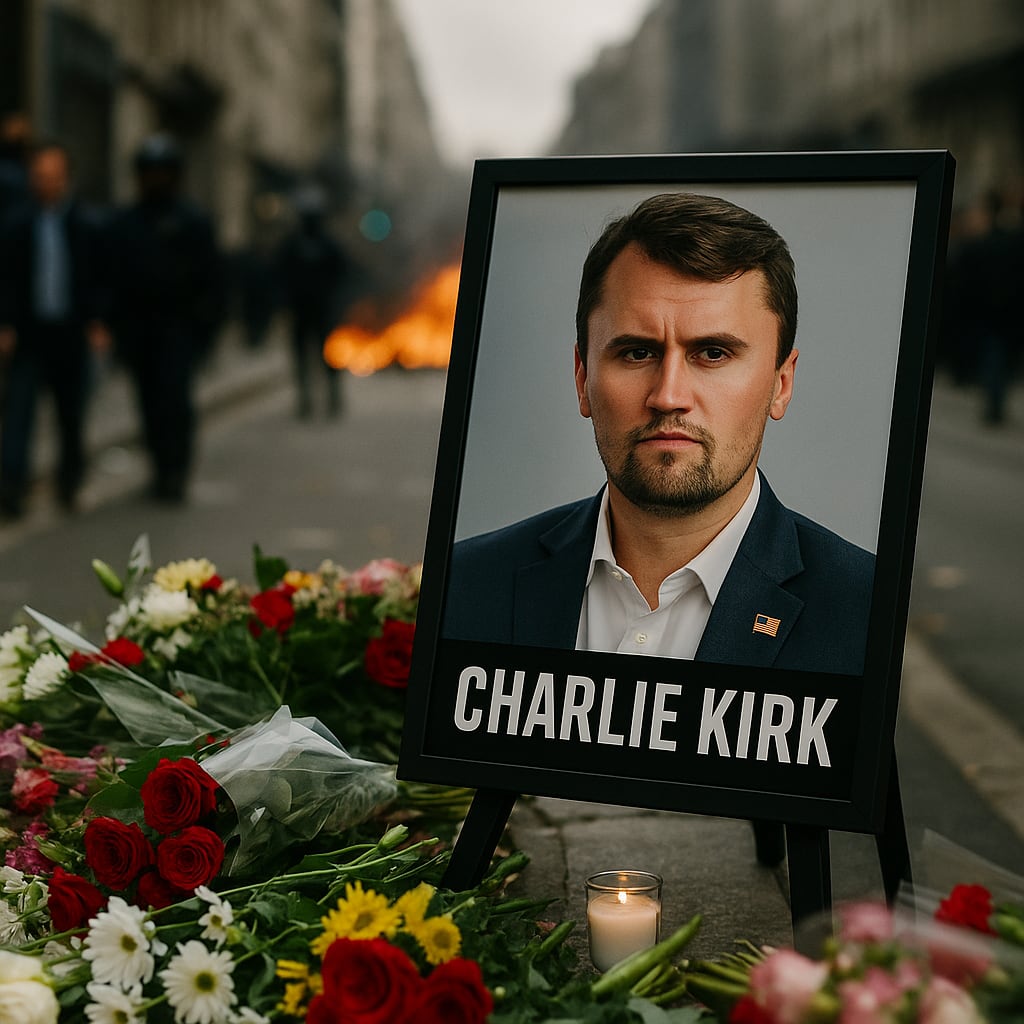
Charlie Kirk was one of the most recognizable and controversial political voices of his generation. As the founder of Turning Point USA (TPUSA), a conservative student movement, he quickly rose to national prominence for his outspoken views, viral online presence, and refusal to back down in the face of criticism. His assassination in 2025 shocked the American public and reignited debates over ideological divisions, political violence, and the limits of civil discourse.
Early Life and the Birth of a Movement
Born on October 14, 1993, in Arlington Heights, Illinois, Charlie Kirk bypassed traditional academic pathways. Instead of enrolling in a university, he dedicated himself to political activism at just 18. In 2012, he founded Turning Point USA with the mission of “promoting free markets, limited government, and individual freedom” on college campuses.
At a time when conservative students felt marginalized, TPUSA offered structure, visibility, and a sense of identity. Through campus chapters, conferences, and a barrage of social media campaigns, Kirk created a brand that appealed directly to young, politically disillusioned conservatives. His message was simple: challenge the progressive dominance of academia and fight back with facts, memes, and unapologetic rhetoric.
A Digital Strategist Ahead of His Time
Charlie Kirk’s rapid ascent was due in large part to his mastery of digital communication. He understood the power of Twitter, Instagram, and YouTube in shaping public opinion, especially among younger audiences. With sharp soundbites, graphically compelling posts, and shareable videos, he built a loyal following of millions.
Unlike traditional political commentators, Kirk operated more like a content creator than a policy wonk. He didn’t rely on long-form essays or televised debates. Instead, he focused on clips, live streams, and on-the-go commentaries, often filmed from his car — a trademark that made him feel relatable, raw, and direct.
Clear Views in a Polarized Climate
Kirk never tried to be centrist. He embraced his role as a defender of traditional conservative values: he supported the Second Amendment, criticized illegal immigration, opposed progressive gender ideologies, and condemned what he saw as leftist overreach in schools and media.
These views earned him admiration from many on the right and scorn from the left. His critics labeled him reactionary and divisive, while supporters praised his courage and consistency. Whether you agreed with him or not, he had become a symbol of ideological defiance in a culture many conservatives believed was turning against them.
Political Influence and Proximity to Power
As his popularity grew, so did his political clout. Charlie Kirk became a regular speaker at events like CPAC and built relationships with figures close to Donald Trump, including the former president’s son, Donald Trump Jr. He helped mobilize conservative youth during the 2016 and 2020 elections and became a reference point for a segment of the population that felt neglected by mainstream politics.
His influence went beyond just speaking engagements. TPUSA’s massive campus network became a pipeline for young conservative leaders, creating a sustained impact on grassroots organizing in the U.S.
The Assassination
In August 2025, news broke that Charlie Kirk had been assassinated outside a private event in Dallas, Texas. The motives remain unclear. Law enforcement has not released an official conclusion, but speculation ranges from politically motivated violence to personal revenge or ideological extremism.
The political world reacted swiftly. Conservative voices decried the act as a chilling sign of intolerance toward right-wing figures, while many on the left condemned the violence but remained silent on Kirk’s legacy. The climate was one of fear, confusion, and renewed division.
Authenticity Over Production
One of Kirk’s most defining characteristics was his low-tech, high-impact style. While many influencers relied on studios and editing teams, Kirk preferred filming from his car. His content often felt improvised, direct, and brutally honest. This gave him an edge: in an era of overproduced personalities, he stood out as someone who spoke plainly.
He wasn’t chasing cinematic perfection — he was chasing resonance. And in many ways, that strategy worked. Millions of viewers felt like they were hearing from “one of their own,” not a distant elite.
Why People Subscribed
Kirk’s audience wasn’t just interested in what he said — they were invested in how he said it. His directness, refusal to apologize, and sense of urgency gave his message weight. He didn’t pretend to be neutral; he represented a side, and he represented it fiercely.
Subscribing to his channel meant entering a space where conservative values weren’t just defended — they were celebrated. It was less about balance, and more about countering what many saw as overwhelming liberal narratives in schools, media, and government.
Legacy Beyond Life
While Kirk’s political journey was not without controversy, there’s no denying that he shaped the direction of modern American conservatism. He encouraged young conservatives to speak up, question authority, and engage in politics not as spectators, but as actors.
His death leaves a void in the conservative movement, but his influence persists — not only through TPUSA, but through a generation of voices he helped inspire.
Controversy and Criticism
It would be dishonest to ignore the controversies. Kirk often courted backlash for his views on race, gender, and science. He was accused of spreading misinformation during the COVID-19 pandemic and was frequently at odds with mainstream fact-checkers.
However, his defenders argue that the criticisms were politically motivated and that Kirk merely said what many were thinking but too afraid to say out loud. To them, he was not a provocateur, but a truth-teller in a world of polite lies.
A Divisive Yet Defining Figure
Charlie Kirk was never interested in compromise. That’s what made him effective — and dangerous, depending on who you ask. He thrived in the chaos of the modern culture war and understood better than most that in today’s world, influence is often louder than power.
Now, with his untimely death, America is left to confront difficult questions. Is political violence becoming normalized? Can figures from opposing camps still coexist in the public arena? And what does it say about a society when someone is killed for what they believe?
Final Thoughts
Love him or loathe him, Charlie Kirk’s story is a mirror of modern America — fractured, fervent, and full of contradictions. His life was short, but his impact is undeniable. In the end, he was a messenger of a movement, a voice for a tribe, and a lightning rod in a storm of division.
Whether his legacy will be one of inspiration or caution remains to be seen. But one thing is certain: Charlie Kirk changed the conversation — and that conversation isn’t over.
About the Creator
Bubble Chill Media
Bubble Chill Media for all things digital, reading, board games, gaming, travel, art, and culture. Our articles share all our ideas, reflections, and creative experiences. Stay Chill in a connected world. We wish you all a good read.
Keep reading
More stories from Bubble Chill Media and writers in Geeks and other communities.
Aldo Sterone
Aldo Sterone is a name that has circulated for several years among those who follow political and social debates in French-speaking corners of YouTube. At first glance, nothing about this creator suggests he would achieve wide success: no studio, no editing, no polished aesthetic. Most of the time, Aldo simply speaks to a camera placed in his car, with the background noise of an idle engine or passing traffic.
By Bubble Chill Media 6 months ago in Geeks
Pritzker Prize 2026: Chile’s Smiljan Radić Wins ‘Nobel’ of Architecture
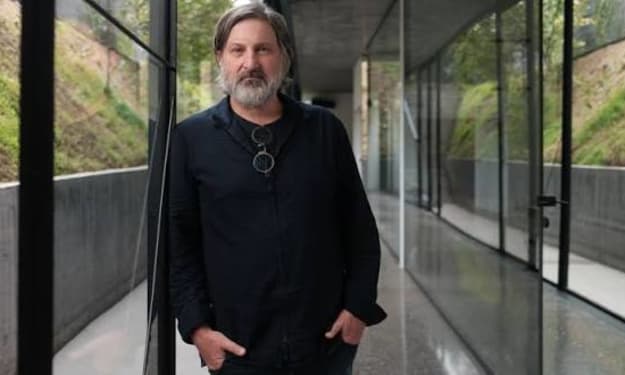
The 2026 Pritzker Architecture Prize—commonly known as the “Nobel Prize of architecture”—has been awarded to Smiljan Radić Clarke, a Santiago‑based visionary whose quietly radical approach to design has garnered global admiration. Radić’s recognition marks a notable moment in contemporary architecture, drawing attention not only to his deeply personal work but also to how architectural expression can engage with culture, materiality, and human experience in profound ways. Founded in 1979 by the Pritzker family and sponsored by the Hyatt Foundation, the Pritzker Architecture Prize annually honors a living architect whose built work demonstrates a combination of talent, vision, and commitment that has contributed significantly to humanity and the built environment. It is widely regarded as the highest accolade in the field, accompanied by a US $100,000 grant, a citation, and a bronze medallion. A Career of Quiet Depth and Material Sensitivity Born in Santiago in 1965, Radić studied at the Pontifical Catholic University of Chile and later at the IUAV University in Venice. He founded his own practice, Smiljan Radić Clarke, in 1995, dedicating his career to exploring how architecture can transcend conventional form and instead become an experiential engagement with space, materials, and context. His approach is not rooted in superficial signatures or stylistic bravado but in a deeply reflective process that values atmosphere, perception, and the poetics of human experience. Over decades, Radić’s work has gained international attention for its capacity to blur boundaries between architecture, poetry, and landscape. One of his most celebrated projects is the Serpentine Gallery Pavilion (2014) in London, a delicate exercise in material and spatial ambiguity that invited visitors to experience architecture as a sequence of sensations rather than a fixed form. His built work often appears elemental and serene, seemingly resisting easy interpretation. Instead of declaring architectural authority, Radić’s buildings—both small and monumental—engage visitors through subtle shifts in light, texture, and proportion, encouraging reflection and sensory immersion. What Sets Radić Apart According to commentary from architectural critics following the award announcement, Radić’s designs embody a kind of architectural introspection that distinguishes him from many peers. In a profession that sometimes prioritizes spectacle or technical bravado, his work embraces fragility, ambiguity, and the poetic potential of space. Observers note that this quiet radicalism challenges assumptions about architectural expression while reinforcing the medium’s capacity to shape emotional and sensory experience. Radić becomes the second Chilean architect to receive the Pritzker Prize, following Alejandro Aravena, who won in 2016. Aravena’s work was widely celebrated for its socially conscious approach to housing and community design; Radić’s recognition highlights a different lineage of architectural thought—one rooted in phenomenology, material inquiry, and an almost philosophical engagement with place and presence. The Jury’s Rationale The Prize jury cited Radić’s body of work as emphasizing “architecture as a lived, sensorial experience.” Rather than imposing grand narratives or dominating the landscape, his buildings invite occupants to enter spaces that feel suspended in time—neither completely resolved nor entirely fixed—reflecting a belief that architecture can mirror the complexity and richness of human existence. This focus on the experiential over the declarative positions Radić’s work as uniquely attuned to contemporary architectural discourse. Reception and Influence Radić’s win has been celebrated within the architectural community as a recognition of innovative thinking that expands the boundaries of what architecture can be. Unlike designers who foreground bold formal gestures, his work subtly integrates cultural memory, material memory, and contextual sensitivity, offering a counterpoint to trends that prioritize surface spectacle or overly rationalized programs. His buildings address a wide spectrum of scales—from intimate residential work to public pavilions—yet they consistently reflect a commitment to crafting environments that foster reflection and emotional response. Critics have praised this depth of inquiry, suggesting that Radić’s architecture reminds the profession of its capacity to engage with human vulnerability and environmental context in meaningful ways. Looking Ahead As Radić prepares to receive the 2026 Pritzker Prize at an upcoming international ceremony, his recognition reinforces the enduring relevance of architecture that prioritizes human experience, cultural memory, and spatial poetry. For students, practitioners, and observers of the built environment, his work offers an inspiring example of how architecture can be both contemplative and transformative—capable of shaping not just cities, but how individuals perceive, inhabit, and emotionally connect with space. Smiljan Radić Clarke’s achievement underscores a broader truth: that architecture’s highest honors are not merely bestowed for iconic forms or technological mastery, but for work that resonates with human depth and reimagines how we live within the world.
By Fiaz Ahmed about 20 hours ago in Geeks



Comments
There are no comments for this story
Be the first to respond and start the conversation.