
Ragtime by EL Doctorow
Why It's a Masterpiece (Week 54)

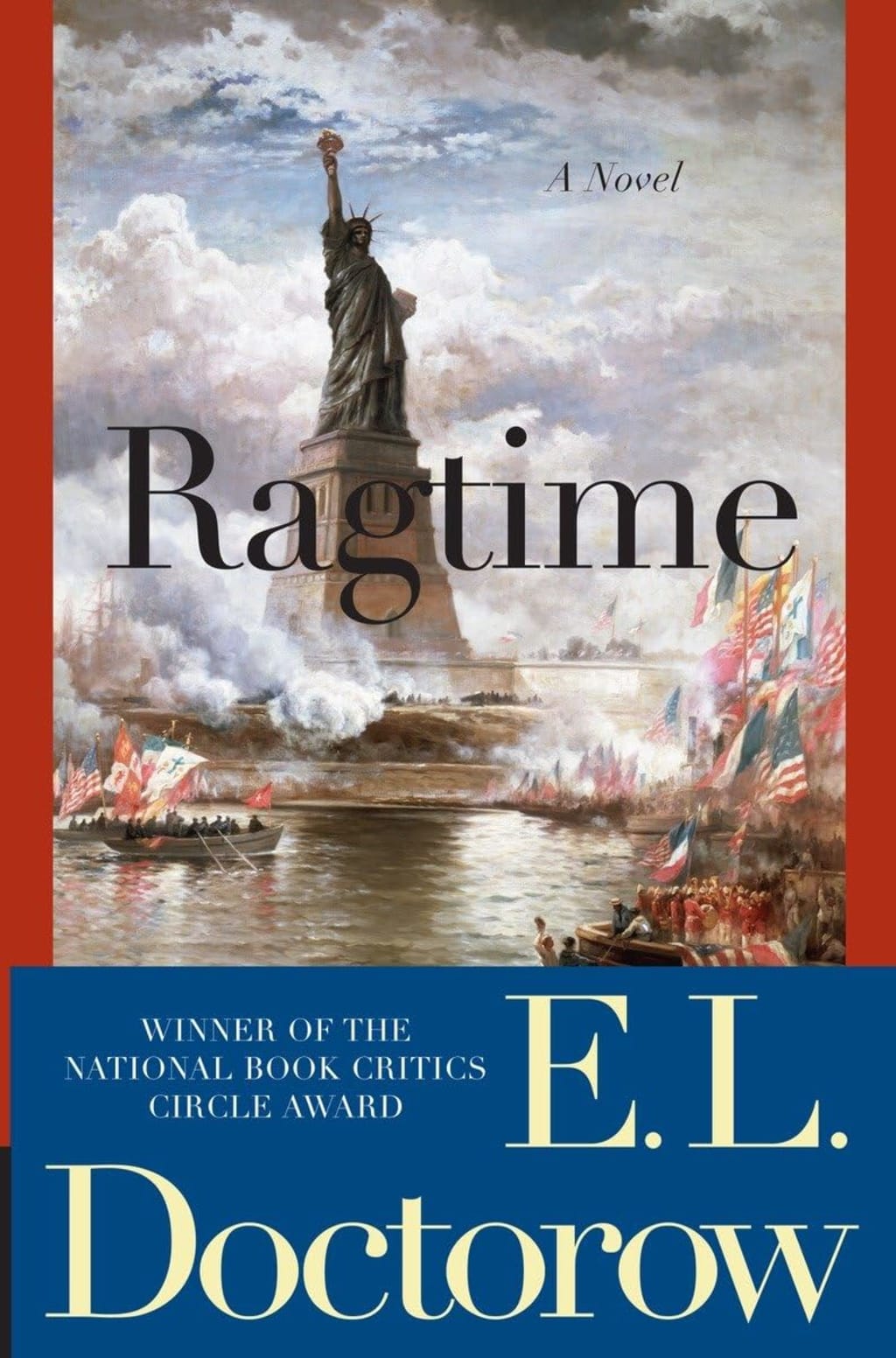
Note: this is exciting as I studied this book on one of my degrees and did a paper on it. Thanks for reading in advance.
E.L. Doctorow’s Ragtime, published in 1975, emerged at a time when historical fiction was experiencing a resurgence in the United States, and the novel itself became a seminal work in the genre. Born in 1931, Doctorow grew up in New York City, surrounded by the cultural diversity and political activism that would later influence his writing. He studied at Kenyon College and Columbia University, developing a deep interest in history, literature, and politics, all of which shaped his approach to storytelling.
Doctorow's earlier works had already established him as a writer deeply concerned with the intersection of fiction and history, but Ragtime marked a turning point in his career. The novel, set at the turn of the 20th century, skilfully blends real historical figures such as: Henry Ford, Emma Goldman, and J.P. Morgan with fictional characters, creating a narrative that captures the energy, contradictions, and social upheavals of the era. The title refers to the musical genre popularised by African American musicians like Scott Joplin, and Doctorow uses 'ragtime' as a metaphor for the rhythm and dissonance of American life at the time.
Plot
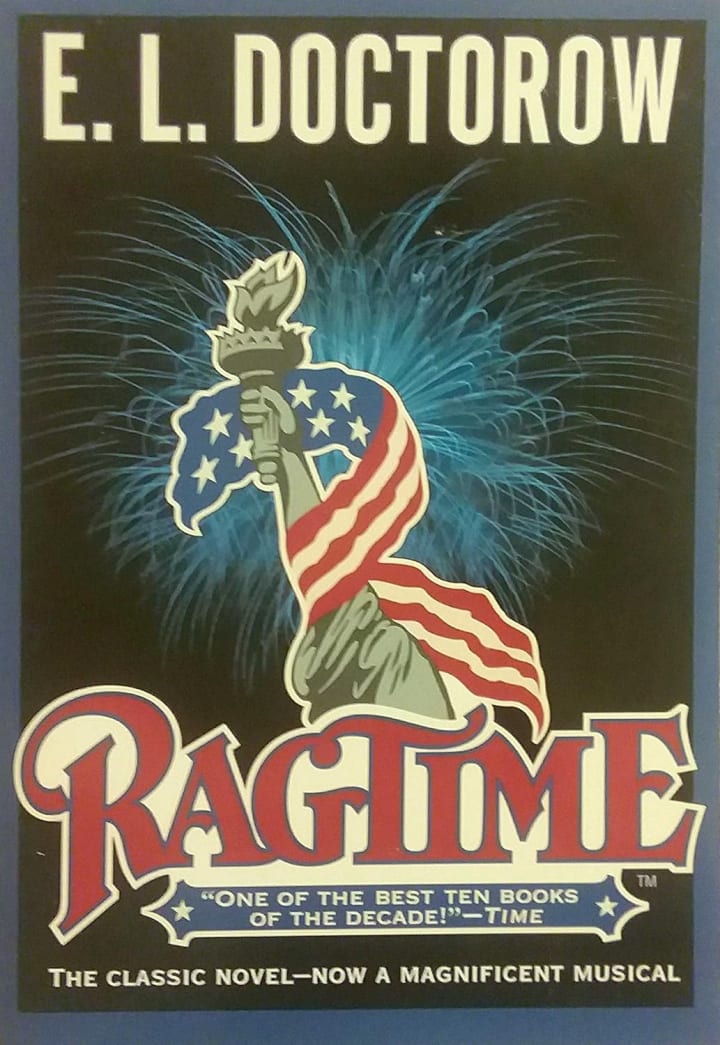
Ragtime by E.L. Doctorow weaves together multiple storylines set in early 20th-century America, centering on themes of race, class, and social change. The novel opens with an affluent white family in New Rochelle, New York, referred to simply as Father, Mother, and their son. Father is a traditionalist who leaves for a polar expedition, while Mother, more open-minded, begins to develop her own sense of independence in his absence. One day, she discovers an abandoned African American baby in her garden, along with its mother, Sarah. Mother takes them into her home, and they eventually become connected with Coalhouse Walker Jr., an African American pianist who turns out to be the baby’s father. Coalhouse’s efforts to reunite with Sarah and lead a respectable life are disrupted when he faces racial discrimination, as a group of white firemen vandalise his car and the justice system refuses to intervene.
The story takes a dark turn when Sarah dies after being struck by a police officer while trying to appeal to then-President Theodore Roosevelt. Devastated, Coalhouse embarks on a mission of vengeance, seeking justice for the wrongs done to him and his family. He assembles a group of followers and engages in a violent campaign, taking over J.P. Morgan’s library and demanding that his car be restored as a symbol of retribution. This act of rebellion is one of the central conflicts of the novel, highlighting the racial tensions and systemic injustices that plague American society. Coalhouse’s fate is tragic, as he ultimately surrenders to the authorities after the intervention of a character known as Younger Brother, who sympathizes with his cause. Despite Coalhouse’s peaceful surrender, he is shot and killed by the police, leaving a profound impact on the characters and the reader alike.
Alongside this primary storyline, Ragtime features an array of historical figures interwoven into the fictional narrative. Characters like Henry Ford, Emma Goldman, J.P. Morgan, and Harry Houdini move in and out of the story, influencing the fates of the fictional characters while also reflecting the broader social currents of the time. Tateh, a Jewish immigrant and artist, begins the novel in poverty but rises to success, eventually becoming a prominent filmmaker. His journey parallels the transformation of America itself, illustrating the potential for reinvention and the allure of the American Dream, though it remains elusive for many.
The novel concludes with a reflection on the passage of time and the relentless pace of progress, leaving readers to contemplate the personal and societal costs of change. Through its complex tapestry of characters and events, Ragtime paints a vivid portrait of a turbulent period in American history, exploring the tensions between tradition and modernity, privilege and oppression, and justice and revenge.
Into the Book
One of the central themes of Ragtime is racial injustice, which is explored primarily through the character of Coalhouse Walker Jr., an African American pianist striving for respect and equality. Doctorow uses Coalhouse’s story to illustrate the entrenched racial discrimination present in early 20th-century America. Coalhouse is a talented, respectable man who embodies dignity, but despite his best efforts to live a peaceful and successful life, he faces relentless hostility simply because of his race. The novel’s pivotal moment occurs when Coalhouse’s car, a symbol of his success and self-worth, is vandalised by white firemen, and the legal system refuses to hold them accountable.
This act of racial violence sets off a chain reaction that leads to Coalhouse's transformation from a peaceful man to a revolutionary, demonstrating how systemic racism can drive even the most honourable individuals to extreme measures. His quest for justice and the tragic outcome of his rebellion expose the profound inequities in the American legal and social systems. Coalhouse’s storyline serves as a microcosm for the broader racial tensions of the era, highlighting the failure of American ideals of justice and equality for all citizens.
“Thus with continued concentration and the expenditure of enormous amounts of energy he tried to keep himself from slipping into the vast distances of his unhappiness. It was all around him."
- Ragtime by EL Doctorow
Another key theme in the novel is the tension between tradition and modernity, as seen through the characters’ interactions with the rapid changes brought by industrialization and social progress. Father, a traditionalist who clings to old values, represents those who struggle to adapt to the modern world. He feels increasingly alienated as the world around him changes—his business in manufacturing patriotic paraphernalia becomes obsolete, and his family life shifts while he is away on an expedition. In contrast, characters like Tateh, a Jewish immigrant, embrace change and the opportunities it presents.
Tateh’s transformation from a poor artist to a successful filmmaker symbolises the promise of reinvention in America. The novel also weaves in real historical figures like Henry Ford and J.P. Morgan, whose industries and wealth epitomize the rise of modern capitalism. These figures represent the ways in which technology, mass production, and industrial power were reshaping the American landscape. Doctorow juxtaposes these contrasting responses to modernity, illustrating the social and personal struggles that accompany such profound change. The novel suggests that the push towards progress comes at a cost, leaving behind those who are unwilling or unable to adapt, like Father, while elevating others who seize the opportunities of the modern world.
“No longer expecting to be beautiful and touched with grace till the end of her days, she was coming to the realisation that whereas once, in his courtship, Father might have embodied the infinite possibilities of loving, he had aged and gone dull, made stupid, perhaps, by his travels and his work, so that more and more he only demonstrated his limits, that he had reached them, and that he would never move beyond them.”
- Ragtime by EL Doctorow
The theme of class struggle and the American Dream is also central to Ragtime, as the novel examines the gap between the idealized version of the American Dream and the harsh realities faced by many of its characters. Immigrant characters like Tateh arrive in America with the hope of achieving success and a better life, but they initially experience only poverty and exploitation. Tateh's journey from struggling artist to successful filmmaker reflects the possibility of upward mobility, yet Doctorow tempers this optimism by showing the vast social and economic inequalities that persist throughout the novel.
While some characters, like Tateh, manage to achieve a version of the American Dream, others—particularly those from marginalised groups, like Coalhouse Walker—find that the promise of equal opportunity is largely illusory. The novel also explores the lives of the wealthy elite, such as J.P. Morgan and Henry Ford, who control vast amounts of wealth and power, further emphasizing the widening gap between rich and poor. Through the interplay of fictional characters and historical figures, Doctorow critiques the myth of the American Dream, suggesting that the system is rigged in favour of those with privilege and power, while those without face nearly insurmountable barriers to success.
“It proposed that human beings, by the act of making witness, warranted times and places for their existence other than the time and place they were living through.”
- Ragtime by EL Doctorow
Why It's a Masterpiece
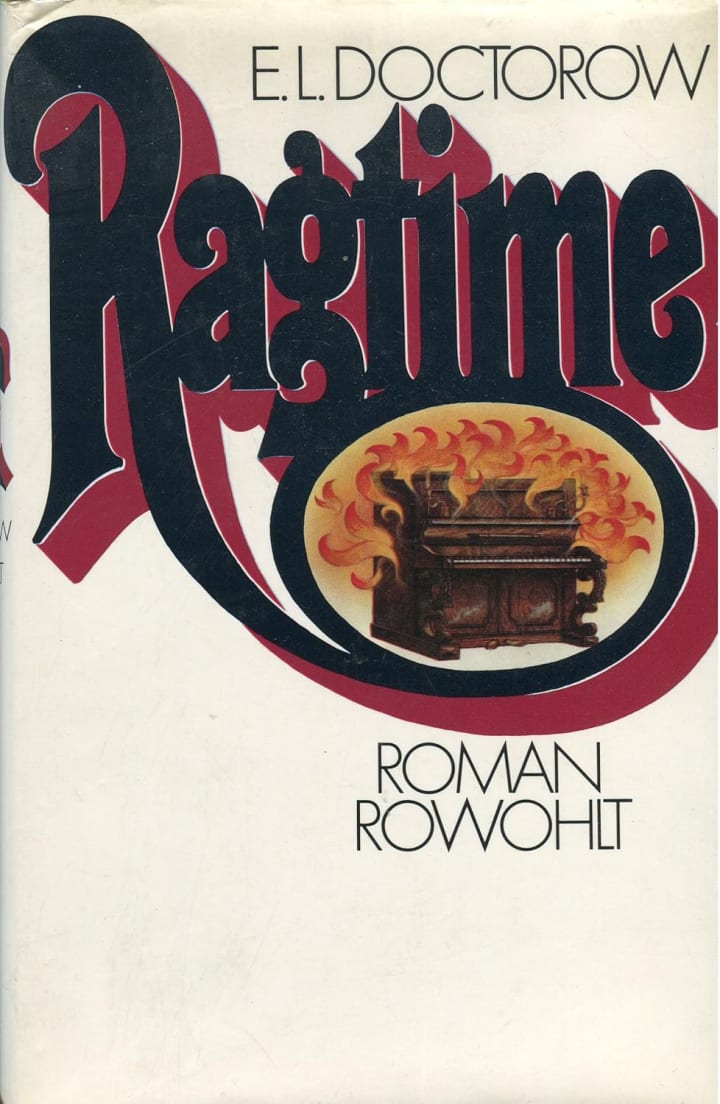
The critical acclaim and awards the novel garnered further underscore its status as a literary masterpiece. Ragtime won the first-ever National Book Critics Circle Award for Fiction in 1975 and was shortlisted for the National Book Award, cementing Doctorow’s reputation as one of America’s leading novelists. Its influence extended beyond literature, inspiring adaptations into other media, including a successful Broadway musical in 1998 and a film directed by Milos Forman in 1981. These adaptations helped solidify the novel’s place in American cultural history. Ragtime remains a powerful exploration of the complexities of the American experience, addressing issues of race, class, and power that resonate to this day. Its ability to encapsulate a pivotal era in American history while offering timeless insights into societal struggles is why Ragtime is considered a masterpiece.
Conclusion
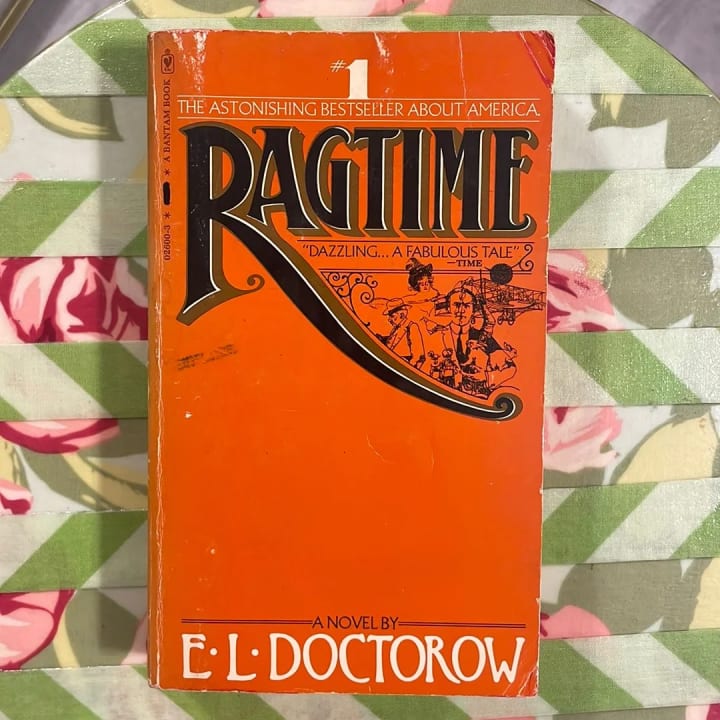
I hope you enjoyed learning about a great book from American literary history. This has been a great experience of re-reading this classic and I have to say that even though I didn't like it as much as I had hoped when I first read it, I came to appreciate it through my study of it some years' back. Thank you for coming on this reading experience journey with me and let's look forward to next week!
Next Week: The Prime of Miss Jean Brodie by Muriel Spark
About the Creator
Annie Kapur
I am:
🙋🏽♀️ Annie
📚 Avid Reader
📝 Reviewer and Commentator
🎓 Post-Grad Millennial (M.A)
***
I have:
📖 280K+ reads on Vocal
🫶🏼 Love for reading & research
🦋/X @AnnieWithBooks
***
🏡 UK
Keep reading
More stories from Annie Kapur and writers in Geeks and other communities.
Book Review: "He Died With His Eyes Open" by Derek Raymond
I don't know how I found this book but the blurb of it was absolutely compelling. This is another one of those books I have read for my New Year's Reading Resolution. I wanted to read more books by authors I hadn't heard of and I don't think I had ever heard of this guy before this point of reading the blurb to the book. I quite literally found it randomly when searching for cheap Kindle books. Again, this is going to one of those reviews where I go 'this was surprisingly really good...' and yes, it is part of a series so I just hope I don't get addicted to it. Here we go then...
By Annie Kapur10 months ago in Geeks
The Rachels - 2025
Much to my surprise, I have kept a list of the films I‘ve seen this year. I daresay it isn’t complete. There will be films that snuck in on a late night in front of the TV that I would’ve forgotten to note. Or others, that I went to watch at the cinema, but then had a red wine and promptly forgotten about. But it’s not a bad approximation of the films I’ve seen this year. In total, there are 53 films listed, so an average of one a week and one for good luck.
By Rachel Robbins20 days ago in Geeks


Comments
There are no comments for this story
Be the first to respond and start the conversation.