
Police Academy Box Office Breakdown: How a $4.8M Comedy Became a $273M Phenomenon (And Then Faded Fast)
The Fast Start and Fast Fade of an 80s Franchise

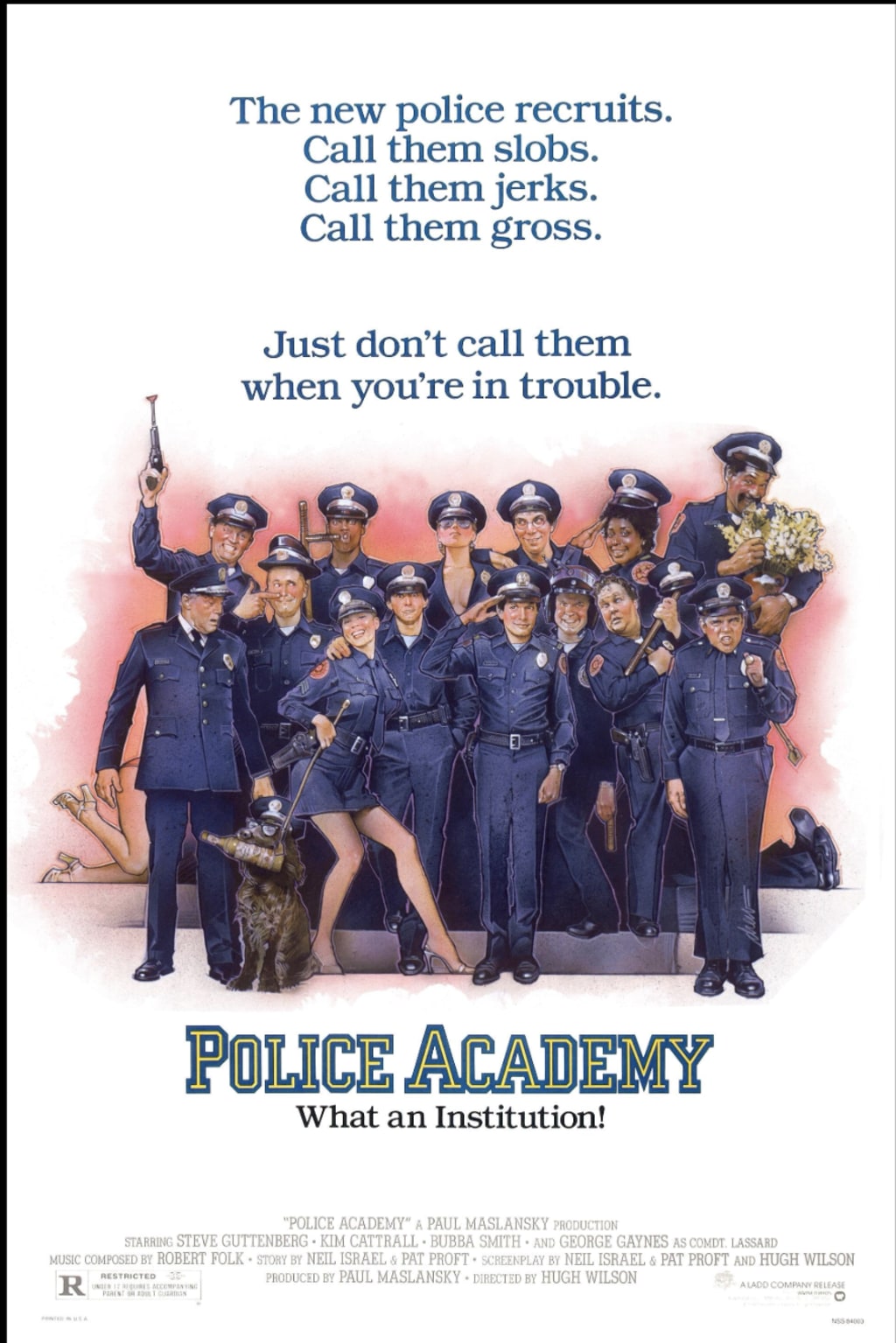
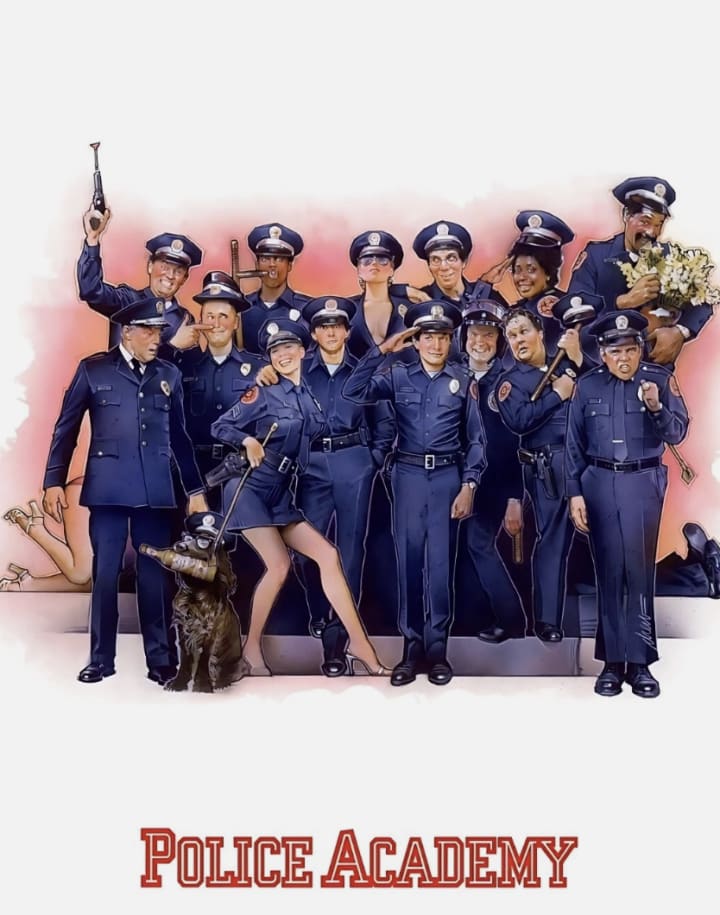
The Police Academy franchise ran from 1984 to 1994, producing seven theatrical films, all distributed by Warner Bros.
It began as a low-budget gamble and exploded into one of the most profitable comedy series of the 1980s. But by the time Mission to Moscow arrived a decade later, the franchise had quietly collapsed.
When adjusted for inflation, the financial story becomes even more dramatic: a massive sleeper hit at the top — followed by one of the steepest declines of any major 1980s comedy franchise.
Let’s break it down.
Ranked by Domestic Gross (Inflation-Adjusted)
(Adjusted figures reflect modern ticket-price equivalents based primarily on The Numbers’ methodology, current to 2024–2025 estimates. Some later entries use close approximations based on yearly multipliers and chart rankings.)
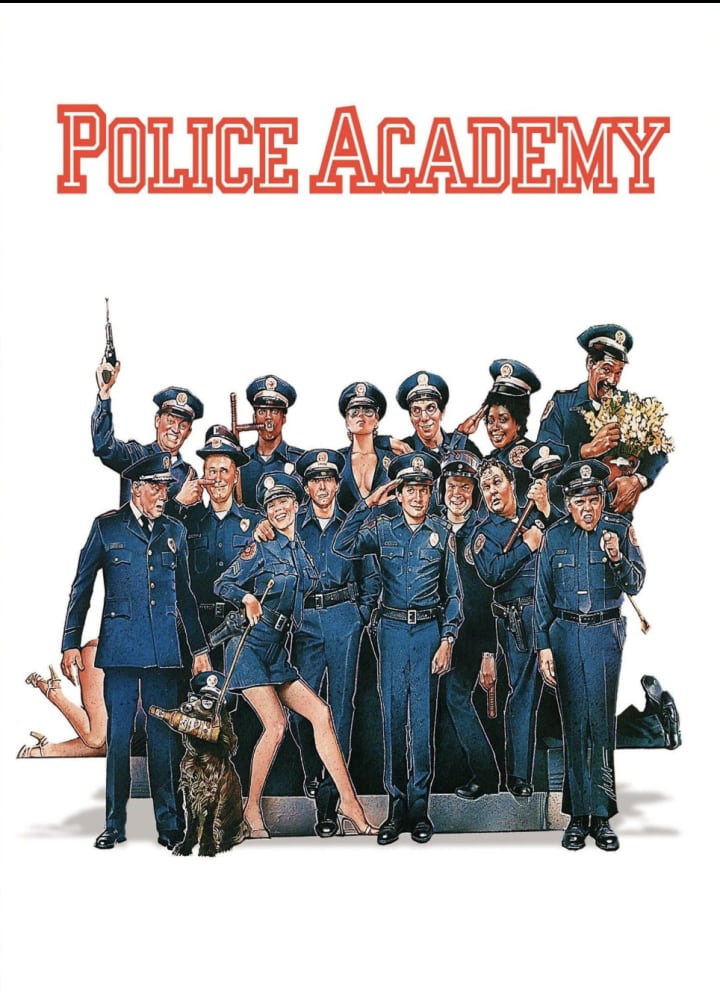
1. Police Academy (1984)
Release Date: March 23, 1984
Budget: $4.8M
Opening Weekend: $8.57M (1,063 theaters)
Domestic Gross (Unadjusted): $81.2M
Domestic Gross (Adjusted): $273.3M
Worldwide Gross: $149.8M
The original was a massive sleeper hit, finishing as the 6th highest-grossing domestic release of 1984. On a tiny budget, it became a cultural phenomenon.
Its adjusted domestic gross places it among the top ~450 domestic earners of all time — blockbuster territory by any standard.
This is the film that launched the brand, the characters, and the annual-release strategy.
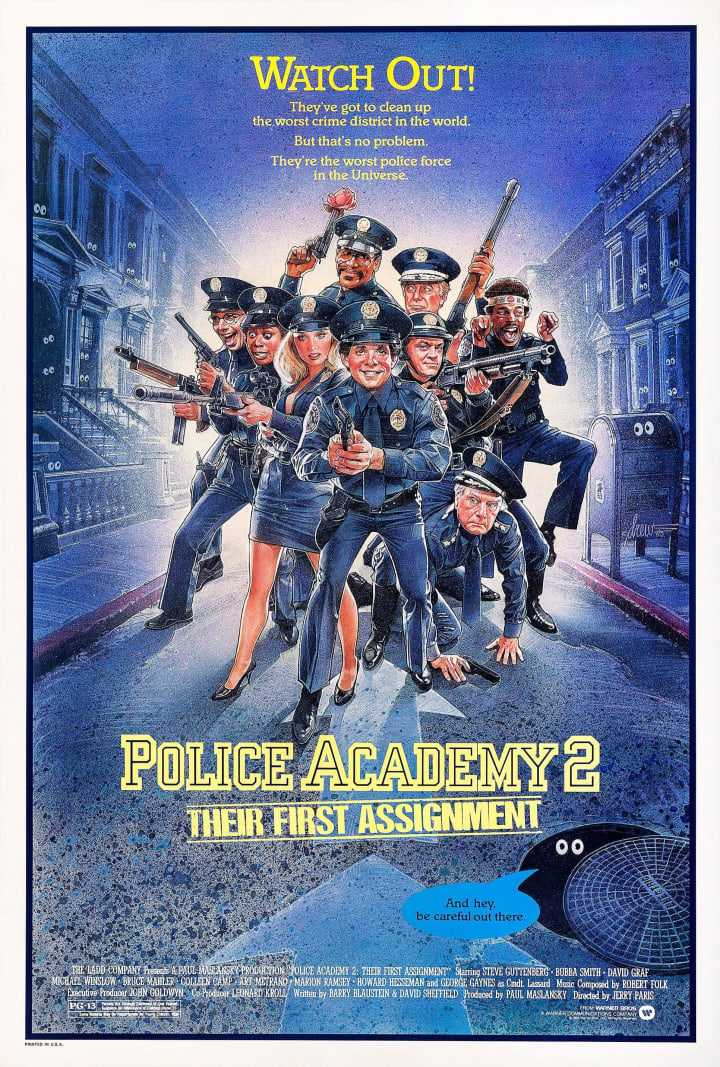
2. Police Academy 2: Their First Assignment (1985)
Release Date: March 29, 1985
Budget: $7.5M
Opening Weekend: $10.68M (1,613 theaters)
Domestic Gross (Unadjusted): $55.6M
Domestic Gross (Adjusted): ~$176M
Worldwide Gross: $115.0M
A strong follow-up with a bigger opening and solid hold. The decline had begun, but this was still a clear commercial success.
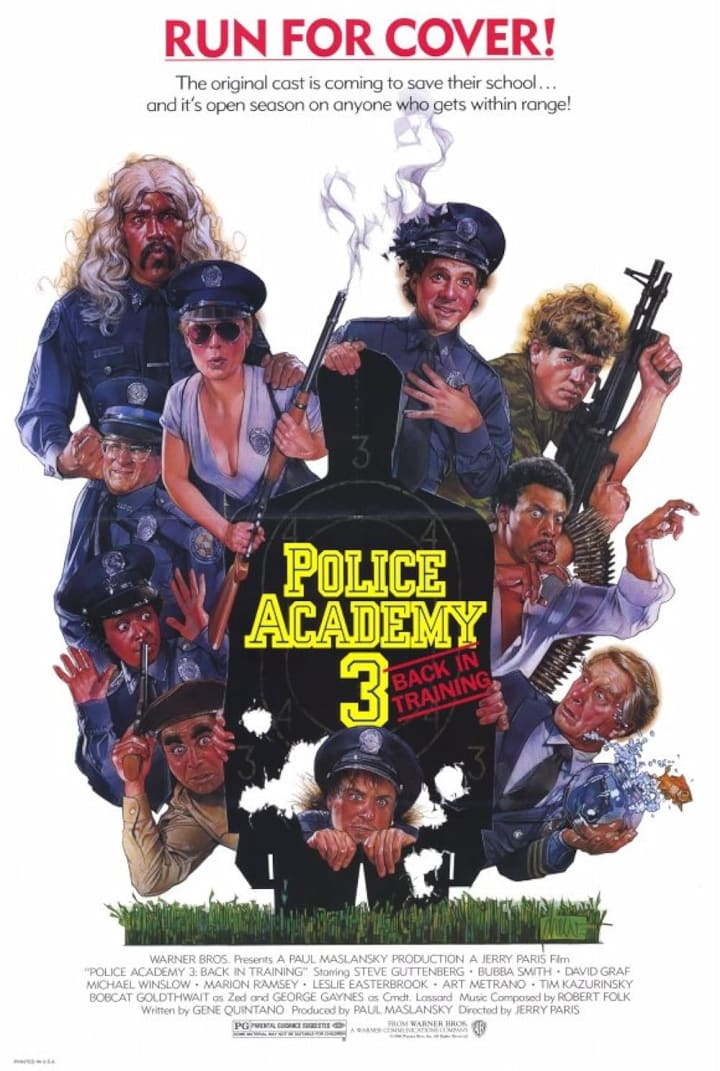
3. Police Academy 3: Back in Training (1986)
Release Date: March 21, 1986
Budget: ~$12.2M
Opening Weekend: $9.05M (1,788 theaters)
Domestic Gross (Unadjusted): $43.6M
Domestic Gross (Adjusted): $132.9M
Worldwide Gross: $107.6M
Still profitable, but the downward trend was obvious. Budgets were climbing. Returns were shrinking.
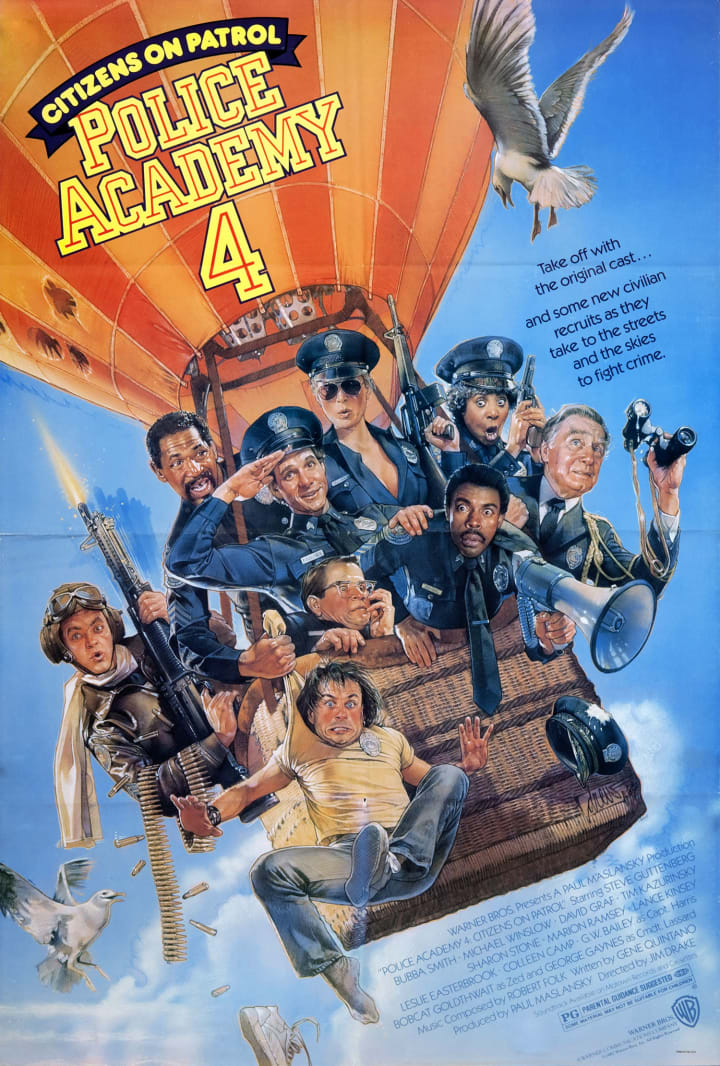
4. Police Academy 4: Citizens on Patrol (1987)
Release Date: April 3, 1987
Budget: ~$17.3M
Opening Weekend: $8.48M (1,750 theaters)
Domestic Gross (Unadjusted): $28.1M
Domestic Gross (Adjusted): ~$81M
Worldwide Gross: $76.8M
This is where the drop becomes sharp. Domestic interest cooled significantly, though international markets helped cushion the fall.
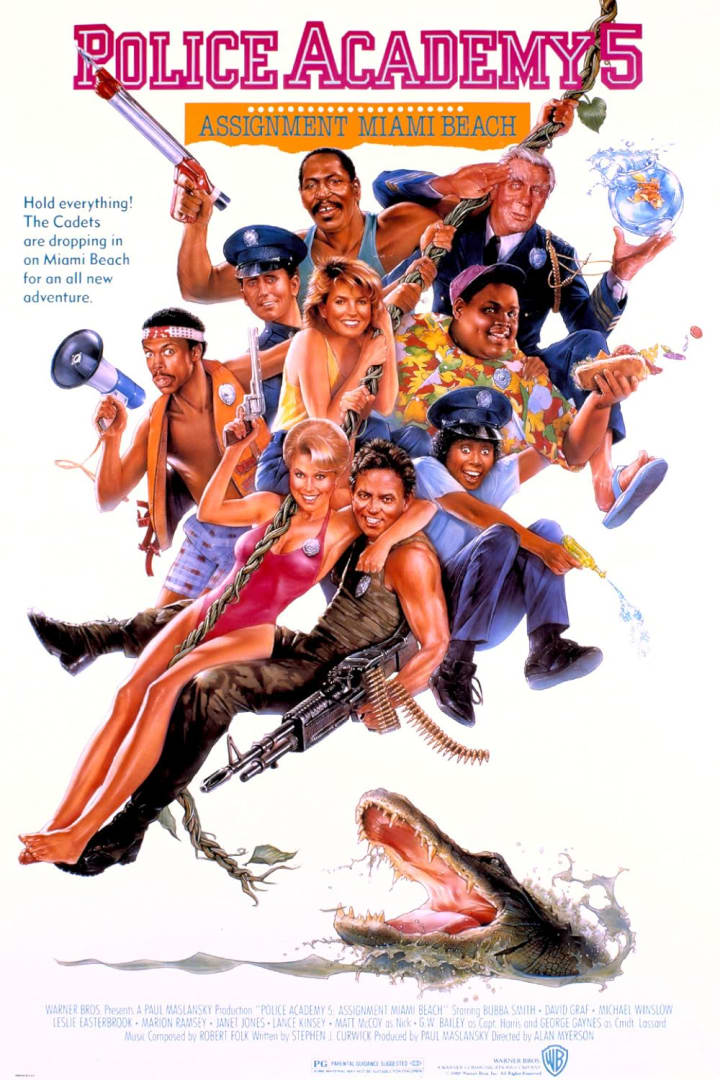
5. Police Academy 5: Assignment Miami Beach (1988)
Release Date: March 18, 1988
Budget: ~$13.9M
Opening Weekend: $6.11M (1,700 theaters)
Domestic Gross (Unadjusted): $19.5M
Domestic Gross (Adjusted): ~$53M
Worldwide Gross: $54.5M
The formula was wearing thin. Reviews worsened. The once-reliable annual event status was fading.
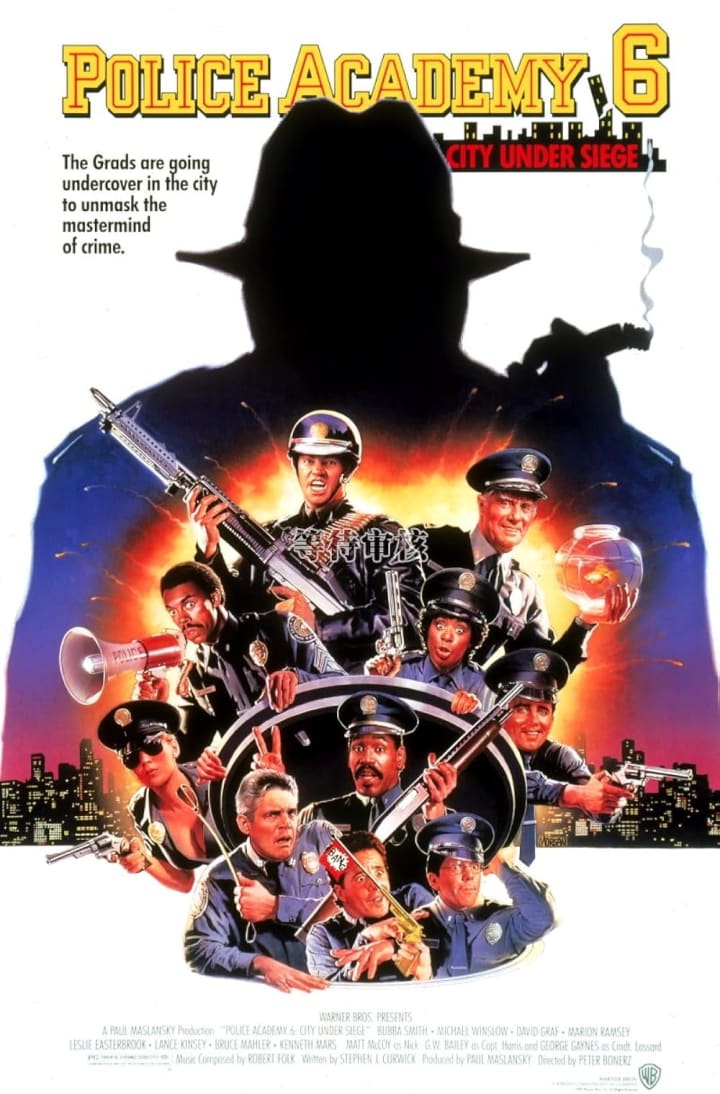
6. Police Academy 6: City Under Siege (1989)
Release Date: March 10, 1989
Budget: ~$12–14.5M
Opening Weekend: $4.03M (1,627 theaters)
Domestic Gross (Unadjusted): $11.6M
Domestic Gross (Adjusted): $32.8M
Worldwide Gross: $33.2M
At this point, the franchise was running on fumes. The domestic audience had largely moved on.
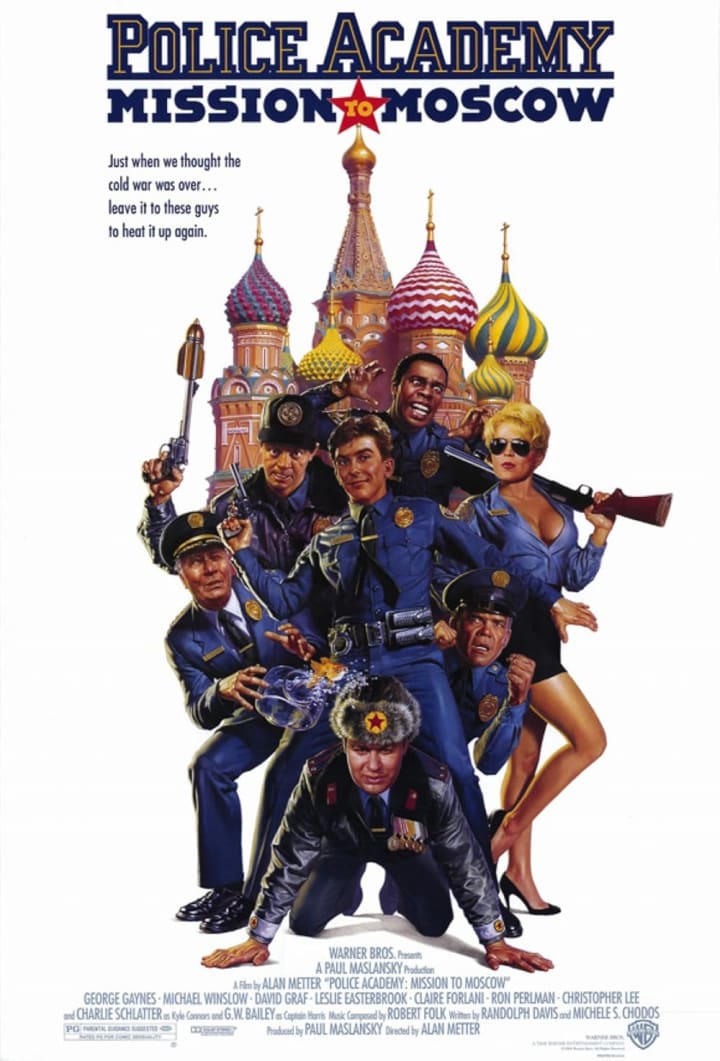
7. Police Academy: Mission to Moscow (1994)
Release Date: August 26, 1994 (Limited U.S. release)
Budget: $10M
Opening Weekend: $0.13M
Domestic Gross (Unadjusted): $0.13M
Domestic Gross (Adjusted): $0.35M
Worldwide Gross: $4.3M
The seventh film was essentially an international play. Its wide U.S. release was canceled, and it barely registered domestically.
It was an outright theatrical bomb — and the quiet end of the series.
Franchise Totals (Unadjusted)
• Domestic Gross: ~$239.6M
• Worldwide Gross: ~$541.3M
• Combined Production Budgets: ~$80M
Even with the decline, the franchise was profitable overall thanks to modest budgets, strong 1980s international appeal, and a booming home video market.
The Pattern: A Perfect 1980s Rise and Fall
The most striking takeaway is this:
The domestic box office ranking — both unadjusted and inflation-adjusted — is identical. Each sequel earned less than the one before it.
That’s rare. And revealing.
The original film’s adjusted total shows just how powerful its ticket-buying momentum was. In modern terms, it performed like a major studio comedy blockbuster.
But the strategy was clear:
Annual releases. Same ensemble energy. Slight escalation. Repeat.
For a while, it worked.
Then audiences drifted away.
By the late 1980s, competition increased, tastes shifted, and slapstick ensemble comedies without reinvention struggled to hold ground. The formula that once felt anarchic and fresh began to feel mechanical.
Final Take
The Police Academy series is one of the clearest examples of:
• A lightning-in-a-bottle original hit
• Rapid sequel production
• Predictable diminishing returns
• And an international-market safety net delaying the inevitable
Seven theatrical films. Ten years. One massive hit. Six progressively smaller follow-ups.
No additional theatrical entries followed Mission to Moscow.
And yet, the franchise remains a defining artifact of 1980s studio comedy economics — proof that sometimes the biggest story isn’t just how high a series climbs…
…but how steadily it falls.
About the Creator
Movies of the 80s
We love the 1980s. Everything on this page is all about movies of the 1980s. Starting in 1980 and working our way the decade, we are preserving the stories and movies of the greatest decade, the 80s. https://www.youtube.com/@Moviesofthe80s
Keep reading
More stories from Movies of the 80s and writers in Geeks and other communities.
Gene Roddenberry Vs 'The Ice Pirates': The Feud that Never Happened
IMDb is both indispensable and deeply unreliable. It is the first place most film lovers go when curiosity strikes. Who wrote that scene? Where was that filmed? Why does that actor look familiar?
By Movies of the 80s3 days ago in Geeks
Get Two to Four More Surgeries’: How Atiqa Odho Became the Punchline in Fahad Mustafa’s Bruised Ego
A televised exchange between two of Pakistan’s most recognisable entertainment figures — Fahad Mustafa and Atiqa Odho — has ignited a widespread debate about ageism, respect in the industry, and the responsibilities of public personalities when speaking live on air. What began as a light-hearted suggestion turned into a viral controversy that resonated well beyond the screens of viewers. The On-Air Exchange The episode began innocuously on Hasna Mana Hai, a popular TV show hosted by Tabish Hashmi, when veteran actress Atiqa Odho was shown a set of celebrity photos and asked to give advice. When Fahad Mustafa’s image flashed on the screen, Odho suggested he should consider working “with girls of his own age” instead of much younger co-stars — a comment that pointed to a perennial discussion in Pakistani dramas about age differences between actors and their on-screen partners. Odho, 58, prefaced her advice with praise for Fahad’s hard work and good looks, but her remarks were intended as professional guidance rather than personal criticism. Yet what followed quickly took a different direction. A Crass Response on Prime-Time TV Later that evening on Jeeto Pakistan, where Fahad is both host and producer, he addressed Odho’s comments alongside fellow actor Humayun Saeed. With humor that many viewers interpreted as insensitive, Fahad replied: “Atiqa Apa, you are the only heroine left for us now. Inshallah, we will come with you. You may want to get two or four more surgeries and then we’ll be your heroes.” The implication — a joking suggestion about cosmetic surgery — was meant to elicit laughter but immediately drew criticism for its ageist and appearance-focused tone. While some saw it as classic banter, a significant number of viewers and industry peers were unsettled by the remark, describing it as unnecessary and disrespectful on a high-profile Ramadan programme watched by families. Public and Peer Reactions The response on social media was swift. Many critics argued that Fahad’s comment reinforced harmful stereotypes about ageing and women in entertainment, especially when made in prime time during a culturally significant month. One renowned actress, Urwa Hocane, publicly called out Fahad for what she described as “age-shaming” and called for greater respect toward senior artists. Her statement amplified the discussion and brought further attention to the issue. Online communities also heatedly debated the situation, with many voicing disapproval of the joke and framing it as indicative of a broader “fragile ego” problem in celebrity culture. Others noted that age gaps in casting have long been criticized, and Odho’s original comment was no more than a reminder of industry double standards. Apologies and Attempts to Quell the Backlash Facing backlash, both celebrities issued public apologies in the days that followed. Odho took to social media to soften the situation, writing that her earlier remark may have hurt Fahad’s feelings and apologising “to anyone she unintentionally offended.” She urged fans and the public not to over-analyse or prolong the controversy, praising Fahad as a “talented and hardworking professional.” Fahad also apologised on Jeeto Pakistan, expressing respect for Odho and calling her “our elder” and “one of Pakistan’s most beautiful women” while offering blessings and calling for harmony between artistes. However, many critics said his apology focused more on flattery than addressing the deeper issues raised by his remarks. Underlying Industry Conversations Beyond the immediate clash, the incident has reignited an ongoing conversation about how age and gender are treated in South Asian entertainment. Age differences between leading men and their female co-stars have been a recurring topic, particularly when younger actresses are paired with much older leading men — and when senior actresses are sidelined or typecast into supporting roles. Some observers noted that Odho’s suggestion was reflective of a wider discomfort with these casting norms. The row also underscores how quickly on-air banter can escalate in the digital age, where clips become viral and audiences — both local and international — engage in real-time commentary and critique. What might once have been dismissed as simple television banter is now dissected across social platforms, fan communities, and mainstream commentary. A Moment of Reflection for Viewers and Stars As the dust settles, many in the entertainment community say the episode should prompt broader reflection on how public figures use humour and how the industry treats senior artists. For some fans, Odho’s grace in apologising and urging an end to the controversy elevated her reputation, while others see the event as an overdue reckoning with the way performers engage with each other and their audiences. Suno News Whether this incident becomes a footnote in celebrity gossip or a catalyst for deeper cultural discussions about ageism and respect in media remains to be seen. What is clear, however, is that even seemingly light-hearted moments on popular TV can spark significant cultural debates in an age of instant reaction and amplified voices.
By Fiaz Ahmed 3 days ago in Geeks


Comments
There are no comments for this story
Be the first to respond and start the conversation.