
One More Shot: A Relentless Action Thriller
Scott Adkins Returns in a High-Stakes, One-Take Action Thriller That Delivers Tension, Realism, and Relentless Momentum

In an era where action movies often rely on rapid editing, CGI-heavy set pieces, and spectacle over substance, One More Shot arrives with a refreshing sense of discipline. Directed by James Nunn and starring Scott Adkins, the film is a direct sequel to One Shot (2021), and it doubles down on what made its predecessor stand out: a relentless real-time structure, grounded combat, and a focus on tension rather than excess. Get the best Christmas VPN Deal now.
While One Shot surprised audiences with its ambitious “single-take” illusion and stripped-down storytelling, One More Shot refines the formula. It doesn’t try to reinvent itself; instead, it sharpens its execution, delivering a lean, intense action experience that knows exactly what it wants to be.
Picking Up Where the First Film Left Off
One More Shot continues the story of Jake Harris, a Navy SEAL portrayed with stoic intensity by Scott Adkins. After the events of the first film, Harris finds himself once again pulled into a high-stakes mission involving terrorism, intelligence failures, and moral ambiguity. This time, the setting shifts from a remote black-site prison to a more urban, politically charged environment, raising the stakes and broadening the scope.
The narrative is deliberately simple. Rather than burden the audience with excessive backstory or exposition, the film drops viewers directly into the situation and lets events unfold in near real time. This approach creates a sense of urgency that never lets up. The story is less about twists and more about survival, responsibility, and the cost of constant violence.
The Power of the “One-Take” Illusion
What truly defines One More Shot is its commitment to the long-take illusion. Like its predecessor, the film is designed to appear as if it unfolds in a single continuous shot. While careful viewers will notice hidden cuts, the craftsmanship behind the camera work is impressive.
This technique isn’t just a gimmick. It fundamentally changes how action is experienced. Without traditional editing to reset tension, every moment feels connected. When a character is injured or exhausted, it carries forward instead of being erased by a cut. This gives the film a raw, immersive quality that makes even quiet moments feel suspenseful.
James Nunn’s direction shows clear growth here. The camera movements are smoother, the blocking more confident, and the action choreography better integrated into the environment. The result is a film that feels more fluid and controlled, even as chaos unfolds onscreen.
Scott Adkins at His Best
Scott Adkins has long been a favorite among action fans, particularly for his work in martial-arts-driven films that prioritize physical performance. In One More Shot, he delivers one of his most grounded performances to date.
As Jake Harris, Adkins isn’t portrayed as an invincible action hero. He’s competent, trained, and determined—but also visibly tired, injured, and human. His physical acting sells the exhaustion that comes from prolonged combat, and his restrained emotional performance fits the film’s serious tone.
Adkins’ fight choreography is sharp and practical, emphasizing efficiency over flash. The combat feels functional, as it should for a trained operative in a real-world scenario. This realism enhances the film’s credibility and separates it from more stylized action fare.
Supporting Characters and Performances
While One More Shot is very much Scott Adkins’ film, the supporting cast plays an important role in shaping the narrative. Characters from military and intelligence backgrounds bring conflicting motivations into the story, adding layers of tension beyond the physical danger.
The performances are understated but effective. Rather than indulging in dramatic monologues, the actors convey urgency and mistrust through clipped dialogue and body language. This restraint aligns with the film’s real-time structure and keeps the focus on the mission at hand.
Action That Feels Earned
One of the film’s greatest strengths is how it handles action. There’s no unnecessary spectacle or exaggerated violence. Every confrontation serves a purpose, either advancing the plot or escalating the danger.
Because of the long-take approach, action scenes feel messier and more exhausting than usual. Characters make mistakes, lose weapons, and adapt on the fly. This unpredictability makes the film more engaging, as viewers can’t rely on familiar action-movie rhythms.
Importantly, One More Shot avoids glamorizing violence. The consequences of every decision are immediate and often severe, reinforcing the film’s grounded tone.
Themes Beneath the Gunfire
Though primarily an action thriller, One More Shot quietly explores deeper themes. Questions of accountability, the ethics of covert operations, and the human cost of endless conflict run beneath the surface.
Jake Harris is not portrayed as a patriotic symbol or a moral authority. Instead, he’s a man repeatedly placed in impossible situations, forced to act while knowing that no outcome will be clean or fully justified. This moral ambiguity gives the film emotional weight and prevents it from feeling shallow.
Technical Precision on a Modest Scale
For a film that doesn’t rely on a massive budget, One More Shot is technically impressive. The sound design enhances immersion, particularly during close-quarters combat and moments of silence between gunfire. The pacing is tight, with no wasted scenes or unnecessary detours.
The production design makes smart use of limited locations, turning corridors, stairwells, and confined spaces into sources of tension rather than limitation. Every environment feels purposeful, reinforcing the sense that there’s no escape from the unfolding crisis.
Final Thoughts
One More Shot won’t be for everyone. Its minimalist storytelling, real-time structure, and intense focus on physical action may feel too restrained for viewers seeking large-scale spectacle. However, for fans of grounded action cinema, the film is a standout.
By refining the one-take illusion, delivering disciplined performances, and maintaining relentless momentum, One More Shot proves that action films don’t need excess to be effective. Sometimes, all it takes is a clear vision, strong execution, and one more chance to get it right.
For Scott Adkins and director James Nunn, One More Shot isn’t just a sequel—it’s a confident statement about what modern action cinema can achieve when it values precision over noise.
About the Creator
Keep reading
More stories from James S Pope and writers in Geeks and other communities.
The Strangers: Chapter 3 — The Final Chapter in a Modern Horror Saga
For horror fans familiar with the chilling saga of The Strangers, the final chapter is fast approaching. The Strangers: Chapter 3 marks the fifth film in the longstanding franchise and closes out a modern trilogy that reimagines the terrifying home-invasion narrative for a new generation. Directed by Renny Harlin and featuring a return by Madelaine Petsch as Maya, this concluding installment promises to bring the trilogy to a full-circle reckoning—and to push the horror deeper than ever before. Get the best Christmas VPN Deal now.
By James S Pope21 days ago in Geeks
The Rachels - 2025
Much to my surprise, I have kept a list of the films I‘ve seen this year. I daresay it isn’t complete. There will be films that snuck in on a late night in front of the TV that I would’ve forgotten to note. Or others, that I went to watch at the cinema, but then had a red wine and promptly forgotten about. But it’s not a bad approximation of the films I’ve seen this year. In total, there are 53 films listed, so an average of one a week and one for good luck.
By Rachel Robbins17 days ago in Geeks
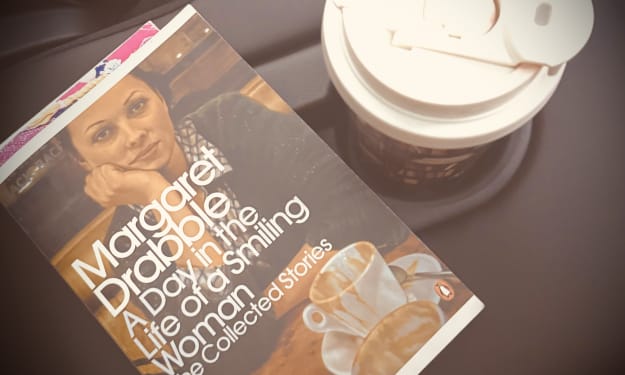
Book Review: "A Day in the Life of a Smiling Woman" by Margaret Drabble
Full Title = A Day in the Life of a Smiling Woman: The Collected Stories by Margaret Drabble "Those who do not love, die, and they are forgotten, and it is of no account. But those who love as I have loved cannot perish. The body may perish, but my love could not cease to exist…"
By Annie Kapur4 days ago in Geeks



Comments
There are no comments for this story
Be the first to respond and start the conversation.