
The Strangers: Chapter 3 — The Final Chapter in a Modern Horror Saga
The Chilling Conclusion to a Modern Horror Trilogy That Explores Trauma, Survival, and Unrelenting Terror

For horror fans familiar with the chilling saga of The Strangers, the final chapter is fast approaching. The Strangers: Chapter 3 marks the fifth film in the longstanding franchise and closes out a modern trilogy that reimagines the terrifying home-invasion narrative for a new generation. Directed by Renny Harlin and featuring a return by Madelaine Petsch as Maya, this concluding installment promises to bring the trilogy to a full-circle reckoning—and to push the horror deeper than ever before. Get the best Christmas VPN Deal now.
A Trilogy Built on Fear
The Strangers franchise is rooted in primal terror: masked assailants who invade homes and stalk victims seemingly at random. The original 2008 film made an impact with its minimalist premise and real-world dread. The recent trilogy—beginning with Chapter 1 in 2024 and followed by Chapter 2 in 2025—expands that vision. Rather than isolated stories, these films follow protagonist Maya’s prolonged nightmare as she confronts the killers who shattered her life.
This approach is unique: instead of standalone sequels loosely connected by a theme or villain, this trilogy was filmed as one continuous arc. Director Renny Harlin and his team shot all three films back-to-back, capturing nearly four and a half hours of interlinked horror. This strategy allows for remarkable continuity and a sense of cumulative tension that builds across all three chapters.
What Chapter 3 Brings
The Strangers: Chapter 3 is slated for release in the United States in early 2026. It brings back key cast members, including Madelaine Petsch as Maya, Gabriel Basso, Ema Horvath, and Richard Brake. The narrative focus remains on Maya’s struggle not only to survive but to confront the masked killers in a final, brutal clash.
This film isn’t just another sequel—it is a thematic conclusion that brings Maya face-to-face with the horror that has defined her journey. In contrast to earlier entries, which often put audiences directly into terrifying situations, Chapter 3 aims to deepen the mythology of the killers themselves and explore how trauma transforms a survivor over time.
The Evolution of Horror in the Trilogy
Based on early teasers and interviews with the filmmakers, Chapter 3 is expected to lean into psychological terror more than sheer shock. From the start, the masked intruders in The Strangers franchise were haunting because of their anonymity—their blank masks, inscrutable motives, and chilling calmness. In this final chapter, their menace is presented more as a haunting presence than a predictable threat, with fleeting glimpses, sudden intrusions, and an atmosphere of paranoia that refuses to relent.
This thematic shift signals a move toward horror that lingers long after the theater lights come up. Rather than relying purely on jump scares, Chapter 3 appears to explore the psychological toll of prolonged terror on Maya—a survivor hardened by her ordeal and driven by something more complex than simple fear. This emphasis on dread and unease could make it one of the more haunting entries in modern horror cinema.
A Closer Look at Maya: Horror’s Relentless “Final Girl”
Madelaine Petsch’s return as Maya is central to Chapter 3’s emotional core. Throughout the trilogy, Maya evolves from a terrified victim into a woman shaped by relentless violence and survival instinct. While earlier films presented her as reactive, Chapter 3 positions her as someone who must actively confront the source of her trauma, even when the cost is terrible.
This focus on character evolution sets the movie apart from many horror sequels that lean on repetition. Instead of replaying the same formula, The Strangers: Chapter 3 builds on what came before, challenging both Maya and audiences to consider how far someone can go when pushed beyond fear into proto-revenge territory.
Production Background and Strategy
Filming all three chapters back-to-back was a bold strategy, one often used to control costs and maintain narrative continuity. Principal photography wrapped in late 2022, with additional work completed in early 2025 to refine scenes based on audience feedback from earlier films.
While critics and audiences haven’t universally embraced this trilogy—some responses to Chapter 1 and Chapter 2 cited mixed reviews—the filmmakers remained committed to seeing the story through to its conclusion. The investment in reshoots and enhancement work shows a desire to refine the material and give the final chapter the weight it deserves.
Legacy and Expectations
The original The Strangers remains a touchstone in modern horror for its stark, stripped-down terror. The trilogy’s attempt to expand that world into a deeper, character-driven narrative is ambitious, even if the execution hasn’t hit the mark for all viewers.
Chapter 3 faces the challenge of satisfying both franchise loyalists and horror fans looking for a satisfying emotional and narrative payoff. If the final installment leans into psychological complexity and atmospheric dread, it may redefine how horror trilogies can evolve beyond simple scares to explore the emotional and mental consequences of prolonged terror.
Final Thoughts
As The Strangers: Chapter 3 prepares to hit theaters in early 2026, it carries with it more than just a series conclusion. It represents a bold attempt to tell an extended horror story that grows in scope and intensity, tracing one woman’s journey from victim to survivor to something more nuanced and terrifying.
Whether it becomes a favorite among horror aficionados or simply a curiosity in the broader landscape, Chapter 3 stands as an ambitious capstone to a trilogy that dared to push a familiar franchise into deeper, darker territory. With its focus on psychological unease, thematic closure, and a final confrontation that promises to be unforgettable, it’s a chapter worth watching—for fans and critics alike.
About the Creator
Keep reading
More stories from James S Pope and writers in Geeks and other communities.
The Politics of Playing Dress-Up
Well, to start off I'd like to say a happy world book day to all who celebrate. I know I haven't really posted anything on my socials about it but I'm not a jubilant kind of person. I lay low most of the time. Let's start off with a popular anecdote from the vaults...
By Annie Kapur6 days ago in Geeks
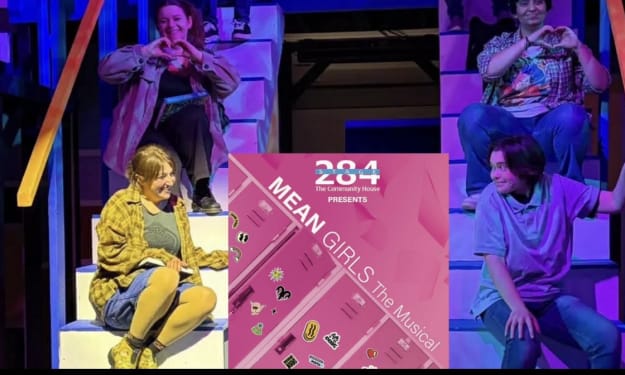
Stage 284's "Mean Girls" is a Totally Fetch Time!
On Wednesdays, we wear pink. Stage 284 presents “Mean Girls: The Musical,” based on the classic 2004 film. 16-year-old Cady Heron attends public school for the first time. While trying to fit in, she befriends ‘The Plastics,’ an A-list clique. Cady is a hit, until she falls for Aaron Samuels, the ex-boyfriend of Alpha plastic, Regina George.
By Marielle Sabbaga day ago in Geeks
TUS NUA - ch 53
TUS NUA – ch 53 New Beginnings – Mia and Midnight (*)(*)(*) Finola knew Ali’s brother-in-law needed to put his mind at rest. She fed her arm through his and led him outside. “We’ll sit here. If you like, I can put a block around us so our conversation will be private.”
By Margaret Brennan3 days ago in Fiction



Comments
There are no comments for this story
Be the first to respond and start the conversation.