


On this day in May, 1929 at the Hollywood Roosevelt Hotel, LA, California - the very first Oscars Ceremony was underway. A private dinner held by the then president of AMPAS, Douglas Fairbanks and ticket costs were $5 (which is around $74-75 in today's money considering inflation). Around 270 people took their seats to watch and the ceremony itself lasted just 15 minutes. The ceremony was neither broadcast on radio of TV with the idea of the radio broadcast coming in by the following year's awards show. There were 12 awards and the winners were announced some months before the event of the dinner itself. There were only 36 banquet tables required on the night.
With AMPAS being established in 1927 by Louis B Mayer, Douglas Fairbanks was back then, the president chosen to head the organisation. Mayer's want was to unite all the major branches of filmmaking: acting, directorship, production, technicalities and writing. It was the job of Cedric Gibbons - the then art director for Louis B Mayer's MGM Studios - to design a statue fit for purpose as a prize.
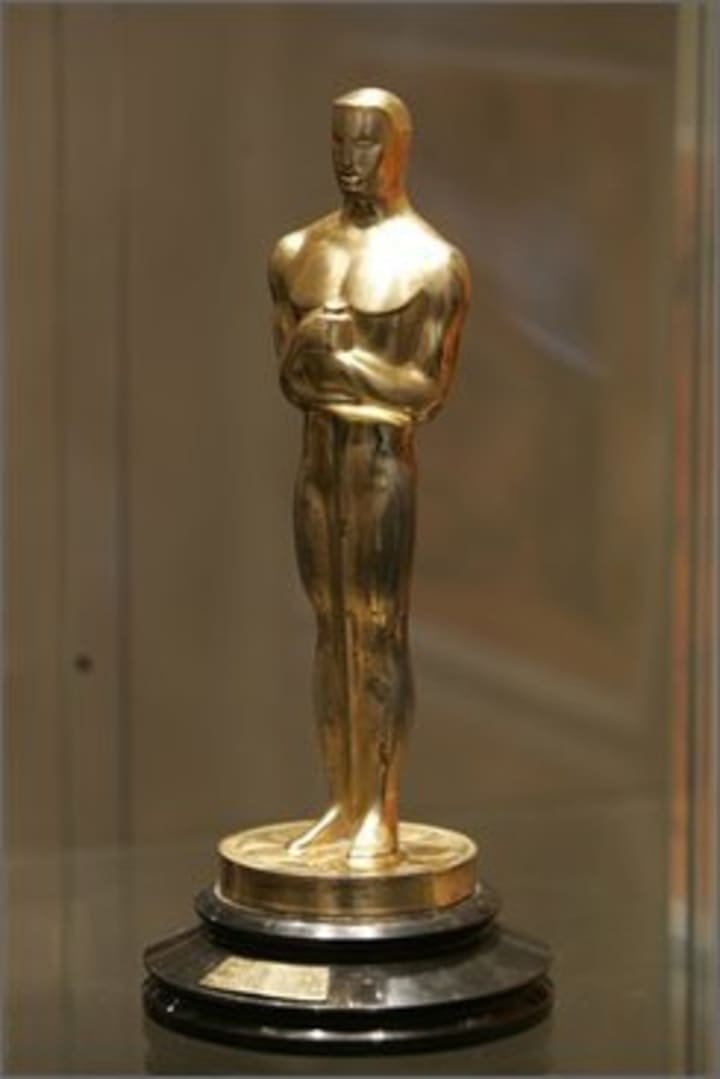
Let's take a look at the winners of that particular year and what they meant for film and this new, budding evolution of Hollywood:
Outstanding Picture - "Wings" (1928)
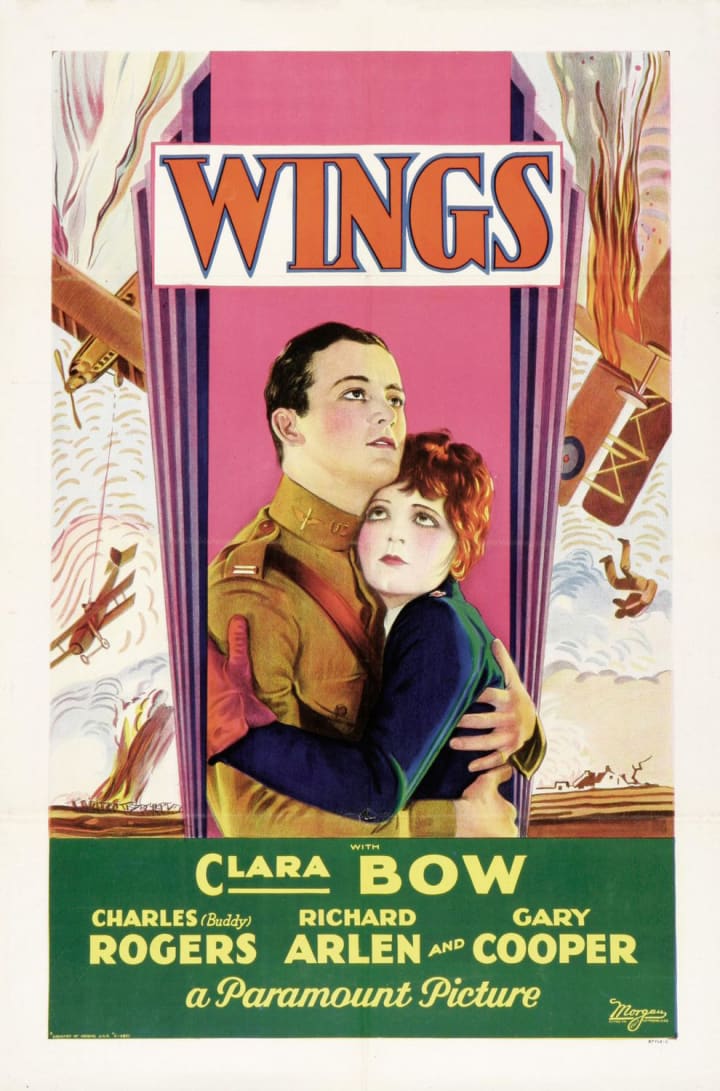
Wings (1928) was a war film which was also a love story and an epic drama. Starring the then "it" girl Clara Bow, it was award the "Outstanding Picture" (now called "Best Picture") award for its category. Let's face it, the amount that "Wings" (1928) did for the industry is a lot because here we have Hollywood trying to make a celebrity out of the subjects of a movie, something that hadn't really been done much in the past. Clara Bow was the original celebrity woman with possibilities like Charlie Chaplin and Buster Keaton as the male equivalents in the celebrity field. We also have the nature of the film, it isn't just one genre - it's many. It transcends the genres and offers itself up to be all of them at once. Another thing that Hollywood wasn't used to in that time.
Best Actor: Emil Jennings in The Last Command (1928)
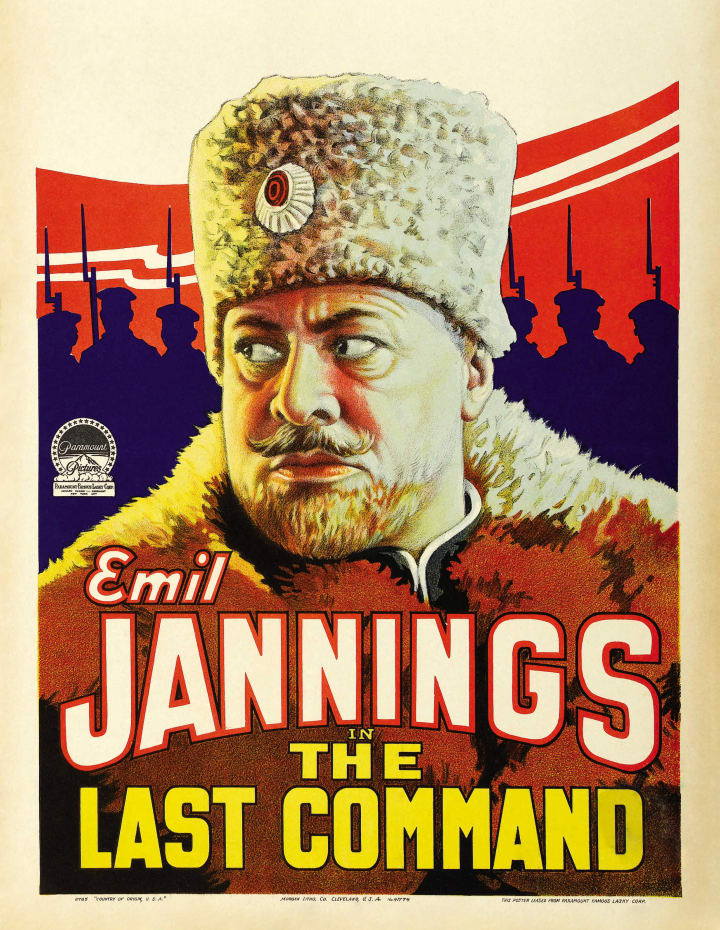
Entered into the Library of Congress National Film Registry in 2006, this is one of those films that if you're a classic movie buff - then you have to see it. The film is set in 1928 and takes a flashback of ten years in order to set itself in another time - the Russian Revolution. Within this film of revolution, war, death and anger there is a beautiful love story. There is also a mass tragedy which brings out so much emotion, I think I cried during the train scene at least twice. It's a beautiful film that needs to be seen and I can see why Emil Jennings won that Oscar.
Best Actress: Janet Gaynor in 7th Heaven (1927)
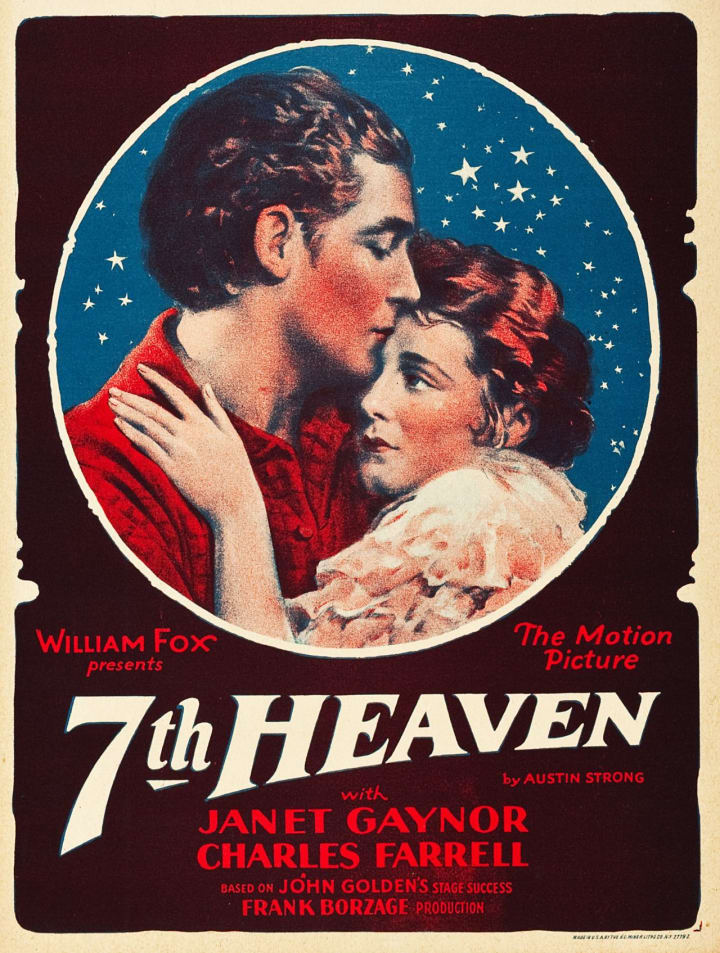
A silent romantic drama starring the then best actress Janet Gaynor was one of the best selling films in the USA at the time. It had a synchronised soundtrack and was based upon a 1922 play of the same name. Its success helped Fox Film secure its place amongst the Hollywood big production companies alongside Paramount and Columbia Pictures and yes, even alongside MGM Studios. It also won for Best Screenplay (Adapted). In 1995, it was entered into the Library of Congress National Film Registry as being culturally significant.
This film also ended up winning the Best Director Academy Award for Frank Borzage. Borzage went on to become a bigger director and directed films such as Street Angel (1928), Bad Girl (1931) and Mortal Storm (1940).
There were a number of other awards and mostly they went to the same or similar films with 7th Heaven (1927) winning a large number of the awards. There were, as there is today, honorary awards in the industry and these were awarded to Charlie Chaplin and it said:
"To Charles Chaplin, for acting, writing, directing and producing The Circus"
And the next one was to Warner Bros studios for moving the cinema industry on with their production of the first ever 'talkie' - The Jazz Singer (1928). Here's what was stated:
"To Warner Bros., for producing The Jazz Singer, the pioneer outstanding talking picture, which has revolutionised the industry."[
7th Heaven (1927) ended up being nominated for five of the awards at these awards which was the most nominations of the year, with Sunrise (1927) following close behind with four nominations. Even though Wings (1928) was only nominated for two awards, it still ended up winning the Best Picture Award.
About the Creator
Annie Kapur
I am:
🙋🏽♀️ Annie
📚 Avid Reader
📝 Reviewer and Commentator
🎓 Post-Grad Millennial (M.A)
***
I have:
📖 280K+ reads on Vocal
🫶🏼 Love for reading & research
🦋/X @AnnieWithBooks
***
🏡 UK
Keep reading
More stories from Annie Kapur and writers in Geeks and other communities.
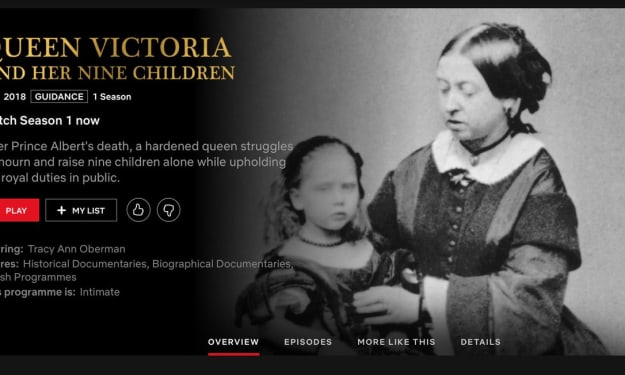
A Filmmaker's Review: "Queen Victoria and Her Nine Children" (Netflix, 2018)
I initially watched this documentary because of the fact it was being recommended to me so much by Netflix that I was struggling now to avoid it appearing on my homepage. I caved in and after a few days, I watched it. The show goes over the death of Prince Albert and then shows us the rather volatile reaction towards it by Queen Victoria. She goes into extravagant mourning for more than a decade and takes it out on her children. Over the course of the three episodes, we see her relationship with her children become more and more tense and strained as some manage to escape her and leave home and some are left behind to deal with her ever-growing mess of her life.
By Annie Kapur6 years ago in Geeks
Silver Screen Magic with Mae West
American actress and singer Mae West became a popular film actress during the Great Depression. She started entertaining in vaudeville, then performed on Broadway, and finally went to Hollywood. She signed up with Paramount Pictures and made her debut in the 1932 film “Night After Night.” She also starred in musicals, comedies, and crime dramas. The American Film Institute named her one of the best classic Hollywood actresses.
By Rasma Raisters5 days ago in Geeks
Top 7 Oak Island Discoveries the Show Didn’t Air
The Curse of Oak Island has captivated audiences for over a decade, blending historical intrigue with reality TV drama. But what fans see on screen is only part of the story. Behind the edited episodes and dramatic voiceovers lies a treasure trove of discoveries that never made it to air — some due to time constraints, others possibly too speculative or controversial for mainstream broadcast.
By Rukka Nova2 days ago in Geeks
Wild Card Weekend Recap: What Happens Now?
I think I figured out why I love Wild Card Weekend so much. It's because it's the first playoff anything of the calendar year. The NFL season starts in the fall, and once upon a time, the champion was crowned either on or slightly before New Year's. The evolution of the NFL schedule has resulted in the playoffs starting just into the New Year, and currently, the final week of the season falls on the first weekend of the New Year, with Wild Card Weekend coming a week after that. So yes, chronologically, the NFL's Wild Card Weekend serves as the first playoff anything of the calendar year.
By Clyde E. Dawkins6 days ago in Unbalanced



Comments
There are no comments for this story
Be the first to respond and start the conversation.