
Movie Review: "Macbeth" (1971)
2/5 - frustrating to watch and filled with lacklustre performances...

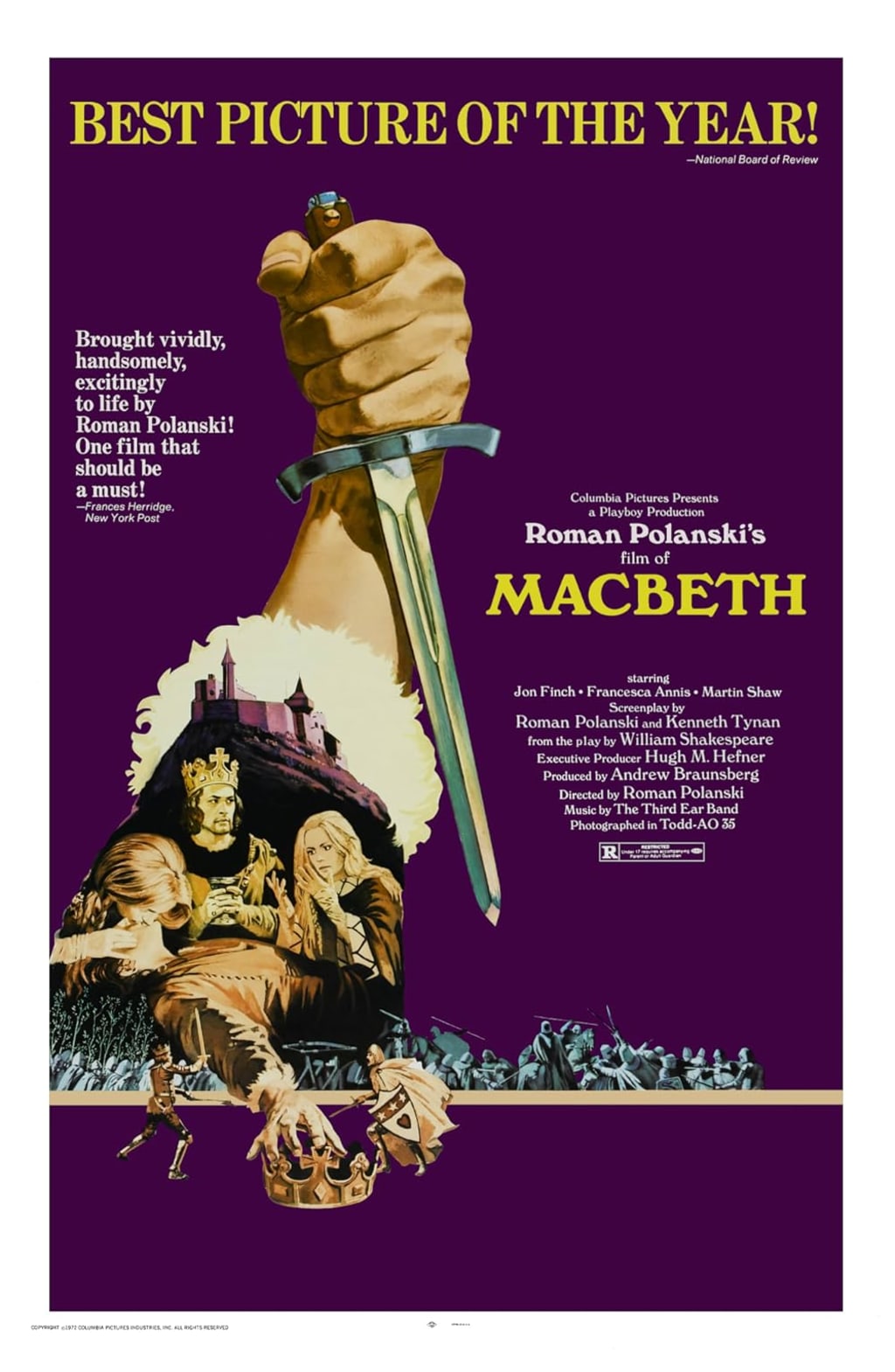
Roman Polanski’s Macbeth (1971) presents a visually striking but ultimately flawed interpretation of Shakespeare’s tragedy. While the film retains much of the original story, its deviations from the text, lacklustre performances, and questionable directorial choices undermine its potential to stand as one of the best adaptations of the Bard’s work.
The narrative remains largely faithful to Shakespeare’s Macbeth, following the titular character’s descent into tyranny and madness spurred by prophecy and ambition. However, Polanski’s approach to the adaptation includes significant alterations that detract from the impact of the original play. Some of Shakespeare’s most important speeches are cut short, robbing the audience of the rich poetic depth and emotional resonance that make the play so compelling. For instance, Macbeth’s soliloquies, which delve into his inner turmoil and moral conflict, are truncated, leaving his motivations less nuanced and his character less layered than in the original text.
Polanski also takes liberties with the plot by adding new scenes that deviate from Shakespeare’s original staging. One notable example is the depiction of Lady Macbeth’s death. In the play, her death occurs offstage, a choice that lends her demise a sense of eerie finality and allows the focus to remain on Macbeth’s unravelling psyche. By showing Lady Macbeth’s death on screen, Polanski strips the moment of its enigmatic power and shifts the attention away from Macbeth’s growing despair. This decision not only diminishes the emotional impact of the scene but also feels unnecessary within the context of the story.
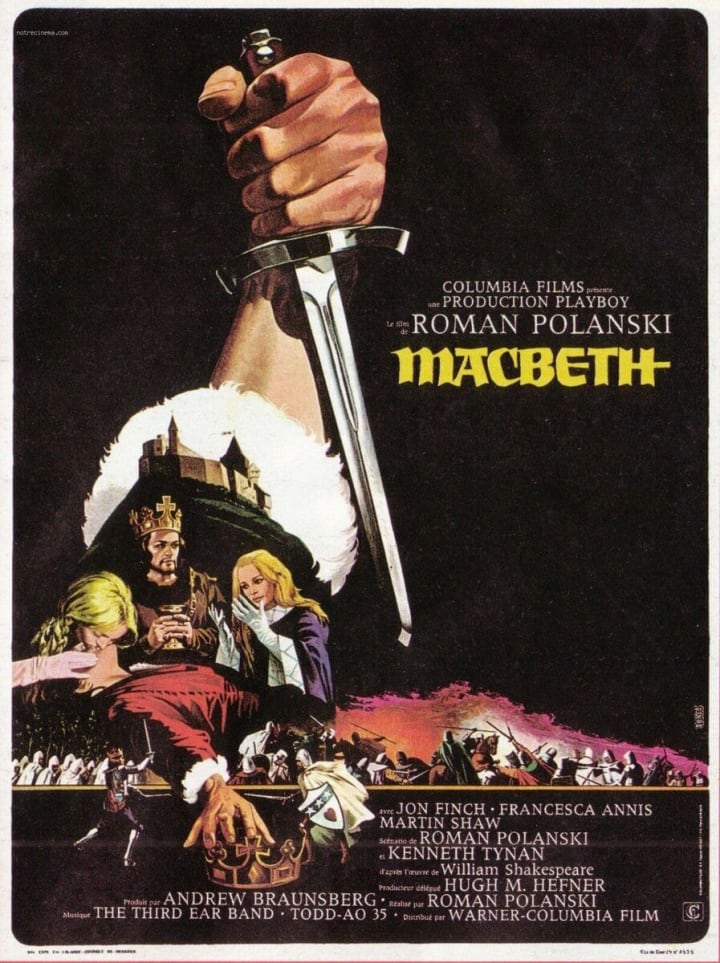
Lady Macbeth herself is one of the film’s most disappointing elements. Traditionally, she is an extreme and manipulative figure, inspiring both hatred and terror with her horrifying resolve and unrelenting ambition. In Polanski’s adaptation, however, she is portrayed as a drab and unremarkable character. Her commanding presence and sinister influence are minimised, reducing her importance in the narrative. Instead of embodying the chillingly ambitious partner who drives Macbeth to commit regicide, she becomes a shadow of her literary counterpart, her character rendered bland and unmemorable. This portrayal significantly weakens the dynamic between Macbeth and Lady Macbeth, a relationship that is central to the play’s exploration of guilt and ambition.
Similarly, the performance of the actor playing Macbeth is lacklustre for much of the film. His portrayal lacks the intensity and emotional depth needed to fully capture the complexity of the character. Up until the death of Banquo, his acting is notably dull, failing to convey Macbeth’s moral conflict and growing paranoia. It is only later in the film that the actor’s performance begins to show the proper gravitas, particularly as Macbeth becomes more consumed by his tyrannical ambition and ultimate despair. This delayed emergence of compelling acting, however, is not enough to redeem the overall performance, leaving the audience with a protagonist who fails to fully engage or captivate.
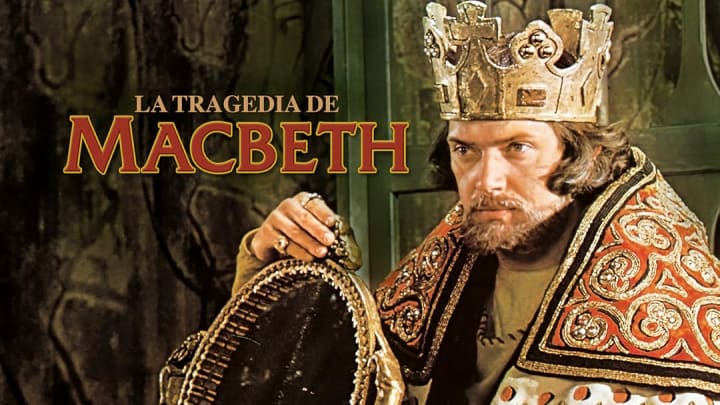
Despite these shortcomings, Polanski’s Macbeth does succeed in creating a dark and gritty atmosphere that reflects the brutal and chaotic world of the play. The film’s cinematography and set design are undeniably impressive, capturing the bleakness of the Scottish landscape and the ominous tone of the story. Polanski’s use of violence is unflinching, emphasising the brutal consequences of Macbeth’s actions and the pervasive sense of doom that continues through the narrative. However, this focus on visual elements often comes at the expense of the play’s rich language and thematic depth, resulting in a film that feels more concerned with spectacle than substance.
Ultimately, Polanski’s Macbeth fails to live up to its potential as an adaptation of one of Shakespeare’s greatest tragedies. While the film retains the basic structure of the play, its deviations from the text, underwhelming performances, and misplaced emphasis on visual elements detract from its overall effectiveness. Lady Macbeth’s diminished role, the actor’s uneven portrayal of Macbeth, and the unnecessary addition of scenes such as Lady Macbeth’s death all contribute to a film that feels disjointed and lacking in emotional resonance.
For those familiar with Shakespeare’s Macbeth, Polanski’s version may be a frustrating watch, as it often fails to capture the depth and complexity of the original work. While there are moments of visual brilliance, these are overshadowed by the film’s inability to fully bring the characters and themes of the play to life.
In conclusion, this adaptation falls short of being a definitive interpretation of the play and likely does not belong among the top five Macbeth adaptations. For those seeking a more faithful and compelling rendition of the tragedy, other versions are likely to offer a more satisfying experience.
About the Creator
Annie Kapur
I am:
🙋🏽♀️ Annie
📚 Avid Reader
📝 Reviewer and Commentator
🎓 Post-Grad Millennial (M.A)
***
I have:
📖 280K+ reads on Vocal
🫶🏼 Love for reading & research
🦋/X @AnnieWithBooks
***
🏡 UK
Keep reading
More stories from Annie Kapur and writers in Geeks and other communities.
Book Review: "Towards Another Summer" by Janet Frame
I found this book whilst browsing amongst things that could feel very much like a Virginia Woolf novel and I also needed something that relied on the theme of alienation to tell its story. God knows I am getting so bored with the obsession our society has with dystopian novels - it seems to be a cookie-cutter standard and I have given up trying to find one I'll enjoy. There's plenty of sadness and suffering in real life, I don't need a fantasy world with two-dimensional characters to tell me the story of that. Towards Another Summer is very much a real story with a real person at the centre. It is a fantastic achievement of alienation literature which feels so raw and real.
By Annie Kapurabout a year ago in Geeks
Silver Screen Magic with Mae West
American actress and singer Mae West became a popular film actress during the Great Depression. She started entertaining in vaudeville, then performed on Broadway, and finally went to Hollywood. She signed up with Paramount Pictures and made her debut in the 1932 film “Night After Night.” She also starred in musicals, comedies, and crime dramas. The American Film Institute named her one of the best classic Hollywood actresses.
By Rasma Raisters10 days ago in Geeks
Kangana Ranaut Hints At Hrithik Roshan's ‘Controversial Legal Notice’ From 2016: Life Became A Living Hell
Summary of this article Kangana Ranaut has joined the ‘2026 Is The New 2016’ trend and recalled the 'miserable' phase of her life. Without naming Hrithik Roshan directly, Ranaut referred to receiving a controversial legal notice from a "colleague". She also called 2016 the best phase of her career.
By Dena Falken Esq5 days ago in Geeks


Comments (2)
Ah, a film review! And an interesting choice... I used this for a paper on Shakespeare and film. Not my favourite. Look for Kurosawa's "Throne of Blood"!
Though a lover of all things Shakespeare, I have not yet seen this film. Believing one should never, ever tamper with the bard's original words, especially with by omission or rewrite, I think I may continue to forego it. Thanks for your genuine review.