
Military Planes
5 Key Reasons Why Military Planes Have High Wings

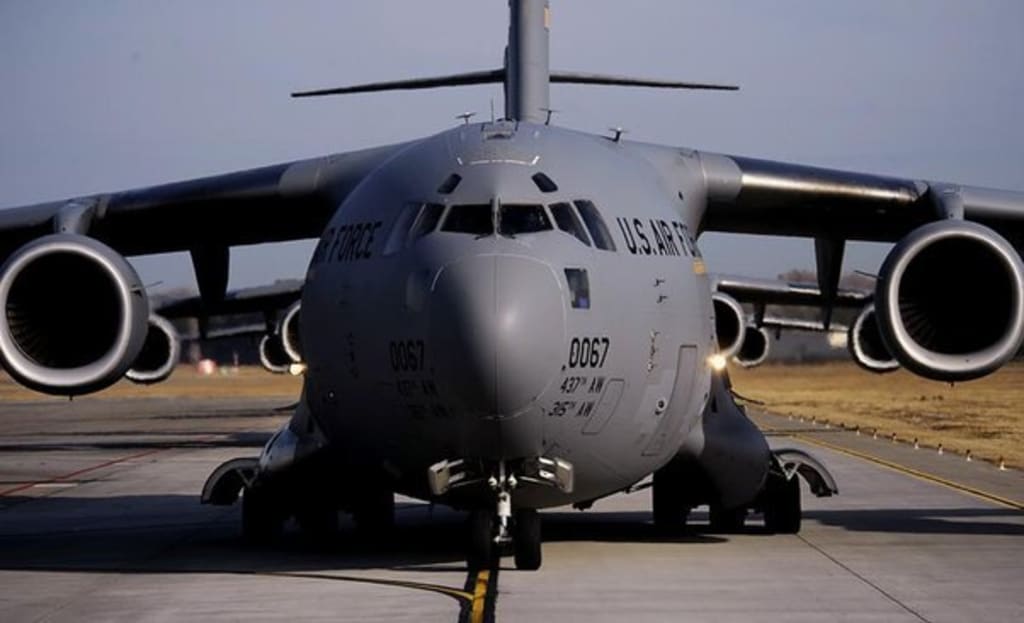
Military transport planes often feature high-wing designs, a striking contrast to the low-wing configurations prevalent in commercial airliners. But why is this the case? The choice of a high-wing configuration in military aircraft is far from random; it’s a design rooted in practicality, tailored to meet the unique demands of military missions. This blog explores five key reasons behind the preference for high wings in military transport planes, with examples that highlight these benefits.
1. Easy Cargo Loading and Unloading
The high-wing design is particularly advantageous when it comes to cargo operations, a critical aspect of military missions. In this configuration, the wings are attached to the top of the fuselage, positioning the main body of the aircraft below the wings. This setup creates a clear, unobstructed area for cargo doors, which simplifies the process of loading and unloading equipment, vehicles, and supplies. For military transport planes, this efficiency is not just a convenience but a necessity. Also, in military operations, speed and efficiency are paramount. The ability to quickly load and unload cargo can make a significant difference in mission success. High-wing aircraft allow for this by eliminating the obstacles that wings might present if they were positioned lower on the fuselage. This is particularly important when dealing with large or awkwardly shaped cargo, where every inch of clearance can count.
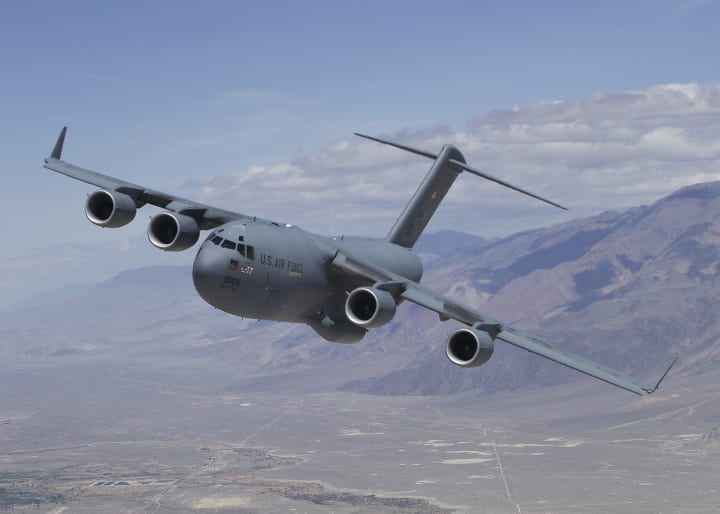
The Boeing C-17 Globemaster III is a prime example of how the high-wing design facilitates easy cargo operations. With its wings positioned above the fuselage, the C-17 allows for straightforward access to its cargo bay, which sits closer to the ground. This low-to-the-ground stance enables faster loading and unloading, even in austere environments where specialized ground support equipment might not be available. In contrast, commercial airliners like the Airbus A320, which feature low wings, require complex and often bulky ground equipment to reach their higher fuselage. This difference underscores how the high-wing design is tailored to the specific needs of military logistics, where every second counts and operational efficiency is crucial.
2. Short Takeoff and Landing (STOL) Capability
Military operations often require aircraft to operate in environments that are vastly different from the well-maintained runways used by commercial airliners. These missions might involve landing and taking off from short, unpaved airstrips in remote or hostile areas. The high-wing configuration is integral to the Short Takeoff and Landing (STOL) capabilities that many military transport planes possess, enabling them to perform in such challenging conditions. The high-wing design contributes to STOL capabilities by allowing for the use of larger, more efficient flaps and slats, which are essential for creating the lift needed to take off from shorter runways. Additionally, because the wings are positioned above the fuselage, there is less risk of the aircraft’s body obstructing airflow over the wings during critical phases of flight, such as takeoff and landing. This results in a more efficient lift generation, allowing the aircraft to become airborne more quickly and land on shorter strips of land.
The C-17 Globemaster III is again a stellar example of a high-wing aircraft with impressive STOL capabilities. Despite its massive size and weight (up to 395,000 pounds), the C-17 can take off in just 3,000 feet (914 meters). This is a stark contrast to a similarly weighted Boeing 787-9 airliner, which requires a much longer takeoff run of 8,150 feet (2,480 meters). The C-17’s ability to operate from such short runways is a direct result of its high-wing design, which is optimized for the kind of rugged, unpredictable environments that military missions often entail. This capability allows military forces to deploy quickly and efficiently in areas that would be inaccessible to conventional aircraft, providing a strategic advantage in both combat and humanitarian operations.
3. Enhanced Ground Clearance
Another significant advantage of the high-wing design is the increased ground clearance it provides, which is crucial for military aircraft operating in rugged or unprepared environments. Ground clearance refers to the distance between the lowest part of the aircraft (typically the engines or landing gear) and the ground. For military transport planes, having a higher clearance is vital to protect the aircraft from damage during landing, takeoff, and ground operations on uneven or debris-strewn surfaces. In environments where runways may be little more than dirt or gravel strips, the risk of damage from rocks, debris, or uneven terrain is high. A low-wing design, where the wings and engines are closer to the ground, would increase the likelihood of damage during these critical phases of flight. The high-wing configuration, by contrast, positions the engines and wings well above the ground, reducing the risk of damage and increasing the aircraft’s operational reliability in challenging conditions.
The Lockheed C-130 Hercules exemplifies the benefits of enhanced ground clearance in a high-wing design. This military transport plane is designed to operate from a variety of airstrips, including those that are unpaved and potentially hazardous. The C-130’s high wings keep its engines and landing gear safely elevated, protecting them from debris and uneven terrain during landings and takeoffs. In contrast, low-wing commercial aircraft like the Boeing 737 are built for operation on well-maintained, paved runways, where the risk of debris damage is minimal. These aircraft sit lower to the ground, which is ideal for passenger boarding and fuel efficiency but would be a liability in the rough environments military aircraft often encounter. The C-130’s design ensures it can operate reliably even in the most challenging conditions, a testament to the strategic advantage of high-wing configurations in military aviation.
4. Improved Visibility
Visibility is another critical factor in the design of military transport planes, particularly during tactical missions that require precision and situational awareness. The high-wing design offers superior visibility from the cockpit, which is essential for pilots navigating complex environments, performing airdrops, or conducting medical evacuations. In a high-wing aircraft, the cockpit is positioned below the wings, providing an unobstructed view of the ground and surrounding area. This enhanced visibility is crucial for low-level flying, where pilots need to have a clear and continuous view of the terrain to avoid obstacles and maintain control of the aircraft. It also allows for better observation during operations where ground visibility is paramount, such as search and rescue missions or reconnaissance flights.
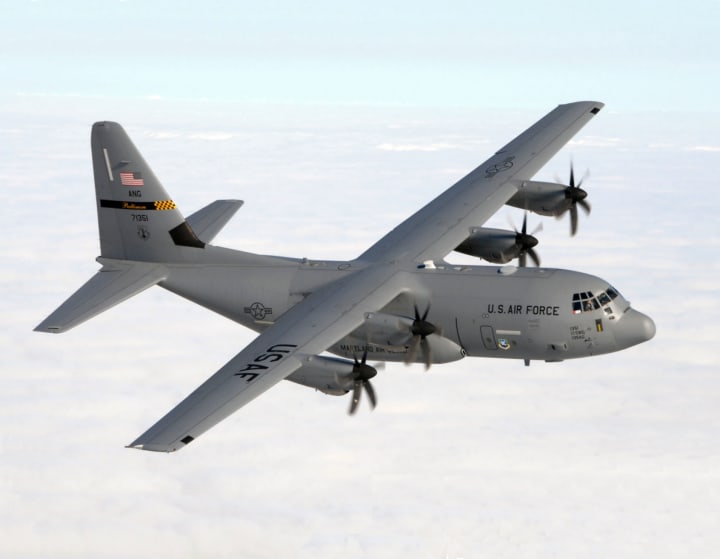
The Lockheed C-130 Hercules is a prime example of how high-wing design improves visibility. Pilots in the C-130 benefit from an unobstructed view that allows them to perform low-level flights with greater safety and accuracy. This is particularly important in military operations where precise navigation and a clear understanding of the surrounding environment are necessary for mission success. In contrast, low-wing commercial aircraft like the Airbus A380, while excellent for long-haul passenger flights, have more restricted visibility from the cockpit. The wings, positioned below the fuselage, can create blind spots that would be problematic in a tactical military context. The C-130’s design ensures that pilots have the visual information they need to execute complex maneuvers and complete their missions effectively, demonstrating the strategic advantage of high-wing configurations in military operations.
5. Protection from Dust and Debris
Military transport planes often operate in environments where the runways are not paved, but rather made of dirt, gravel, or even grass. These conditions can pose significant risks to aircraft, particularly in terms of dust and debris that can be kicked up during takeoff and landing. The high-wing design provides a measure of protection against these hazards, helping to preserve the integrity of the aircraft’s engines and systems. When an aircraft takes off or lands on an unpaved surface, the propulsion and movement can unsettle a significant amount of dust and debris. If the aircraft’s engines and critical systems are positioned too close to the ground, they are more likely to suffer damage from this debris. The high-wing configuration, by elevating these sensitive components, reduces the risk of damage and helps ensure the aircraft’s continued operational readiness.
The Boeing C-17 Globemaster III is a high-wing aircraft designed with these challenges in mind. When operating from dirt or gravel airstrips, the C-17’s elevated engines and wings are less likely to be affected by dust and debris, reducing the risk of foreign object damage (FOD) that could impair the aircraft’s performance or even lead to catastrophic failure. In contrast, commercial airliners like the Boeing 777, which typically land on paved runways, have low wings and engines closer to the ground. While this design is efficient for the environments these aircraft operate in, it would be less suitable for the harsh conditions military aircraft often face. The C-17’s high-wing design ensures it can handle the rigors of unpaved airstrips, providing a strategic advantage that is crucial in military operations where reliable performance is essential.
Closing
The high-wing configuration offers a multitude of advantages that are critical for military transport planes. From facilitating easy cargo loading and unloading to enhancing STOL capabilities, increasing ground clearance, improving visibility, and protecting against dust and debris, the high-wing design is tailored to meet the specific demands of military missions. While commercial airliners prioritize different factors, such as passenger comfort and aerodynamics, the high-wing design remains the go-to choice for military aircraft, where these benefits are paramount for mission success.
About the Creator
Horace Was
Essay Writer, Aviation and Technology Expert
Keep reading
More stories from Horace Was and writers in Geeks and other communities.
Sully
The 2016 film Sully, directed by Clint Eastwood and starring Tom Hanks, captivated audiences with its portrayal of Captain Chesley "Sully" Sullenberger's heroic emergency landing of US Airways Flight 1549 on the Hudson River. While the movie effectively dramatized the tension and bravery of that fateful day, several important aspects of the real-life incident were either left out or altered for cinematic effect. Here’s a look at some key elements the movie didn’t include.
By Horace Was2 years ago in Geeks
A Knight of the Seven Kingdoms Series Review (Season 1)
As one of the biggest properties in fantasy, A Song of Ice and Fire remains immensely popular with audiences. After reaching far into the past with House of the Dragon, a second spin-off was on the cards. A Knight of the Seven Kingdoms serves up a bite-sized slice of action and drama, but it still claims a spot among the best small-screen titles.
By Robert Cain14 days ago in Geeks
REVIEW - The Redemption of Faust (Directed by Genel Mejia)
The Redemption of Faust, written by Justin Suran (Muse, Visitors, The Screenplay) and Genel Mejia (Visitors, The Screenplay, The Experiment, Normal, Splash Damage, La Mejia, Muse), and also produced and directed by Mejia, is a short film which takes its name from the famous 19th century work 'Faust' by Johann Wolfgang von Goethe.
By MegaFlix Movie Awards5 days ago in Geeks


Comments
There are no comments for this story
Be the first to respond and start the conversation.