

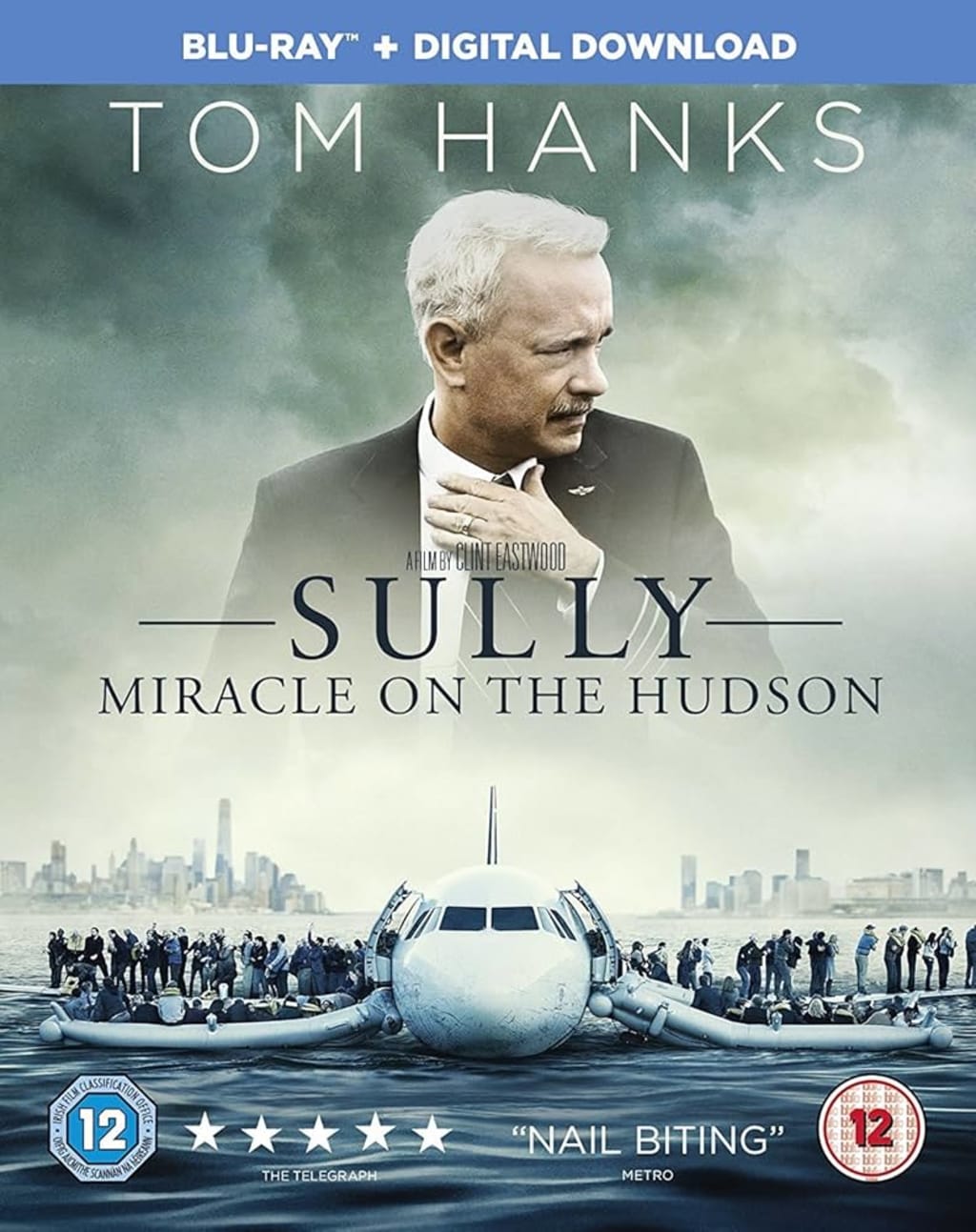
The 2016 film Sully, directed by Clint Eastwood and starring Tom Hanks, captivated audiences with its portrayal of Captain Chesley "Sully" Sullenberger's heroic emergency landing of US Airways Flight 1549 on the Hudson River. While the movie effectively dramatized the tension and bravery of that fateful day, several important aspects of the real-life incident were either left out or altered for cinematic effect. Here’s a look at some key elements the movie didn’t include.
1. The Team Effort
The successful emergency landing of US Airways Flight 1549 on the Hudson River was not just the result of Captain Chesley "Sully" Sullenberger's quick thinking and skilled piloting; it was a remarkable display of teamwork under extreme pressure. While Sully primarily focuses on Captain Sullenberger’s actions, the real-life events involved coordinated efforts from the entire flight crew, including First Officer Jeffrey Skiles and the cabin crew.
First Officer Jeffrey Skiles, who was relatively new to the Airbus A320 but an experienced pilot with over 20,000 flight hours, played an indispensable role in the emergency. At the time of the bird strike that turned off both engines, Skiles was at the controls, as it was his turn to fly the plane. However, after the engines failed, Sully took over the controls, and Skiles immediately began following the emergency procedures that were critical for the situation.
One of Skiles’ primary responsibilities during the emergency was to attempt an engine restart and manage the aircraft’s systems. He also assisted in communicating with air traffic control and helped evaluate the options for an emergency landing. The film shows him as Sully’s support, but in reality, Skiles was working frantically to ensure that any possible restart of the engines could give them a chance to reach an airport. The teamwork between the two was seamless, with Sully focusing on flying the plane and Skiles managing the technical aspects and communications. This division of labor was crucial as it allowed Sully to concentrate on the unprecedented task of ditching the aircraft on water, something that is rarely done successfully.
The cabin crew of Flight 1549, consisting of flight attendants Donna Dent, Doreen Welsh, and Sheila Dail, played a vital role in the passengers' survival. They were responsible for ensuring that all passengers followed safety procedures during the emergency and then leading the evacuation once the plane came to a stop on the Hudson River.
Despite the chaos and fear that ensued after the bird strike, the cabin crew maintained an extraordinary level of professionalism. They quickly instructed passengers to brace for impact, a directive that likely saved lives. After the plane landed on the river, the crew swiftly organized the evacuation, guiding passengers to exit the aircraft onto the wings or into the life rafts. This was done with remarkable efficiency, considering that the icy waters of the Hudson presented an immediate threat of hypothermia. The crew's quick actions in deploying the rafts, helping passengers with life vests, and ensuring that everyone was out of the aircraft within minutes was a testament to their training and composure under pressure.
Another critical factor in the successful outcome of Flight 1549 was the calm and cooperative behavior of the passengers. In many emergencies, panic can exacerbate the situation, but the passengers on Flight 1549 followed the crew's instructions carefully. This collective composure helped prevent a stampede or other chaotic situations that could have slowed the evacuation and led to injuries or fatalities.
The film emphasizes Sully’s quick decision to land on the Hudson, but it’s important to understand that this decision was made in the context of continuous and effective communication between Sully, Skiles, and air traffic control. The controllers were offering possible options for emergency landings at nearby airports, including Teterboro and LaGuardia, but Sully and Skiles quickly realized that they wouldn't make it to either airport. Skiles’ role in verifying data and options, combined with Sully’s instincts and experience, led to the decision to land on the Hudson. It was a calculated risk that relied heavily on the trust and coordination between the two pilots.
The successful ditching of Flight 1549 was a true team effort that involved every member of the flight crew, as well as the cooperation of the passengers. The movie Sully provides a gripping portrayal of the events, but it doesn’t fully capture the depth of collaboration and professionalism that contributed to the so-called "Miracle on the Hudson." First Officer Skiles’ quick thinking, the cabin crew’s calm leadership, and the collective efforts of all on board were instrumental in ensuring that all 155 people survived this extraordinary event.
2. The Full Scope of the NTSB Investigation
In Sully, one of the most intense and dramatic elements is the depiction of the National Transportation Safety Board (NTSB) investigation into the emergency landing of US Airways Flight 1549. The film portrays the NTSB as being highly skeptical of Captain Sullenberger's decisions, creating a narrative where Sully is a hero under siege, fighting to prove that his actions were justified. However, the reality of the investigation was quite different. While the NTSB's role is to investigate incidents to determine causes and make safety recommendations thoroughly, the actual investigation into Flight 1549 was far more collaborative and less adversarial than the film suggests.
The NTSB's investigation into the events of January 15, 2009, was indeed comprehensive, as it needed to be. The ditching of an Airbus A320 on the Hudson River was an unprecedented event in commercial aviation history, and the board's mandate was to understand every aspect of the incident. This included not only Captain Sullenberger’s and First Officer Skiles’ actions but also the performance of the aircraft, the bird strike that led to the dual engine failure, the emergency response, and the procedures that were followed by the crew. Contrary to the film's portrayal, the NTSB did not approach the investigation with a preconceived notion that Sully had made errors in judgment. Instead, the board sought to understand why Sully made the decisions he did and whether they were the best possible choices given the circumstances. The investigation involved analyzing the flight data recorder (FDR) and cockpit voice recorder (CVR), reconstructing the flight, and running simulations to evaluate different scenarios, including whether the plane could have returned to LaGuardia or landed at Teterboro Airport.
One of the key points of contention in the film is the NTSB’s use of flight simulations to suggest that Sully could have safely returned to LaGuardia Airport. In reality, these simulations were indeed part of the investigation, but they were used as one of many tools to understand the incident, not to indict Sully’s decision-making. The simulations initially showed that the aircraft could have made it back to an airport, but these did not take into account the time it took for the pilots to process what was happening and assess their options—a critical factor in real-life emergency decision-making. When this reaction time, known as "human factors," was added to the simulations, the results showed that a return to LaGuardia would not have been possible, validating Sully’s decision to land on the Hudson River. This aspect of the investigation underscored the importance of understanding not just technical performance but also the human element in crisis situations.
The film suggests that the NTSB was primarily focused on finding fault with Sully's actions, which created a dramatic tension that served the movie's narrative. In reality, the NTSB's focus was on learning from the incident to improve aviation safety rather than placing blame. The board recognized the extraordinary circumstances of the bird strike and dual engine failure, and its investigation was aimed at determining how such a situation could be better managed in the future. Throughout the process, the NTSB worked closely with Captain Sullenberger, First Officer Skiles, and US Airways to gather information and understand the sequence of events. The investigation was collaborative, involving multiple stakeholders, including Airbus, the Federal Aviation Administration (FAA), and pilot unions. Sully was not isolated or vilified during this process; instead, he was an integral part of the investigation, providing insights based on his experience and decision-making during the flight.
The NTSB's final report, released in 2010, concluded that Sully's decision to ditch the aircraft in the Hudson River was the best option available, given the circumstances. The report praised the flight crew for their professionalism and the successful outcome of the emergency landing. It also made several safety recommendations, including enhancements to bird strike reporting and improvements to engine design to withstand such incidents. The investigation also had a broader impact on aviation safety. It highlighted the importance of simulator training that includes scenarios with multiple simultaneous failures and emphasized the need for pilots to be trained in ditching procedures, which are rarely used but can be life-saving.
The real NTSB investigation into Flight 1549 was a thorough and meticulous process, focused on understanding the unprecedented situation and learning from it to enhance aviation safety. Unlike the confrontational portrayal in Sully, the investigation was marked by collaboration and a shared goal of improving safety standards. Captain Sullenberger and his crew were recognized not only for their skill and professionalism during the emergency but also for their contributions to the investigation that ultimately benefited the entire aviation industry. The story of Flight 1549 is not just one of a single hero but of a team effort that extended beyond the cockpit to the investigation and the lessons learned for the future.
3. The Technical Challenges Faced by the Pilots
The movie Sully effectively dramatizes the harrowing moments following the bird strike that turned off both engines of US Airways Flight 1549. However, it only partially delves into the myriad of technical challenges that Captain Sullenberger and First Officer Skiles faced during those critical seconds. These challenges went beyond simply losing thrust; they encompassed the loss of several automated systems, the need for manual control, and navigating one of the most densely populated urban areas in the world—all while under immense time pressure.
When the Airbus A320 collided with a flock of Canada geese, both engines were immediately and catastrophically damaged, resulting in a complete loss of thrust. This situation is one of the most dangerous scenarios a pilot can face. Commercial jets are designed to handle engine failures, but the loss of both engines simultaneously is extremely rare and presents unique challenges. One of the most significant consequences of losing both engines was the loss of many automated systems that pilots typically rely on, especially during emergencies. Modern aircraft like the A320 are equipped with sophisticated automation designed to assist pilots by managing engine power, maintaining altitude, and ensuring a stable flight path. However, when both engines failed, these systems either became inoperative or severely degraded, leaving Sully and Skiles with limited resources to manage the situation.
With the loss of engine power, the aircraft also lost its primary source of electrical and hydraulic power, which are essential for operating many of the plane's automated systems. The A320 is equipped with a Ram Air Turbine (RAT), a small windmill-like device that deploys automatically in the event of a dual engine failure. The RAT provides emergency electrical and hydraulic power, but it is a backup system with limited capacity, designed to give the pilots just enough control to manage the aircraft. Under these conditions, Sully and Skiles had to rely heavily on manual flying skills. The plane was in a gliding descent, and without engine power, maintaining control required precise and calculated inputs from the pilots. Flying a large, heavily loaded commercial jet at low altitude over New York City, a densely populated area filled with skyscrapers, bridges, and other obstacles, added to the complexity of the task.
The decision-making process that unfolded in the cockpit was a masterclass in aviation expertise under pressure. After the bird strike, Sully immediately took control of the aircraft while Skiles began going through the emergency checklist. This checklist is designed to guide pilots through the steps necessary to restart the engines or manage an emergency landing. However, given the nature of the engine failure, the chances of a successful restart were slim, and time was running out. Sully quickly assessed his options. Returning to LaGuardia Airport, where the flight had taken off minutes earlier, or attempting to reach Teterboro Airport in New Jersey were both considered. However, the loss of altitude and the aircraft's position over the city made these options increasingly unlikely. This realization came within seconds, forcing Sully to make the critical decision to attempt a water landing on the Hudson River. This decision was not made lightly. Water landings, or ditchings, are extremely risky, and commercial pilots receive limited training for them, as they are rare and generally considered a last resort. Sully’s decision required him to weigh the risks of attempting to reach an airport against the possibility of crashing in a populated area if the aircraft couldn't make it. His choice to ditch in the Hudson was driven by the need to ensure the safety of everyone on board and on the ground.
Executing a controlled water landing under these conditions is extraordinarily difficult. Unlike a runway, water presents a moving and unstable surface. The aircraft had to be brought down at the right angle and speed to avoid catastrophic damage upon impact. Too steep or too fast, and the plane could have broken apart; too shallow or too slow, and it could have stalled before reaching the water. Sully’s experience as a glider pilot played a crucial role here. Without engine power, he had to glide the aircraft, maintaining just the right speed and descent rate to bring it down safely. This required not only skill but also the ability to stay calm and focused in an incredibly stressful situation. The successful ditching of Flight 1549 was a testament to both his and Skiles' abilities as pilots.
While Sully’s decision-making and flying skills were critical, it’s important to recognize that this was a team effort. Skiles, despite being the less experienced of the two in terms of flight hours, was instrumental in following through with the emergency procedures and supporting Sully throughout the ordeal. The cabin crew also played a vital role in the successful outcome by ensuring the passengers were prepared for impact and executing an efficient evacuation once the aircraft was in the water.
The technical challenges faced by Captain Sullenberger and First Officer Skiles during the emergency landing of Flight 1549 were far more complex than the film Sully portrays. From managing the loss of both engines and critical automated systems to making rapid, high-stakes decisions in a densely populated area, the pilots demonstrated extraordinary skill and professionalism. The successful ditching on the Hudson River was not just a remarkable feat of aviation but also a testament to the importance of experience, teamwork, and the ability to stay composed under extreme pressure. The full scope of these challenges underscores the significance of the "Miracle on the Hudson" and the exceptional efforts of everyone involved.
4. The Psychological Impact on the Crew
The Sully movie does a commendable job of portraying the immediate aftermath of the Miracle on the Hudson, particularly Captain Sullenberger's (Sully’s) struggle with post-incident stress and self-doubt. However, the psychological impact on the entire crew was far-reaching and more complex than what the film reveals. The sudden transition from an ordinary flight to a life-threatening emergency left an indelible mark on all the crew members, with lasting effects that extended well beyond the incident itself.
In the moments following the successful ditching of Flight 1549, the entire crew, including Sully, First Officer Jeffrey Skiles, and the cabin crew, faced a wave of shock and adrenaline. They had just navigated an unprecedented and highly dangerous situation, and while the outcome was miraculous, the psychological toll was immense. For Sully, the psychological aftermath was particularly profound. Despite his calm and collected demeanor during the emergency, the weight of what had just transpired began to sink in almost immediately. The realization that his decisions had directly impacted the lives of 155 people was overwhelming. Although the passengers were safe, Sully couldn't help but replay the events in his mind, questioning every decision and contemplating the many "what ifs" that could have led to a different, potentially disastrous outcome. The film briefly touches on Sully’s struggle with these doubts, but in reality, this internal conflict is far more intense. He was haunted by thoughts of what could have gone wrong, and the pressure of being hailed as a hero only compounded these feelings. While the public celebrated him, Sully was privately dealing with the fear that, despite the successful outcome, he might have made the wrong decisions. This kind of cognitive dissonance is not uncommon in individuals who experience traumatic events, especially when they are thrust into the role of a hero.
First Officer Jeffrey Skiles also faced significant psychological challenges after the incident. Although the film portrays him as a supportive and capable co-pilot, it does not fully explore the psychological impact the event had on him. Skiles was relatively new to the Airbus A320 at the time, having previously flown Boeing 737s. The transition between aircraft types involves a steep learning curve, and Skiles had just completed his training on the A320 a few weeks before Flight 1549. The sudden and catastrophic nature of the bird strike was a test of Skiles' training and experience. Despite the successful outcome, the experience was traumatic. Like Sully, Skiles was thrust into a situation where his actions had life-or-death consequences. The stress of navigating such an intense situation, combined with the realization of how close they had come to disaster, left Skiles with his own set of psychological scars. In interviews following the incident, Skiles spoke about the surreal nature of the event and the difficulty of processing what had happened. The pressure of being in the public eye, coupled with the expectation to maintain a stoic and professional demeanor, added to the strain. While he and Sully received widespread praise for their actions, the psychological burden of the incident was something that both men had to carry privately.
The cabin crew, who played a crucial role in the safe evacuation of the passengers, also faced significant psychological challenges in the aftermath of the incident. The flight attendants, whose primary responsibilities usually involve ensuring passenger comfort and safety, were suddenly thrust into an emergency situation that required them to act quickly and decisively. Their actions were critical in maintaining calm among the passengers and ensuring that everyone evacuated the aircraft safely.
The trauma of the incident was compounded by the responsibility the cabin crew felt for the lives of the passengers. They had to remain composed under extreme pressure, even as they themselves were grappling with fear and uncertainty. After the incident, many of the flight attendants reported feelings of shock, anxiety, and stress. The sudden transition from normalcy to a life-threatening emergency left them with lasting psychological effects. The film does not fully explore the emotional and psychological toll on the cabin crew. While they are shown as competent and professional, the reality is that they, too, were deeply affected by the incident. The trauma of such an event can lead to symptoms of post-traumatic stress disorder (PTSD), including flashbacks, nightmares, and heightened anxiety. For some crew members, returning to work and resuming their normal duties was a significant challenge.
For all involved, the psychological impact of the Miracle on the Hudson was not something that faded quickly. The immediate aftermath was characterized by shock and relief, but as time passed, the crew members had to come to terms with what had happened. For Sully, this meant continuing to grapple with the "what ifs" and dealing with the intense scrutiny of the NTSB investigation. For Skiles and the cabin crew, it meant processing the trauma and finding ways to move forward. The long-term psychological impact of such an event can be profound. Many individuals who survive traumatic experiences like this one struggle with feelings of anxiety, depression, and PTSD. The crew of Flight 1549 had to find ways to cope with these feelings while also dealing with the public's perception of them as heroes. The pressure to live up to this image added an additional layer of stress. While the movie Sully does a good job of highlighting some of Sully's internal struggles, the real psychological journey for him, Skiles, and the cabin crew is far more complex and prolonged. The crew's ability to manage the immediate crisis was nothing short of extraordinary, but the emotional and psychological aftermath of that day is a reminder of the human cost of such an event. The Miracle on the Hudson was not just a story of heroism and survival; it was also a story of the deep and lasting impact that such a close brush with disaster can have on those involved.
5. The Passengers’ Stories
The movie Sully masterfully focuses on the heroic actions of Captain Sullenberger and First Officer Skiles, as well as the subsequent investigation. However, it largely omits the personal stories of the 155 passengers onboard US Airways Flight 1549, each of whom experienced the harrowing incident in their own unique way. These passengers' stories are a crucial part of the Miracle on the Hudson, as their resilience, quick thinking, and ability to follow the crew's instructions played a significant role in ensuring everyone's survival.
As Flight 1549 took off from LaGuardia Airport on January 15, 2009, it seemed like any other routine flight. Passengers settled into their seats. Some prepared for the short trip to Charlotte, North Carolina, while others were connecting to different destinations. Little did they know that within minutes, their lives would be in grave danger. Shortly after takeoff, the plane collided with a flock of Canada geese, causing both engines to fail. The loss of power was sudden and absolute, plunging the aircraft into a dire situation. As the plane began to glide without engine power, the passengers' experiences varied. Some reported hearing loud bangs, others noticed the eerie silence as the engines shut down, and many realized something was seriously wrong when the plane began to descend rapidly. Despite the terror of the situation, the passengers largely remained calm, a testament to both the leadership of the flight crew and the passengers’ own composure. In interviews following the incident, many passengers recounted how they turned to prayer, held hands with strangers, or prepared themselves for what they believed would be a catastrophic crash. The fear was palpable, yet so was the resolve to stay calm and do what was necessary to survive.
When Captain Sullenberger announced over the intercom to "brace for impact," the gravity of the situation became all too real. Passengers quickly adopted the brace position, bracing themselves for what seemed like an inevitable disaster. The subsequent impact was jarring, with the plane skimming across the icy waters of the Hudson River, sending water spraying over the windows and filling the cabin with the sound of screeching metal and rushing water.
In the moments following the landing, the passengers faced the immediate threat of water flooding into the cabin. Despite the chaos, the evacuation proceeded with remarkable efficiency. The flight attendants, who had remained composed under extreme pressure, guided the passengers toward the exits. Some passengers struggled with opening their seatbelts, while others helped their fellow travelers reach the life rafts and exit doors. One of the most poignant aspects of the evacuation was the passengers’ collective effort to ensure that everyone got out safely. Despite the panic and confusion, there was a sense of solidarity among those onboard. Passengers assisted each other, helping those who were slower to exit or who were struggling to get their life vests on. Many passengers later described the experience as surreal, with the freezing cold of the Hudson River and the uncertainty of their survival adding to the sense of disorientation.
Once out of the aircraft, the passengers faced another life-threatening challenge: surviving in the frigid waters of the Hudson River. The water temperature was just above freezing, and the risk of hypothermia was high. Some passengers were able to climb onto the wings of the aircraft, which were partially submerged, while others crowded into the life rafts. Those who ended up in the water had to cling to whatever they could find, whether it was a piece of debris or the hands of fellow passengers. The rescue effort that followed was swift and efficient, with ferry boats, police boats, and other vessels converging on the scene within minutes. The passengers were pulled from the water and brought to safety, many of them suffering from exposure to the cold. The quick response of the rescue teams undoubtedly saved lives, as the freezing temperatures could have quickly led to severe hypothermia or worse.
In the days and weeks following the Miracle on the Hudson, the passengers of Flight 1549 had to come to terms with what they had experienced. For many, the incident was a life-altering event that reshaped their perspectives on life, relationships, and priorities. Survivors spoke of a newfound appreciation for life, with some making significant changes to their careers, relationships, and lifestyles in the wake of the crash. One passenger, for instance, decided to pursue a career in aviation, inspired by the heroism and skill of the crew. Others became more involved in charitable work, driven by a desire to give back after surviving such a close brush with death. Many of the passengers stayed in touch with one another, forming a unique bond over their shared experience. The annual reunions of Flight 1549 passengers became a way for them to celebrate life and honor the miracle they had witnessed. However, the psychological impact was not uniformly positive. Some passengers struggled with post-traumatic stress disorder (PTSD), grappling with nightmares, anxiety, and a heightened fear of flying. The sudden and violent nature of the crash, coupled with the close call to death, left deep emotional scars on many of those who survived. For these individuals, the journey to healing was long and difficult, requiring therapy, support from loved ones, and time.
The passengers of Flight 1549 each have their own story of survival, and while these stories may not have been prominently featured in the film Sully, they are an essential part of the legacy of the Miracle on the Hudson. These narratives provide a fuller understanding of the event, highlighting the collective effort and resilience that contributed to the successful outcome. The film’s focus on the pilots and the investigation is understandable, given the dramatic nature of those elements, but the omission of the passengers' experiences leaves out a critical dimension of the story. The courage and composure of the passengers, their ability to work together in the face of unimaginable danger, and the profound impact the event had on their lives are all integral to the Miracle on the Hudson. In retelling the story of Flight 1549, it is important to remember that the miracle was not just the result of one man’s heroism but the collective efforts of all those onboard and the rescue teams that swiftly responded. The passengers' stories add depth and humanity to the narrative, reminding us that while the pilots may have guided the plane to safety, it was the courage and resolve of everyone onboard that truly made the Miracle on the Hudson a story of survival against the odds.
6. The Heroic Rescue Efforts
The movie Sully briefly acknowledges the rescue efforts that followed the miraculous landing on the Hudson River, but it only scratches the surface of the extraordinary actions taken by the New York Waterway ferries, the Coast Guard, and other emergency responders. The rescue operation that unfolded in the freezing waters of the Hudson was a remarkable display of quick thinking, coordination, and bravery that ultimately ensured the survival of all 155 people onboard Flight 1549.
When Captain Sullenberger safely landed the aircraft on the Hudson River, the passengers and crew faced a new set of dangers: the frigid water and the potential for hypothermia. The temperature of the water was just above freezing, and the wind chill made the situation even more perilous. Time was of the essence, and the success of the rescue operation depended on the swift arrival of help. Fortunately, New York City's proximity to the river and the dense network of commuter ferries that traverse the Hudson daily meant that help was not far away. Within minutes of the aircraft touching down, the New York Waterway ferries, which operate along the river, were rerouted to the crash site. The first ferry, the Thomas Jefferson, arrived at the scene within four minutes of the landing, with others following closely behind. The ferry captains and crew members, many of whom had no formal training in water rescues, acted with extraordinary courage and quick thinking. They maneuvered their vessels as close to the sinking plane as possible, helping passengers climb onto the wings or pulling them directly from the water. The icy conditions made the rescue challenging, but the ferry crews worked tirelessly to get everyone to safety.
As the ferries began their rescue operations, the U.S. Coast Guard and local emergency services were also mobilized. The Coast Guard dispatched boats from its New York station, while the New York City Fire Department (FDNY) and the New York Police Department (NYPD) sent out their marine units to assist in the rescue. The coordination between these various agencies was seamless, with each unit playing a vital role in the operation. The Coast Guard's boats were equipped with additional life-saving equipment, including life vests and thermal blankets, which were distributed to the passengers who had been exposed to the freezing temperatures. The FDNY and NYPD divers also played a crucial role in ensuring that no one was left behind, conducting thorough sweeps of the aircraft and the surrounding water to account for all passengers and crew members. The speed and efficiency of the response were critical in preventing a tragedy. The entire rescue operation was completed in less than 30 minutes, a testament to the dedication and skill of the responders. By the time the last passenger was pulled from the water, all 155 people onboard Flight 1549 had been safely rescued, with only a few suffering from minor injuries or hypothermia.
Beyond the technical and logistical aspects of the rescue operation, there was a deeply human element to the efforts of the rescuers. The ferry crews, Coast Guard personnel, and emergency responders not only performed their duties with professionalism but also showed immense compassion for the survivors. Many of the rescuers later spoke about how the incident affected them personally, knowing that they had played a part in saving so many lives. For the passengers, the sight of the ferries and rescue boats arriving so quickly was a lifeline in a moment of unimaginable fear. The relief of being pulled from the icy water and knowing that they were safe was overwhelming for many. In interviews and documentaries that followed the incident, passengers have often expressed their deep gratitude for the rescuers, crediting them with their survival.
The rescue operation following the Miracle on the Hudson is a shining example of how ordinary people can perform extraordinary acts in times of crisis. The actions of the ferry crews, the Coast Guard, and emergency responders turned what could have been a catastrophic disaster into a story of hope and heroism. While Sully gives viewers a glimpse of the rescue efforts, the full scale and impact of the operation deserve more recognition. The seamless coordination between the various agencies, the bravery of the rescuers, and the rapid response all contributed to the miracle that day. The rescue operation is not just a footnote in the story of Flight 1549; it is a central part of what made the event so extraordinary. In the years since the incident, the rescuers have been honored for their bravery, and the story of the Miracle on the Hudson has become a symbol of resilience and hope. The successful rescue of all 155 passengers and crew members is a reminder of the power of quick thinking, teamwork, and the willingness to help others in their time of need.
Final Thoughts
Sully is a powerful film that captures the essence of heroism and quick thinking, but like any movie based on real events, it leaves out some of the nuances and details that make the true story even more compelling. Understanding the full scope of what happened on January 15, 2009, adds a richer dimension to our appreciation of Captain Sullenberger, his crew, and the many others who contributed to the "Miracle on the Hudson." While the movie gives us a glimpse into this incredible event, the real story is even more inspiring.
About the Creator
Horace Was
Essay Writer, Aviation and Technology Expert
Keep reading
More stories from Horace Was and writers in Geeks and other communities.
Military Planes
Military transport planes often feature high-wing designs, a striking contrast to the low-wing configurations prevalent in commercial airliners. But why is this the case? The choice of a high-wing configuration in military aircraft is far from random; it’s a design rooted in practicality, tailored to meet the unique demands of military missions. This blog explores five key reasons behind the preference for high wings in military transport planes, with examples that highlight these benefits.
By Horace Was2 years ago in Geeks
Russia Delivers 13 Tons of Medical Aid to Iran
Introduction As tensions continue to rise in the Middle East, humanitarian efforts have become increasingly important for civilians affected by the conflict. In a significant gesture of support, Russia has delivered more than 13 tons of humanitarian and medical aid to Iran. The aid shipment aims to assist hospitals and emergency services dealing with the consequences of the ongoing crisis in the region.
By shaoor afridiabout 5 hours ago in Geeks
Thief In The Night
To the thief in the night that took and replicated what once was mine: Honestly, I feel kind of bad for you. It’s funny, because we hardly know each other. I only know of you through the magazines you’ve written and the broadcasts you have televised in the past — as well as through the public mentions of you from your show business connections there.
By Snarky Lisa6 days ago in Humans




Comments
There are no comments for this story
Be the first to respond and start the conversation.