
Mexico Language Service Market Size and Forecast (2025–2033)
Globalization, Digital Transformation, and Multilingual Demand Reshape Mexico’s Communication Landscape


Mexico Language Service Market Overview
The Mexico Language Service Market is entering a phase of consistent and sustainable growth, driven by globalization, cross-border trade, digital transformation, and the increasing need for multilingual communication. According to Renub Research, the market is expected to grow from US$ 1.52 million in 2024 to US$ 2.54 million by 2033, registering a CAGR of 5.92% during 2025–2033.
Language services encompass a broad range of professional solutions designed to enable effective communication across linguistic and cultural boundaries. These services include translation, interpretation, localization, transcription, and language-related consulting. Translation focuses on converting written content from one language to another, while interpretation deals with real-time spoken communication. Localization goes a step further by adapting content to cultural, legal, and regional nuances, ensuring relevance and acceptance in target markets.
In Mexico, language services play a vital role across industries such as IT & telecommunications, government, healthcare, automotive, education, tourism, and e-commerce. As Mexico continues to strengthen its position as a global manufacturing, trade, and services hub, language services are becoming indispensable for businesses, institutions, and government agencies operating in multilingual environments.
Mexico Language Service Industry Outlook
Mexico’s strategic geographic location, strong trade ties with North America, and participation in global supply chains have significantly elevated the demand for professional language services. Agreements such as the United States–Mexico–Canada Agreement (USMCA) have intensified cross-border collaboration, requiring accurate translation of legal documents, technical manuals, compliance reports, and corporate communications.
Additionally, Mexico’s linguistic diversity, including numerous indigenous languages alongside Spanish and English, adds complexity to communication requirements. Government initiatives promoting multilingual education, inclusive public services, and digital governance further stimulate the need for reliable language solutions.
Technological advancements are also reshaping the industry. Artificial intelligence (AI), machine translation, natural language processing (NLP), and cloud-based platforms are improving turnaround times and accessibility. However, despite automation, demand for human expertise remains strong, particularly in sensitive sectors such as legal, medical, and government services where accuracy and cultural context are critical.
Growth Drivers of the Mexico Language Service Market
1. Globalization and International Trade
Globalization is one of the most influential drivers of Mexico’s language services market. As foreign direct investment increases and multinational corporations expand operations in Mexico, the need for seamless multilingual communication becomes essential. Companies require professional translation and interpretation for:
Legal and regulatory documentation
Technical and operational manuals
Marketing and branding materials
Cross-border negotiations and compliance
Similarly, Mexican companies expanding into international markets rely on language services to communicate effectively with global partners and customers. This growing interdependence ensures sustained demand for high-quality language solutions.
2. Expansion of E-commerce and Digital Business
The rapid growth of e-commerce in Mexico is significantly boosting the language services market. Increasing internet penetration, smartphone adoption, and digital payment systems have encouraged businesses to operate online and reach broader audiences.
For e-commerce platforms, translation and localization are critical to enhancing user experience, building trust, and increasing conversion rates. Multilingual product descriptions, customer support, payment instructions, and return policies allow businesses to engage both domestic and international consumers effectively. As online retail continues to expand, demand for professional language services will grow in parallel.
3. Digital Transformation Across Industries
Digital transformation is reshaping how businesses and institutions operate in Mexico. Government agencies, healthcare providers, educational institutions, and private enterprises are increasingly adopting digital platforms to deliver services.
This transformation has created rising demand for multilingual digital content, including:
Websites and mobile applications
Digital marketing campaigns
Online customer support and chatbots
E-learning platforms and training materials
Advances in AI-driven translation tools are enhancing efficiency, but professional language service providers remain crucial for ensuring accuracy, tone, and cultural relevance—particularly in regulated industries.
4. Growth in Tourism and Immigration
Mexico remains one of the world’s most popular tourist destinations, welcoming millions of international visitors each year. Tourism-related sectors such as hospitality, travel, healthcare tourism, and transportation require multilingual communication to cater to global travelers.
Additionally, immigration, expatriate communities, and international students contribute to the demand for interpretation, document translation, and localization services. These factors collectively strengthen the long-term outlook of the language services market.
Challenges Facing the Mexico Language Service Market
Regulatory and Compliance Complexity
One of the key challenges in Mexico’s language services industry is compliance with regulatory requirements. Legal, government, and medical translations often require certified, notarized, or sworn translators. Navigating these requirements can be complex, particularly for international service providers unfamiliar with local regulations.
Inconsistent enforcement and varying certification standards across regions may lead to delays, increased costs, and reputational risks. To remain competitive, providers must invest in training, certification, and continuous monitoring of regulatory changes.
Cost Sensitivity and Pricing Pressure
Cost sensitivity is another major challenge, particularly among small and medium-sized enterprises (SMEs). Many clients prioritize affordability over quality, placing pressure on service providers to reduce prices. This can impact profitability and limit investments in advanced technology or specialized expertise.
The availability of low-cost automated translation tools further intensifies competition, even though such tools may not meet professional or regulatory standards. Balancing cost efficiency with service quality remains a critical challenge for market participants.
Mexico Language Service Market Segmentation
By Service Type
Translation Services
Translation services account for the largest share of the market, driven by demand for written content in legal, technical, commercial, and digital formats.
Interpretation Services
Interpretation services are widely used in government proceedings, healthcare settings, corporate meetings, and international conferences.
Others
This category includes localization, transcription, subtitling, and language consulting services, which are gaining importance with digital media growth.
By Application
IT and Telecommunications
Commercial and Corporate
Government
Automotive
Healthcare
Others
The IT and commercial sectors dominate demand due to digital expansion and global business operations, while healthcare and government applications require high accuracy and regulatory compliance.
Competitive Landscape and Key Players
The Mexico language services market features a mix of global leaders and specialized providers offering translation, interpretation, and localization solutions. Competition is driven by service quality, industry expertise, technological integration, and geographic reach.
Key players operating in the market include:
Global Linguist Solutions, LLC
Hogarth Worldwide
Keywords Studios plc
LanguageLine Solutions
Lionbridge Technologies, Inc.
Mission Essential Personnel
SDI Media Group Inc.
TransPerfect
These companies focus on strategic partnerships, technology adoption, sector-specific solutions, and geographic expansion to strengthen their presence in Mexico and Latin America.
Future Outlook for the Mexico Language Service Market
The future of the Mexico language services market looks promising, supported by steady economic integration, digital growth, and rising cross-cultural communication needs. Demand for professional language services will continue to expand across e-commerce, government, healthcare, and technology sectors.
While automation and AI will enhance efficiency, human expertise will remain essential for complex, sensitive, and high-stakes communication. Providers that successfully combine technology with linguistic and cultural expertise are likely to gain a competitive advantage.
Final Thoughts
The Mexico Language Service Market is evolving into a critical enabler of globalization, digital transformation, and inclusive communication. With the market projected to reach US$ 2.54 million by 2033, language services are no longer optional but essential for businesses and institutions operating in multilingual environments.
Driven by trade agreements, e-commerce expansion, tourism growth, and government digital initiatives, the industry offers long-term opportunities despite challenges related to regulation and cost sensitivity. As Mexico continues to integrate into the global economy, professional language services will remain at the heart of effective communication, cultural understanding, and sustainable growth.
About the Creator
Janine Root
Janine Root is a skilled content writer with a passion for creating engaging, informative, and SEO-optimized content. She excels in crafting compelling narratives that resonate with audiences and drive results.
Keep reading
More stories from Janine Root and writers in Geeks and other communities.
Photo Printing and Merchandise Market Size and Forecast 2025–2033
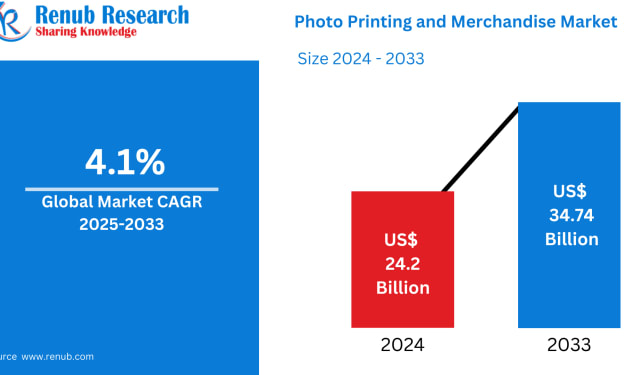
Global Photo Printing and Merchandise Market Overview The Global Photo Printing and Merchandise Market continues to transform how people preserve memories and express creativity in a digital-first world. Valued at US$ 24.2 billion in 2024, the market is projected to reach US$ 34.74 billion by 2033, expanding at a compound annual growth rate (CAGR) of 4.1% during 2025–2033, according to Renub Research.
By Janine Root 21 days ago in Geeks
Marty Supreme Review: Timothée Chalamet Is Excellent, The Movie… Not So Much
⭐ Rating: 2 out of 5 stars Marty Supreme Directed by Josh Safdie Written by Josh Safdie, Ronald Bronstein Starring Timothee Chalamet, Gwyneth Paltrow, Tyler The Creator, Odessa A'zion
By Sean Patrickabout a month ago in Geeks
Best VPN for Hotstar
Hotstar is one of the biggest providers of Indian TV shows and movies, but it’s only available in a handful of countries. The good news is that you can easily unblock Hotstar from outside of India, the UK, Canada, or Singapore; you just have to connect to a Virtual Private Network (VPN).
By David Cook4 days ago in Geeks
If You Love Me, You'll Do It
I met Jason when I was five years old. I could say that I loved him from the moment I saw him. He was so handsome to me and I felt in awe by his presence. When they introduced him as the new kid in school, I wanted to be his friend right away. I remember it like it was yesterday. I remember his smile and how he didn't seem shy. He appeared confident and ready to learn. I waved at him and said "hello," before anyone else could even say a word. He sat next to me, and I asked him if he wanted to be friends. He looked so happy as he said, "Yes!"
By Sidney Smith (Sid Smith)6 days ago in Fiction


Comments
There are no comments for this story
Be the first to respond and start the conversation.