
Manhattan Transfer by John Dos Passos
Why It's a Masterpiece (Week 70)


John Dos Passos’s Manhattan Transfer, published in 1925, is a landmark modernist novel that captures the pulse of New York City during the early 20th century. Dos Passos, heavily influenced by his experiences as a young man in the 1910s and 1920s, sought to depict the complexities of urban life and the fragmentation of modern society.
The title Manhattan Transfer refers both to a railroad junction in New Jersey and to the constant motion and transience of city life. The novel captures the cultural, social, and economic momentum of New York, portraying characters from diverse walks of life: immigrants, industrialists, artists, and working-class individuals, all navigating the opportunities and challenges of urban existence.
Upon its release, the novel was both celebrated and critiqued for its experimental style and bleak portrayal of modernity. It was lauded by authors such as Sinclair Lewis and Malcolm Cowley, who recognised its ambitious scope and groundbreaking technique. It remains a significant achievement in 20th-century literature, offering a snapshot of New York City living in every way possible.
Plot

Manhattan Transfer does not follow a traditional linear plot but instead weaves together the lives of numerous characters, creating a mosaic of urban life in New York City during the early 20th century. Through vignettes and fragmented scenes, the author paints a vivid portrait of the city’s vibrancy, chaos, and harsh realities.
The novel opens with the birth of Jimmy Herf, who becomes one of the central figures in the sprawling narrative. As Jimmy grows up, he struggles to find meaning and stability amidst the city’s ever-changing landscape. His experiences: first as a reporter and later as a disillusioned wanderer, highlight the alienation and restlessness of modern life.
Ellen Thatcher, another prominent character, represents the shifting roles and expectations of women in this period. Ellen moves through different relationships and professions, embodying the tensions between personal ambition and societal constraints. Her relationships with men such as George Baldwin, an ambitious lawyer, and Stan Emery, a troubled artist, reflect the interconnectedness and impermanence of urban relationships.
The narrative also delves into the lives of working-class characters, immigrants, and those on the margins of society. These vignettes include stories of hardship, survival, and fleeting moments of hope. For instance, Congo Jake, a waterfront labourer, and Gus McNeil, a striving businessman, offer contrasting perspectives on the pursuit of the American Dream.
The author definitely captures the city’s energy through stylistic experimentation, including stream-of-consciousness passages, rapid shifts in perspective, and interspersed snippets of headlines, advertisements, and overheard conversations. This technique immerses readers in the sensory overload of city life, creating a sense of simultaneity and fragmentation.
As the novel progresses, its tone becomes increasingly sombre, reflecting the disillusionment and despair of its characters. Jimmy’s ultimate decision to leave the city underscores his inability to reconcile his ideals with the harsh realities of urban existence.
Into the Book

The Fragmentation of Modern Life
One of the most prominent themes in Manhattan Transfer is the fragmentation of modern life, exemplified by the novel’s structure and narrative style. The author deliberately avoids a linear plot, instead presenting a series of overlapping narratives. This reflects the chaotic, fast-paced nature of life in New York City, where individuals are often isolated despite their physical proximity.
The novel captures this fragmentation through its use of shifting perspectives and stream-of-consciousness passages. For example: the opening scene juxtaposes the birth of Jimmy Herf with the hustle and bustle of the city streets, illustrating the disconnection between personal milestones and the larger, impersonal machinery of urban life. Dos Passos further emphasises this theme through the interspersed use of advertisements, headlines, and snatches of overheard dialogue, which create a cacophony of competing voices and ideas.
The characters themselves embody this fragmentation, as their lives rarely intersect in meaningful ways. Jimmy Herf’s aimless wanderings and Ellen Thatcher’s shifting relationships highlight the difficulty of forging lasting connections in a city defined by transience and change. As Jimmy reflects, “People live their lives like rats in a cage, running in circles and never knowing why.”
“The terrible thing about having New York go stale on you is that there's nowhere else. It's the top of the world.”
- Manhattan Transfer by John Dos Passos
The American Dream...If Any
He also uses Manhattan Transfer to critique the myth of the American Dream, exposing its contradictions and limitations. Many of the novel’s characters pursue success and happiness, only to find their aspirations thwarted by societal inequalities and personal disillusionment.
For instance, Gus McNeil’s rise and fall as a businessman symbolises the precariousness of economic success in a competitive capitalist society. Despite his initial achievements, Gus becomes a victim of the very system he sought to conquer, losing both his fortune and his sense of purpose. Similarly, Congo Jake’s struggles as a labourer highlight the exploitation and hardship faced by those at the bottom of the social hierarchy.
Even characters like Ellen Thatcher, who achieve a degree of material success, remain unfulfilled. Ellen’s relationships and career choices ultimately leave her feeling alienated and dissatisfied, illustrating the hollowness of the American Dream for women and those seeking personal fulfilment beyond material wealth. Through these narratives, Dos Passos suggests that the dream of upward mobility and self-actualisation is often an illusion, obscuring the systemic barriers that perpetuate inequality.
“I read and keep silent. I am one of the silent watchers. I know that every sentence, every word, every picayune punctuation that appears in the public press is perused and revised and deleted in the interests of advertisers and bondholders. The fountain of national life is poisoned at the source.”
- Manhattan Transfer by John Dos Passos
Alienation
Alienation is a recurring theme in Manhattan Transfer, as the author explores the emotional and psychological toll of modern urban life. The novel’s characters frequently grapple with feelings of loneliness, disconnection, and purposelessness, despite being surrounded by millions of people.
Jimmy Herf’s journey epitomises this theme, as he moves through the city in search of meaning and belonging. His interactions with others are often fleeting and superficial, leaving him disillusioned with the possibility of genuine human connection. Ellen Thatcher’s experiences further underscore this alienation, as her relationships are characterised by a lack of intimacy and understanding.
Dos Passos uses the city itself as a symbol of alienation, depicting it as a sprawling, impersonal machine that consumes and isolates its inhabitants. The fragmented narrative mirrors the characters’ fractured lives, while the novel’s abrupt transitions and overlapping voices create a sense of disorientation. This technique reinforces the idea that the modern urban environment is both exhilarating and dehumanising, offering endless possibilities while eroding individual identity.
“There’s a rattle of chains and a clatter from the donkeyengine where a tall man in blue overalls stands at a lever in the middle of a cloud of steam that wraps round your face like a wet towel.”
- Manhattan Transfer by John Dos Passos
Why It's a Masterpiece

Manhattan Transfer is considered a masterpiece for its innovative narrative techniques, profound social commentary, and vivid depiction of New York City as a microcosm of modern life. The author's fragmented structure and experimental style were totally new at the time of the novel’s publication, influencing subsequent generations of writers. By weaving together diverse perspectives and incorporating elements of journalism, advertising, and stream-of-consciousness, Dos Passos captures the complexity and chaos of urban life in a way that feels both authentic and revolutionary.
The exploration of themes such as alienation, the fragmentation of modern life, and the disillusionment of the American Dream resonates across even our own time with immigration to America in hopes of getting an "American Dream" being glamourised.
Dos Passos offers a critique of capitalism and societal inequality, presenting New York City as a place of both opportunity and oppression. His characters, while often flawed and struggling, are deeply human, reflecting the hopes and fears of individuals navigating a rapidly changing world.
Conclusion

The innovative narrative techniques continue to inspire writers, while this portrayal of New York City captures the enduring allure and challenges of modernisation. The novel’s themes resonate with contemporary readers, offering insights into the complexities of society and the individual’s place within it. As both a historical document and a work of art, Manhattan Transfer continues to be a powerful and relevant exploration of the urban experience.
Next Week: Beware of Pity by Stefan Zweig
***
Don’t forget to join my unofficial challenge!
About the Creator
Annie Kapur
I am:
🙋🏽♀️ Annie
📚 Avid Reader
📝 Reviewer and Commentator
🎓 Post-Grad Millennial (M.A)
***
I have:
📖 280K+ reads on Vocal
🫶🏼 Love for reading & research
🦋/X @AnnieWithBooks
***
🏡 UK
Keep reading
More stories from Annie Kapur and writers in Geeks and other communities.
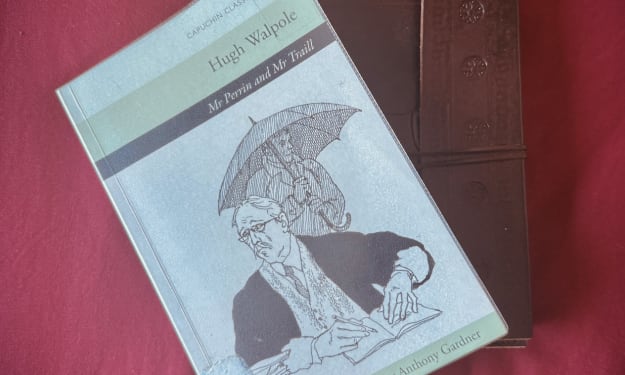
Book Review: "Mr Perrin and Mr Traill" by Hugh Walpole
As you know I've recently been to the library and picked up quite a few books. I was on the phone to my mother and she asked me why I needed so many - mother, don't you know me by now? Well, I've moved on from Kindle deals, though I don't know for how long because there's a book on The Borgias right there and...yes, I am now a proud owner of it. I knew I couldn't keep away long. This book we are looking at today is different to my usual requests but honestly, I really enjoyed it.
By Annie Kapur7 months ago in Geeks
Silver Screen Magic with Mae West
American actress and singer Mae West became a popular film actress during the Great Depression. She started entertaining in vaudeville, then performed on Broadway, and finally went to Hollywood. She signed up with Paramount Pictures and made her debut in the 1932 film “Night After Night.” She also starred in musicals, comedies, and crime dramas. The American Film Institute named her one of the best classic Hollywood actresses.
By Rasma Raisters8 days ago in Geeks
Emma Watson up for national award after JK Rowling comments
Emma Watson is up for a national award after her comments and feud with JK Rowling. The 35-year-old is studying at Oxford University, in the city where she grew up, having opted to study a Master’s degree in creative writing in September 2023.
By Dena Falken Esq4 days ago in Geeks
The CEO of Everything
They say "jack of all trades, master of none," but they forgot to mention the part where the jack of all trades is also the camera woman, the makeup artist, and the person currently yelling at a tangled Wii microphone cable in a her own bathroom while recording herself singing and trying to make it look realistic and professional. (As professional as you can make it with nothing but a cell phone camera and a mic that doesn't work)
By Sara Wilson4 days ago in Humans



Comments (2)
Thanks for sharing this review. It really captures the energy, innovation, and emotional depth of Manhattan Transfer. Dos Passos’ portrayal of city life feels just as relevant today.
He's a writer I have kept on my radar, but never explored.