
Madness, G Minor and The Apocalypse: 10 Quiet Scenes of Reflection in Chaotic Movies
The moments that allowed us to breathe

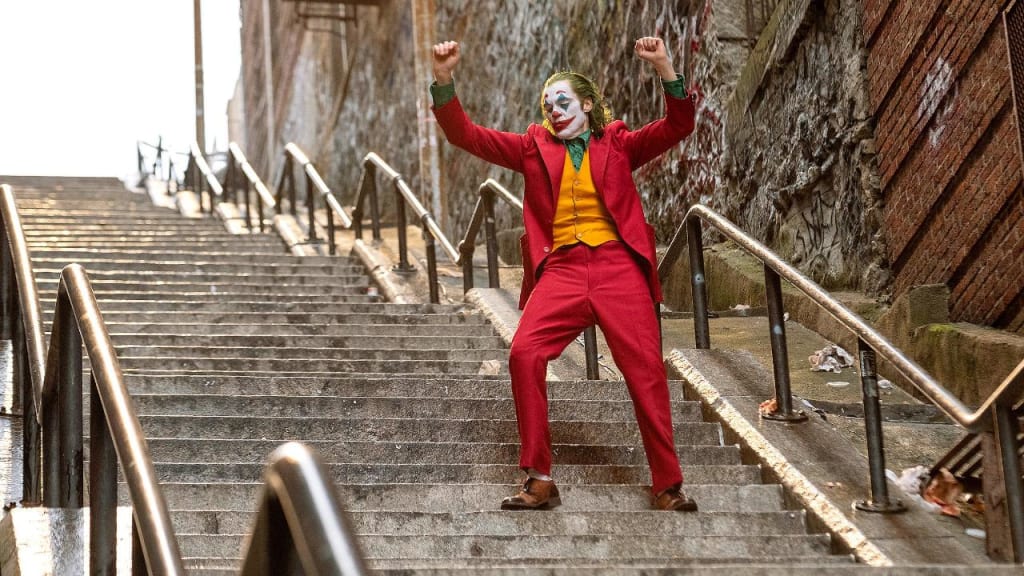
Whether it's zombies, self discovery, war or a cute but also terrifying monster; film, just like life, can never always be smooth sailing. The mind can only take so much at one time and if it all becomes a little too much to handle, whether that be in a fantastical world or through your own mirror, a few moments of stillness is often needed.
However, we're only here to talk about fictional chaos and the few moments that allowed us to catch our breath, readjust, and be thrust further down that rabbit hole that we all love so much.
Dancing in the rain, 'Kotoko' (2011)

Kotoko, directed by and co-starring Shinya Tsukamoto (Tetsuo: The Iron Man), became the first Japanese film to win the Best Film award in the Orizzonti section of the Venice International Film Festival. It follows a single mother, Kotoko (J-pop star Cocco, who also penned the story), who chooses to keep herself relatively shut off from the outside world as she goes about her seemingly rather mundane day-to-day life. We progress and learn through her narration that she deals with double vision and schizophrenia, which often leads to self-harm.
Kotoko is a chaotic and stressful viewing experience by way of the dizzy and shaky camera work reflecting her unhinged existence and the loud sounds of the city reflective of the ever-present chaos in her mind. So by the time of the scene in question, Kotoko has been through the worst; she has lost custody of her son and has been admitted to a mental hospital. Everything has gone south and looks as though it can't get worse. Well that's the thing- it can't.
As Kotoko stands outside holding an umbrella over her head to protect herself against the downpour, she pauses for a moment, the umbrella drops and an expression of acceptance and freedom ensues. Kotoko dances in the rain, without a care and free of the stress. This bittersweet moment changes everything. One moment of pure bliss, and nothing else.
The train, 'Spirited Away' (2001)
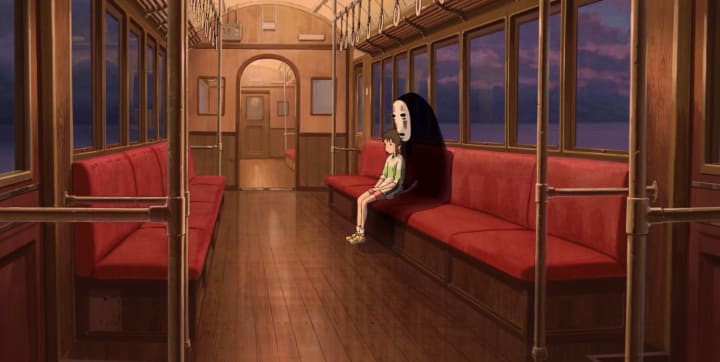
Studio Ghibli’s beloved Academy-Award winning masterpiece about a girl who finds herself in a supernatural realm is the highest grossing Japanese movie of all time. Hayako Miyazaki’s magic continues to wow every new generation and the studio have long-cemented themselves in the history books.
The train scene is a high-ranking favourite amongst film fans and it’s interesting because it is a scene where nothing actually happens. Although absent of any important events or plot information, the scene is far from unnecessary, quite the opposite in fact because by this point, Chihiro has been through a lot. Her life has been threatened at every turn and the initially aggressive spirit whom she befriends, known as No-Face, has made it his mission to gain her affection. His method to achieve that is by eating other beings which grants him their personality and physical traits, and also protects her. However he has eaten so many by this point that he has become a greedy, self-involved monster.
When we arrive at the train scene, it is a much needed break away from all the madness of the spirit world and its ominous inhabitants. It is a minute and a half of quiet to just breathe and take in everything that we’ve experienced as we admire the luscious scenery. It could be described as a sort of meditation and is a very welcome one.
The van, 'Love Exposure' (2008)
Love Exposure is prolific auteur Sion Sono's (Cold Fish) four-hour-long tale of love, lust, deception, sin, pornography, death and mistaken identities (not necessarily in that order). It tells the story of Yu Honda (Takahiro Nishijima), a well-behaved 17-year-old raised in a devout Christian family who becomes a sinner following a string of unfortunate events. He meets a beautiful girl named Yoko (Hikari Mitsushima) while dressed as a woman after being on the losing end of a bet and they instantly fall in love. There are only two problems: Yoko thinks that the person she met is a woman and a religious cult leader named Kioke (Sakura Ando) is carefully manipulating both of their lives.
Love Exposure is part satirical black comedy and part psychological drama; the first half is noticeably different tonally to the second. It is a journey of self-discovery, manipulation and influence.
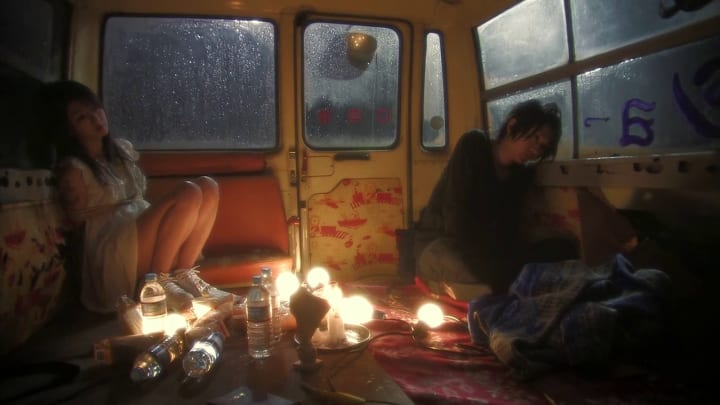
Kioke succeeds in getting into the heads of Yu’s family including Yoko. After his failure to get through to her civilly, he resorts to kidnapping and trapping her in a van for an un-specified amount of time. While this doesn’t sound like something that could be described as calm, it is the quietest part of the whole four hours. Like a melodic guitar solo in the middle of a death metal track, this is a much-needed period of quiet in the middle of unexplainable insanity on both sides of it. As Yu sits with Yoko just trying to get her to talk and get her head back to a normal place, the audience can relax for a moment. Getting too comfortable however, would not be recommended.
The bathroom, ‘Joker’ (2019)
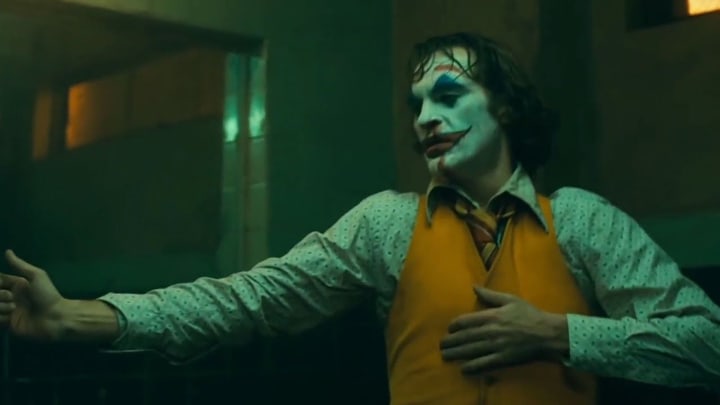
Todd Phillips’ recent take on the iconic DC villain is a rare occasion of a comic book movie creating mainstream Oscar buzz and quickly becoming iconic. Joaquin Phoenix’s portrayal of the mentally disabled Arthur who would eventually become the crown prince of crime is much more like a social commentary about society’s mistreatment of the mentally disabled rather than a movie about the Joker. In fact, one could remove the Bat-verse references and change the title and it would remain very much the same.
Arthur descent into Gotham’s most famous criminal is a long and painful one with his first murder occurring as a consequence of self-defence. Initially, that is. Arthur gets a taste for being able to silence those who anger and upset him and thus begins his transformation. After the three men are silenced with a flurry of bullets by Arthur’s hand, he flees into a nearby bathroom; coming to terms with what he has done. He then, in a reportedly improvised scene by Phoenix, begins to move his body and perform a sort of tai-chi in a state of awakening and euphoria; a culmination of all the negativity, hate and torment that Arthur has endured.
After all the literal madness preceding it, this peaceful albeit slightly disturbing scene is a welcome change of pace if only for just a few moments. For the audience, this scene is a re-adjustment to the direction the story will go. As we watch Arthur dance with the devil in the pale moonlight; losing himself, and truly finding himself. It’s eerily sinister, but also tragically beautiful.
The piano, ‘The Pianist’ (2002)
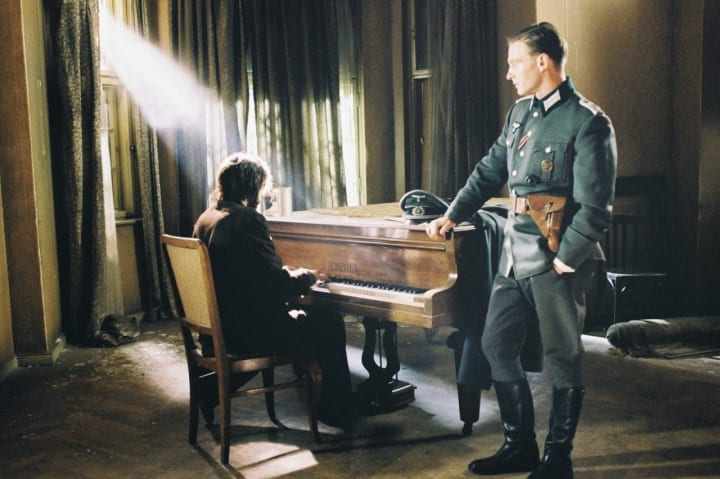
Any movie dealing with the subject of World War II and/or the holocaust will be full of tragedy; Roman Polański's (Rosemary's Baby) multi-award winning autobiographical drama starring Adrien Brody (with the screenplay by Ronald Harwood) is no different. Telling the story of composer, pianist and holocaust survivor Władysław Szpilman, based on his autobiography of the same name.
Clearly this is not a happy 150 minutes and that is why any scene that would provide a breathing moment would be a welcome one. Whilst we got that moment, not intending to pull away from the mood of everything outside this bubble, it is one filled also with great tension. As Szpilman searches an empty house for supplies, he is spotted by Wehrmacht officer Wilm Hosenfeld. At first glance, this would spell certain disaster for a Jewish man in hiding, and that does remain in the back of the viewers mind. Upon learning that Szpilman is a pianist, Hosenfeld asks him to play something on the grand piano in the house.
The events of the time stripped Szpilman of what he was most proud of, he tells Hosenfeld that he “was” a pianist. What follows is four-and-a-half minutes of Chopin’s Ballade in G minor as Szpilman is given permission to once again do what he loves, only this time presumably playing for his life; his uncertain grizzly fate awaiting him. Having said that, it is four-and-a-half minutes of no dialogue but more importantly, no hate. Hosenfeld agrees to let Szpilman stay in the attic of the abandoned house as we realise that indeed not all heroes wear capes; some wore a swastika.
The guitar, ‘Han Gong-ju’ (2013)

Han Gong-ju by director Lee Su-jin stars Chun Woo-hee in her first leading role which earned her multiple awards and she has since catapulted to the top of South Korean cinema. Han Gong-ju is inspired by the real-life Miryang gang rape case of 2004.
The film follows the story of the titular character after having suffered the awful tragedy as she tries to get on with her life and back on her feet. Obviously the event has changed her and her trust of others along with her efforts to stay away from any sort of attention. It all becomes a little difficult when a group of girls from her new school discover that she has musical talent.
By this point we still don’t know very much about Gong-ju. We know that something tragic has happened to her, we know a little about her past and her complicated relationships with her parents and some ominous occurrences amongst her old friends. But the scene in which she enters an empty classroom, picks up a guitar and sings; for a few minutes, she is free; free of the torment and free of the fear that consumes her. Living inside her own little world where all that exist are her, the guitar, and nothing else.
The dance, ‘A Girl Walks Home Alone at Night’ (2014)
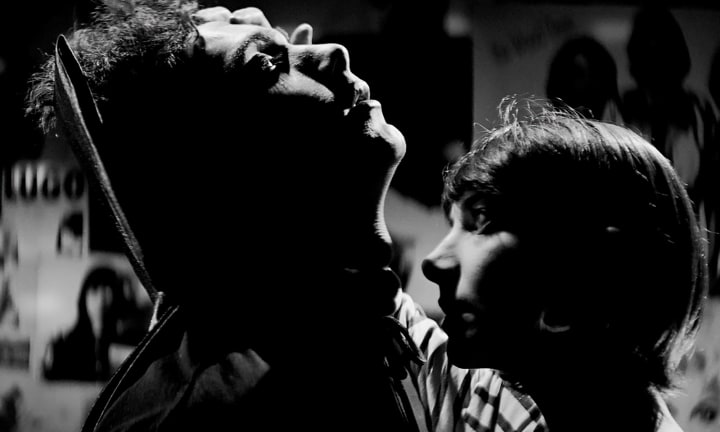
A Girl Walks Home Alone at Night is Ana Lily Amirpour’s toothy throwback to a time before any sparkles, duel gun-wielding Death Dealers, sword-wielding hunters or any leather trench coats. A Girl is much more in the vein of the fang-tastic tales of yesteryear like Dracula or even closer to 1914’s silent movie A Fool There Was.
Following the unnamed ‘Girl’ as she gets her blood-fix preying on men who disrespect women, the film is shot in black and white and oozes that classic style. It also has a very prominent focus on creating an ominous atmosphere to aid its slow-burn narrative.
In the middle of the movie comes a scene that is vastly different to any of the rest of the flick and yet exactly the same. Calm yet tense. The vamp spends her free time alone in her apartment and the times that she decides to leave consist only of blood. That changes after she meets Arash. Arash is looking after his heroin-addicted father and is as innocent as the vamp is immortal, plus he has no idea what she really is. When he shows up in her sanctuary ironically wearing a Dracula costume, it at first seems like the vamp will do her usual vampy thing but the two end up simply embracing and dancing to Death White’s ‘Lies’ as the vamp takes a moment in her immortality to just exist for that moment. Free of hate or anger, and full of bliss.
The baby, ‘Children of Men’ (2006)
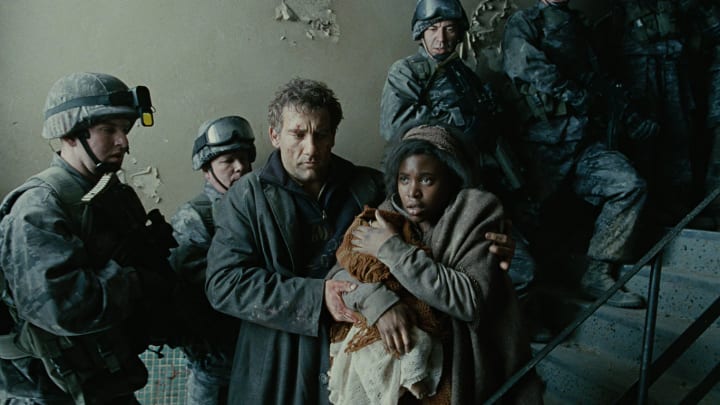
Alfonso Cuarón’s (Gravity, Roma, Harry Potter and the Prisoner of Azkaban) dystopian tale starring Clive Owen and based on P.D. James’ novel, imagines a future not too far from now in 2027 where humans have lost the ability to reproduce; society is on the brink of collapse and the issue of illegal immigration is on a continuous rise.
Of course the set up poses a lot of possibility for chaos and destruction and Children of Men delivers on all cylinders. Amidst all of that chaos and destruction is a miracle. We call it the miracle of birth almost as a bit of a throwaway phrase because truth be told, we take that miracle for granted. In Children of Men, the phrase takes on a whole new level.
After two decades without a single new life entering our world, Kee (Clare-Hope Ashitey), an illegal immigrant, falls pregnant. After her miracle is born, the protection of the baby becomes the most important thing in the world and the scene in which Clive Owen’s Theo Faron escorts Kee and her baby through a war zone is tear-jerking and oh so chill inducing. At the sound of a crying baby; a new life, the fighting just stops. What has happened in that moment is far more important than the ongoing war and everybody, including all the soldiers sworn to follow their destructive orders, lower their weapons in the face of pure innocence as they take a moment to witness something that brings hope back to our race. Nobody has seen a baby in twenty years and the pure awe and emotion on display is so powerful. Children of Men is an easy contender for the most underrated movie of all time and is for sure on its way to becoming a cult icon. It is scenes like this one that make it easy to see why.
The horses, ‘28 Days Later’ (2002)
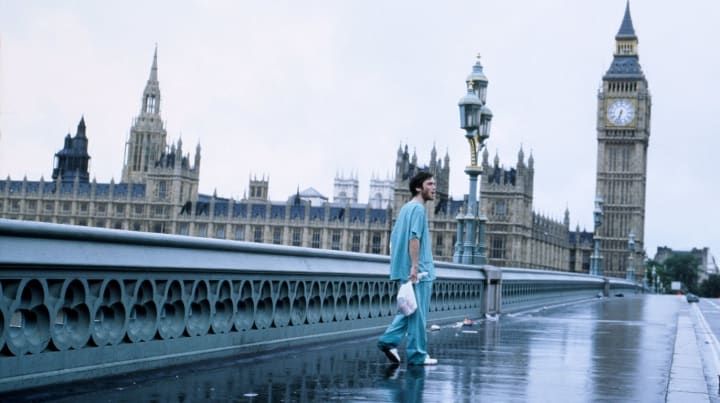
Another Brit-based post-apocalyptic tale also by an acclaimed director, Danny Boyle (Slumdog Millionaire, Steve Jobs) is cited as one of the best British movies ever made. 28 Days Later is a horror movie with heart; following the aftermath of the breakout of a viral infection destroying humanity as we know it. Sound familiar?
The film does a fantastic job of creating a real sense of isolation in the vastly large areas of the nation’s capital other cities major landmarks and cities cities including Manchester. Together with the all-star cast of the U.K scene with Cillian Murphy, Naomie Harris, Christopher Eccleston, Megan Burns, and Brendan Gleeson, 28 Days Later is a must-watch for any fans of the genre.
The scene in which our four sit and enjoy some of the food they have acquired is beautifully interrupted by the site of a family of horses galloping past the scene. The group take a moment to appreciate this moment of peace and tranquility in the hectic situation that they have been riddled with; it is a reminder that despite everything that has been lost, there is still beauty in our world. The scene boasts a certain dreamlike quality as it also presents us with a sort of grim but also in a way reassuring reminder that life can and will go on with or without us humans. As the horses depart the scene, Frank blows them a kiss- perhaps a thank you for showing him that maybe there will be peace after all.
The coyotes, ‘Collateral’ (2004)
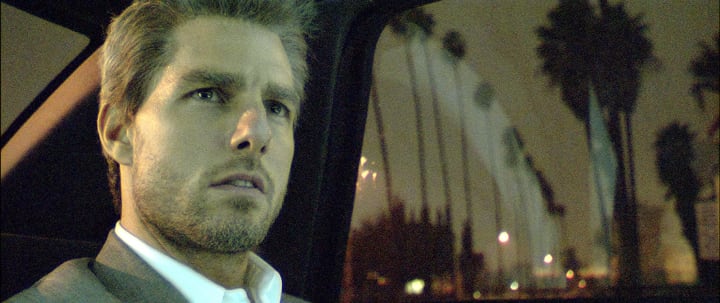
With Tom Cruise’s lengthy career as a nice-guy action star, a movie as different for Hollywood’s sweetheart as Collateral is an easy one to get lost amongst his filmography. In what is perhaps the most underrated performance of his career, this is Tom Cruise like you’ve never seen him before- a cold-blooded assassin, and ultimately a bad guy.
By Michael Mann (Public Enemies, Heat) Collateral is a neo-noir with a colour palette lit by the cool night skies of LA. It follows Vincent (Cruise) on a mission to assassinate a series of five targets in a single night. He recruits cab driver, Max (Jamie Foxx) as his reluctant personal chauffeur.
Amidst the evening that is dare I say, rather fast and rather furious, the pair spot a pair of coyotes as they are cruising through the streets and the two men just observe as they scurry by. Aided by Audioslave’s ‘Shadow on the Sun’, the scene in a lot of ways is the tonal chalk to the film’s cheese however could serve as a representation of a number of things.
The most common idea is that the coyotes are a metaphor of Vincent: A lone wolf unsure of his place in the world; passing through the night in search of prey. It is also perhaps when Vincent notices the goodness in Max, to stop to let the animals cross the street. Perhaps an ordinary action for you and I, but for somebody like Vincent, perhaps not. However one chooses to interpret it, it is generally agreed that it serves as a moment of self-reflection for Vincent. It an easy-going moment in an otherwise deadly night. Although interestingly enough, the coyotes were reportedly unplanned, so perhaps there is no intended meaning at all; yet it is the most powerful scene of the movie.
About the Creator
Keep reading
More stories from Alex Leptos and writers in Geeks and other communities.
Vengeance, Vampires and Vibrant Celestial Beings from the Moon: 6 of the Most Beautiful Movie Scenes of the 2000s
It's staggering just how much work goes into cinematography to create a film’s look alone. Some unfortunate movies don’t really achieve much past their mesmerising visuals and sometimes it’s just enough to save them. The best film-makers however, use visuals as a rich and diverse tool to aid in the telling of their stories.
By Alex Leptos6 years ago in Geeks
Silver Screen Magic with Mae West
American actress and singer Mae West became a popular film actress during the Great Depression. She started entertaining in vaudeville, then performed on Broadway, and finally went to Hollywood. She signed up with Paramount Pictures and made her debut in the 1932 film “Night After Night.” She also starred in musicals, comedies, and crime dramas. The American Film Institute named her one of the best classic Hollywood actresses.
By Rasma Raisters6 days ago in Geeks
Ikkis and Dhurandhar Should Co-Exist in a Democracy’: Writers on Facing Trolls and Working With Dharmendra
In an era where social media commentary often overshadows artistic discourse, the creators of the upcoming film Ikkis have opened up about navigating public scrutiny, collaborating with Bollywood legend Dharmendra, and defending the democratic spirit of storytelling. The film, which blends political satire with action-driven drama, has sparked discussions not only about its cinematic merit but also about the broader responsibilities of filmmakers in a politically aware society.
By Fiaz Ahmed Brohi3 days ago in Geeks
Wild Card Weekend Recap: What Happens Now?
I think I figured out why I love Wild Card Weekend so much. It's because it's the first playoff anything of the calendar year. The NFL season starts in the fall, and once upon a time, the champion was crowned either on or slightly before New Year's. The evolution of the NFL schedule has resulted in the playoffs starting just into the New Year, and currently, the final week of the season falls on the first weekend of the New Year, with Wild Card Weekend coming a week after that. So yes, chronologically, the NFL's Wild Card Weekend serves as the first playoff anything of the calendar year.
By Clyde E. Dawkins7 days ago in Unbalanced



Comments
There are no comments for this story
Be the first to respond and start the conversation.