
Lotte in Weimar by Thomas Mann
Why It's a Masterpiece (Week 64)


Lotte in Weimar, published in German in 1939 as Lotte in Weimar: Der Roman von Goethe, was written by Thomas Mann whilst he was living in exile from Nazi Germany. The novel sees Mann's turn to historical fiction and reflects on his engagement with German cultural identity and history. Mann based the story on the 1816 real-life visit of Charlotte Buff, (a former love interest of the young Johann Wolfgang von Goethe), to Weimar, where Goethe was then a famed public figure. Mann used this event as a framework to delve into Goethe’s life, influence, and the psyche of the emerging Germany.
The novel was first translated into English by H.T. Lowe-Porter and published in 1940, receiving praise for its concentration on Goethe’s legacy and its commentary on love. Mann was a Nobel laureate known for his profound and often complex prose. He uses Lotte in Weimar to reflect on Germany’s heritage amidst the grim backdrop of the Nazi era, creating a work compiled with irony, philosophical dialogue, and introspective characterisation.
Plot

This novel tells the story of Charlotte "Lotte" Kestner (née Buff), a woman who visits Weimar in 1816 to see her former admirer, Johann Wolfgang von Goethe. Lotte had been immortalised in Goethe's famous novel The Sorrows of Young Werther as the heroine who inspires the his tragic love, and she remains an object of fascination for German readers due to this characterisation. Now in middle age, Lotte arrives in Weimar both curious and apprehensive. She is carrying memories of her youth and wondering how her encounter with Goethe will unfold.
Upon her arrival, Lotte is greeted by locals who are eager to meet “Werther’s Lotte.” As she settles into the hotel, her presence stirs up great interest and becomes the talk of the town, with various characters discussing Goethe’s impact and the legacy of his writing. Lotte herself is torn between her nostalgia for her youthful romance with Goethe and her reservations about the man he has become. He is now revered as a towering intellectual and cultural figure. Famous more for his writing, she is known only in context of him and his works, not as her own person.
The novel consists largely of conversations and introspective passages as Lotte encounters Goethe’s admirers, associates, and detractors. When she finally meets Goethe, their conversation reveals the sheer distance time has placed between them and the rose-tinted memories of their youth. Goethe, still charming but now somewhat more complex than she remembers, treats Lotte with respect but is also preoccupied with his own legacy, seeing her as an item from his past rather than the person she is in the present.
Into the Book

"The Nature of Fame" is central to the novel, with Mann presenting Goethe as a character caught between his personal identity and his public image. Goethe has become not merely a writer but a cultural icon whose work redefines him more than his own personality.
Through Lotte’s arrival and her interactions with Goethe’s admirers and critics, the author shows the weight of fame and the dehumanisation that often accompanies it. Goethe is depicted as someone who is aware of the “mask” he wears for society and it is one that both protects and isolates him.
Mann’s language, especially through Goethe’s introspection and dialogue, reflects this ambivalence; Goethe refers to his fame as both a “gift” and a “prison,” revealing his complex relationship with his renown. This duality is shown also through phrases like “the burden of worship” and “shadow of adulation,” which concern Goethe’s discomfort with being seen as more than human.
"For the sake of the past and for the future’s sake, I strive to hold myself firm and stay clear-headed."
- Lotte in Weimar by Thomas Mann
"The Passage of Time" (and the inevitable transformation of relationships over time) are also explored through Lotte’s visit to Weimar. Her memories of Goethe and the passionate, youthful relationship they shared have been frozen in time. They are pretty much preserved in Goethe’s novel as an idealised romance. However, when she meets Goethe decades later, she realises that both he and she have changed beyond recognition from their former selves.
The author uses Lotte’s nostalgia as a lens to examine how time can alter our perception of others, especially those who have been idealised both by the personal and the public. Lotte’s monologues are filled with poetic descriptions of her past. This serves as something intense and contrasting from the restrained, almost detached language Goethe uses to speak of those days. The phrases “lost youth” and “ghost of innocence” portray Lotte’s sense of something precious yet unreachable, while Goethe’s responses reflect his acceptance of the past as something closed and immutable.
“The poet's role is not to become, but to be; and therefore, only he is truly alive who can transcend the petty ambitions of life and live above them.”
- Lotte in Weimar by Thomas Mann
"The Dichotomy between Reality and Idealisation" is another theme that Mann develops, particularly through Lotte’s experience as “Werther’s Lotte.” She is constantly confronted by the image of herself that exists in the minds of Goethe’s readers: a woman who represents a fictionalised ideal rather than a real person.
Mann uses this dynamic to explore the distance between art and life, demonstrating how the two can intertwine yet remain fundamentally separate. This is done through the fact that Lotte has actually changed, contrary to what the public want to believe.
Lotte’s inner dialogue shows her grappling with this discrepancy, with phrases like “shadow of my own creation” and “captive of a dream” reflecting her unease at being immortalised in a way that no longer showcases her reality.
Goethe’s treatment of Lotte as both a muse and a symbol of his artistic past further complicates her understanding of herself. The author often uses subtle irony in these interactions to highlight the impossibility of living up to the ideals we create in art.
"How extraordinary the human mind is; it is both fragile and resilient, prone to doubts and illusions, yet capable of soaring insights."
- Lotte in Weimar by Thomas Mann
Why It's a Masterpiece

Lotte in Weimar is considered a masterpiece for its intellectual depth, innovation on juxtaposing themes, and its exploration of timeless ideas related to memory and identity. Thomas Mann uses the historical figure of Goethe as a lens to reflect on broader questions about the nature of fame and the complex relationship between art and life. By fictionalising Goethe’s interactions with Lotte Buff, Mann delves into the psychological impact of being immortalised through art and the existential burden of carrying a public persona that often eclipses personal identity.
The author's ability to combine meticulous historical detail with profound philosophical inquiry has earned Lotte in Weimar its place as a celebrated work of modernist literature. The novel’s structure, composed largely of dialogues and monologues, is challenging encouraging readers to engage deeply with the characters’ inner lives and the socio-political climate of early 19th-century Germany.
(Side note: one of the things I have adored about studying this era of Germany into the Weimar and then the Nazi era is how many ways you can read Lotte in Weimar. Set in early-19th century Germany, using themes clearly from the Weimar Era and written under Nazi rule - it is something quite fantastic).
Mann’s prose is at its most introspective, captures the emotional complexity of characters torn between past and present, individual identity and social expectation.
Conclusion
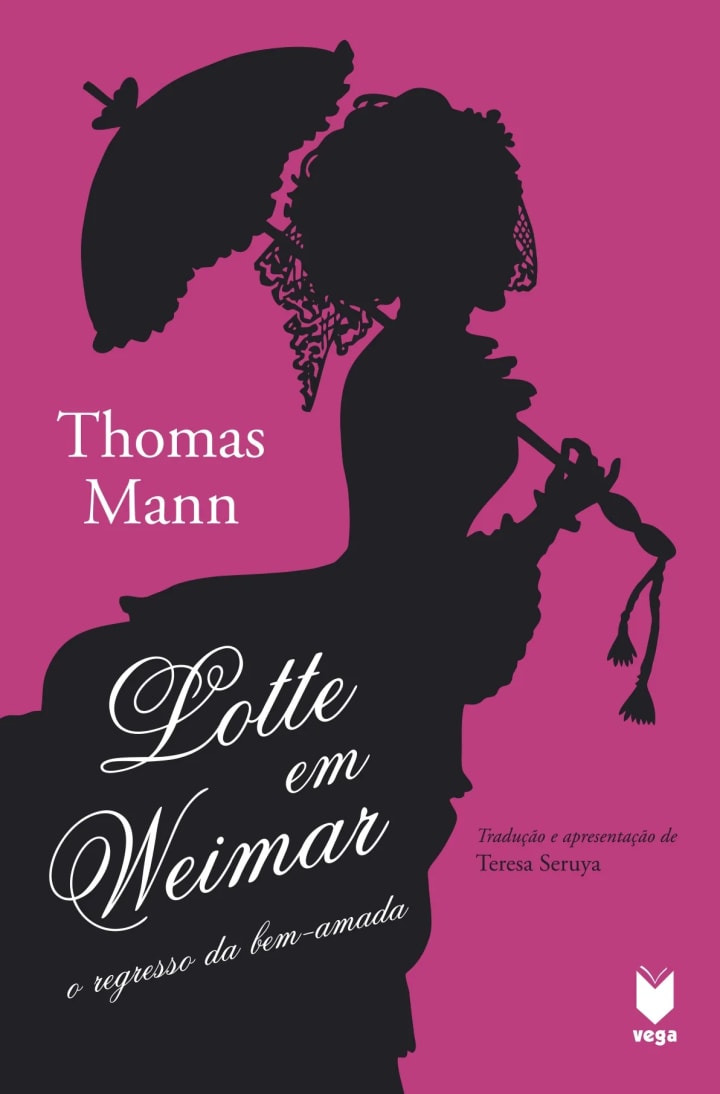
I love this book. When I first read it, it became one of my favourite books of all time. It is a beautifully intense read and I hope, that if you read anything by Thomas Mann, that it is either this or Dr Faustus. His work is absolutely brilliant in the modernist writing of Germany's literary history. So, on to next week!
Next Week: Less Than Zero by Bret Easton Ellis
About the Creator
Annie Kapur
I am:
🙋🏽♀️ Annie
📚 Avid Reader
📝 Reviewer and Commentator
🎓 Post-Grad Millennial (M.A)
***
I have:
📖 280K+ reads on Vocal
🫶🏼 Love for reading & research
🦋/X @AnnieWithBooks
***
🏡 UK
Keep reading
More stories from Annie Kapur and writers in Geeks and other communities.
Book Review: "The Extraordinary Life of Sam Hell" by Robert Dugoni
I'm back to reading those books that I have never heard of by authors I have never heard of. If you're struggling on what to read, then I suggest you let Amazon Kindle Unlimited do the choosing for you. Go for something you like the initial read of and run from there. You will find that even though the big corporations are, in fact, evil - this is probably the best way to discover books you would have never otherwise seen around and about. This is how I discovered this John Irving-esque novel entitled The Extraordinary Life of Sam Hell - a boy born into strange circumstances with something that makes him special, but left out amongst his peers.
By Annie Kapur8 months ago in Geeks
Silver Screen Magic with Mae West
American actress and singer Mae West became a popular film actress during the Great Depression. She started entertaining in vaudeville, then performed on Broadway, and finally went to Hollywood. She signed up with Paramount Pictures and made her debut in the 1932 film “Night After Night.” She also starred in musicals, comedies, and crime dramas. The American Film Institute named her one of the best classic Hollywood actresses.
By Rasma Raisters8 days ago in Geeks
Fallout Season 2 Episode 5 Review: The Wrangler & Major Lore Drop Explained
Fallout Season 2 Episode 5 arrived swinging with one of the densest, most lore-heavy chapters of the series so far. We’ve got timeline twists, New Vegas callbacks, Mr. House slowly stepping out of the shadows, and more clues about who actually launched the bombs than we’ve ever gotten in any game.
By Bella Anderson6 days ago in Geeks


Comments
There are no comments for this story
Be the first to respond and start the conversation.