
Little Women (2019) Film Review
Little Women: from page to screen
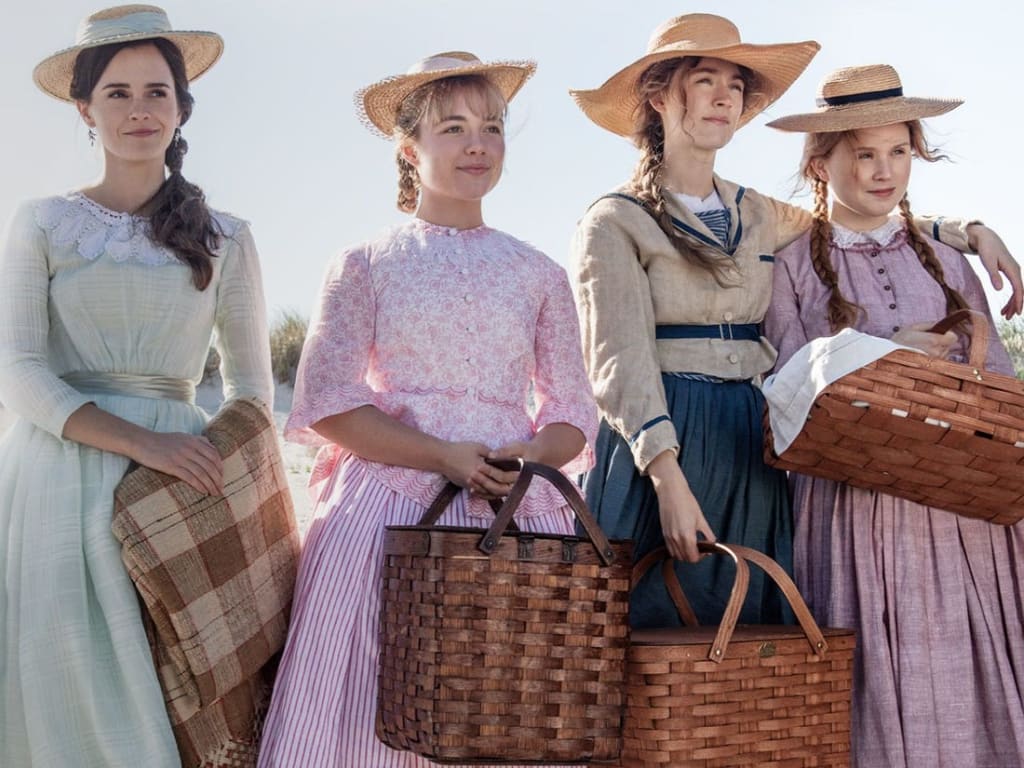
Greta Gerwig’s 2019 adaptation of Louisa May Alcott’s Little Women is nothing short of excellent. Known for the success of her original film Lady Bird (2017), Gerwig wrote and directed the adaptation of the childhood classic with a star-studded cast including Saoirse Ronan, Timothée Chalamet, Emma Watson and Meryl Streep (absolute queen). With such an incredible cast and talented writer/director, I shouldn’t have been surprised at the brilliance of Little Women, and yet it still blew me away.
I must begin by noting the excellent handling of the double timeline throughout the film; a narrative of childhood plays alongside a narrative of adult life, without the jarring interruption of time stamps. Gerwig places trust in the intelligence of her audience to piece together her non-chronological plot and equally, the audience trusts the film to unfold and make sense. Differentiation between the two timelines is helped by colour correction; childhood is depicted through a warm, golden filter that perfectly encapsulates the feeling of safety and beauty in youth. Adulthood is shot in a thin, cold light that perfectly matches the tone of the plot. Gerwig’s rearranging of the plot is beautifully executed. The manipulation of structure and style allows her to place focus on themes such as the role of woman and marriage, and place romantic plotlines further in the background to bring the film into our era. Female ambition takes centre stage, particularly in the decision to have the film begin and end with the topic of Jo’s writing career, allowing Gerwig to make Little Women more prevalent to today’s society than imaginable for an 1860’s text.
Beyond Gerwig’s reimagining of the structure of the novel, it is commendable how faithfully she sticks to the original plot and tone while simultaneously giving us more than we expected. Amy’s character, portrayed perfectly by Florence Pugh, is given a new depth that is not often found in reading the original text. From my memory of reading Little Women as a young girl, I always pictured Amy to be a bratty, selfish girl with little understanding of the real word. In manipulating the timeline and reimagining Amy, Greta and Pugh manage to justify Amy’s bratty behaviour with an understanding that she is frustrated by the constraints placed on her within society. She wants to be the best artist in the world, she has ambition, yet she knows her role is to marry well and not for love. Marriage is a financial exchange and social status move that benefits her family. Not only is Amy given new depth, she is also hilariously funny in Pugh’s depiction of her. A particularly notable moment comes as she is stood outside the Laurence’s house and declares ‘I have lovely small feet. The best in the family.’ The audience could not help but be endeared by Amy’s witty charm, and so her character was revitalised beautifully by Greta Gerwig.
The performance of all the actresses playing the March sisters is commendable. Not once did a sister appear one dimensional or flat; each girl had their own ambitions, drives and motives that set each apart from the other. The ingenious costume design also supported the depiction of sisters: each girl had their own defining colour, and all the colours came together to make up the outfit that Laura Dern wore as Mary March. The comradery created between the girls on screen, both through costume and outstanding acting, made their sisterly bond and love undeniable. Equally, the on-screen chemistry between Saoirse Ronan and Timothée Chalamet created a beautifully dynamic friendship between Jo and Laurie. Previously cast together in Gerwig’s Lady Bird, the pair had the audience captivated and warmed by their natural bond.
Saoirse Ronan shone as Jo March, particularly in her impassioned speech about the role of women: ‘Women. They have minds, and they have souls as well as just hearts. And they’ve got ambition and they’ve got talent as well as just beauty. And I’m so sick of people saying that love is just all a woman is fit for, I’m so sick of it. But I’m so lonely.’ The moment is beautifully executed; the acting is natural, empathetic and raw. There is an undeniable notion that desiring love as a woman is not a weakness or failure to feminism, but a natural human response. Greta draws on the other writings of Louisa May Alcott to create the script for this moment, keeping close to Alcott’s language and assertions. The depiction of loneliness appears effortlessly perfect and raw, making it my favourite moment in the film.
There are too many skilfully crafted aspects of this film to name them all: the cinematography was delicious and effortlessly allowed the beautiful landscapes to shine; the emphasis upon the geographical and metaphorical placement of the March house between rich (the Laurence’s house) and poor (the Hummels’ house) created a subtle commentary on social class; the chaos of the March girls in comparison to the still, grand, masculine setting of the Laurence’s house was beautifully telling of the March family energy; and Gerwig’s subtle emotional manipulation and flow of tone never failed to be smooth and assured.
If you have yet to have seen Little Women, I urge you to find the time to do so. Let it wash over you, and then sit with you for a few days. Pick up a copy of Louisa May Alcott’s original text. While you’re at it, indulge in watching Lady Bird (it’s on Netflix and it is 1 hour 35 minutes well spent). Needless to say, I cannot wait to see what Greta Gerwig does next.
About the Creator
Keep reading
More stories from Brooke Le Breton and writers in Geeks and other communities.
Reading in a Pandemic
So, we are all well aware by now that the world is not doing too well. Things aren’t great to say the least. We are living in an anxiety fuelled time, which doesn’t make creativity or concentrating particularly easy. Lots of people have been expressing their struggles with reading over the past few weeks, and I really relate. Studying English Literature as my degree means I couldn’t afford to stop reading completely, so I have had to come up with strategies to keep myself absorbing the words. Today, I want to share some of these tips in the hopes that maybe it will help a few people get reading again!
By Brooke Le Breton6 years ago in Geeks
Silver Screen Magic with Mae West
American actress and singer Mae West became a popular film actress during the Great Depression. She started entertaining in vaudeville, then performed on Broadway, and finally went to Hollywood. She signed up with Paramount Pictures and made her debut in the 1932 film “Night After Night.” She also starred in musicals, comedies, and crime dramas. The American Film Institute named her one of the best classic Hollywood actresses.
By Rasma Raisters3 days ago in Geeks
Ludacris and Nelly draw backlash over bookings at MAGA-coded music festival
Ludacris and Nelly headlining a mostly right-wing event is good for them. It’s also great for the genre of hip hop. The two rap veterans have showcased their talents on other stages. Why can’t they perform for mostly MAGA folks and grab that bag?
By Skyler Saunders2 days ago in Beat


Comments
There are no comments for this story
Be the first to respond and start the conversation.