
Legacy in Unity: Why Sam Wilson and Steve Rogers Will Stand Shoulder-to-Shoulder in Avengers: Doomsday (2026)
How the MCU Can Honor Captain America’s Legacy Without Replacing the New Hero.


The latest MCU teaser for Avengers: Doomsday–Marvel Studios’ epic ensemble film set for release in December 2026–has reignited one of the franchise’s most passionate debates: Will Steve Rogers return to the forefront, or will Sam Wilson remain the true Captain America? Early reactions to the teaser confirm the shocking return of Chris Evans as Steve Rogers, showing him riding a motorcycle and cradling a baby — a peek at a life beyond his heroic past.
Despite online speculation that Rogers might reclaim the mantle, a careful reading of MCU continuity, narrative intentions, and comic book precedent strongly suggests a more likely and satisfying path: Sam Wilson remains Captain America, teaming with Steve Rogers as an ally, mentor, or multiversal variant, rather than being displaced.
The Narrative Stakes of Sam Wilson’s Captain America

Since Avengers: Endgame (2019), when Steve Rogers passed his shield to Sam Wilson, the MCU has been actively building Sam’s journey into the mantle. His ascension was more than the passing of a shield; it was a deliberate exploration of legacy, worthiness, and identity. The Disney+ series The Falcon and the Winter Soldier and the feature Captain America: Brave New World centered on Sam’s struggle to earn the title in his own right.
This groundwork matters because Marvel Studios rarely undermines long-term character development without significant payoff. Having Sam displaced by Rogers’s return–especially after Marvel invested years in establishing him as the heir to Captain America–would feel abrupt and unearned. Instead, the MCU is far more likely to emphasize collaboration over replacement
Reading Between the Lines of the “Doomsday” Teaser
The Avengers: Doomsday teaser depicts Steve Rogers living a quiet life, complete with domestic imagery, such as holding a baby. This suggests retirement, not resurgence. The teaser announces Steve Rogers’s return but does not directly show him reclaiming the Captain America mantle.
In visual storytelling, imagery matters. If the goal were to signal Steve's return as Captain America again, the teaser likely would have shown him in uniform, ready for battle. Instead, the focus on reflection and domesticity primes the audience for a story of mentorship and legacy, suggesting that Steve will aid Sam rather than replace him.
Comic Book Precedent: Multiple Captain Americas and Variants

Comic book history reinforces the idea that multiple Captain Americas can coexist. Notably, the Earth-61311 variant of Steve Rogers, corrupted by Hydra, illustrates how alternate versions can appear without undermining the main character. In the comics, Sam Wilson confronts this Hydra variant in Secret Empire (2017), ultimately restoring the true Rogers and defeating Hydra’s grip on the American ideal.
In the MCU, multiversal storytelling allows for a similar dynamic: Steve could appear as a mentor, guide, or variant without taking the mantle from Sam. Such an approach would emphasize collaboration, legacy, and that heroism transcends one individual’s shield.
Why Marvel Would Choose Collaboration Over Replacement
- Respect for Character Development: Sam Wilson’s arc has been central to the MCU’s Phase 4 and Phase 5. Displacing him now would undermine years of narrative investment.
- Narrative Depth Through Mentorship: Teaming Sam and Steve allows exploration of legacy, generational transition, and moral complexity.
- Scale of Threat: The 'Doomsday' title implies a massive, multiversal threat. Unity is narratively interesting, making collaboration between the two Captain Americas a logical choice.
Could Marvel Use the Hydra-Cap Storyline?
Some fans speculate Marvel could adapt the Hydra Steve Rogers storyline from Earth-61311 as an MCU plot twist, but doing so would require careful narrative framing. Using the beloved Steve Rogers as a villain risks alienating audiences. A more likely approach is to explore a variant or multiversal version as a foil or mirror to Sam, enriching the story without displacing the new Captain America.
How Steve Rogers Could Return From the 1940s Without Reclaiming the Shield
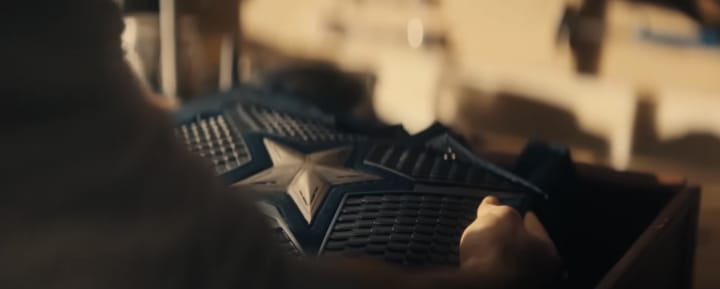
One of the most persistent questions surrounding Steve Rogers’s potential return in Avengers: Doomsday concerns which Steve is returning, and how that return aligns with the MCU’s established rules of time travel and aging. Avengers: Endgame (2019) complicated Steve’s fate in a way that actually opens the door for his return without undoing Sam Wilson’s legitimacy as Captain America.
When Steve Rogers traveled back to the 1940s to return the Infinity Stones, he made a conscious choice to remain in the past and live a full life with Peggy Carter. The Russo Brothers have previously suggested that this choice created an alternate timeline, meaning Steve did not overwrite Earth-616 history but branched into a parallel reality. Under this interpretation, two crucial versions of Steve Rogers can logically exist:
- An aged Steve Rogers who lived an entire lifetime with Peggy and eventually returned to Earth-616 to pass the shield to Sam Wilson.
- A younger, unaged Steve Rogers who remained active in the alternate 1940s timeline, preserved by the Super Soldier Serum.
The serum has long been established as slowing Steve’s aging dramatically. Even in the prime MCU timeline, Steve survived decades frozen in ice without aging physically. If the serum continued to function after his return to the 1940s, it is entirely plausible that this alternate Steve Rogers did not age normally at all–remaining physically in his prime while living quietly off the public stage.
Multiverse Mechanics Make the Return Plausible
With the MCU’s post-Loki multiverse framework, returning to Earth-616 no longer requires traditional time travel. A Steve Rogers from a branched timeline could re-enter the “main” universe through:
- Multiverse incursions
- TVA intervention
- Doctor Strange-style dimensional manipulation
- Or cosmic-level interference tied to Avengers: Doomsday’s central threat.
Crucially, this version of Steve would not be reclaiming his old life, nor undoing his choice to step aside. Instead, he would be returning as a man out of time twice over: a Captain America who chose retirement but is called back by necessity, not ego.
Why This Steve Rogers Would Not Reclaim the Mantle
From a narrative standpoint, Steve Rogers has already completed his character arc.
He chose love over duty.
He passed the shield intentionally.
He recognized Sam Wilson as Captain America.
To reclaim the mantle now would invalidate that growth. Instead, his return functions most powerfully if Steve occupies a non-competitive role–one that reinforces Sam’s authority rather than undermines it.
In Avengers: Doomsday, Steve Rogers works best as:
- A seasoned strategist.
- A moral and historical anchor during multiversal collapse
- A living embodiment of what Captain America was, standing beside what Captain America has become.
By standing beside Sam rather than in front of him, Steve affirms that Captain America is not a title to be reclaimed, but a legacy meant to move forward.
Conclusion: A Shared Legacy, Not a Stolen One

The return of Steve Rogers in Avengers: Doomsday is undoubtedly one of the MCU’s most emotionally charged developments. Yet when examined through the lens of continuity, character integrity, and Marvel’s long-standing approach to legacy storytelling, the evidence overwhelmingly points toward collaboration rather than replacement.
Sam Wilson’s Captain America is not a temporary placeholder. His journey–from doubt to conviction, from Falcon to Captain–has been the foundational narrative of the MCU’s modern era. To sideline him now would undermine years of deliberate storytelling and erode the thematic weight of Steve Rogers’s ultimate choice in Endgame.
Instead, Avengers: Doomsday offers Marvel Studios a rare opportunity: to honor the past without erasing the present. Steve Rogers can return as a symbol, a mentor, or even a multiversal echo–while Sam Wilson stands at the center of the Avengers as Captain America.
In doing so, the MCU affirms its most powerful truth: heroes are not defined by who holds the shield, but by who carries the ideals forward.
And in Doomsday, those ideals are strongest when Steve Rogers and Sam Wilson stand together.
About the Creator
Jenna Deedy
Just a New England Mando passionate about wildlife, nerd stuff & cosplay! 🐾✨🎭 Get 20% off @davidsonsteas (https://www.davidsonstea.com/) with code JENNA20-Based in Nashua, NH.
Instagram: @jennacostadeedy
Keep reading
More stories from Jenna Deedy and writers in Geeks and other communities.
In Defense of the Makers: Why Disney Fandom Must Actively Support Human Creativity
Disney's enduring appeal lies in more than just stories; it sells feelings of wonder, nostalgia, and belonging — a century-long magic crafted by human artists, animators, and storytellers. However, this legacy now faces an urgent challenge as artificial intelligence is integrated into creative pipelines.
By Jenna Deedy25 days ago in Geeks
Marvel Zombie
The last entry into our 2025 superhero projects catalogue is Marvel Zombies. This was a show that was anticipated by absolutely no one and it disappeared from the public consciousness as quickly as it was released. There was nothing special about the project that made it a must see, or a must remember. In fact if anything it's a must forget.
By Alexandrea Callaghan16 days ago in Geeks
Everything We Know About 'Dune 3' So Far
When Dune: Part Two concluded, Denis Villeneuve did not simply finish a story—he detonated one. The film’s ending left audiences exhilarated, disturbed, and quietly unsettled as Paul Atreides finally embraced the role destiny had been forcing upon him. Victory came swiftly, but so did dread. The holy war had begun, and Paul knew it.
By David Cook2 days ago in Geeks



Comments (2)
I really like your theories and logic here. I'm looking forward to seeing how the movie plays out.
This is a very logical assessment. The one thing it overlooks is sales, which is the same problem presented when Sam replaced Steve in the comics, and when Miles Morales was introduced as Spider-Man in the Ultimate Universe. Many fans thought the idea of a younger, diverse Spider-Man (Miles) was great, and some of them bought the title when it centered on Miles, but the majority of fans want to see Peter Parker as Spider-Man. Not Miles, not Otto Octavius' mind in Parker's body, working toward redemption as a hero. Peter Parker. And so, after years of establishing new direction and established storyline, Peter was restored as Spider-Man again and again. It was a similar situation with Captain America. Cap effectively had two great partners over his long, long career- Bucky, who had become the Winter Soldier, and Falcon. Cap died at the end of Civil War and Bucky took up the mantle after a number of heroes, including Hawkeye, were asked to take it up. He joined the New Avengers and was overall pretty effective, providing a new Captain America who was a logical heir to the legacy, and who, unlike Steve, wasn't the go-to leader in every situation. Still, Steve returned. Then Steve got old, not for the first time, and he had to fall back to a mainly leadership position, directing the Secret Avengers. He passed the mantle to Falcon this time, making it official. Sam Wilson was Captain America, as chosen by Steve Rogers himself. The book was fine, but the majority of fans still wanted to see Steve Rogers as Cap. So once again Steve's youth and full power were restored and there were two Captain Americas. Sam's Cap joined a new version of the Avengers and it was shown how effective he was, but overall fans like established heroes to have their roles. Tony Stark as Iron Man, Thor as Thor, not Jane Foster. Steve Rogers as Captain America. Bruce Wayne as Batman. The MCU hasn't done so well after Endgame. There have been some hits, but some significant misses, and there was discussion about brining back the original Avengers to try to right the course. Money counts, especially when Disney is often bleeding it.