

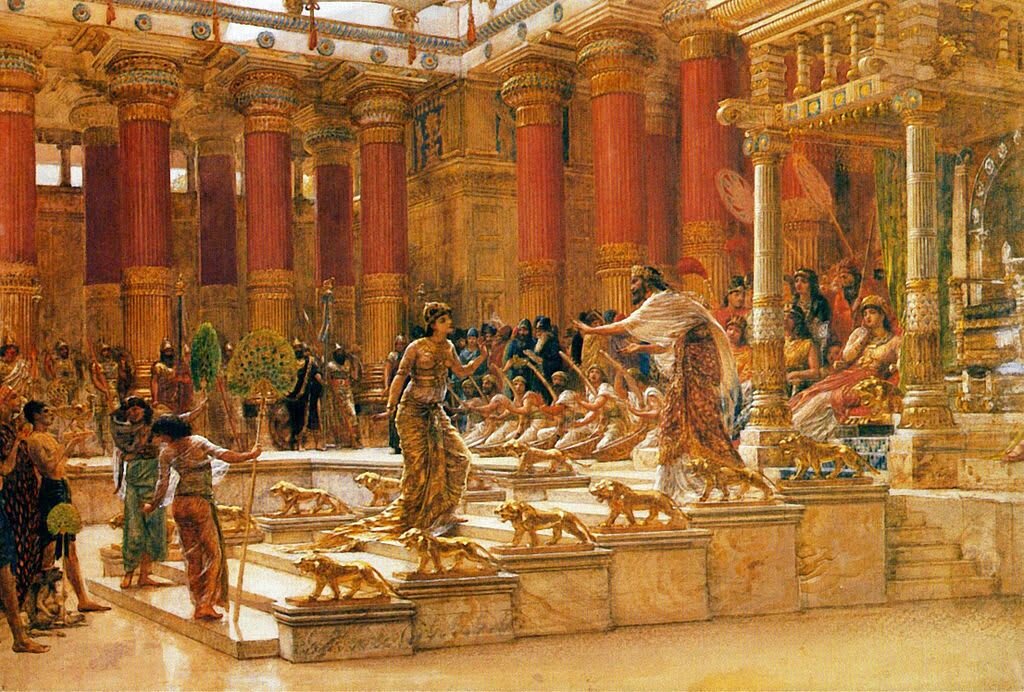
King Solomon’s riches have long been the subject of legend, mystery, and speculation. According to ancient texts, Solomon, the biblical king of Israel, possessed unimaginable wealth, including gold, jewels, and rare treasures. But where did this fortune come from, and more intriguingly, where did it go? Some believe Solomon’s vast riches were tied to the legendary mines of Ophir, a fabled location that many historians and treasure hunters have tried to identify over the centuries. Others suggest that the treasure was hidden away, lost to time, or perhaps intentionally concealed to protect its power. As the myth persists, the truth behind Solomon’s wealth remains a tantalising puzzle, prompting questions about the secrets buried in history and the search for a treasure that could change everything.
Plot
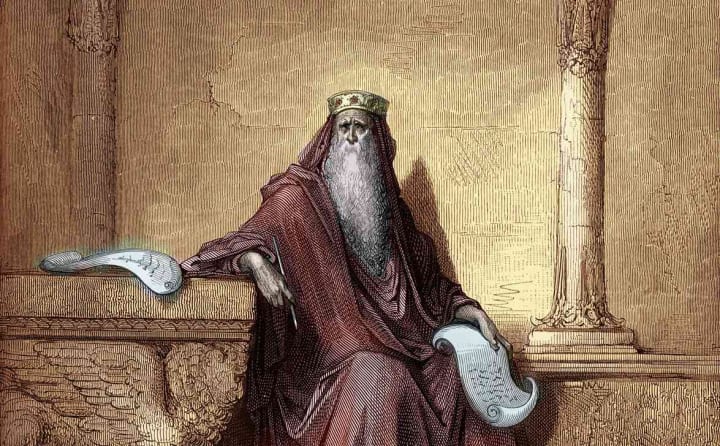
King Solomon, one of the most iconic figures in biblical history, is best known for his wisdom, wealth, and building projects, including the construction of the First Temple in Jerusalem. He was the son of King David and Bathsheba, and ascended to the throne of Israel around 970 BCE, ruling for a prosperous 40 years. His reign marked a period of unparalleled peace and economic growth, with Solomon consolidating power, expanding his kingdom, and establishing alliances with neighbouring nations.
Solomon’s wisdom is perhaps his most enduring legacy. According to the Bible, his renowned wisdom was a divine gift, granted by God after Solomon famously asked for the ability to discern right from wrong rather than wealth or power. One of the most famous biblical stories illustrating his wisdom is the judgment he passed between two women who claimed to be the mother of a child. Solomon proposed to divide the baby in half, but the real mother immediately offered to give up her claim to save the child’s life. This act of profound wisdom earned him the respect of his people and further solidified his rule.
Solomon’s wealth, often depicted as boundless in the scriptures, was another key feature of his reign. Under his leadership, Israel flourished economically, largely due to successful trade agreements with other nations, including Egypt and Tyre. The wealth Solomon accumulated is legendary, with stories of gold, precious stones, and rare commodities pouring into his treasury. The Bible describes the tribute he received from other rulers, including the famous visit of the Queen of Sheba, who brought gifts of spices, gold, and precious stones to test Solomon’s wisdom. Impressed by his answers and the grandeur of his court, the Queen offered even more lavish presents, cementing Solomon’s reputation as a ruler of immense power and prosperity.
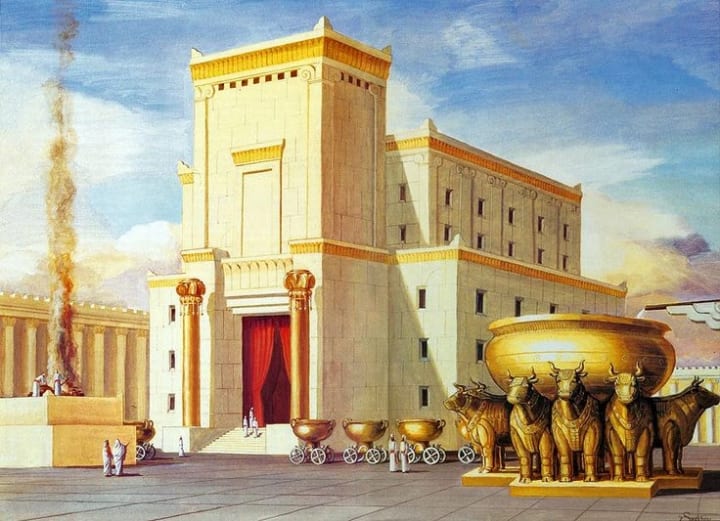
One of Solomon’s most significant achievements was the construction of the First Temple in Jerusalem, also known as Solomon’s Temple. This monumental project, which took seven years to complete, became the central place of worship for the Israelites and a symbol of their connection to God. The Temple housed the Ark of the Covenant, which was believed to contain the tablets of the Ten Commandments. The structure’s grandeur, adorned with gold, precious stones, and intricate carvings, is often described as a marvel of ancient architecture.
In addition to his wisdom and wealth, Solomon was also known for his literary contributions. The Bible attributes several books of the Old Testament to him, including Proverbs, Ecclesiastes, and Song of Songs. These writings reflect his philosophical musings on life, morality, and the human condition, and have been studied for centuries for their timeless insights into human nature and divine wisdom.
Despite his many accomplishments, Solomon’s reign was not without controversy. His later years were marked by a decline in religious devotion and the construction of shrines to foreign gods to appease his many wives, who came from various foreign nations. This deviation from strict monotheism angered God, according to the biblical narrative, and led to the eventual division of the kingdom after Solomon’s death, with the northern tribes breaking away from the southern kingdom of Judah.
King Solomon remains a figure surrounded by both admiration and criticism. His wisdom, wealth, and building projects set him apart as one of the greatest rulers of the ancient world, but his later actions, particularly his idolatry, serve as a cautionary tale in biblical tradition. His story has had a profound influence on religious thought, literature, and popular culture, continuing to captivate people’s imaginations for millennia.
Into the Theories
Solomon Hides the Treasure:
One theory suggests that King Solomon intentionally hid his vast treasure to protect it from invaders or political instability. Given the constant threats to the kingdom from surrounding empires, it is believed that Solomon, knowing his wealth could be a target, took measures to conceal it before his death. This theory is supported by the biblical narrative that speaks of the vast wealth accumulated during Solomon’s reign, yet no mention is made of where it ended up.
Some believe that Solomon, foreseeing the eventual division of his kingdom, ordered the treasure to be hidden in secret chambers or remote locations, ensuring its safety. Over the centuries, various explorers and treasure hunters have searched for this hidden hoard, but no conclusive evidence has ever been found, leaving it a tantalising mystery. If this theory is correct, the treasure may still be waiting to be uncovered, buried beneath the sands of time or within ancient ruins now lost to history.
Invaders Take the Treasure:
Another theory suggests that after Solomon’s death, his treasure was looted by invading forces, most notably the Babylonians. In the 6th century BCE, the Babylonian Empire, under King Nebuchadnezzar II, captured Jerusalem, destroyed the First Temple, and exiled the Israelites. This event is often seen as the moment when Solomon’s legendary wealth was lost. It’s believed that the Babylonians, recognising the value of the treasures housed in the Temple, carried away whatever riches they could find.
The destruction of the Temple in 586 BCE was a significant blow to the kingdom of Judah, and it’s plausible that much of Solomon’s wealth was lost or stolen during this time. While some biblical texts mention the wealth of Solomon being brought to the Temple, there’s little evidence suggesting what happened to it after the destruction. If this theory is true, Solomon’s riches may have been scattered across the ancient world, making it virtually impossible to trace them.
The Vatican Concealed the Treasure:
A more conspiratorial theory suggests that King Solomon’s treasure never truly disappeared but was deliberately concealed by the Vatican, possibly to prevent its power from falling into the wrong hands. This theory posits that the treasure, once hidden or taken by invading forces, was secretly recovered by religious or political authorities in later centuries. Some conspiracy theorists claim that during the Crusades, the Vatican, aware of the treasure's immense religious and symbolic significance, found and kept it hidden.
The wealth could have been locked away in the vaults of the Vatican, perhaps alongside other ancient artefacts, such as the Holy Grail, that hold great mystical power. According to this theory, the Catholic Church has suppressed any knowledge of the treasure’s existence to maintain control over its spiritual influence and to prevent it from sparking conflict or greed. The search for Solomon's treasure, according to this perspective, is a smokescreen to cover up the Church's long-standing possession of these riches, hidden in plain sight for centuries.
Why It's Shifty
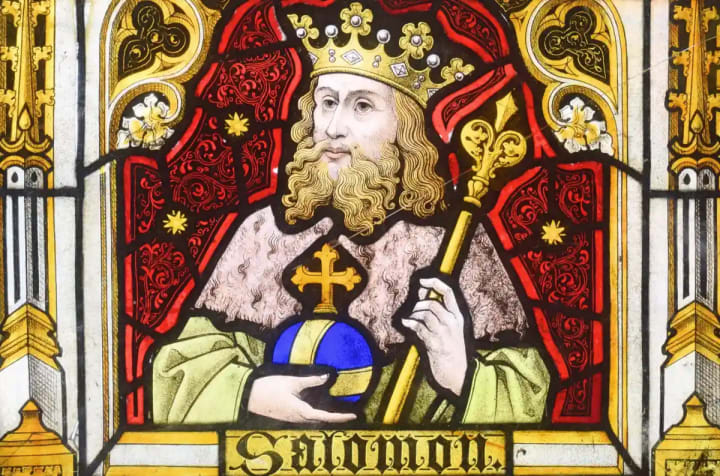
King Solomon’s riches remain controversial today due to the enduring mystery surrounding their existence and the ethical implications of their possible concealment. The biblical accounts describe a wealth so vast it seems almost mythical, leading to intense debates about whether such treasures ever truly existed or were simply symbolic. Theories about where the treasure went: whether hidden by Solomon himself, stolen by invaders, or concealed by modern institutions, fuel further speculation and intrigue.
Some argue that the treasure holds immense religious and mystical power, leading to conspiracies about its suppression or deliberate hiding by authorities such as the Vatican. Additionally, the idea of such boundless wealth in an ancient context raises uncomfortable questions about the source of that wealth, especially when considering the power structures, slavery, and exploitation that may have underpinned it. The search for Solomon’s riches thus touches on deeper themes of history, power, and the value of material wealth versus spiritual legacy.
Conclusion
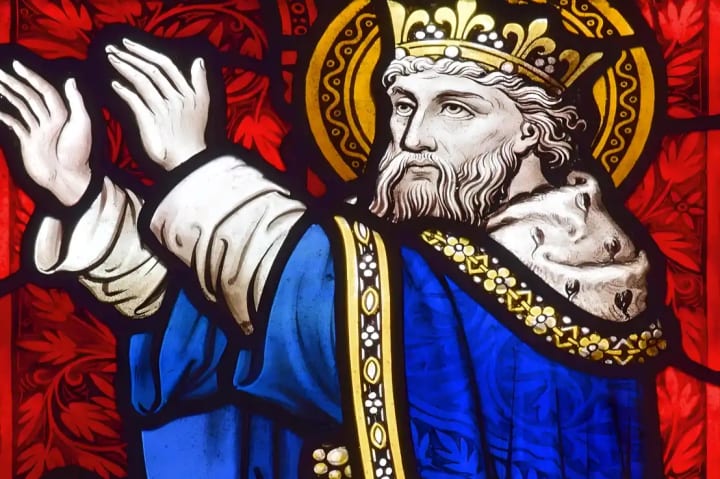
In conclusion, the most likely case regarding King Solomon’s treasure is that it did exist, but its wealth was likely either looted or dissipated over time. While the Bible speaks of Solomon’s immense riches, there is no definitive evidence to confirm the full extent of his wealth. Following Solomon’s death, his kingdom fractured, and subsequent invasions, notably by the Babylonians, likely resulted in the loss or destruction of much of the treasure.
The Babylonians, after sacking Jerusalem and the First Temple, would have seized anything of value. Additionally, the treasure may have been gradually spent or diminished through the centuries as Israel faced political instability. The notion of a vast, untouched hoard may be more myth than reality, amplified over time through biblical narratives and legend. While the treasure was undoubtedly significant, its exact fate remains uncertain, and it’s probable that most of it simply disappeared in the chaos of the ancient world.
Next Week: Who Was Joan of Arc?
About the Creator
Annie Kapur
I am:
🙋🏽♀️ Annie
📚 Avid Reader
📝 Reviewer and Commentator
🎓 Post-Grad Millennial (M.A)
***
I have:
📖 280K+ reads on Vocal
🫶🏼 Love for reading & research
🦋/X @AnnieWithBooks
***
🏡 UK
Keep reading
More stories from Annie Kapur and writers in Geeks and other communities.
Book Review: "Okay Then, That's Great" by Susannah Wise
Again, this is a book I borrowed from the library. No it wasn't in my reservations, I simply found it and became intrigued at the chaos of the cover. I was reluctant to find another dark-comedy-horror to start because of the fact it would very quickly become dull for me and it's a genre I enjoy too much to allow it to do that. Instead, after reading the back of this book, I decided that a lighter approach was probably the best way to go. This book is titled Okay Then, That's Great and follows a protagonist who is clearly having some deep personal problems. By the time it was over, I really felt like I knew Marnie very well...
By Annie Kapur8 months ago in Geeks
Silver Screen Magic with Mae West
American actress and singer Mae West became a popular film actress during the Great Depression. She started entertaining in vaudeville, then performed on Broadway, and finally went to Hollywood. She signed up with Paramount Pictures and made her debut in the 1932 film “Night After Night.” She also starred in musicals, comedies, and crime dramas. The American Film Institute named her one of the best classic Hollywood actresses.
By Rasma Raisters6 days ago in Geeks
The Devil's Cut
“Comrade, finally you’re awake.” The voice was smooth, sensual. A flickering incandescent bar was all that lit the white, sterile room. All Vladimir remembered was everything going black. He tried to move his arms and found them strapped to the gurney.
By Matthew J. Fromm5 days ago in Fiction



Comments (1)
The mix of history and mystery kept me interested. The theories about Solomon’s treasure were really intriguing, and the way you explained everything was clear and engaging. Well done!