
Internet Archive - How to use the Wayback Machine?
Wayback Machine
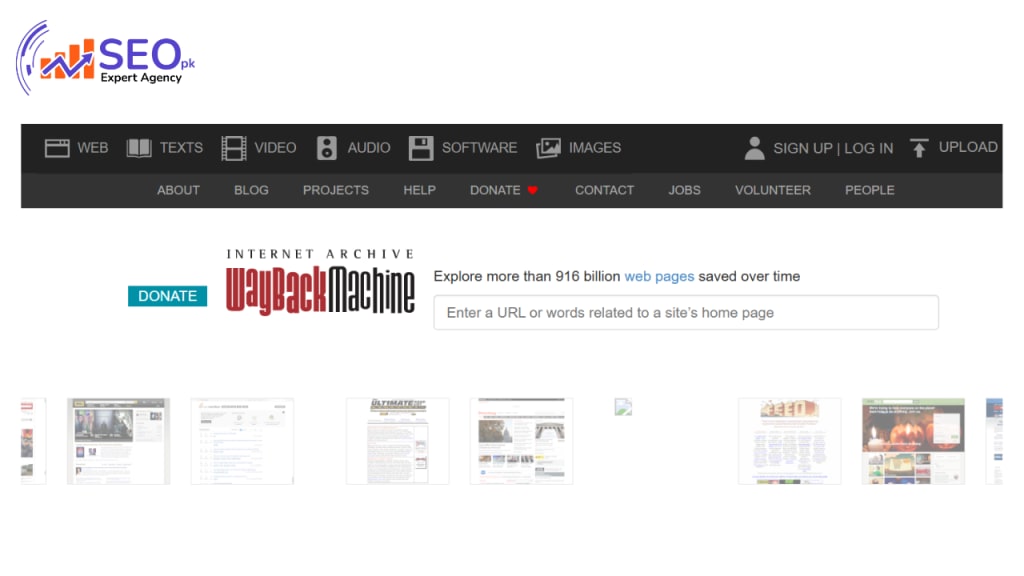
The Wayback Machine, hosted by the Internet Archive, is a popular tool for exploring the history of websites. It allows users to see how websites looked in the past, providing a fascinating glimpse into the evolution of the internet. However, there are times when the Wayback Machine might not have the specific snapshot you're looking for or might not be the best tool for a particular task. That's where Wayback Machine alternatives come in. These alternatives offer similar functionalities, sometimes with additional features or a broader range of archived content.
Here are some key reasons why you might consider using a Wayback Machine alternative:
Why Use a Wayback Machine Alternative?
Missing Snapshots
The Wayback Machine doesn't have a complete record of every website's history. Sometimes you might search for a specific date and find that there's no snapshot available. This can be frustrating, especially if you're looking for critical information that's no longer accessible on the live website.
Reasons for Missing Snapshots
● Crawling Frequency
The Wayback Machine doesn't crawl every website every day. Some sites are crawled more often than others, depending on factors like popularity and update frequency.
● Robots.txt Exclusion
Website owners can use a robots.txt file to instruct web crawlers like the Wayback Machine not to archive their site or specific parts of it.
● Technical Issues
Sometimes, technical glitches or errors can prevent the Wayback Machine from successfully capturing a snapshot of a website.
● Removal Requests
Website owners can request the removal of archived content from the Wayback Machine, which can lead to missing snapshots.
Different Features
You're transitioning to another key reason! The Wayback Machine is a powerful tool, but it primarily focuses on capturing and displaying website snapshots. Some Wayback Machine alternatives offer additional features that might be beneficial for specific tasks or research purposes.
Features Found in Some Alternatives
● Website Comparison
Some alternatives allow you to compare different snapshots of a website side-by-side, highlighting changes over time. This can be useful for tracking design updates, content revisions, or even competitor analysis.
● Advanced Search Filters
While the Wayback Machine allows basic date-based searches, some alternatives offer more advanced filters, allowing you to search by keywords, file types, or specific website sections.
● Content Download
Some alternatives provide options to download archived content, such as HTML files, images, or even entire website structures, for offline analysis or preservation.
● API Access
Certain alternatives offer API access, enabling developers to integrate the web archive's functionality into their own applications or tools for programmatic access and analysis.
Focused Scope
You got it, let's explore that next! The Wayback Machine aims to archive a broad spectrum of websites, capturing a diverse range of online content. However, some Wayback Machine alternatives have a more focused scope, specializing in archiving specific types of content or targeting particular regions or industries.
Examples of Focused Scope
● Social Media Archives
Some services focus specifically on archiving social media content, such as tweets, Facebook posts, or Instagram photos. This can be helpful for tracking online conversations, analyzing social media trends, or preserving evidence from social media platforms.
● News Archives
There are dedicated archives that focus on preserving news articles and publications, often offering search functionalities tailored to news content and providing historical perspectives on current events.
● Government Archives
Some government institutions maintain their own web archives, preserving official websites, government documents, and public records for transparency and historical research.
● Academic Archives
Universities and research institutions might have specialized archives focused on scholarly publications, research data, or digital materials related to specific academic disciplines.
By focusing on a particular niche, these alternatives can often provide richer, more relevant results for researchers or individuals interested in a specific type of content or subject area.
What are some popular Wayback Machine alternatives?
You're ready to explore some specific alternatives! Here are some popular Wayback Machine alternatives you can try:
Are there any free Wayback Machine alternatives?
Yes, there are! Many Wayback Machine alternatives are completely free to use. Remember that free services might have limitations in terms of features, scope, or frequency of updates. However, they can still be valuable resources for exploring web history.
Free Wayback Machine Alternatives
● Archive.today (Archive.is)
A popular free alternative with a user-friendly interface and a vast archive of web pages. Its focus is on preserving evidence, often capturing snapshots of news articles, social media posts, and controversial content.
● Memento Time Travel
A meta-archive that aggregates results from various web archives, including the Wayback Machine. It's a powerful tool for finding archived content from multiple sources in one place.
● Yubnub
A command-line interface for power users, providing access to the Wayback Machine and other web archives through efficient search commands. Requires some technical knowledge but offers great flexibility.
● Google Cache
While not a dedicated web archive, Google's search engine often stores cached versions of web pages. You can access these by clicking the down arrow next to a search result and selecting 'Cached'.
These are just a few examples of free Wayback Machine alternatives. Each service has its strengths and weaknesses, so exploring multiple options might be helpful depending on your specific needs!
Are there any alternatives that specialize in archiving social media content?
You're diving into a specific niche! Yes, several services specialize in archiving social media content. Given the ephemeral nature of social media, these archives are becoming increasingly valuable for research, journalism, and legal purposes.
Social Media Archiving Services
● TweetBinder
Focuses on Twitter analytics and archiving, offering tools to track hashtags, keywords, and user mentions over time.
● SnapBird
Allows you to search and download your own Twitter archive, providing a way to analyze your past tweets and interactions.
● Social Searcher
Offers real-time and historical social media search across various platforms, including Twitter, Facebook, Instagram, and YouTube.
● Politwoops
A project by ProPublica that tracks deleted tweets from politicians and government officials, providing insights into their online activity.
These are just a few examples, and the availability of archival data can vary based on platform policies and the specific service's capabilities. Some platforms, like Twitter, offer their own built-in archiving features, while others require third-party tools. It's always a good idea to check the specific terms and conditions of these services before using them.
What are some of the ethical considerations when archiving social media content?
Archiving social media content raises several ethical considerations. Unlike traditional websites, social media often involves personal information, user-generated content, and evolving privacy norms. Here are some key ethical considerations to keep in mind:
Ethical Considerations in Social Media Archiving
● Informed Consent
Should users be informed and give consent before their social media content is archived? How can we ensure transparency and user control over their data?
● Privacy
Social media posts can contain sensitive personal information. How can we protect user privacy and prevent the misuse of archived data?
● Context and Interpretation
Social media content is often context-dependent. How can we ensure that archived posts are presented with their original context to avoid misinterpretations?
● Ownership and Control
Who owns and controls archived social media content? How do we balance the interests of users, platforms, and archivists?
Navigating these ethical complexities requires careful consideration of user rights, privacy concerns, and the potential impact of archiving social media content.
About the Creator
Keep reading
More stories from Seopkexpert and writers in Geeks and other communities.
Search Engine Optimizer Services in Pakistan: Boosting Your Online Presence
In today’s digital age, having a robust online presence is crucial for businesses of all sizes. As competition intensifies across various sectors, the need for effective Search Engine Optimization (SEO) becomes paramount. Search engine optimizer services in Pakistan have gained significant traction, helping businesses climb the ranks of search engine results pages (SERPs) and reach their target audience effectively. This article explores the importance of SEO services, what they entail, and how businesses in Pakistan can benefit from them.
By Seopkexpertabout a year ago in Geeks
Silver Screen Magic with Mae West
American actress and singer Mae West became a popular film actress during the Great Depression. She started entertaining in vaudeville, then performed on Broadway, and finally went to Hollywood. She signed up with Paramount Pictures and made her debut in the 1932 film “Night After Night.” She also starred in musicals, comedies, and crime dramas. The American Film Institute named her one of the best classic Hollywood actresses.
By Rasma Raisters7 days ago in Geeks
Premier League in Switzerland: How to Watch
The 2025–26 Premier League season is underway, marking the 34th edition of the competition and the 127th year of top-flight English football. Liverpool start their title defense with confidence after lifting their second Premier League trophy last season, but the return of Leeds United, Burnley, and Sunderland ensures fresh rivalries – including the long-awaited Tyne–Wear derby, back for the first time since 2015–16.
By David Cook7 days ago in Geeks




Comments
There are no comments for this story
Be the first to respond and start the conversation.