
Inside the Jungle Fortress Found in Hunting Hitler: The Nazi Hideout That Still Terrifies Investigators
Buried deep within the dense, humid jungles of northern Argentina lies something that shouldn’t exist.


Buried deep within the dense, humid jungles of northern Argentina lies something that shouldn’t exist.
It’s not just ruins. Not just relics.
It’s a fortified compound — isolated, expertly built, and unmistakably European in its design. A structure so secret, so well-hidden, that it might have sheltered the most hunted man in history.
This is the jungle fortress uncovered by the team in the Hunting Hitler TV show — and even years later, the site continues to disturb, fascinate, and fuel one terrifying question:
Was this Adolf Hitler’s escape hideout?
A Discovery That Changed the Game
When the History Channel’s Hunting Hitler team, led by former CIA operative Bob Baer and Special Forces operator Tim Kennedy, set out to follow the Nazi escape trails across South America, they expected rumors.
What they didn’t expect was a full-scale Nazi stronghold hiding in plain sight — with construction features so advanced and specific, they left even the experts stunned.
The compound was nestled within the unforgiving jungle near Teyú Cuaré National Park in Argentina. Accessible only by off-road vehicles and foot trails carved through thick brush, the location screamed one thing:
Secrecy.
Nazi Architecture… in the Middle of the Jungle?
What made the site so disturbing wasn’t just the fact that it was hidden — it was how familiar it looked.
The construction mirrored Third Reich engineering. Thick stone walls. Defensive positioning. Strategic elevation. Even the angles of the windows reflected known Nazi military architecture — designed for visibility and protection, not comfort.
But it didn’t end there.
- German coins from the WWII era were found buried near the foundation
- Porcelain fragments stamped with German markings were recovered inside
- The mortar used in the walls matched mixtures used in wartime Germany
- Remnants of industrial-level machinery suggested ongoing operation post-1945
This wasn’t a shack built by German immigrants.
This was a strategically constructed compound, likely built with a very specific purpose: to hide and house someone powerful.
Someone like… Hitler?
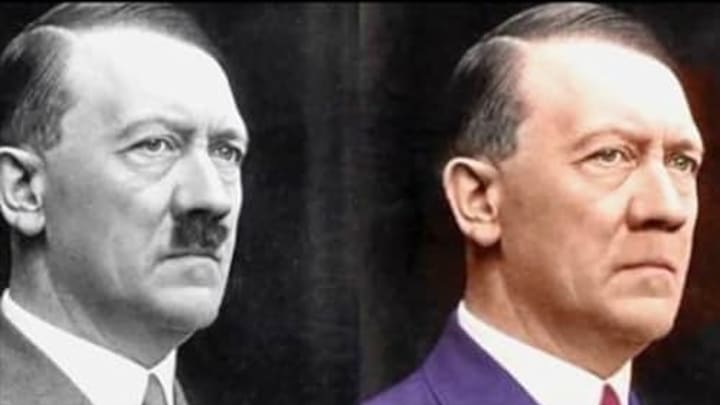
The “El Viejo Alemán” Testimonies
As the Hunting Hitler crew expanded their investigation, they began collecting local testimonies — many from elders who had lived in the region for decades.
The most common legend?
A mysterious, heavily guarded man known only as “El Viejo Alemán” — the Old German.
Locals claimed:
- He rarely left the compound
- He was surrounded by armed bodyguards
- He spoke only in formal German
- Visitors came by plane and boat, but never stayed long
- The property was off-limits, even to nearby villagers
One man, now in his 80s, told the team, “My father said he saw the devil himself living up there. With eyes that never blinked.”
Was this merely myth? Or the remnant of something far more sinister?

Why Argentina?
Let’s not forget — Argentina was a known Nazi haven after WWII.
Hundreds of high-ranking Nazis, including Adolf Eichmann and Josef Mengele, successfully fled to South America, many using ratlines — covert escape networks involving clergy, passports, and intelligence agencies.
Argentina’s president at the time, Juan Perón, was openly sympathetic to the Axis powers. Nazi officers were welcomed. Papers were forged. Safehouses were funded.
So the existence of a Nazi fortress in Argentina isn’t fiction.
It’s history.
What Hunting Hitler uncovered was a physical manifestation of those truths — and possibly, the final destination of Hitler himself.
A Fortress Built for a Ghost
One of the most haunting realizations came from how militarized the compound felt.
This wasn’t a cabin in exile. This was a headquarters. A command post. A place designed for long-term occupation and active operation.
The team found:
- Guard stations and sentry points built into the perimeter
- A signal tower foundation, possibly used for radio communication
- Remains of a power supply system capable of supporting multiple residents
- Escape tunnels leading deeper into the jungle — some still intact
In essence, this wasn’t just a hideout. It was a fortress designed for survival — and silence.
Everything about it suggested it was prepared long before the war ended.
So then the question becomes:
Who was it built for?
The Timeline That Makes You Shiver
Let’s do the math.
Hitler “died” in April 1945
U-530 and U-977 — two German submarines — arrived in Argentina months later
The jungle compound’s design and materials suggest construction finished in the late 1940s
Local testimonies place “El Viejo Alemán” living there between 1947 and the early 1960s
Everything lines up.
If Hitler had escaped via submarine, made it to the Argentine coast, and then been transported inland under cover of night…
This jungle fortress could’ve been his final stronghold.
And no one would’ve ever found it — until Hunting Hitler did.

Still No DNA, No Autopsy, No Closure
The most disturbing part?
There’s no forensic evidence tying Hitler to the Berlin bunker conclusively. Soviet reports were contradictory. The “skull fragment” attributed to Hitler? Tested in 2009 and found to be from a woman.
There was no confirmed autopsy, no shared remains, and no DNA match ever provided to the public.
Which means this:
- If this jungle fortress was built for Hitler, and he did live there…
- The official story of WWII ends with a lie.
- Why the Site Still Terrifies Investigators
Even members of the Hunting Hitler team admitted they were rattled by the site.
Tim Kennedy said the structure “felt alive” — as though it had been preserved for a purpose not yet fulfilled. Drones captured images of additional ruins nearby, suggesting the fortress was part of a larger network.
Locals warned the crew not to stay too long. Not to ask too many questions.
One investigator even described the area as having an “oppressive silence, like the jungle itself wanted you gone.”
So what else lies buried beneath the vines and roots of that rainforest?
More compounds? More tunnels? More secrets?
Or the final, unthinkable truth about Adolf Hitler?

Final Thoughts: The Fortress That Shouldn’t Exist
The jungle fortress found in Hunting Hitler isn’t fiction. It’s real.
It stands. It breathes. And it challenges everything we’ve been taught.
Was it just a forgotten Nazi outpost?
Or was it the last refuge of a man the world believed dead?
There are no clear answers. But the existence of the compound, the way it was built, the stories surrounding it — all point toward one terrifying possibility:
History didn’t catch up to Adolf Hitler. He outran it.
And if that’s true, the jungle fortress isn’t just a ruin.
It’s a monument to a lie we still haven’t fully uncovered.
About the Creator
Rukka Nova
A full-time blogger on a writing spree!
Keep reading
More stories from Rukka Nova and writers in Geeks and other communities.
5 Clues From Hunting Hitler That Still Haunt Us
When the History Channel launched Hunting Hitler, most viewers expected yet another fringe theory wrapped in dramatic editing. What they got instead was something far more disturbing: a serious, global investigation led by ex-intelligence agents, uncovering pieces of evidence that suggest Adolf Hitler may not have died in that Berlin bunker.
By Rukka Nova8 months ago in Geeks
Silver Screen Magic with Mae West
American actress and singer Mae West became a popular film actress during the Great Depression. She started entertaining in vaudeville, then performed on Broadway, and finally went to Hollywood. She signed up with Paramount Pictures and made her debut in the 1932 film “Night After Night.” She also starred in musicals, comedies, and crime dramas. The American Film Institute named her one of the best classic Hollywood actresses.
By Rasma Raisters6 days ago in Geeks



Comments
There are no comments for this story
Be the first to respond and start the conversation.