
I Watched the Most Banned Movies on the Internet—Here’s Why They’re Hidden
Here’s Why They’re Hidden

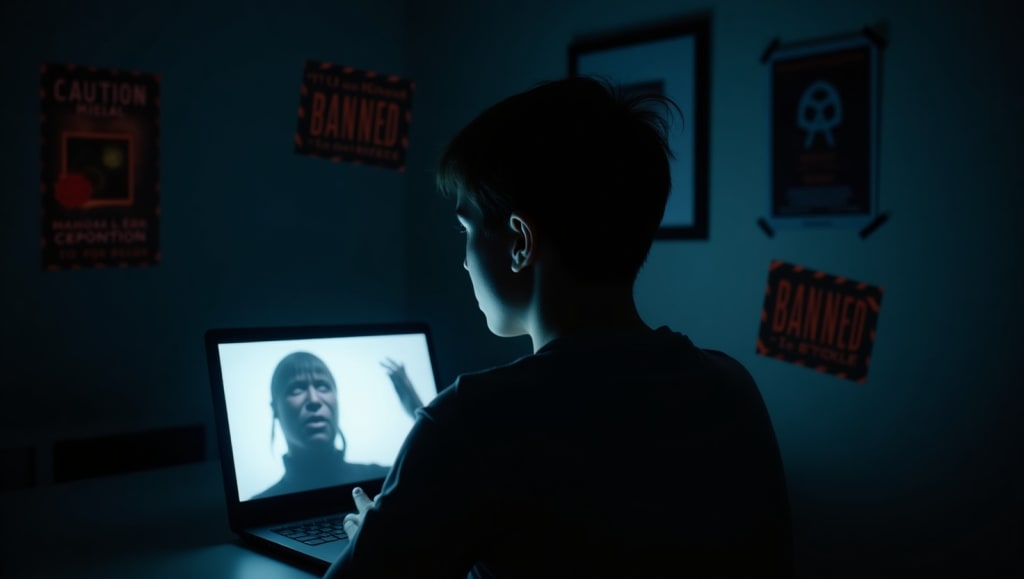
There’s something undeniably magnetic about forbidden content.
When something’s banned, our curiosity sharpens. It feels like a secret we aren’t supposed to know. So when I came across an online thread titled “The Most Banned Movies Ever Made,” I dove down the rabbit hole—and I didn’t climb out until I had watched nearly all of them.
From disturbing violence to psychological trauma, these films have been banned, censored, or pulled from public view for a reason. But as I discovered, the real story isn’t just about blood or shock value—it’s about what these movies say about us.
Here’s what I learned after watching the most banned movies on the internet—and why they’re hidden from view.
The Lure of the Unwatchable
Before we dive into the list, it’s important to understand why these films are so controversial.
Most of the banned movies I watched were either:
- Pulled by governments for violating moral or decency laws
- Removed by streaming platforms due to extreme content
- Hidden on the dark web and passed around in underground forums
Some were banned outright in countries like the UK, Germany, Australia, and even the United States. But that only made them more intriguing.
These weren’t your typical horror flicks. These were films that left you with a pit in your stomach long after the credits rolled.
1. A Serbian Film (2010)
Status: Banned in over 40 countries
Reason: Graphic sexual violence, child exploitation themes
My Take: This film exists in infamy, and honestly—it lives up to the reputation. It's not just disturbing; it's emotionally scarring. Critics say it’s a political allegory. Maybe. But it’s also a brutal test of endurance.
Why it's hidden: No major platform will touch it. Even underground torrent sites issue warnings. It’s considered one of the most extreme films ever made.
2. Cannibal Holocaust (1980)
Status: Banned in multiple countries, director arrested
Reason: Animal cruelty, hyper-realistic violence
My Take: Shot like a documentary, this film feels too real. The director had to prove in court that the actors were still alive. While it critiques sensationalist media, the graphic animal deaths are stomach-turning.
Why it's hidden: Many scenes violate animal rights laws. Ethical concerns keep this buried—even in film school circles.
3. Salò, or the 120 Days of Sodom (1975)
Status: Banned in Italy, Australia, and the UK
Reason: Graphic abuse, fascist overtones, sexual violence
My Take: A twisted adaptation of de Sade’s work, “Salò” shows the abuse of power in a raw, unfiltered way. It’s both political and perverse. Watching it felt like staring into a moral abyss.
Why it's hidden: Too politically charged and too explicit for most audiences. It pushes every limit of human dignity.
4. The Human Centipede 2 (2011)
Status: Banned in the UK and New Zealand
Reason: Extreme body horror, sexualized violence
My Take: The sequel to an already infamous film, this one’s black-and-white style only intensifies its grotesque imagery. It’s self-aware, but still traumatizing.
Why it's hidden: Censors called it “sexually violent and degrading.” It's banned in multiple regions even today.
5. Begotten (1990)
Status: Pulled from theaters, lives mostly in cult status
Reason: Surrealist violence, disturbing religious imagery
My Take: No dialogue. Grainy black-and-white. This isn’t horror—it’s existential despair captured on film. It’s what nightmares look like when filmed in the void.
Why it's hidden: Too avant-garde and intense for mainstream cinema. You won’t find this on Netflix.
So… Why Are These Films Really Hidden?
It’s not just about shock value. These films are banned because they force viewers to confront the darkest aspects of humanity—often without the veil of fantasy. They show us war, abuse, control, depravity, and death with such blunt force that our instinct is to look away.
And yet… millions of people don’t look away. These titles are passed around like digital contraband on the dark web and obscure subreddits.
We seek them out. Why?
The Psychology Behind Forbidden Films
Experts say watching disturbing films triggers a form of emotional release—a safe way to explore fear, trauma, or societal collapse. It’s the same reason we slow down at car accidents or consume true crime documentaries.
But these banned films take it a step further. They’re taboo. Watching them gives viewers the thrill of rebellion—of witnessing something the world said they couldn’t handle.
And that allure? It’s addictive.
What Watching These Films Did to Me
I’ll be honest: I couldn’t sleep properly for a few days.
My dreams were flooded with imagery I couldn’t unsee. I questioned my own morality. Why did I press “play” knowing what was coming?
But I also walked away with clarity. These films, as horrifying as they are, reveal something raw and honest about the world. They expose how easily humans can dehumanize others. How quickly power can corrupt. How pain is often aestheticized for the sake of commentary.
Not every banned film is worth watching—but many are worth understanding.
Final Thoughts: Should You Watch Them?
That depends.
If you’re easily disturbed, don’t. These aren’t horror movies for entertainment. They’re cinematic trauma—sometimes thoughtful, sometimes senseless, always intense.
But if you're curious about why certain content is hidden from public view—about how film can become dangerous, powerful, or subversive—then approach with caution and an open mind.
These films aren’t just banned. They’re buried. And maybe that says more about us than it does about the films themselves.
Have you watched any of these banned movies? Share your experience in the comments. And remember—some doors, once opened, can’t be closed.
About the Creator
Vincent Otiri
I'm a passionate writer who crafts engaging and insightful content across various topics. Discover more of my articles and insights on Vocal.Media.
Keep reading
More stories from Vincent Otiri and writers in Geeks and other communities.
I Faked My Own Breakup Online—Here’s What It Taught Me About Love and Attention
It started as a joke—something I blurted out over dinner to my best friend after yet another couple we followed posted a dramatic breakup announcement on Instagram. “What if I faked my own breakup online just to see how people react?” I laughed, swirling the last sip of wine in my glass. But deep down, I was curious. Not just about how people would respond—but why.
By Vincent Otiri8 months ago in Geeks
History of The Three Stooges (Part I: The Beginnings and Columbia Pictures - 1920s-1936)
I have been itching to write about The Three Stooges on Vocal for close to two years, but I couldn't figure out how to do it. I wanted to do it by third Stooge, but that's a bit complicated. I know this much. I was about eight or nine years old when I first saw The Three Stooges. I remember one of my local channels had the Stooges on for hours, and I tried my damnedest to be up for those shorts. I remember that the Family Channel actually had an hour of the Stooges on from 11PM to midnight, and it was the entire library on during that time.
By Clyde E. Dawkins5 days ago in Geeks
Book Review: "The Palace"by Gareth Russell (Pt. 3)
This review covers chapter 7 to chapter 12 *** We're carrying on with our review of The Palace by Gareth Russell and I cannot lie, I am devouring this book so thoroughly I might just go back and read the whole thing again. Chapters are named after rooms, whispers are carrying gossip from chamber to chamber, ladies in waiting are also ladies of intrigue, there's so much to digest. I love Gareth Russell's writing as well, it makes for such interesting reading as I feel like I could shut my eyes and watch Edward VI participating in jousts and games in a place like Hampton Court, made for entertainment.
By Annie Kapur5 days ago in Geeks


Comments
There are no comments for this story
Be the first to respond and start the conversation.