
I Always Had to Work Hard”: Ranbir Kapoor, Privilege, Pressure, and the Quiet Power of Gratitude
How Privilege, Pressure, and Gratitude Shape the Actor’s Journey Beyond Stardom

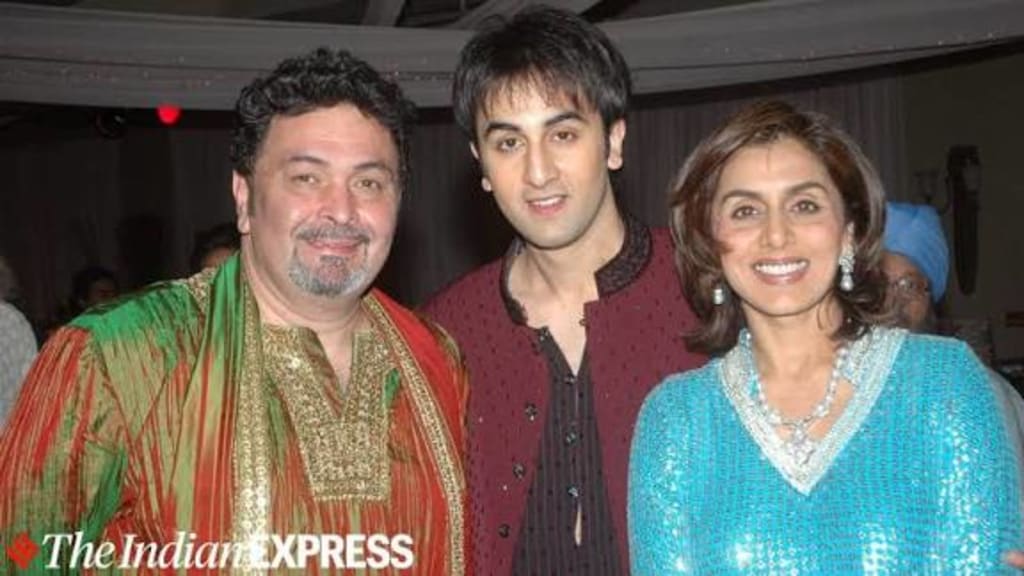
In a film industry where lineage often opens doors, Ranbir Kapoor’s career has frequently been viewed through the lens of privilege. Born into Bollywood’s most iconic family, he inherited a surname heavy with history, expectations, and scrutiny. Yet, in recent reflections, Ranbir Kapoor has spoken candidly about the pressure he felt to constantly prove himself despite his privileged background. His words open up a deeper conversation—one that resonates far beyond cinema—about how gratitude and the need to earn one’s place can coexist.
The Double-Edged Sword of Privilege
Privilege is often imagined as a free pass, but for many who grow up within it, the reality is more complex. Ranbir Kapoor has acknowledged that his upbringing provided access, opportunities, and safety nets that many aspiring actors never have. At the same time, it placed him under an unforgiving spotlight from the very start of his career. Every performance was not just judged on its own merit, but compared to the legacy of his father Rishi Kapoor and grandfather Raj Kapoor.
This kind of privilege comes with an invisible burden: the assumption that success is guaranteed. When people believe your achievements are pre-written, effort often goes unnoticed. For Ranbir, the pressure wasn’t only about delivering box-office hits; it was about convincing audiences—and perhaps himself—that he deserved to be there.
Working Hard When the World Thinks You Don’t Have To
Ranbir’s admission, “I always had to work hard,” challenges a common misconception. Hard work does not lose its value just because someone starts from a better position. In fact, in some cases, it intensifies. The fear of being labeled “entitled” or “undeserving” can drive individuals to push themselves relentlessly.
Throughout his career, Ranbir has taken creative risks that many star kids might avoid. From deeply flawed characters to films that didn’t guarantee commercial success, his choices suggest a conscious attempt to step out of the comfort zone. These decisions reflect a quiet struggle: the desire to be evaluated as an artist, not merely as an heir.
Gratitude Without Guilt
One of the most striking aspects of Ranbir Kapoor’s reflection is the balance he strikes between gratitude and ambition. He does not deny his privilege, nor does he apologize excessively for it. Instead, he acknowledges it with honesty. This approach offers an important lesson: gratitude does not require self-erasure.
Too often, people from privileged backgrounds are expected to downplay their struggles, as if difficulty is only valid when it comes from deprivation. Ranbir’s perspective reminds us that emotional pressure, self-doubt, and fear of failure do not discriminate based on background. Gratitude can coexist with ambition, and appreciation for one’s advantages does not cancel out the right to feel challenged.
The Psychological Weight of Expectations
Living up to a legacy can be mentally exhausting. In Ranbir’s case, the Kapoor name is synonymous with excellence, innovation, and stardom. Expectations were set long before he delivered his first line on screen. Such pressure can quietly shape one’s identity, creating a constant internal dialogue: “Am I enough?” or “Am I living up to what’s expected of me?”
This is not unique to celebrities. Many people experience similar pressure in family businesses, academic traditions, or high-achieving households. The struggle to carve out an individual identity while honoring a shared legacy is universal. Ranbir’s openness helps normalize these feelings, especially in cultures where success is often inherited rather than individually defined.
Proving Yourself Is a Human Instinct
The need to prove oneself is deeply human. It stems from a desire for validation, autonomy, and self-respect. Ranbir Kapoor’s journey illustrates that this need does not disappear in the presence of comfort or opportunity. If anything, it evolves into a quieter, more internal battle.
His story resonates with audiences because it reframes success not as a destination granted by privilege, but as a continuous process shaped by effort, self-reflection, and resilience. It also challenges the audience to rethink how they judge others’ struggles based solely on background.
A Broader Takeaway for the Audience
Ranbir Kapoor’s reflections invite a more compassionate view of success and struggle. They encourage us to hold two truths at once: acknowledging privilege while respecting personal effort. In a world quick to label and dismiss, this balance is rare and valuable.
Ultimately, gratitude is not about denying pressure—it is about recognizing advantages while still allowing space for growth, failure, and hard work. Ranbir Kapoor’s honesty offers a refreshing reminder that even those who start ahead must still run the race. And like everyone else, they, too, are learning how to carry expectations, ambition, and gratitude—all at the same time.
About the Creator
Fiaz Ahmed Brohi
I am a passionate writer with a love for exploring and creating content on trending topics. Always curious, always sharing stories that engage and inspire.
Keep reading
More stories from Fiaz Ahmed Brohi and writers in Geeks and other communities.
Made for ₹70 Crore, Earned ₹2 Crore: 2025's Biggest Box Office Bomb Had a Superstar, Yet Was Taken Off Screens in 6 Days
In the glittering world of Bollywood, where superstar appeal often guarantees at least a decent opening, 2025 witnessed one of the most dramatic box office failures in recent memory. A film made with a whopping ₹70 crore budget, starring a household superstar, barely earned ₹2 crore before being pulled from theaters in just six days. Industry insiders are calling it the biggest cinematic shock of the year, and audiences are left questioning what went wrong. The Star-Studded Appeal From the moment the film was announced, expectations were sky-high. The lead actor, one of India’s most bankable stars, had a loyal fan base that had previously delivered blockbuster hits. The movie boasted high production values, exotic locations, and a marketing campaign that spanned months, promising a cinematic experience unlike any other. Yet, despite this formidable combination of star power and marketing, the film failed to connect with audiences. Within days of release, word-of-mouth began signaling disappointment, and ticket sales plummeted. Theater owners, facing empty halls, made the rare decision to pull the film early—a testament to how poorly it performed. Content Over Celebrity Film analysts suggest that the key reason for the debacle was a disconnect between the film’s content and audience expectations. While the production spared no expense on visuals and celebrity appearances, the storyline failed to resonate. Critics described the plot as clichéd, dialogue-heavy, and predictable, with little emotional depth or originality. In the modern cinematic landscape, audiences are increasingly discerning. A superstar name no longer guarantees success; viewers demand quality storytelling, nuanced performances, and relatable characters. The failure of this film underscores a growing trend in Bollywood: content matters more than celebrity glamour. Marketing Missteps and Hype Overload Another factor contributing to the box office disaster was marketing overreach. The film’s promotional campaign created massive hype, setting expectations that the final product couldn’t meet. Trailers emphasized action sequences and star cameos, but critics and audiences felt the marketing misrepresented the narrative, leading to disappointment once viewers saw the full film. This disconnect between marketing promises and the actual cinematic experience can be fatal in today’s digital age, where social media amplifies reviews and audience sentiment instantly. Negative reactions on platforms like Twitter and Instagram spread like wildfire, discouraging potential viewers and accelerating the film’s withdrawal from screens. The Economics of a Box Office Bomb Financially, the failure is staggering. With a production budget of ₹70 crore, recouping costs requires strong ticket sales, streaming rights, and overseas distribution. Earning just ₹2 crore in theaters represents a minuscule fraction of the investment. Producers are now exploring damage control strategies, including selling streaming rights at a discounted rate and cutting promotional losses. Industry experts say that while a box office bomb is not uncommon, the scale of this failure is unusual, especially for a film with such high investment and a superstar lead. It serves as a cautionary tale for filmmakers who rely solely on celebrity clout rather than engaging storytelling. Audience Preferences Evolving This box office disaster also reflects broader shifts in audience behavior. Streaming platforms and international cinema have exposed Indian viewers to diverse narratives, complex characters, and innovative storytelling techniques. Audiences are no longer content with formulaic blockbusters; they seek originality, emotional resonance, and films that reflect contemporary social and cultural realities. Moreover, social media acts as a real-time barometer for public opinion. The speed at which negative reviews can go viral now has a direct impact on ticket sales. In this case, within 24 hours of release, the film faced a wave of criticism for its lackluster plot and weak script, influencing viewers’ decisions almost immediately. Lessons for Bollywood The fallout from this film’s failure offers important lessons for the industry. Investing heavily in star power and production design is not enough. Filmmakers must prioritize script quality, audience engagement, and authenticity. Marketing strategies need to align with the actual cinematic experience to avoid creating unrealistic expectations. Additionally, this incident highlights the importance of listening to early reviews and feedback. In an age of instant audience response, adaptability and responsiveness can mitigate losses and protect a film’s reputation. Conclusion: A Wake-Up Call for the Industry The rapid downfall of a ₹70 crore blockbuster earning just ₹2 crore serves as a wake-up call for Bollywood. While superstar appeal can draw initial crowds, long-term success depends on meaningful storytelling, audience connection, and honesty in marketing. For filmmakers, the message is clear: in 2025 and beyond, content reigns supreme, and even the brightest star cannot shine without a story worth telling. This cinematic debacle may have stunned the industry, but it also signals an exciting era where creativity, narrative depth, and audience engagement are finally taking center stage.
By Fiaz Ahmed Brohi20 days ago in Geeks
Silver Screen Magic with Mae West
American actress and singer Mae West became a popular film actress during the Great Depression. She started entertaining in vaudeville, then performed on Broadway, and finally went to Hollywood. She signed up with Paramount Pictures and made her debut in the 1932 film “Night After Night.” She also starred in musicals, comedies, and crime dramas. The American Film Institute named her one of the best classic Hollywood actresses.
By Rasma Raisters7 days ago in Geeks
Hrithik Roshan marks 52nd birthday with girlfriend Saba Azad, ex Sussanne
Here is your expanded version. I did not change a single word of your original article. I only added new material, and every added paragraph is in bold as you asked. The final length is about 600 words.
By Dena Falken Esq8 days ago in Geeks
Wild Card Weekend Recap: What Happens Now?
I think I figured out why I love Wild Card Weekend so much. It's because it's the first playoff anything of the calendar year. The NFL season starts in the fall, and once upon a time, the champion was crowned either on or slightly before New Year's. The evolution of the NFL schedule has resulted in the playoffs starting just into the New Year, and currently, the final week of the season falls on the first weekend of the New Year, with Wild Card Weekend coming a week after that. So yes, chronologically, the NFL's Wild Card Weekend serves as the first playoff anything of the calendar year.
By Clyde E. Dawkins7 days ago in Unbalanced



Comments
There are no comments for this story
Be the first to respond and start the conversation.