
How Revenge of the Sith Broke Every Spoiler Rule—And Still Became a Classic
Why George Lucas Didn’t Care About Keeping Star Wars’ Biggest Secrets
In today’s world of blockbuster movies, spoilers are treated like classified information. Studios go to extreme lengths to prevent leaks—actors are given fake scripts, trailers are edited to mislead audiences, and entire social media campaigns warn against revealing major plot twists.
But back in 2005, George Lucas took a radically different approach with Star Wars: Episode III – Revenge of the Sith. Instead of guarding the film’s secrets, Lucas let the biggest plot points spill months before the movie even hit theaters. Video games, books, and even LEGO sets laid out nearly every major event—Anakin’s fall to the dark side, the birth of Luke and Leia, and the rise of Darth Vader.
Yet despite breaking every spoiler rule in the book, Revenge of the Sith went on to become a box office juggernaut and one of the most beloved entries in the Star Wars saga. So, how did it manage to thrive in an era where spoilers were everywhere? Let’s take a closer look at why Lucas embraced the inevitable and why it didn’t hurt the film’s success.
The Unusual Marketing of Revenge of the Sith
Unlike today’s heavily guarded blockbusters, Revenge of the Sith was essentially an open book before its release. The film’s biggest moments were widely known months in advance, thanks to Lucasfilm’s aggressive marketing strategy.
- The LEGO Star Wars Game That Told the Whole Story
One of the biggest and most surprising spoilers came from LEGO Star Wars: The Video Game, which was released on March 29, 2005—nearly two months before Revenge of the Sith hit theaters.
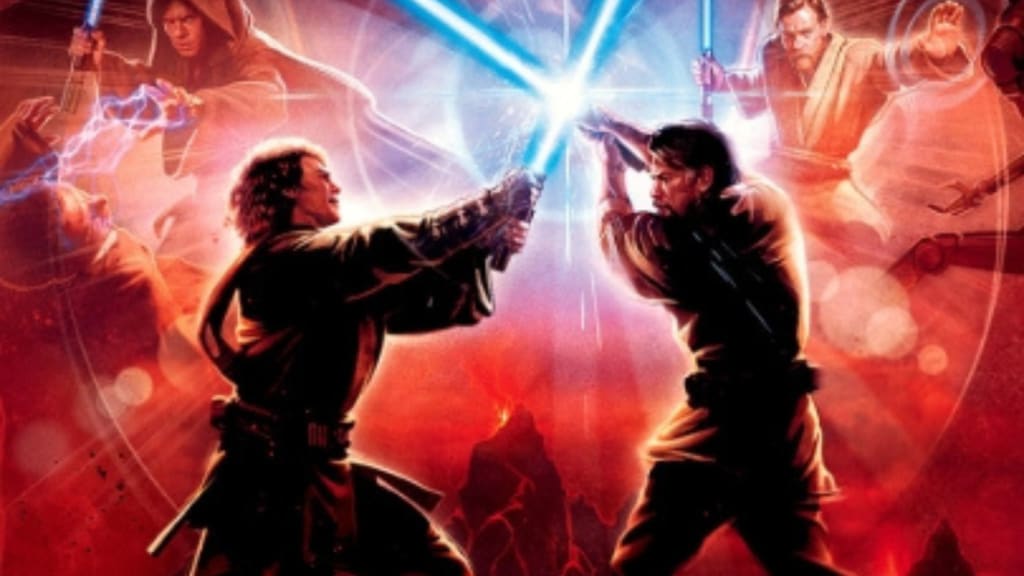
The game, designed for kids and casual gamers, didn’t just tease the movie’s story. It fully recreated the film’s major scenes, including Anakin and Obi-Wan’s duel on Mustafar, Anakin’s transformation into Darth Vader, and even Padmé giving birth to Luke and Leia. Players could experience the entire third act of the movie before they had a chance to see it on the big screen.
Imagine if a video game today revealed the entire plot of Avengers: Endgame before its release—it would have caused chaos online. Yet, back in 2005, this was just part of the Star Wars marketing playbook.
- The Novelization and Comic Adaptation That Left Nothing to the Imagination
If gamers didn’t spoil the movie for themselves, book readers certainly did. The official Revenge of the Sith novelization by Matthew Stover hit shelves on April 2, 2005—seven weeks before the film’s release.
Unlike most novelizations, which are often written as simple retellings, Stover’s book was a deep, dramatic character study that gave insight into Anakin’s tragic fall. It wasn’t just a glimpse of the story—it was arguably a more emotional and intense version of it.
Lucasfilm also released a comic book adaptation around the same time, featuring frame-by-frame recreations of key moments, including the infamous “Order 66” betrayal and Anakin’s transformation into Vader.
Between the game, the book, and the comics, Revenge of the Sith was completely exposed. If you wanted to know what happened before heading to the theater, all you had to do was look around.
Why George Lucas Didn’t Care About Spoilers
So why did George Lucas allow Revenge of the Sith to be so freely spoiled? The answer is simple: he believed spoilers didn’t matter.
Lucas often saw Star Wars as a grand myth—a story where the journey was more important than the destination. After all, Revenge of the Sith was a prequel to A New Hope, meaning fans already knew Anakin Skywalker would become Darth Vader. They knew Luke and Leia would be born. They knew Obi-Wan would survive.
For Lucas, the tension wasn’t about what would happen—it was about how it would unfold. He believed that even if fans knew the plot, they would still be drawn in by the emotional weight of the performances, the stunning visuals, and the operatic tragedy at the heart of the film.
This philosophy is a stark contrast to how movies are marketed today. Studios treat every plot point as sacred, teasing only vague hints in trailers and keeping actors under strict NDAs. But Lucas was playing a different game—he trusted that Revenge of the Sith was compelling enough to stand on its own, spoilers be damned.
Did Spoilers Hurt Revenge of the Sith? Not at All
If Revenge of the Sith had followed the traditional blockbuster playbook, revealing so much ahead of time should have been a disaster. Yet, the film was anything but.
It grossed $868 million worldwide, making it the highest-grossing film of 2005.
It received strong critical and fan acclaim, with many calling it the best of the prequel trilogy.
It remains one of the most rewatched Star Wars films, with its darker tone and epic action sequences standing the test of time.
Instead of hurting the movie, the early reveals arguably helped build excitement. Fans weren’t upset by spoilers—they were eager to see those moments unfold on the big screen. The emotional impact of Anakin and Obi-Wan’s duel, the heartbreak of Padmé’s final moments, and the chilling birth of Darth Vader still hit hard, even if audiences knew they were coming.
Could a Movie Get Away with This Today?
It’s hard to imagine a modern blockbuster pulling off what Revenge of the Sith did. In the era of social media, spoilers spread instantly, and audiences have become more protective over plot twists.
Marvel Studios, for example, keeps its scripts locked down, and actors like Tom Holland and Mark Ruffalo are closely monitored to avoid slip-ups. Even Lucasfilm has changed its approach—when The Rise of Skywalker was released in 2019, the studio went to great lengths to prevent leaks.
But Revenge of the Sith is proof that a great movie doesn’t need secrecy to succeed. Audiences didn’t love it because they were surprised—they loved it because it delivered an unforgettable, emotional, and visually stunning conclusion to the prequel trilogy.
Final Thoughts: The Power of Storytelling Over Secrets
In a world obsessed with keeping movie plots under wraps, Revenge of the Sith is a reminder that great storytelling isn’t about shocking the audience—it’s about making them feel something.
Even with every major twist laid out in advance, the movie still resonated with fans on a deep level. George Lucas understood that spoilers aren’t as powerful as execution, emotion, and unforgettable moments.
So, while today’s movies will continue to guard their secrets, Revenge of the Sith stands as proof that sometimes, spoilers don’t ruin the magic—they can even add to it.
About the Creator
Keep reading
More stories from Sangita Nandi and writers in Geeks and other communities.
Why Does Fran Drescher Have No Kids?
Fran Drescher, the beloved actress from The Nanny, has captured hearts with her humor and charm. Despite her successful career and vibrant personality, many fans have wondered why she never had children. While she has sometimes expressed regret, her decision was shaped by health struggles, career ambitions, and personal circumstances. In this article, we explore the reasons behind her choice and how she has found fulfillment in other aspects of life.
By Sangita Nandi10 months ago in Geeks
Silver Screen Magic with Mae West
American actress and singer Mae West became a popular film actress during the Great Depression. She started entertaining in vaudeville, then performed on Broadway, and finally went to Hollywood. She signed up with Paramount Pictures and made her debut in the 1932 film “Night After Night.” She also starred in musicals, comedies, and crime dramas. The American Film Institute named her one of the best classic Hollywood actresses.
By Rasma Raisters5 days ago in Geeks
Top 7 Oak Island Discoveries the Show Didn’t Air
The Curse of Oak Island has captivated audiences for over a decade, blending historical intrigue with reality TV drama. But what fans see on screen is only part of the story. Behind the edited episodes and dramatic voiceovers lies a treasure trove of discoveries that never made it to air — some due to time constraints, others possibly too speculative or controversial for mainstream broadcast.
By Rukka Nova2 days ago in Geeks
Ludacris and Nelly draw backlash over bookings at MAGA-coded music festival
Ludacris and Nelly headlining a mostly right-wing event is good for them. It’s also great for the genre of hip hop. The two rap veterans have showcased their talents on other stages. Why can’t they perform for mostly MAGA folks and grab that bag?
By Skyler Saunders4 days ago in Beat


Comments (1)
It broke all the rules! Great movie!