
How Dhurandhar’s Repurposed Qawwali with Pakistani Origins Engages with a Shared Cultural Past
Cinema, music, and memory: Exploring the overlooked cultural dialogue in Dhurandhar’s soundtrack.

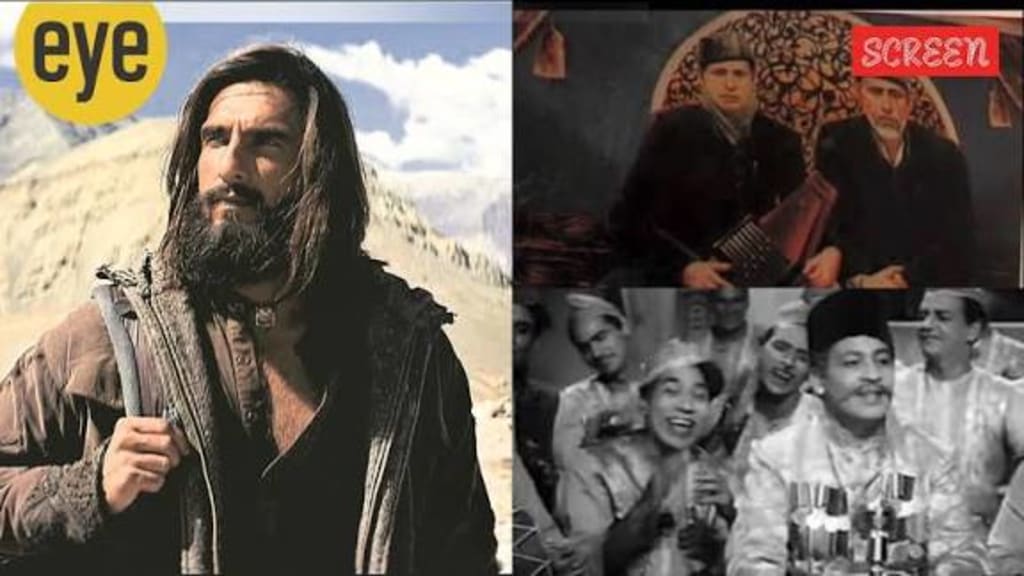
In the ever-evolving landscape of South Asian cinema, music has always served as a bridge across borders, generations, and histories. Dhurandhar, the latest cinematic spectacle from India, offers audiences high-octane drama and stellar performances, yet its musical choices present a fascinating cultural dialogue—one that is largely overlooked. The film’s repurposed qawwali, originally rooted in Pakistani musical traditions, engages with a shared cultural past, even as the movie’s narrative chooses to sidestep this origin.
Qawwali, the devotional Sufi music form, has long been an emblem of South Asia’s intertwined cultural heritage. Its pulsating rhythms, intricate melodies, and poetic lyrics speak to centuries of spiritual expression across the subcontinent. Many iconic qawwalis from Pakistan, especially those by legends like Nusrat Fateh Ali Khan and Abida Parveen, have crossed geographical and political boundaries, finding fans across India and beyond. Dhurandhar’s decision to integrate a qawwali with Pakistani origins is not just a musical choice; it is an invocation of this shared cultural memory.
Repurposing Qawwali for Cinematic Drama
In Dhurandhar, the qawwali appears at a pivotal juncture of the film, underlining themes of rivalry, honor, and reconciliation. The filmmakers adapted the piece to suit the cinematic context: tempo adjustments, orchestral layering, and modern production techniques transform the devotional original into a soundtrack that feels larger than life. Yet beneath this repurposed exterior lies a deep resonance of history—the original composition’s lyrics, rhythm, and style subtly remind audiences of a musical tradition that predates contemporary national borders.
This creative adaptation illustrates how cinema can act as a vessel for cultural dialogue. While the film itself may focus on fictional narratives, the music carries a weight of collective memory. For audiences familiar with the Pakistani roots of the qawwali, there is an additional layer of recognition and nostalgia. Even viewers unaware of its origins are drawn into a sonic world that hints at the subcontinent’s shared past, subtly challenging the notion that art is confined by political lines.
Ignoring the Origins: A Missed Opportunity
While Dhurandhar’s use of Pakistani-origin qawwali enriches its auditory experience, the film’s narrative largely ignores the provenance of the music. This oversight reflects a broader tendency in South Asian cinema to extract cultural elements without acknowledging their cross-border histories. By not crediting the musical lineage, the film misses an opportunity to highlight the rich, intertwined histories of India and Pakistan—a reminder that art often transcends geopolitical divides.
Acknowledging these origins could have added depth to the viewing experience, allowing audiences to engage not only with the story onscreen but also with the shared heritage that the music represents. It would have positioned Dhurandhar not merely as a cinematic spectacle but as a subtle commentary on the resilience of cultural connections despite political tensions.
Cultural Resonance Beyond Borders
The repurposed qawwali also underscores a significant truth about art: its ability to resonate beyond the circumstances of its creation. Despite being adapted for a Bollywood action-drama, the essence of the qawwali—its devotion, rhythm, and lyrical beauty—remains intact. This illustrates how cultural products from one region can be reinterpreted and celebrated in another, creating a shared artistic language. In the context of Dhurandhar, the music becomes a bridge connecting audiences across borders, reminding them of a collective heritage that persists even in times of division.
A Reflection on South Asian Cinema
Dhurandhar’s soundtrack invites reflection on how South Asian cinema engages with its musical inheritance. The repurposing of Pakistani-origin qawwali is emblematic of a larger trend: Indian films often draw from neighboring cultures to enrich their storytelling, yet seldom acknowledge these sources. While this can be seen as a form of cultural borrowing, it also highlights the enduring power of music to transcend boundaries. The audience’s emotional response, whether conscious or subconscious, reflects recognition of a shared history that politics cannot erase.
Conclusion
In repurposing a Pakistani-origin qawwali, Dhurandhar inadvertently engages with a cultural past that predates its cinematic universe. While the film may sidestep acknowledging this lineage, the music itself carries a memory of shared heritage, acting as a quiet testament to the intertwined histories of India and Pakistan. This juxtaposition—high-octane modern cinema paired with centuries-old musical tradition—offers a powerful reminder that art often finds ways to preserve connections that politics cannot sever.
Dhurandhar’s soundtrack thus serves as a case study in the enduring relevance of cross-border cultural dialogue, highlighting the power of music to engage audiences on multiple levels. Even when films overlook these origins, the resonance of shared heritage persists, reminding viewers that the subcontinent’s artistic history belongs to all who inhabit it.
Key Takeaways:
Dhurandhar uses a qawwali rooted in Pakistani tradition, enriching the film’s musical landscape.
The film’s narrative ignores the cultural origin, missing a chance to highlight shared heritage.
Music serves as a bridge across borders, preserving connections beyond politics.
South Asian cinema continues to navigate the balance between borrowing and acknowledging cross-cultural influences.
About the Creator
Fiaz Ahmed Brohi
I am a passionate writer with a love for exploring and creating content on trending topics. Always curious, always sharing stories that engage and inspire.
Keep reading
More stories from Fiaz Ahmed Brohi and writers in Geeks and other communities.
When Vinod Khanna Hired the Best Technicians to Launch Akshaye Khanna at 19: “There Are 2–3 Conditions”
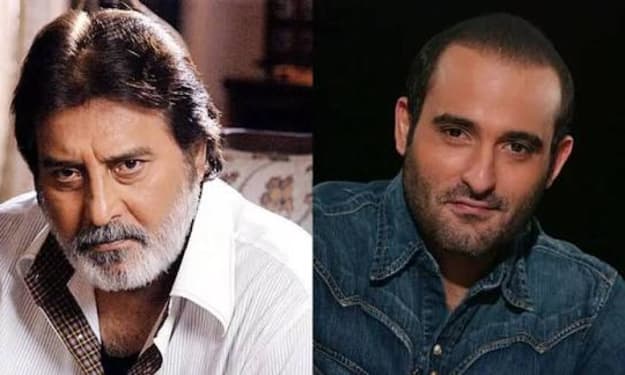
In Bollywood, star kids often enter the industry with advantages—but very few are launched with the care, discipline, and long-term vision that veteran actor Vinod Khanna applied while introducing his younger son Akshaye Khanna to cinema. At just 19 years old, Akshaye made his debut, but his father ensured it would not be an ordinary launch driven by hype alone. Instead, Vinod Khanna quietly assembled some of the best technicians in the industry, laying down a few firm conditions that shaped Akshaye’s unconventional journey. A Thoughtful Entry, Not a Flashy Launch Unlike many star launches of the 1990s, Akshaye Khanna’s debut was never designed to be loud or overexposed. Vinod Khanna, by then a seasoned superstar and a man who had experienced both fame and detachment from it, believed that longevity mattered more than instant stardom. Rather than relying solely on his own stature, Vinod Khanna focused on the craft of filmmaking. He sought top-notch directors, writers, cinematographers, and music composers—people who respected storytelling and performance over glamour. His goal was simple: if Akshaye was entering films, he would do so with quality surrounding him. The “2–3 Conditions” That Defined Akshaye’s Start Insiders from that era recall that Vinod Khanna had a few non-negotiable conditions when launching his son. The first condition was no shortcuts in preparation. Akshaye had to undergo acting training, voice modulation, and script readings before stepping onto a film set. Vinod Khanna firmly believed that natural intelligence alone wasn’t enough; discipline had to be learned early. The second condition was strong scripts over commercial formulas. Vinod Khanna did not want Akshaye boxed into typical romantic-hero roles simply because he looked the part. He insisted that Akshaye be offered characters that demanded emotional depth, even if they carried some risk. The third condition, according to industry chatter, was limited interference. Once the right team was hired, Vinod Khanna reportedly stepped back, allowing filmmakers to treat Akshaye as an actor—not as a star’s son. Akshaye Khanna’s Early Films Reflected That Vision Akshaye Khanna’s early performances revealed a young actor who was observant, restrained, and intelligent—qualities rarely expected from debutants. He did not chase larger-than-life heroism. Instead, his characters often felt inward-looking, conflicted, and layered. This approach puzzled some audiences initially. Akshaye wasn’t loud, dramatic, or conventionally “heroic.” But over time, critics and viewers began to appreciate his subtle acting style, which stood out in an era dominated by high-energy performances. A Different Kind of Legacy Vinod Khanna’s own life had been a mix of superstardom, spiritual withdrawal, and political involvement. That experience shaped how he viewed success. For him, launching Akshaye wasn’t about creating another mass idol—it was about building a serious actor who could sustain a long career. Interestingly, Akshaye Khanna later took long breaks from films, returning only when roles truly interested him. This selective approach mirrors his father’s early philosophy: work less, but work meaningfully. Industry Respect Over Box Office Pressure One of the most striking outcomes of Vinod Khanna’s strategy is that Akshaye Khanna today enjoys immense respect among filmmakers and critics, even without being a constant box-office presence. Directors often describe him as one of the finest actors of his generation—someone who elevates every scene he’s in. That reputation did not happen overnight. It was built quietly, starting from that carefully planned debut at 19, backed by skilled technicians and guided by a father who valued craft over chaos. A Lesson for Star Kids and Audiences In an age where celebrity children are often launched with massive promotions, Vinod Khanna’s approach feels almost radical. He understood that true stardom is not announced—it is earned over time. Akshaye Khanna’s career stands as proof that a thoughtful beginning, guided by experience and restraint, can create something far more enduring than overnight fame. Conclusion When Vinod Khanna hired the best technicians to launch Akshaye Khanna, he wasn’t just introducing his son to Bollywood—he was planting the seeds of a serious artistic career. Those “2–3 conditions” may have seemed simple, but they shaped one of Hindi cinema’s most respected actors. In a film industry obsessed with noise, the Khannas chose silence—and let the work speak instead.
By Fiaz Ahmed Brohi23 days ago in Geeks
Silver Screen Magic with Mae West
American actress and singer Mae West became a popular film actress during the Great Depression. She started entertaining in vaudeville, then performed on Broadway, and finally went to Hollywood. She signed up with Paramount Pictures and made her debut in the 1932 film “Night After Night.” She also starred in musicals, comedies, and crime dramas. The American Film Institute named her one of the best classic Hollywood actresses.
By Rasma Raisters6 days ago in Geeks
Can you Watch Premier League in Europe?
The 2025–26 Premier League season is underway, marking the 34th edition of the competition and the 127th year of top-flight English football. Liverpool start their title defense with confidence after lifting their second Premier League trophy last season, but the return of Leeds United, Burnley, and Sunderland ensures fresh rivalries – including the long-awaited Tyne–Wear derby, back for the first time since 2015–16.
By David Cook5 days ago in Geeks
Ludacris and Nelly draw backlash over bookings at MAGA-coded music festival
Ludacris and Nelly headlining a mostly right-wing event is good for them. It’s also great for the genre of hip hop. The two rap veterans have showcased their talents on other stages. Why can’t they perform for mostly MAGA folks and grab that bag?
By Skyler Saunders4 days ago in Beat


Comments
There are no comments for this story
Be the first to respond and start the conversation.