
Green Mystery From the Stars: Why 3I/ATLAS Is Turning Into the Solar System’s Most Baffling Visitor
From outgassing to color changes, here's what scientists are discovering — and wondering — about this interstellar comet.
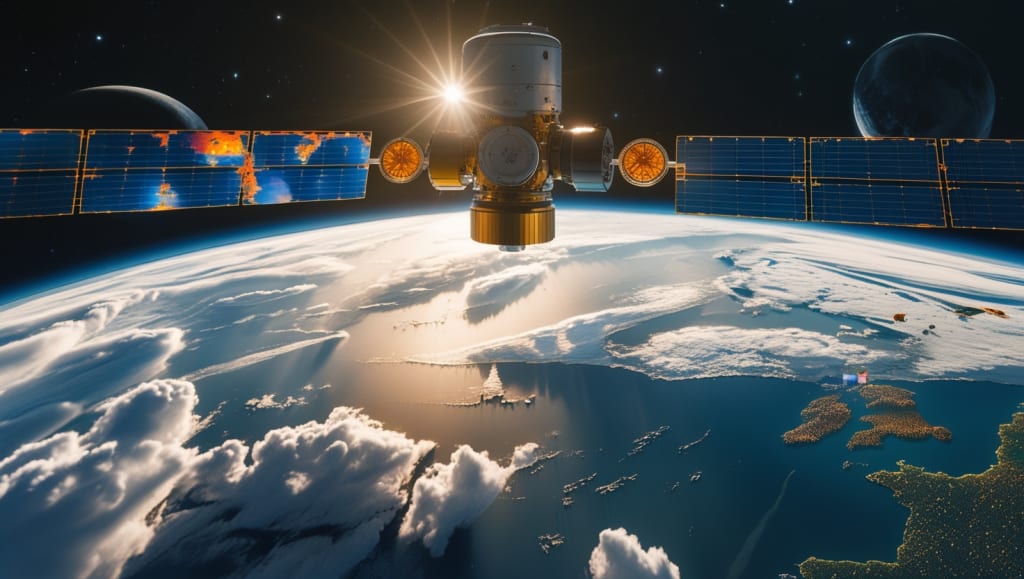
When 3I/ATLAS was first detected hurtling toward our solar system, astronomers knew immediately that this wasn’t just another icy body drifting in from the Kuiper Belt. Its trajectory, velocity, and glowing green hue all signaled something extraordinary: an interstellar visitor, only the third ever recorded after the groundbreaking discoveries of ʻOumuamua in 2017 and 2I/Borisov in 2019.
Unlike those earlier encounters, 3I/ATLAS has quickly developed a reputation for being both spectacular and puzzling. At first, it appeared as a fairly standard comet, albeit with a distinct emerald tint. But as it approached the Sun, scientists noticed bizarre changes — shifts in its coma brightness, jets of gas shooting out at unpredictable angles, and even temporary fragmentation. All these strange behaviors raise one big question: what exactly is 3I/ATLAS?
The Green Glow Explained
The eerie green glow, which captured headlines around the world, isn’t the comet’s core itself but rather the gases it releases when solar radiation hits. Astronomers believe it comes from diatomic carbon (C2) — molecules that emit a green hue when excited by ultraviolet light. This chemical signature is not uncommon in comets, but in 3I/ATLAS the glow is unusually bright and long-lasting.
“This object almost looks alive,” joked one NASA astronomer, noting how dramatically the comet changes from week to week. That sense of unpredictability is exactly why the scientific community is so captivated.
Lessons From ʻOumuamua and Borisov
To appreciate why 3I/ATLAS is causing so much buzz, it’s helpful to remember its predecessors. ʻOumuamua, the first-known interstellar object, baffled scientists with its elongated, cigar-like shape and lack of a visible tail. Some even speculated it could be alien technology — a claim that sparked years of debate.
2I/Borisov, discovered just two years later, was more conventional: a comet with a clear tail of dust and gas, behaving much like those from our own solar system.
3I/ATLAS seems to fall somewhere in between. It has the classic cometary features missing in ʻOumuamua, but also enough irregularities to keep experts guessing.
A Window Into Distant Worlds
The most exciting part of studying 3I/ATLAS is that it represents material from far beyond our solar neighborhood. Astronomers believe these interstellar comets are fragments ejected from the protoplanetary disks of distant stars billions of years ago. By analyzing their composition, we get a chemical fingerprint of planetary systems we may never directly observe.
So far, spectroscopy of 3I/ATLAS suggests a familiar mix of water ice, carbon dioxide, and organics — but in slightly unusual ratios compared to local comets. That difference hints at diverse conditions in other solar systems, fueling deeper questions about planet formation across the galaxy.
Public Reactions: Awe and Speculation
As expected, the public fascination with 3I/ATLAS isn’t limited to science circles. Social media has been flooded with photos, amateur telescope footage, and wild theories. Some insist its green glow is proof of alien engineering; others simply marvel at its beauty.
In forums and podcasts, people wonder aloud: could this comet carry microbial life? Is it a fragment of an exoplanet destroyed eons ago? While scientists remain cautious, they agree on one point — objects like this remind us how small we are in the cosmic scale.
Why It Matters
Beyond the spectacle, 3I/ATLAS underscores how astronomy is entering a new era. Improved sky surveys and automated telescopes mean we’re catching more interstellar visitors than ever before. Just two decades ago, no one had even confirmed the existence of such objects. Now, we’re studying their chemical makeup in real time.
The comet also illustrates the thin line between science and imagination. For every rigorous analysis, there’s a spark of wonder that pushes humanity to dream bigger — about what’s out there, what’s possible, and what’s waiting to be discovered.
Final Thoughts
3I/ATLAS may not be alien technology or a harbinger of doom, but it is something equally valuable: a messenger from another star system, carrying with it secrets of cosmic history. Whether it ultimately disintegrates under the Sun’s heat or sails off back into the void, it has already left its mark — on science, and on our collective imagination.
One day, we may send probes to intercept interstellar visitors. For now, we point our telescopes upward and celebrate that, every once in a while, the universe sends us a postcard from across the stars.
About the Creator
Keep reading
More stories from Shahjahan Kabir Khan and writers in Geeks and other communities.
🌌 Samsung’s Galaxy S25 FE: The Affordable Flagship We’ve Been Waiting For
Straightforwardly, Samsung's Fan Edition (FE) series was designed to provide flagship-quality features at a more reasonable price. Among those looking for top-end performance without excessive costs, the FE series has grown in popularity over time. Samsung seems to have finally corrected its course with the launch of the Galaxy S25 FE.
By Shahjahan Kabir Khan4 months ago in Geeks
Silver Screen Magic with Mae West
American actress and singer Mae West became a popular film actress during the Great Depression. She started entertaining in vaudeville, then performed on Broadway, and finally went to Hollywood. She signed up with Paramount Pictures and made her debut in the 1932 film “Night After Night.” She also starred in musicals, comedies, and crime dramas. The American Film Institute named her one of the best classic Hollywood actresses.
By Rasma Raisters6 days ago in Geeks
The Devil's Cut
“Comrade, finally you’re awake.” The voice was smooth, sensual. A flickering incandescent bar was all that lit the white, sterile room. All Vladimir remembered was everything going black. He tried to move his arms and found them strapped to the gurney.
By Matthew J. Fromm5 days ago in Fiction



Comments
There are no comments for this story
Be the first to respond and start the conversation.