
Fangs Out, Pants Down: How the New Nosferatu Bares It All - Literally and Emotionally
The Evolution of Vampires on Screen: Humanity in Monstrosity and the New Nosferatu’s Boldest Leap

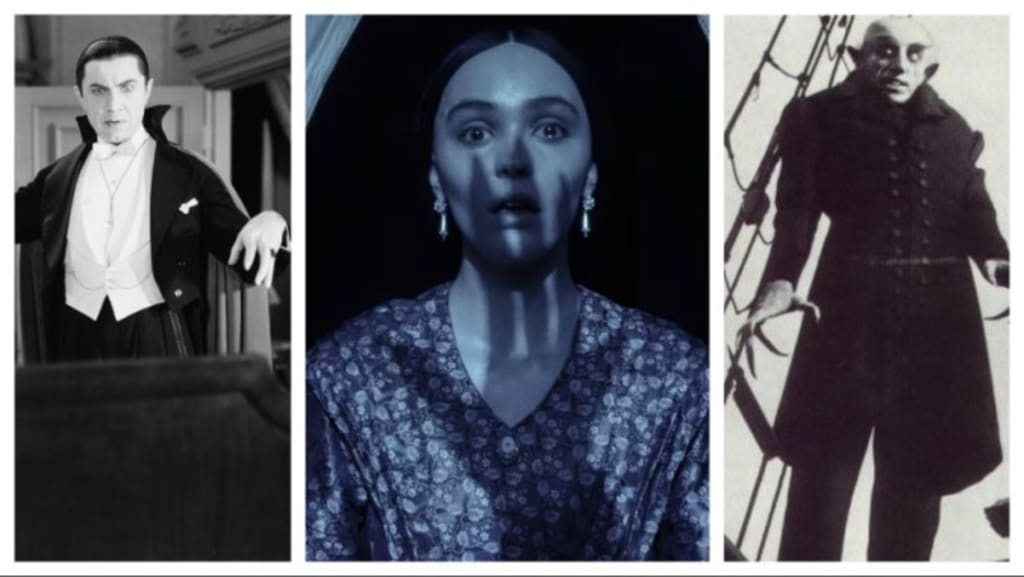
Vampire mythos have evolved significantly in their cinematic representation over the past century. From the shadowy figure of Count Orlok in F.W. Murnau's Nosferatu (1922) to the sensuality of Anne Rice's Interview with the Vampire adaptations, vampires have transitioned from grotesque creatures of the night to emotionally complex, sexually charged, and deeply humanized beings. This transformation reflects broader societal changes in how monstrosity and humanity intersect. The recent remake of Nosferatu has taken this evolution to an unprecedented level by presenting a nude scene featuring full-frontal male nudity. This choice strips away the traditional armor of monstrosity and delves into the raw vulnerability of its titular character.
This article will explore the trajectory of vampires on screen, focusing on how the new Nosferatu redefines vampire cinema by juxtaposing the grotesque with the intimate, highlighting a pivotal shift in humanizing the inhuman.
From Shadowy Monsters to Uncanny Beings: A Brief History
Nosferatu (1922) and Early Representations
In Murnau's original Nosferatu, Count Orlok was the epitome of monstrosity - his bald head, elongated fingers, and rat-like teeth designed to evoke pure revulsion. Orlok was an "other" in every sense, representing the fear of the unknown, disease, and death. Vampires in early cinema were not meant to be understood or sympathized with; they were alien predators.
Universal's Dracula and the Romanticization of Vampires
The shift began with Bela Lugosi's portrayal of Count Dracula in Tod Browning's Dracula (1931). Lugosi brought a suave, aristocratic charm to the role, hinting at the vampire's seductive nature. The character became less monstrous and a dark mirror of human desires - wealth, power, and immortality.
Coppola's Dracula and the Rise of Emotional Depth
The humanization of vampires reached new heights with Francis Ford Coppola's Bram Stoker's Dracula (1992). Gary Oldman's Dracula was not merely a predator but a tragic figure driven by love and loss. Coppola's adaptation imbued Dracula with profound emotional depth, emphasizing the tension between his monstrous actions and human desires.
This emotional complexity marked a turning point. Vampires were no longer one-dimensional villains but deeply flawed characters whose struggles mirrored humanity's.
Sexuality and the Vampire
Anne Rice and the Erotic Vampire
Anne Rice's The Vampire Chronicles redefined vampire sexuality. Her characters, such as Louis and Lestat, were sensual and ambiguous, exploring love, desire, and existential angst themes. The 1994 film adaptation of Interview with the Vampire captured this eroticism, blending gothic horror with lush, homoerotic undertones.
The Vampires of True Blood
HBO's True Blood (2008–2014) took the eroticism of vampires to new levels, portraying them as hypersexual beings. The series used vampire sexuality as a metaphor for societal taboos, from queer identities to BDSM. However, despite its provocative nature, True Blood adhered to the tradition of concealing physical vulnerability - nudity was often partial, with full frontal shots strategically avoided.
The Boldness of the New Nosferatu
Breaking Taboos with Full-Frontal Male Nudity
The recent Nosferatu remake introduces a pivotal moment in vampire cinema: a full-frontal nude scene featuring the male vampire. This choice breaks with tradition not just in vampire films but in mainstream cinema, where male nudity remains relatively rare compared to female nudity.
The decision to include this scene does more than shock; it humanizes the vampire unprecedentedly. Nudity, especially when not sexualized, reveals vulnerability and fragility. In this context, the vampire is literally and metaphorically stripped of his mystique and power. The audience is confronted with his physicality, a reminder that beneath the supernatural lies a being with a body that can be scrutinized, judged, and even pitied.
Vulnerability in the Grotesque
Unlike the eroticized vampires of True Blood or Anne Rice's universe, the Nosferatu vampire's nudity is not seductive. It is raw and unsettling, juxtaposing the grotesque elements of the vampire with the innate vulnerability of the human form. This duality emphasizes the uncanny nature of the character, blurring the line between human and monster.
The Evolution of Humanity in Monstrosity
Vampires as Mirrors of Humanity
Vampires have always reflected societal fears and desires. In early cinema, they represented external threats - the unknown and the alien. As society shifted towards introspection, vampires began to embody internal struggles: unfulfilled desires, fear of death, and the quest for meaning.
The new Nosferatu takes this evolution to its logical extreme by challenging the audience to confront the vampire as a mirror and a window. The full-frontal scene forces viewers to see the vampire as a being with a body, subject to the same vulnerabilities and indignities as any human. This humanization is unsettling precisely because it challenges the comforting separation between "us" and "them."
The Uncanny and the Humanized Monster
The uncanny - something that is simultaneously familiar and strange - is central to the vampire's allure. The nude scene in Nosferatu heightens this uncanny quality by presenting the vampire in a state of disarmament. He is both predator and prey, both immortal and painfully mortal.
Conclusion: A New Chapter in Vampire Cinema
The new Nosferatu marks a bold departure in the cinematic portrayal of vampires. By embracing full-frontal male nudity, it strips away layers of mystique to reveal the raw humanity underlying the monster. This choice redefines the character and pushes the boundaries of how we understand monstrosity and vulnerability on screen.
As vampires continue to evolve in popular culture, their trajectory reflects our own evolving understanding of what it means to be human. The new Nosferatu reminds us that even the most grotesque of monsters can evoke empathy - and that humanity, in all its naked vulnerability, is the most haunting thing.
About the Creator
Nazgol Rasoolpour
An emerging researcher with a passion for horror narrative. My focus revolves around the captivating subgenres of religious horror and techno horror.
Reader insights
Outstanding
Excellent work. Looking forward to reading more!
Top insights
On-point and relevant
Writing reflected the title & theme
Compelling and original writing
Creative use of language & vocab
Easy to read and follow
Well-structured & engaging content
Excellent storytelling
Original narrative & well developed characters
Expert insights and opinions
Arguments were carefully researched and presented
Keep reading
More stories from Nazgol Rasoolpour and writers in Geeks and other communities.
Blake Lively vs. Justin Baldoni: A Call for Patience Amid Allegations
Recent headlines have been dominated by a legal battle between actors Blake Lively and Justin Baldoni, where Lively has filed a lawsuit accusing Baldoni of inappropriate behavior, including pressuring her to lose weight during the production of their latest film. Baldoni, however, has reportedly defended himself, claiming that his comments were related to a practical need to safely execute a scene requiring him to lift Lively due to his back condition.
By Nazgol Rasoolpourabout a year ago in Geeks
Silver Screen Magic with Mae West
American actress and singer Mae West became a popular film actress during the Great Depression. She started entertaining in vaudeville, then performed on Broadway, and finally went to Hollywood. She signed up with Paramount Pictures and made her debut in the 1932 film “Night After Night.” She also starred in musicals, comedies, and crime dramas. The American Film Institute named her one of the best classic Hollywood actresses.
By Rasma Raisters7 days ago in Geeks
Thoughts on Stranger Things 5
Recalling cultural zeitgeists like HBO's Game of Thrones or the BBC's Sherlock, especially their lacklustre final seasons, gave legitimate reason for audiences to apprehend the quality of Netflix's final run of the hit series Stranger Things, released in three volumes over the last two months of 2025. The sense of finality has been undeniably palpable, given the show's success and decade-long run. Fans wanted to experience a proper conclusion to a story many around the world have grown up with. And like Benioff and Weiss, or Moffat and Gatiss, Stranger Things' creators - the Duffers - have irrevocably and indisputably proven themselves to be... well... just another pair of hack writers.
By Andrei Babanin7 days ago in Geeks



Comments
There are no comments for this story
Be the first to respond and start the conversation.