
E-commerce Apparel Market Size & Forecast 2025–2033
Digital Fashion Boom: How Online Apparel Became a US$ 1.37 Trillion Global Force


The global E-commerce Apparel Market is expected to reach US$ 1,378.77 billion by 2033, rising from US$ 685.72 billion in 2024, according to Renub Research. The market will expand at a CAGR of 8.07% from 2025 to 2033, driven by rapid technological innovation, evolving consumer shopping habits, and expanding smartphone penetration across both developed and emerging economies.
As digital ecosystems grow stronger, the future of fashion retail is increasingly web-first, convenience-driven, and personalized. From mobile apps to AI-powered styling assistants, e-commerce has firmly established itself as the dominant channel for modern apparel shopping.
Global E-commerce Apparel Market Overview
The e-commerce apparel industry has transformed the global fashion retail landscape by offering unprecedented access to clothing, footwear, and accessories at the tap of a screen. The widespread use of smartphones and affordable internet has made online shopping a natural choice for millions. Today, consumers demand convenience, variety, and transparency—qualities that digital platforms deliver more effectively than traditional brick-and-mortar stores.
From virtual try-on technology to AI-backed product recommendations, the shift toward personalized shopping experiences has significantly raised consumer expectations. Meanwhile, influencer marketing, social commerce, and sustainability-focused fashion movements are redefining how brands interact with audiences.
In Asia, nearly 40% of fashion sales already occur online, reflecting the exceptional pace of digital adoption. Globally, the number of online shoppers is projected to reach 2.71 billion by 2024, representing one-third of the world’s population—a massive opportunity for brands, platforms, and retailers worldwide.
Beyond demand-side drivers, governments across multiple regions are also accelerating the digitization of retail. Initiatives promoting digital payments, cyber security standards, and consumer protection laws help enhance trust in online systems, supporting long-term market expansion.
Key Market Drivers
1. Growing Internet & Smartphone Penetration
The expansion of mobile networks and low-cost internet has democratized access to online shopping. Today, a significant percentage of online apparel purchases are made through mobile apps due to:
Seamless checkout experiences
Personalized notifications
Real-time price tracking
Secure digital payment options
Improved digital literacy is enhancing consumer trust in online payments and product quality, allowing retailers to expand into semi-urban and rural markets. Mobile-first design, payment flexibility, and app-based rewards programs further enhance engagement.
2. Technology Advancements and AI Integration
Artificial Intelligence, machine learning, and augmented reality are reshaping digital retail:
Virtual try-ons reduce return rates by giving shoppers instant visualizations.
Chatbots and AI stylists personalize the entire shopping process.
Predictive analytics help brands manage inventory and forecast demand.
AR fitting rooms create immersive experiences that mirror in-store trials.
These tools deepen customer engagement and boost conversion rates, making technology integration a central competitive strategy for brands aiming to retain modern, tech-savvy shoppers.
3. Shifting Lifestyle Trends and Consumer Preferences
Fashion trends today emerge and evolve faster than ever due to social media and influencer culture. Younger consumers—especially Millennials and Gen Z—prioritize:
Affordability
Sustainability
Convenience
Fast delivery
Ethical sourcing
Remote work culture has boosted demand for casual and comfortable clothing, prompting brands to refresh collections frequently. Platforms utilizing user-generated content, loyalty rewards, and personalized shopping paths enjoy higher retention and brand affinity.
Major Challenges in the E-commerce Apparel Market
1. High Return Rates & Logistics Issues
One of the most expensive problems in the apparel e-commerce sector is the high volume of returns, often caused by:
Sizing inconsistencies
Color variations
Mismatched expectations
Handling returns increases operational costs and undermines sustainability efforts. Reverse logistics is particularly costly, especially in cross-border commerce. Last-mile delivery delays, customs bottlenecks, and international shipping intricacies further complicate logistics.
Retailers are responding through:
Enhanced sizing tools
Real-time chat support
Virtual fitting technologies
Stronger fulfillment partnerships
2. Intense Market Competition & Price Wars
The sector’s rapid growth has attracted a vast array of competitors—from global giants to niche D2C brands. This leads to aggressive discounting strategies, deep promotional activities, and rising customer acquisition costs.
New brands often struggle to stand out unless they offer:
Unique value propositions
Sustainable manufacturing
Influencer partnerships
Curated collections
With platforms like Amazon, Shein, and Zalando raising consumer expectations, only brands with strong differentiation and robust digital ecosystems can thrive.
Market Insight: Home Appliances Segment (Under Type Classification)
While apparel is the core focus, the broader e-commerce market also includes home appliances, which have witnessed significant online demand. Products range from:
Small appliances: coffee makers, microwaves, vacuum cleaners
Large appliances: refrigerators, washing machines, air conditioners
Consumers prefer buying appliances online due to:
Variety of models
Transparent pricing
Delivery and installation support
Extended warranty options
IoT-enabled, smart appliances are especially popular among urban consumers. Seasonal promotions and festival sales further boost this segment.
Regional Insights
United States E-commerce Apparel Market
The U.S. remains one of the world’s most mature e-commerce apparel markets due to:
High digital adoption
Advanced logistics
Consumer comfort with online payments
American shoppers prefer fast shipping, easy returns, branded experiences, and personalized recommendations. Subscription boxes, influencer marketing, and omnichannel retailing are major growth drivers.
However, saturation also means stiff competition—brands increasingly rely on:
Exclusive drops
AR-powered try-ons
AI personalization
Sustainable clothing lines
Germany E-commerce Apparel Market
Germany is one of Europe’s most digitally advanced fashion e-commerce hubs. Driven by:
High internet literacy
Stable economy
Strong logistics networks
German consumers value transparency, durable quality, and sustainable fashion. Mobile commerce is rising, and demand for eco-friendly apparel is increasing.
Regulatory compliance—especially GDPR-driven data protection—plays a central role in maintaining consumer trust. D2C brands and social-commerce-led platforms are gaining traction among younger demographics.
India E-commerce Apparel Market
India is among the fastest-growing e-commerce apparel markets due to:
A young, fashion-forward population
Expanding 4G/5G access
Affordable smartphones and data plans
Digital India initiatives
Festival seasons, mega sales, and influencer-led marketing drive massive traffic. Price sensitivity and linguistic diversity shape retail strategies, pushing brands to adopt:
Regional campaigns
COD payments
Vernacular interfaces
Hyperlocal logistics solutions
Challenges include last-mile connectivity and return management in remote regions, though infrastructure is steadily improving.
United Arab Emirates (UAE) E-commerce Apparel Market
The UAE’s high-income population and strong digital infrastructure make it one of the Middle East’s most advanced e-commerce hubs.
Key features include:
Same-day delivery expectations
High mobile shopping rates
Luxury fashion dominance
Strong social media presence
Dubai and Abu Dhabi shape fashion trends for the region, supported by government-backed innovation policies. Arabic interfaces, cultural sensitivity, and influencer partnerships are central to success in this sophisticated market.
Recent Developments in the E-commerce Apparel Industry
• Newme, a fast-fashion company, raised $18 million (Series A) in July 2024 to accelerate its expansion in Asia.
• Unspun, a fashion-tech company, secured $32 million in July 2024 to scale its zero-waste apparel solutions.
• Vuori, a lifestyle apparel brand, achieved a market valuation of US$ 5.5 billion in November 2024, marking significant investor confidence.
Market Segmentation
By Type
Home Appliances
Apparel, Footwear & Accessories
Books
Cosmetics
Others
By Transaction
Business-to-Consumer (B2C)
Business-to-Business (B2B)
Consumer-to-Consumer (C2C)
Others
Regional Outlook
North America: U.S., Canada
Europe: France, Germany, Italy, Spain, UK, Belgium, Netherlands, Turkey
Asia Pacific: China, Japan, India, South Korea, Thailand, Malaysia, Indonesia, Australia, New Zealand
Latin America: Brazil, Mexico, Argentina
Middle East & Africa: Saudi Arabia, UAE, South Africa
Key Companies Covered
Alibaba
Amazon.com Inc.
ASOS
Best Buy
eBay Inc.
Flipkart
Groupon
JD.com
Shopify
Walmart Inc.
Each company section typically includes:
• Overview
• Key Executives
• SWOT Analysis
• Recent Developments
• Revenue Performance
Final Thoughts
The E-commerce Apparel Market is entering a new era defined by digital-first strategies, AI-driven shopping experiences, virtual try-ons, and sustainability-led fashion. As consumer expectations evolve, brands that successfully blend personalization, convenience, and ethical practices will dominate the next decade of online apparel retail.
With the sector projected to reach US$ 1.37 trillion by 2033, the global digital fashion revolution is only getting started. Retailers willing to innovate, invest in technology, and understand the shifting cultural landscape will lead the evolution of the world’s most dynamic retail segment.
About the Creator
Marthan Sir
Educator with 30+ years of teaching experience | Passionate about sharing knowledge, life lessons & insights | Writing to inspire, inform, and empower readers.
Keep reading
More stories from Marthan Sir and writers in Geeks and other communities.
Eyewear Market Trends & Summary: Fashion, Function, and Technology Drive a US$ 288.83 Billion Global Vision Economy by 2033
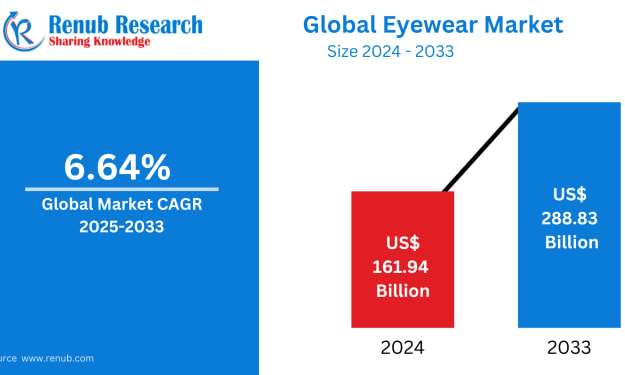
Introduction: A Market Where Fashion Meets Functionality The global eyewear industry is undergoing a powerful transformation, driven by changing lifestyles, rising visual impairments, and a booming appetite for fashionable and technologically advanced eyewear. According to Renub Research, the Global Eyewear Market is projected to grow from US$ 161.94 billion in 2024 to US$ 288.83 billion by 2033, registering a strong CAGR of 6.64% during 2025–2033.
By Marthan Sir2 months ago in Geeks
Marty Supreme Review: Timothée Chalamet Is Excellent, The Movie… Not So Much
⭐ Rating: 2 out of 5 stars Marty Supreme Directed by Josh Safdie Written by Josh Safdie, Ronald Bronstein Starring Timothee Chalamet, Gwyneth Paltrow, Tyler The Creator, Odessa A'zion
By Sean Patrickabout a month ago in Geeks
NFL in Australia for free
The NFL, or National Football League, is the premier professional American football league in the United States, featuring 32 teams divided into the AFC and NFC conferences, competing in a season that culminates in the championship Super Bowl game. Founded in 1920, the NFL is the highest level of professional football globally you can also watch NFL in Australia with VPN.
By David Cook4 days ago in Geeks
Where's the Glory?
In breaking news, rehabilitated Republican Senator Johnnie Johnson (Pronouns: HE, HIM, HIS) called a press conference from the Men’s room of the New Orleans Louis Armstrong International Airport, Concourse B, across from the Ignatius Reilly’s Lucky Dog stand. The Senator had just returned from a sexual reorientation rehabilitation program in Memphis, TN after being publically disgraced at a Buckee’s Truckstop restroom soliciting sex from an undercover cop three months ago. He is a founding member of the Reformed Christians for Christ, a conservative, pro-family and ex-gay advocacy group. In the spirit of being reborn, Senator Johnson invited reporters to marvel at his plans for a major remodeling of airport bathrooms.
By Cathy Schieffelin4 days ago in Humor


Comments
There are no comments for this story
Be the first to respond and start the conversation.