
Dynamic Difficulty Adjustment: Crafting Personalized Gaming Experiences
How Adaptive Game Design Enhances Engagement, Accessibility, and Player Satisfaction

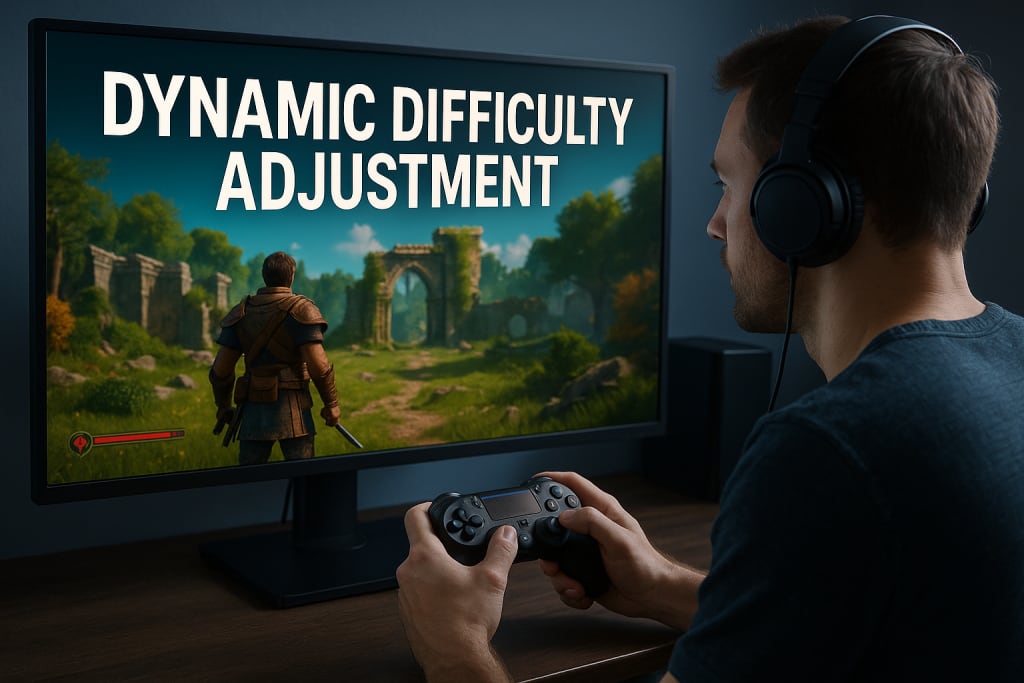
In the ever-evolving world of video games, player experience reigns supreme. One of the most transformative trends in recent years is Dynamic Difficulty Adjustment (DDA) — a system that tailors gameplay challenge in real-time based on player performance.
This concept isn't just a technical marvel; it's a design philosophy that bridges the gap between frustration and flow, ensuring that players remain engaged, challenged, and entertained.
What is Dynamic Difficulty Adjustment?
Dynamic Difficulty Adjustment refers to game systems that automatically modify the level of difficulty based on how well or poorly a player is performing.
Unlike traditional static difficulty settings (Easy, Normal, Hard), DDA systems observe in-game behavior and adapt accordingly. This can involve altering enemy AI, adjusting resource availability, changing puzzle complexity, or modifying game speed.
The ultimate goal of DDA is to keep players within the optimal zone of engagement — not too bored due to lack of challenge, and not too frustrated due to overwhelming difficulty.
This concept aligns closely with Mihaly Csikszentmihalyi's theory of "Flow," which suggests that people are most engaged when skill and challenge are in balance.
The Evolution of Difficulty in Games
Traditionally, video games have relied on fixed difficulty levels. While these options provide some control, they can be a blunt instrument. Players often select a difficulty level at the start of a game without understanding how it will impact their experience. This static approach fails to account for a player's learning curve or moment-to-moment variation in performance.
Enter DDA, which emerged in the late 1990s and early 2000s as game developers sought more nuanced ways to retain players. Early examples include games like "Resident Evil 4" and "Left 4 Dead," which subtly adjusted enemy behavior based on player performance.
Modern titles like "The Last of Us Part II," "Celeste," and "God of War: Ragnarok" incorporate advanced versions of DDA that are almost invisible but highly effective.
How DDA Works: Techniques and Algorithms
Dynamic Difficulty Adjustment is not a one-size-fits-all system. Game developers use a range of techniques and algorithms to implement DDA, including:
- Performance Metrics: Tracking player stats such as accuracy, damage taken, completion time, or frequency of death to inform difficulty scaling.
- Rule-Based Systems: Predefined rules trigger difficulty changes when certain thresholds are met.
- Machine Learning: More advanced systems use AI to predict player behavior and adapt more organically.
- Player Profiling: Segmenting players into archetypes (e.g., aggressive, cautious, exploratory) and tailoring challenges accordingly.
- Heuristic-Based Tweaks: Adjustments based on "fuzzy logic" to maintain a believable and immersive experience.
Each method has its pros and cons, and the choice depends on game genre, player expectations, and development resources.
Benefits of DDA
- Enhanced Player Retention: Games that adapt to player skill levels reduce churn and increase the likelihood of completion.
- Accessibility: DDA makes games more inclusive by providing a playable experience for users with varying abilities.
- Replayability: Adaptive systems can make each playthrough feel unique and challenging in different ways.
- Player Satisfaction: When done right, DDA minimizes frustration and maximizes enjoyment, leading to more positive reviews and word-of-mouth.
Potential Pitfalls and Criticisms
Despite its advantages, DDA is not without controversy:
- Lack of Transparency: Some players prefer to control their difficulty level and may feel manipulated if adjustments are hidden.
- Reduced Sense of Achievement: If a player senses that the game is "helping" them too much, it can diminish the sense of accomplishment.
- Balancing Challenges: Tuning DDA requires extensive playtesting to ensure changes are subtle and effective without breaking immersion.
Games like "Celeste" counter these concerns by offering an "Assist Mode" that clearly communicates changes, allowing players to tailor difficulty while maintaining agency.
Best Practices for Implementing DDA
- Start with Clear Objectives: Know what kind of player experience you're aiming to deliver.
- Make It Optional or Transparent: Provide players with the choice to opt in or receive feedback about adaptive changes.
- Use Data Wisely: Collect meaningful performance data and avoid overreacting to short-term fluctuations.
- Balance Challenge and Empowerment: Keep players on the edge of their abilities while still allowing them to feel capable.
- Test Extensively: Ensure that DDA systems perform consistently across diverse playstyles and skill levels.
The Future of Personalized Gaming
As games continue to evolve, the future of DDA looks promising. With advancements in AI and machine learning, adaptive systems will become even more sophisticated, allowing for truly personalized experiences. Imagine a horror game that learns what scares you, or a strategy game that evolves in complexity based on your tactical decisions.
Dynamic Difficulty Adjustment is more than a technical feature—it's a cornerstone of modern game design focused on empathy, accessibility, and player satisfaction.
By crafting experiences that meet players where they are, developers can create games that are not only more enjoyable but also more meaningful.
About the Creator
Richard Bailey
I am currently working on expanding my writing topics and exploring different areas and topics of writing. I have a personal history with a very severe form of treatment-resistant major depressive disorder.
Keep reading
More stories from Richard Bailey and writers in Geeks and other communities.
The Rise of User-Generated Content in Games: How Players Are Shaping the Industry
In the past two decades, the gaming landscape has experienced a seismic shift, not just in technological capabilities but also in how content is created and consumed. At the forefront of this transformation is user-generated content (UGC) — a phenomenon that empowers players to become creators, blurring the lines between developer and gamer.
By Richard Bailey10 months ago in Geeks
Train Dreams - A Movie Review
The world’s an old place. Train Dreams is a 2025 film based on Denis Johnson’s novella. The story follows Robert Grainier, a logger and railroad worker, who experiences turmoil in the midst of his happy life. Although the journey of grief is difficult, Robert keeps moving forward.
By Marielle Sabbagabout 13 hours ago in Geeks
The Piggy Project
I’ve had so many names in this life I lose track of which ones were ever really mine and which ones I wore because someone needed me to. Some were handed to me before I had words to refuse them, before I knew what they meant, before I knew I could say no. Most weren’t meant to hurt. That doesn’t mean they didn’t leave marks. Marks that told me who I belong to, who I am by way of who claims me, recognizes me in the good and bad, who walks beside me.
By Fatal Serendipity2 days ago in Confessions


Comments
There are no comments for this story
Be the first to respond and start the conversation.