
Doctor Zhivago by Boris Pasternak
Why It's a Masterpiece (Week 68)

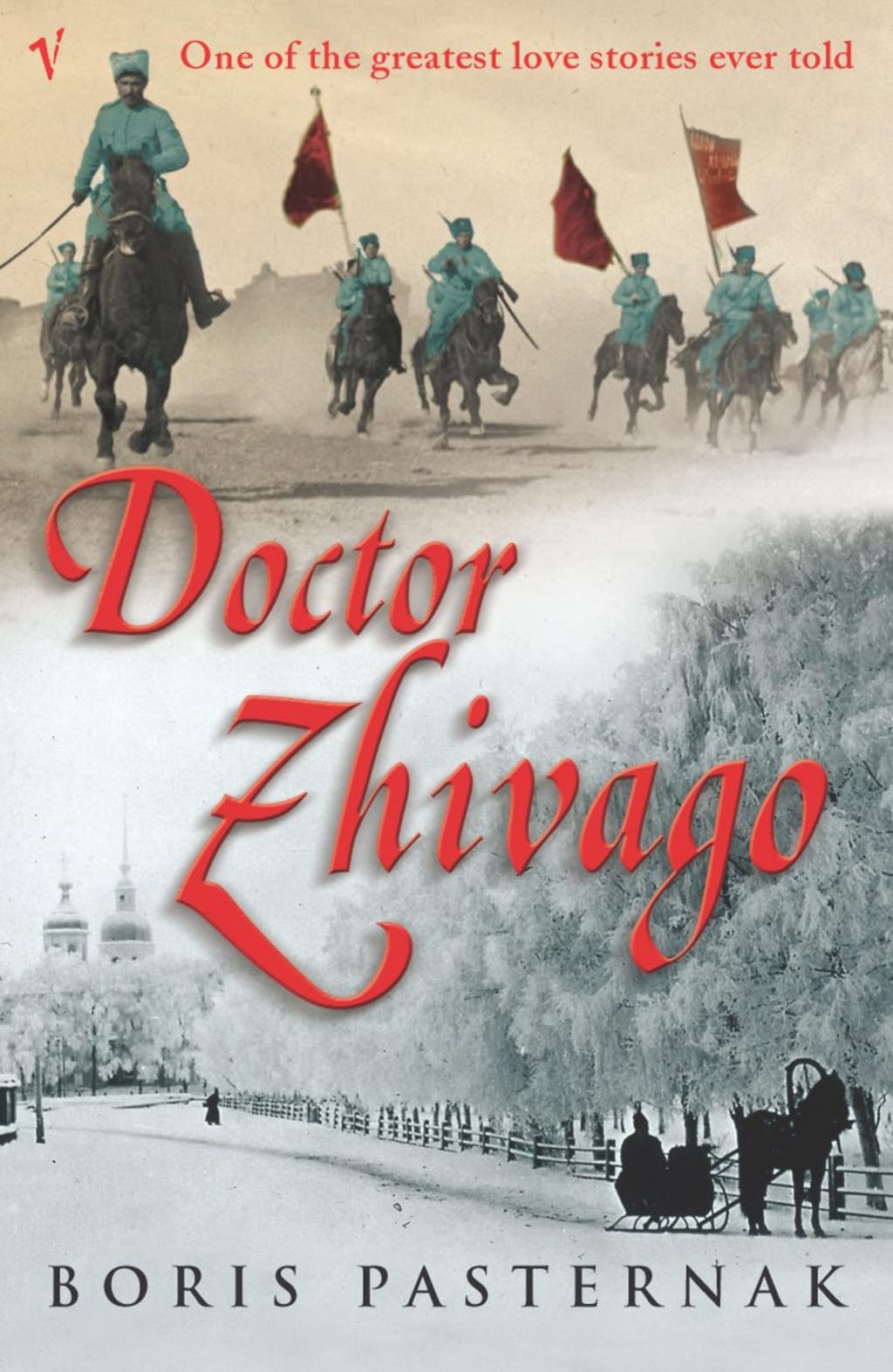
Doctor Zhivago, Boris Pasternak’s magnum opus, was completed in 1956 and published in 1957. The novel is a sweeping epic that intertwines a personal love story with the tumultuous events of early 20th-century Russia, including the Russian Revolution and the subsequent Civil War. Pasternak’s work faced significant resistance within the Soviet Union due to its perceived criticism of the Bolshevik regime and its emphasis on individual freedom over collectivism.
Pasternak, already a renowned poet, wrote Doctor Zhivago over several decades, using his experiences and observations of Russian history to craft the novel’s vivid portrayal of societal upheaval. The story centres on Yuri Zhivago, a physician and poet, whose life is torn apart by the chaos of revolution. Pasternak’s own struggles and relationships, including his affair with Olga Ivinskaya, significantly influenced the novel, particularly in its depiction of Yuri’s love for Lara.
Unable to secure publication in the USSR due to censorship, Pasternak smuggled the manuscript to Italy, where it was published by Giangiacomo Feltrinelli. The novel’s release caused a global sensation, leading to Pasternak being awarded the 1958 Nobel Prize in Literature. However, the Soviet government pressured him to decline the honour, resulting in significant personal and professional turmoil.
Despite its initial suppression in Russia, Doctor Zhivago gained international acclaim for its lyrical prose, profound philosophical insights, and intimate exploration of human resilience amidst historical upheaval. It is now considered one of the great masterpieces of 20th-century literature.
Plot

Doctor Zhivago follows Yuri Zhivago, a physician and poet, as his life is shaped and disrupted by the political and social upheavals of early 20th-century Russia. The novel begins with Yuri’s childhood, marked by the tragic death of his parents, which leaves him an orphan. He grows up in Moscow, raised by the Gromeko family, and eventually marries their daughter, Tonya.
Yuri becomes a doctor and starts a family, but the outbreak of World War I disrupts their lives. While serving as a field physician, Yuri encounters Lara Antipova, a beautiful and complex woman entangled in a troubled marriage with the revolutionary Pasha Antipov. Despite their mutual attraction, Yuri and Lara part ways as their respective obligations pull them in different directions.
The Russian Revolution and Civil War further destabilise Yuri’s life. Returning to Moscow, he finds the city changed, with the Bolshevik regime imposing new social and political realities. Struggling to reconcile his poetic sensibilities with the harshness of the times, Yuri moves his family to the countryside. There, he meets Lara again, and their love deepens amidst the chaos around them.
Yuri’s affair with Lara complicates his life, and the couple becomes entwined with various revolutionary factions. Pasha, now a ruthless Bolshevik commander known as Strelnikov, re-enters the narrative, further complicating their fates. Eventually, Yuri is separated from both Lara and his family, succumbing to illness and exhaustion in a Moscow street years later.
The novel concludes with an epilogue that reveals the fate of Yuri and Lara’s illegitimate daughter, Tanya, who embodies the enduring spirit of her parents. The novel’s final section, a collection of Yuri’s poems, underscores his belief in the redemptive power of art and love, even in the face of immense suffering.
Into the Book

A central theme in Doctor Zhivago is the conflict between individual freedom and the demands of the collective, a tension that defines much of Yuri’s life. Pasternak portrays Yuri as a deeply introspective figure, whose artistic and emotional sensibilities clash with the rigid ideologies of the Bolshevik regime. Yuri’s reflections on the revolution reveal his discomfort with its suppression of individuality: “They sought to remake humanity, but in doing so, they stripped it of its soul.”
This theme is also explored through Lara, whose personal struggles mirror the broader societal upheavals. Her relationships with both Yuri and Pasha/Strelnikov highlight the tension between love and duty, as she is torn between her desire for personal happiness and the expectations placed upon her by others. Pasternak’s depiction of the revolution critiques the loss of personal identity in the pursuit of collective ideals, suggesting that true progress cannot come at the expense of humanity’s emotional and spiritual core.
“I don't think I could love you so much if you had nothing to complain of and nothing to regret. I don't like people who have never fallen or stumbled. Their virtue is lifeless and of little value. Life hasn't revealed its beauty to them.”
- Doctor Zhivago by Boris Pasternak
The love story between Yuri and Lara is at the heart of the novel, offering a counterpoint to the violence and chaos of their surroundings. Their relationship represents a sanctuary, a moment of beauty and authenticity amidst the dehumanising forces of war and revolution. Pasternak describes their love as “a light in the darkness,” emphasising its redemptive power.
However, this love is also fraught with complications. Yuri’s affair with Lara occurs against the backdrop of his marriage to Tonya, highlighting the moral ambiguities of his actions. Pasternak does not present their love as perfect or unproblematic but rather as a testament to the resilience of the human spirit. In one of the novel’s most poignant moments, Yuri reflects: “In loving you, I am alive, even as the world around me dies.”
The theme of love as redemption extends beyond Yuri and Lara’s relationship, encompassing the broader idea that beauty and art can offer solace in the darkest times. The novel’s final section, a collection of Yuri’s poems, encapsulates this belief, demonstrating how creativity endures even in the face of destruction.
“They loved each other, not driven by necessity, by the "blaze of passion" often falsely ascribed to love. They loved each other because everything around them willed it, the trees and the clouds and the sky over their heads and the earth under their feet.”
- Doctor Zhivago by Boris Pasternak
Time and historical change are pervasive themes in Doctor Zhivago, shaping the characters’ lives and relationships. The novel spans several decades, capturing the transformative events of the Russian Revolution and their impact on society. Pasternak frequently contrasts the fleeting nature of individual lives with the vast sweep of history, as Yuri observes: “We are grains of sand in the wind, carried by forces far greater than ourselves.”
This theme is particularly evident in the novel’s depiction of Yuri’s journey, as he navigates the shifting political landscape while clinging to his artistic identity. His poetry serves as a means of preserving the fleeting moments of beauty and truth that he encounters, offering a sense of continuity amidst the upheaval.
Pasternak also explores the cyclical nature of history, suggesting that despite humanity’s attempts to shape its destiny, certain patterns of conflict and suffering persist. The fates of Yuri and Lara underscore this idea, as their love, though profound, is ultimately unable to overcome the forces of history that conspire to separate them.
“I have the impression that if he didn't complicate his life so needlessly, he would die of boredom.”
- Doctor Zhivago by Boris Pasternak
Why It's a Masterpiece

Doctor Zhivago is hailed as a masterpiece for its intricate weaving of personal and historical narratives, its poetic prose, and its profound exploration of universal themes. Pasternak’s ability to blend the intimate with the epic allows the novel to resonate on multiple levels, capturing the human cost of revolution while celebrating the enduring power of love and creativity.
Yuri Zhivago’s character exemplifies the artist as a beacon of individuality and hope in a world dominated by collectivism and ideology. His introspective nature and poetic sensibilities elevate the novel beyond a mere historical account, transforming it into a meditation on the resilience of the human spirit.
The novel’s lyrical style is another hallmark of its greatness. Pasternak’s background as a poet is evident in his evocative descriptions and profound reflections, which lend the narrative a timeless quality. His portrayal of the Russian landscape, both beautiful and unforgiving, serves as a metaphor for the emotional and political turmoil of the characters.
Conclusion

Doctor Zhivago continues to captivate readers with its timeless exploration of love, individuality, and resilience amidst societal upheaval. Pasternak’s lyrical prose and profound insights into the human condition ensure the novel’s enduring relevance. Its critique of ideological conformity and its celebration of art as a source of meaning resonate in an ever-changing world. By blending the personal and the historical, Doctor Zhivago remains a powerful reminder of the complexity of human experience, offering both solace and inspiration to readers across generations.
Next Week: The Collector by John Fowles
About the Creator
Annie Kapur
I am:
🙋🏽♀️ Annie
📚 Avid Reader
📝 Reviewer and Commentator
🎓 Post-Grad Millennial (M.A)
***
I have:
📖 280K+ reads on Vocal
🫶🏼 Love for reading & research
🦋/X @AnnieWithBooks
***
🏡 UK
Keep reading
More stories from Annie Kapur and writers in Geeks and other communities.
Book Review: "The Ridge" by Michael Koryta
So I was back in the library and its mid-2025. It's really warm in my apartment and on the whole, it's alright I guess. I'm going to share something with you here: I've lost a lot of hair so I'm going to have to go back to the doctor's office again. But, at least I've got books and, good books like this one. Again, I love horror novels but I'm often very picky about the psychological thriller sub-genre. I think this time, I hit a good jackpot. The Ridge is as weird and terrifying as it is also thrilling and cold. It has a great atmosphere and Koryta's writing is brilliant.
By Annie Kapur7 months ago in Geeks
The Rachels - 2025
Much to my surprise, I have kept a list of the films I‘ve seen this year. I daresay it isn’t complete. There will be films that snuck in on a late night in front of the TV that I would’ve forgotten to note. Or others, that I went to watch at the cinema, but then had a red wine and promptly forgotten about. But it’s not a bad approximation of the films I’ve seen this year. In total, there are 53 films listed, so an average of one a week and one for good luck.
By Rachel Robbins26 days ago in Geeks


Comments (1)
I had forgotten about this one. As a fiction writer I know that confict and deep themes are important, and this review reminded me of that "the conflict between individual freedom and the demands of the collective"... being a doctor also deepens the themes between duty and self. Its got me thinking of ideas for my next fiction piece.