
Did The Fantastic Four Just Redeem the MCU?
Why The Fantastic Four is the masterpiece the MCU needed.
Overview:
Budget: $200,000,000
Studio: Marvel Studios
Distributor: Walt Disney Studios Motion Pictures
Worldwide Box Office: $367,314,193 to date
Director: Matt Shakman
Writers: Josh Friedman, Eric Pearson, Ian Springer, Kat Wood, Stan Lee, Jack Kirby
General:
Marvel's Fantastic Four film was just fantastic. It was well done in so many ways but even though it was enjoyable and pleasing to watch, there was still some room for improvement. Did this film save Disney and Marvel? Let's find out!
Cinematography and Visual Effects:
The cinematography was amazing! The filmmakers expertly used a variety of angles and camera blocking, making every shot feel organic and visually pleasing. For instance, wide shots powerfully showcased the action and high stakes the characters faced, while medium to close-up shots highlighted character relationships. This allowed the audience to emphasize and connect with each hero, truly capturing the feeling of the family they aimed to portray.
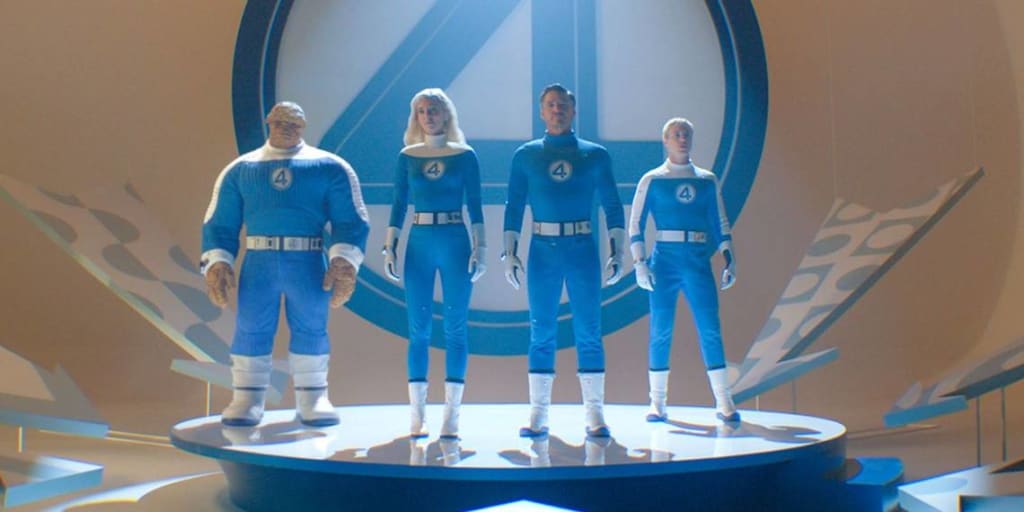
The composition was also spot on, with the rule of thirds consitently used to give viewers space to take in the visuals without feeling overwhelmed. So, what made this film so visually compelling? It brilliantly blended a nostalgic 1960s aesthetic with vibrant superhero flair and touches of futuristic design, perfectly characterizing the technologically savvy Fantastic Four family.
And here's where it shines: According to an article by The Ringer, the film's reliance on practical lighting and on-location filming truly '[helped] distinguish it from a visual standpoint, it avoided a third-act implosion by turning away from the typical climax of a CGI slugfest...' This deliberate filmmaking direction not only presented a fresher superhero story but also offered audiences a different formula, all while maintaining the essence of the Marvel Cinematic Universe.
The VFX was truly impressive, striking a fantastic balance between character-specific effects and broader spectacle. Johnny Storm's fiery powers and Reed Richards' stretching abilities were seamlessly executed, making both characters feel incredibly immersive and relatable on screen.
However, the real standout was the rendition of the Silver Surfer and Galactus. What elevated these visuals, and the film's aesthetic, was the filmmakers' commitment to practical effects, boldly replicating the charm and authenticity of 1960s cinema rather than relying solely on CGI.
They invested heavily in tangible artistry, meticulously building detailed sets for 1960s New York City and crafting intricate miniatures for specific shots. This dedication extended to characters like The Thing, where practical effects were cleverly blended with visual enhancements for his features. This grounded approach delivered a palpable sense of realism and believability that truly set the film apart.
Storytelling:
The storytelling in this film was captivating, though with a few areas that could have truly elevated it. Let's look at the successes first.
Firstly, the narrative was tightly woven, boasting no discernible plot holes and ensuring every character served a distinct purpose. There were no unnecessary additions; everyone on screen contributed to the unfolding events, a welcome rarity in ensemble films. The humor also landed effectively, bringing genuine laughs that felt organic to characters and situations. Beyond the cosmic clash with Galactus, the main plot skillfully explored the profound meaning of family and unwavering unity. The line "We won't sacrifice our son and we won't sacrifice the planet," resonated powerfully, perfectly encapsulating the immense stakes and the emotional core driving the Fantastic Four's desperate fight.
However, some narrative elements had room for improvment. While we get a glimpse of Ben Grimm's emotional backstory, a deeper dive into his struggles and growth would have added significant weight. Johnny Storm could've also benefitted from more fleshed out origins to truly connect with his journey.
Perhaps the biggest missed opportunity was with the antagonists. Galactus felt surprisingly easy to defeat. Giving him a stronger, more complex motivation for targeting Franklin would have amplified his villainy and the heroes' challenge. On the other hand, the Silver Surfer's arc, though present, begged for more depth. We needed a clearer understanding of her life serving Galactus -- what precisely did she dislike about it, and more importantly, a stronger, more personal motivation for her pivotal turn against him in the final battle. While Johnny's influence was a factor, a richer exploration of her internal conflict and backstory would have made her eventual sacrifice far more impactful and earned.
Editing:
The film's pacing was nothing short of spot on, masterfully balancing moments of calm with bursts of intense action. It offered breathable moments, allowing the audience to immerse themselves in the personal lives of the Fantastic Four and empathize with each character on a deeper level. On the other hand, the fast paced editing really shone in the action sequences, thrusting viewers into the urgency as the heroes raced against time to defeat Galactus and protect their son and the planet.
The eye-trace throughout the film was expertly managed, guiding the audience's attention to the most vital elements of each fight scene. The final battle, for example, is a testament to this, as the editor seamlessly navigated us through each character's contribution. We're shown Johnny trying to convince the Silver Surfer of her compassionate past, then quickly cut to Reed and Sue deploying Franklin to his rendezvous point with Galactus, all while preparing the decoy. These medium quick cuts are a brilliant display of the superheroes' cohesive teamwork in defeating Galactus and safeguarding Franklin from abduction.
A side from the rhythm, the editing also demonstrated exceptional command of spatial relationships. It flawlessly maintained the 180-degree rule, preventing visual chaos and effectively utilizing the two-dimensional plane of the screen. At the same time, it clearly and realistically displayed the characters' and objects' positions within the 3D plane, ensuring no unnecessary collisions or distractions pulled the audience from the narrative.
Sound Design:
While the overall sound design was good, it certainly had room for improvement. My primary complaint is the overuse of the Fantastic Four's leitmotif.
Leitmotifs, by definition, are specific recurring musical themes tied to a character or group, designed to subtly enhance the narrative or foreshadow events. An excellent example of effective leitmotif usage can be found in Dreamworks' How to Train Your Dragon. During the initial battle where the citizens of Berk fight dragons, the audience is introduced to Astrid and Hiccup. Astrid's leitmotif subtly cues as the camera pans to her triumphantly emerging from fire after defeating a dragon, hinting at her appearance just before she's fully on screen.
However, in Fantastic Four: First Steps, this crucial purpose was unfortunately undermined. The Fantastic Four's leitmotif was deployed almost every time the family appeared on screen, effectively saturating the entire film. This constant repetition ultimately defeated the purpose of a leitmotif, which is meant to move the story forward and provide narrative emphasis, not just acting as a general theme. On the bright side, the rest of film's score remains strong, but this specific implementation was a significant misstep.
Final Thoughts:
Overall, this film is a must watch for fans and newcomers a like. The film delivers an engaging, enjoyable, and much needed redemption for the Disney-Marvel partnership.
About the Creator
Keep reading
More stories from The Movie Addict 13 and writers in Geeks and other communities.
Silver Screen Magic with Mae West
American actress and singer Mae West became a popular film actress during the Great Depression. She started entertaining in vaudeville, then performed on Broadway, and finally went to Hollywood. She signed up with Paramount Pictures and made her debut in the 1932 film “Night After Night.” She also starred in musicals, comedies, and crime dramas. The American Film Institute named her one of the best classic Hollywood actresses.
By Rasma Raisters4 days ago in Geeks
Kartik Aaryan suffers first major setback after minor dating controversy
Kartik Aaryan recently suffered first major setback after getting caught in a controversy of dating a minor. It all started when the 35-year-old actor’s newly released film, Tu Meri Main Tera Main Tera Tu Meri, became a box office bomb.
By Dena Falken Esqabout 11 hours ago in Geeks



Comments
There are no comments for this story
Be the first to respond and start the conversation.