
Clyde’s Revenge: The Wild Story Behind Any Which Way You Can
The Wild and Wooly Story of Clyde in Any Which Way You Can.

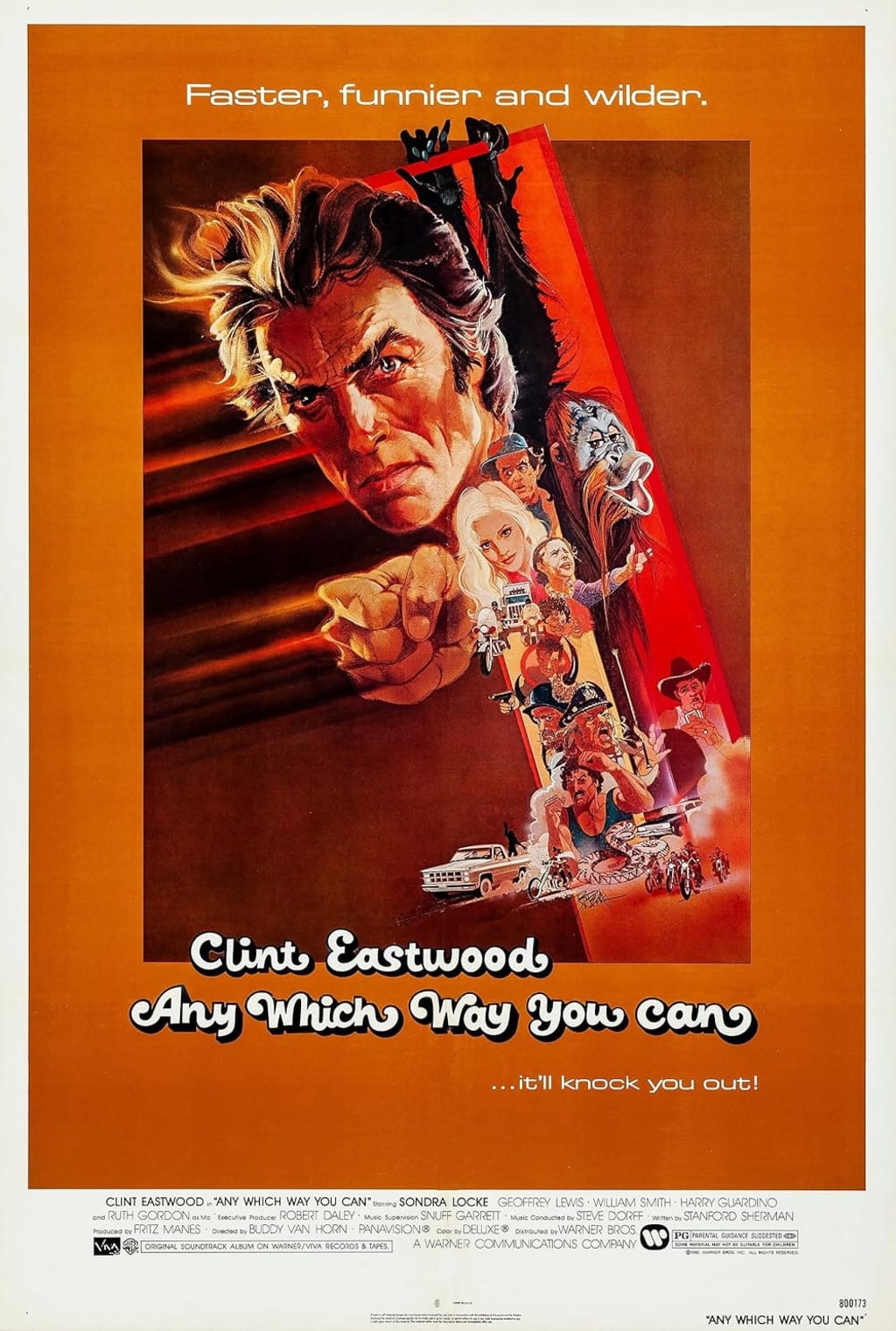
When Clint Eastwood released Every Which Way But Loose in 1978, audiences weren’t quite sure what to expect. The world’s most famous tough guy, known for his squints and six-shooters, was suddenly playing a laid-back trucker with a mischievous orangutan sidekick. It sounded absurd—but the film became a massive box office hit. Two years later, Eastwood returned with Any Which Way You Can (1980), a sequel that doubled down on the oddball comedy, the bare-knuckle brawling, and most importantly, Clyde the orangutan.
But behind the laughs and wild bar fights lies a darker, lesser-known story—one involving controversy, animal mistreatment, and the blurred line between Hollywood entertainment and ethics.
⸻
Clyde Steals the Show
Any Which Way You Can follows Philo Beddoe (Eastwood), a bare-knuckle brawler who wants to retire from fighting. Of course, he can’t escape the fists, the mafia, or the biker gang known as the Black Widows. Through it all, Philo has one loyal companion—Clyde.
Clyde isn’t just comic relief. He drinks beer, flips the bird, and plays the perfect foil to Eastwood’s stoic charm. In scene after scene, Clyde provides the laughs that balance the bruises, and critics of the time agreed he often upstaged the human cast. For kids and families in 1980, Clyde was a revelation: a PG-rated primate who could make Clint Eastwood look soft around the edges
The marketing leaned into it. Posters and trailers sold Clyde as much as Clint, and it worked. The movie earned nearly $71 million at the box office—more than double its budget—and set a Warner Bros. record for its biggest single-day gross at the time.
⸻
The Orangutan Controversy
The Clyde that audiences adored on screen was actually played by multiple orangutans, most prominently one named Buddha. But rumors and reports that emerged years later revealed a troubling behind-the-scenes reality.
Animal rights groups have long cited Any Which Way You Can as an example of the exploitation of animal actors in Hollywood. According to allegations, Buddha suffered abuse during training, with some reports suggesting he was beaten to make him more compliant on set. These claims, though disputed, have cast a shadow over the film’s legacy.
It’s a sobering contrast: the lovable Clyde on screen, and the possible mistreatment off it. In recent years, this story has been revisited by film historians and animal rights advocates as part of a broader conversation about how Hollywood once handled animal performers.
⸻
Clint Eastwood in a Different Light
What makes the Clyde story even more fascinating is how it reshaped Clint Eastwood’s image. Just a decade earlier, he was “Dirty Harry,” the grim San Francisco cop. By 1980, he was starring in a goofy buddy comedy with a primate. Critics were baffled, but audiences loved it.
Part of the charm was seeing Eastwood laugh at himself. Philo Beddoe may be a bruiser, but he’s constantly getting outsmarted by Clyde. That willingness to lean into comedy—alongside the barroom brawls and outlaw spirit—made Eastwood more accessible to mainstream audiences.
At the same time, it raises the question: was Clyde’s presence a brilliant bit of showmanship, or a cynical gimmick propped up at the expense of animal welfare?
⸻
Legacy of Fists and Fur
Today, Any Which Way You Can stands as one of Eastwood’s strangest but most successful films. It blends country music (with a Glen Campbell theme song), slapstick comedy, biker-gang hijinks, and brutal bare-knuckle fighting into a uniquely 1980s stew.
But Clyde’s shadow lingers. For many fans, he remains one of the most beloved animal sidekicks in movie history. For others, his story is a cautionary tale about how far Hollywood once went to make audiences laugh.
Either way, Clyde ensured that Any Which Way You Can wasn’t just another Eastwood sequel—it was a cultural moment. A time when America’s toughest movie star took a detour into broad comedy, and his orangutan co-star became both an icon and a symbol of an industry in transition.
⸻
Final Thoughts
Any Which Way You Can will always be remembered for its mix of brawls, belly laughs, and the unforgettable Clyde. But looking back, the movie also reminds us how complicated Hollywood history can be. The orangutan may have been the film’s biggest star, but his story carries both joy and tragedy.
And maybe that’s why this oddball Clint Eastwood sequel has endured: it’s not just a comedy with fists and fur—it’s a snapshot of an era when movies could be funny, messy, and controversial all at once.

About the Creator
Movies of the 80s
We love the 1980s. Everything on this page is all about movies of the 1980s. Starting in 1980 and working our way the decade, we are preserving the stories and movies of the greatest decade, the 80s. https://www.youtube.com/@Moviesofthe80s
Keep reading
More stories from Movies of the 80s and writers in Geeks and other communities.
Stir Crazy: The Comic Alchemy of Richard Pryor and Gene Wilder
When Sidney Poitier’s Stir Crazy opened in December 1980, few expected it to become a box office juggernaut. Yet the film about two unlucky friends trapped in a prison sentence earned over $100 million domestically, becoming Columbia Pictures’ biggest hit at the time. The film’s real magic wasn’t the plot but the pairing: Gene Wilder and Richard Pryor, two comedians from very different worlds who somehow sparked electricity every time they shared the screen.
By Movies of the 80s4 months ago in Geeks
Silver Screen Magic with Mae West
American actress and singer Mae West became a popular film actress during the Great Depression. She started entertaining in vaudeville, then performed on Broadway, and finally went to Hollywood. She signed up with Paramount Pictures and made her debut in the 1932 film “Night After Night.” She also starred in musicals, comedies, and crime dramas. The American Film Institute named her one of the best classic Hollywood actresses.
By Rasma Raisters4 days ago in Geeks
Grant Gustin's Chances Of Returning As The DC Universe's Flash Have Just Increased After New Update
The Flash has yet to be cast for the new DC Universe, and after a new update, the rumors of Grant Gustin's return as Barry Allen in the new franchise have gained strength once again. Gustin made history by playing Barry for The Flash's nine seasons. The actor also starred in multiple Arrowverse crossovers, becoming one of the franchise's fan-favorites.
By Dena Falken Esq2 days ago in Geeks



Comments
There are no comments for this story
Be the first to respond and start the conversation.