
Carnage on the Water - The Batavia
Why It's Shifty (Week 9)

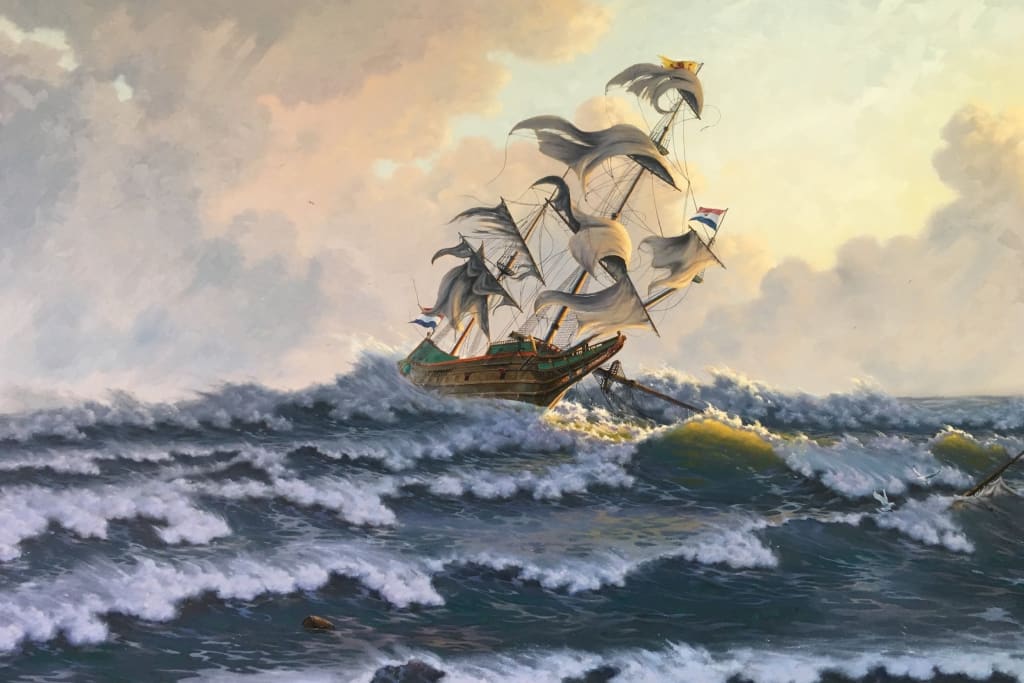
In 1629, the Dutch East India Company’s ship The Batavia set sail for Indonesia, carrying a fortune in trade goods. But the journey soon turned into a nightmare. After a disastrous shipwreck off the coast of Australia, the survivors found themselves stranded on a desolate island. What followed was not just a fight for survival but an unimaginable tale of betrayal, violence, and murder. The ship's officers, including the ruthless Jeronimus Corneliszoon, conspired to take control of the survivors, leading to the slaughter of dozens. But was this just the result of a power-hungry few, or was there a deeper conspiracy at play? Some believe the tragic events were orchestrated to cover up corruption within the East India Company, while others suggest darker forces were involved in the crew’s descent into madness. The story of The Batavia remains one of history's most chilling maritime mysteries.
Plot
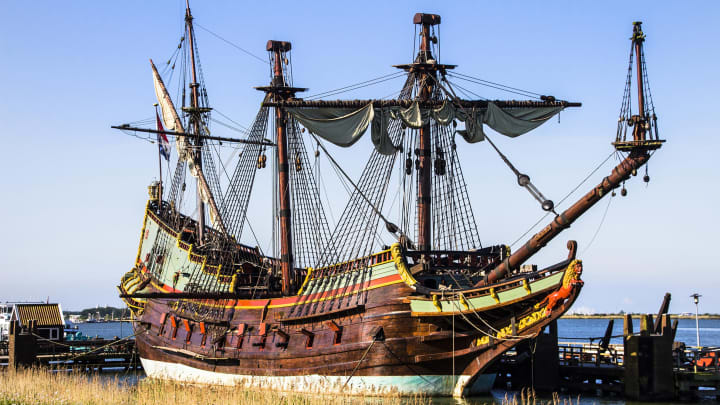
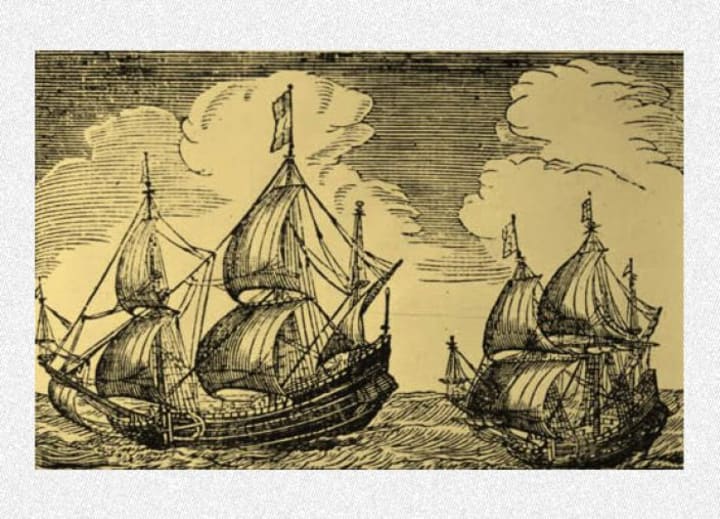
On the 4th of June, 1629, the Batavia, a Dutch East India Company vessel, struck a reef off the coast of Australia’s West Wallabi Islands. The ship, loaded with trade goods and carrying a crew of about 300 men, women, and children, was on its maiden voyage to the East Indies. Despite calm seas and clear skies, the ship had veered off course, and in the early morning hours, the hull was pierced by the sharp coral, causing immediate flooding below deck. The Batavia was doomed.
Captain Francisco Pelsaert and his officers quickly assessed the damage and realised the ship was beyond saving. As the crew scrambled to abandon ship, many were thrown into the churning sea. Although the Batavia’s crew managed to get most of the survivors to safety on nearby islands, several men drowned, and the ship’s cargo, including its valuable trade goods, was lost to the ocean.
The survivors (about 200 people) found themselves stranded on a group of desolate, rocky islands with little food, water, or shelter. The conditions were harsh, and the islands were far from any established European settlements. The only hope for rescue was a 2,000-mile journey to Java, where the Dutch East India Company had a trading post. Captain Pelsaert decided to take the ship’s longboat and set sail for Java, leaving behind a small crew to oversee the survivors. His journey, however, would take several weeks.
In Pelsaert’s absence, the situation quickly spiralled into chaos. Among the survivors was Jeronimus Corneliszoon, a former apothecary who had been disgraced and dismissed from his position in the Dutch East India Company. Corneliszoon was known for his cruel disposition and his criminal history, and he quickly saw an opportunity to gain control of the group. As the survivors’ situation grew increasingly dire, Corneliszoon began to gather a group of conspirators and followers, promising them power and supplies in exchange for loyalty.
Corneliszoon’s plan was ruthless. With the authority of the ship’s officers gone, he effectively became the leader of the survivors. He ordered the murder of anyone he deemed a threat to his control, including the elderly, the sick, and those who had voiced opposition to his leadership. His reign of terror quickly escalated. Women and children were killed without mercy, and others were forced into servitude. Corneliszoon’s followers carried out his brutal orders, and those who refused were either slain or left to starve.
By the time Captain Pelsaert returned to the site of the wreck in mid-September, after a harrowing and arduous journey, he was horrified by the sight that greeted him. Corneliszoon and his followers had committed horrific atrocities. The survivors who had managed to escape the mutineers’ wrath were hiding on a neighbouring island, desperate for help. Pelsaert immediately took action, rounding up the mutineers and placing them under arrest.
A swift trial followed, with Corneliszoon and several of his accomplices found guilty of murder, mutiny, and other crimes. The punishment was brutal. Corneliszoon was executed in a slow and agonising manner, bound and left to die of exposure, while others were executed or left to die in similarly horrific ways. In the aftermath of the Batavia’s wreck, the survivors who had endured the violence were eventually rescued and taken to Java.
The tale of the Batavia is not just one of shipwreck and survival, but of the depths of human cruelty and the breakdown of order in extreme circumstances. The tragedy and the subsequent mutiny have made it one of the most infamous episodes in maritime history.
Into the Theories
Mutiny:
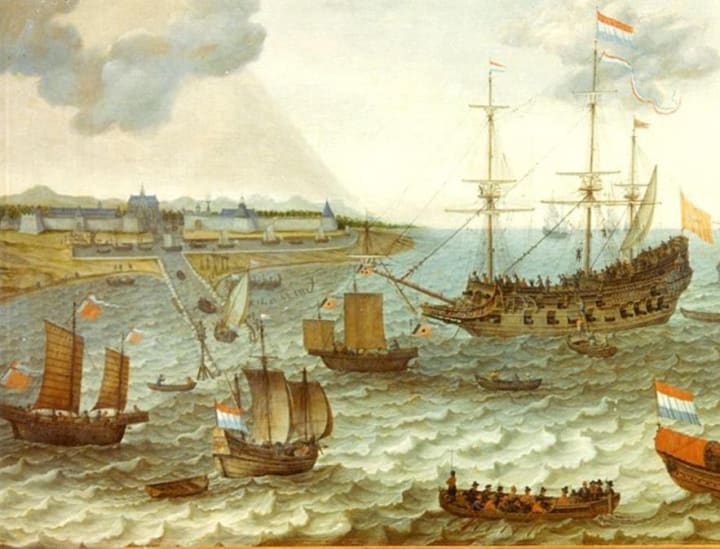
One of the most widely accepted theories regarding the Batavia shipwreck is that the disaster was precipitated by an organised mutiny. Jeronimus Corneliszoon, a disgraced former apothecary, took advantage of the chaos following the shipwreck to seize control of the survivors. With the absence of Captain Pelsaert and the collapse of authority, Corneliszoon masterminded a violent rebellion, promising power and survival to his followers. His influence grew, and he began to execute anyone who opposed him, including women and children, to ensure his dominance. This theory suggests that the mutiny was not simply a result of survival instincts but was part of a calculated plan by Corneliszoon to gain control over the survivors. His ruthless actions, which included the murder of dozens, have led some to believe that the mutiny was orchestrated to cover up earlier wrongdoings or as an attempt to create a new order.
Conspiracy:
Another theory posits that the wreck of the Batavia was not entirely an accident, but rather a result of a deliberate act linked to corruption within the Dutch East India Company. Some historians suggest that the company’s officers, led by Pelsaert, were involved in smuggling and illicit trading and that the wreck was a premeditated move to conceal these activities. The theory speculates that the Batavia was deliberately steered off course, with the wreck serving as a convenient way to hide both the cargo and the corrupt dealings of the officers. This would also explain why the company officers behaved with such incompetence during the shipwreck and why they failed to act decisively to prevent the ensuing chaos. The brutality of the mutiny and the subsequent cover-up could have been part of the effort to avoid the truth coming to light.
Psychological Breakdown:
A third theory argues that the brutal events following the shipwreck were the result of a collective psychological breakdown, exacerbated by the extreme conditions and isolation. Stranded on a barren island, with no immediate hope of rescue and limited resources, the survivors’ mental states deteriorated. The overwhelming stress, combined with a lack of food and fresh water, created an environment ripe for violence. According to this theory, Jeronimus Corneliszoon and his followers were not part of a premeditated mutiny but instead, took advantage of the group’s breakdown under pressure. The theory suggests that Corneliszoon’s ability to manipulate the survivors stemmed from the desperation and fear that plagued them all. His promises of leadership and control in the face of overwhelming adversity allowed him to incite horrific violence, driven not by calculated malice but by the psychological collapse of the group under the trauma of the shipwreck.
Why It's Shifty
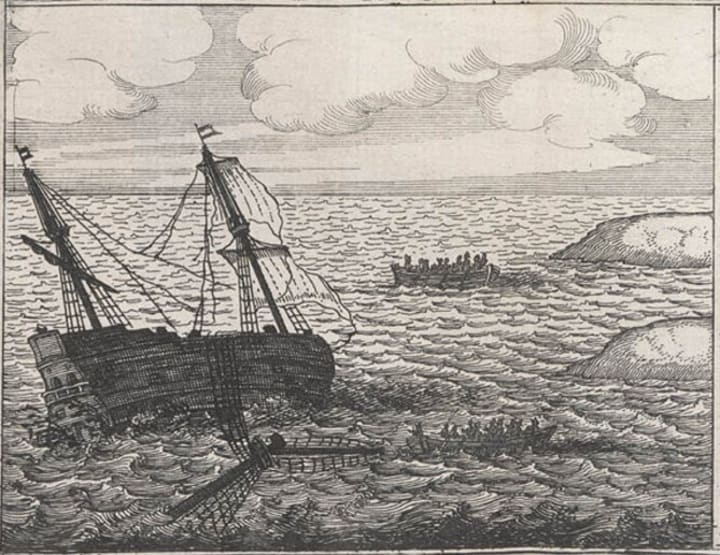
The Batavia shipwreck remains a deeply controversial moment in history because of the sheer brutality that followed. While many shipwrecks result in tragedy, the events that unfolded after the Batavia struck the reef were marked by a level of violence that shocked even the most hardened accounts of maritime disasters. Led by Jeronimus Corneliszoon, a group of survivors turned into ruthless murderers, systematically killing dozens of their fellow shipwrecked men, women, and children in a bid for control. The scale of the bloodshed, without mercy, and often in the most horrific manner highlighted the extreme breakdown of human decency under pressure. The mutineers' savage actions, driven by power and fear, left a lasting stain on the historical record, making the Batavia not just a shipwreck, but a chilling testament to human cruelty in the face of desperation.
Conclusion
The most likely explanation for the events following the Batavia shipwreck is that it resulted in a violent mutiny, led by Jeronimus Corneliszoon, whose lust for power drove him to commit horrific acts. With authority collapsed after the wreck, Corneliszoon manipulated the vulnerable survivors, orchestrating a reign of terror that saw the brutal murder of anyone who posed a threat to his control. While some suggest a corporate conspiracy involving the Dutch East India Company, there is little evidence to support this claim. The chaos and violence stem more from the extreme conditions and psychological breakdown of the survivors than from deliberate corporate action.
Next Week: War and Peace - The Nazis and the Pope
About the Creator
Annie Kapur
I am:
🙋🏽♀️ Annie
📚 Avid Reader
📝 Reviewer and Commentator
🎓 Post-Grad Millennial (M.A)
***
I have:
📖 280K+ reads on Vocal
🫶🏼 Love for reading & research
🦋/X @AnnieWithBooks
***
🏡 UK
Keep reading
More stories from Annie Kapur and writers in Geeks and other communities.
Book Review: "Character Limit" by Kate Conger and Ryan Mac
Full Title = Character Limit: How Elon Musk Destroyed Twitter by Kate Conger and Ryan Mac I think it is important to remember that Elon Musk is one of those human beings that divides opinion. This book goes off the opinion that he destroyed Twitter and to many of us who have Twitter, that is true. The 'bot' accounts he was apparently going to rid us of are worse and more populous than ever, the freedom of speech rule only applies if you aren't making fun of him and finally, his weird endorsements of the government may be viewed as a conflict of interest when it comes to viewing content on Twitter. No, I will not call it X - I am sorry. Perhaps in brackets, it can be (X). But it will remain 'Twitter' for this review.
By Annie Kapur9 months ago in Geeks
Silver Screen Magic with Mae West
American actress and singer Mae West became a popular film actress during the Great Depression. She started entertaining in vaudeville, then performed on Broadway, and finally went to Hollywood. She signed up with Paramount Pictures and made her debut in the 1932 film “Night After Night.” She also starred in musicals, comedies, and crime dramas. The American Film Institute named her one of the best classic Hollywood actresses.
By Rasma Raisters7 days ago in Geeks
Grant Gustin's Chances Of Returning As The DC Universe's Flash Have Just Increased After New Update
The Flash has yet to be cast for the new DC Universe, and after a new update, the rumors of Grant Gustin's return as Barry Allen in the new franchise have gained strength once again. Gustin made history by playing Barry for The Flash's nine seasons. The actor also starred in multiple Arrowverse crossovers, becoming one of the franchise's fan-favorites.
By Dena Falken Esq5 days ago in Geeks



Comments (1)
This is such a haunting and gripping account of the Batavia shipwreck. The psychological breakdown and power struggle that led to such violence are chilling. It's incredible how desperation and human nature can twist a fight for survival into something much darker.