
Building a Scalable NFT Marketplace: Business Models, Key Features, and Growth Strategies
Unlocking Opportunities in NFT Marketplace Development with Scalable Solutions and Growth Strategies

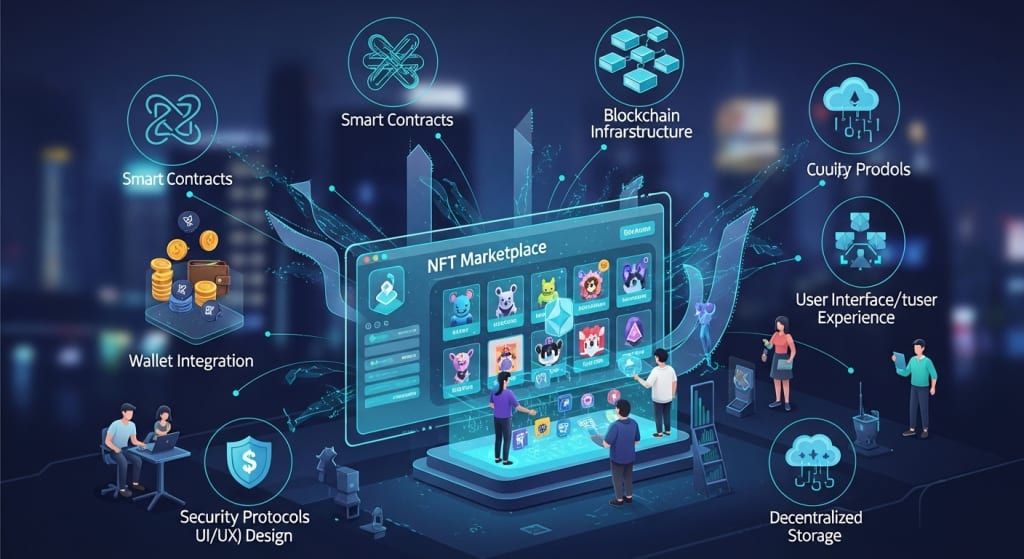
The NFT ecosystem has transformed digital ownership, enabling creators, collectors, and investors to interact through blockchain-powered assets. Establishing a scalable NFT marketplace is a strategic business opportunity that goes beyond simply trading NFTs—it creates a secure, transparent hub where users can mint, buy, sell, and auction unique digital assets. Developing such a marketplace requires careful planning around business models, platform features, technology, and growth strategies, ensuring long-term value for stakeholders while maintaining adaptability to evolving trends and user expectations.
What is Building an NFT Marketplace?
Building an NFT marketplace involves creating a digital platform that allows users to mint, buy, sell, and trade non-fungible tokens securely on the blockchain. It is more than a transactional platform—it acts as a hub for creators and collectors, facilitating digital ownership, royalties, and secondary sales. Developing a marketplace requires integrating blockchain technology, smart contracts, and secure wallets while ensuring a smooth user experience. A well-designed NFT marketplace provides a balance between creator empowerment, collector engagement, and business sustainability.
- Creator-Focused Tools: NFT marketplaces provide creators with the ability to mint, showcase, and sell digital assets. Features like customizable storefronts, royalty management, and auction capabilities empower artists and content creators to monetize their work efficiently.
- Collector-Oriented Features: Buyers benefit from advanced search tools, filtering options, and transparent ownership histories. A robust marketplace ensures collectors can purchase NFTs securely and track provenance without ambiguity.
- Marketplace Security and Transparency: Blockchain integration guarantees that every transaction is recorded, tamper-proof, and traceable. Secure wallet integrations and smart contracts further protect assets and instill confidence among users.
- Revenue and Ecosystem Opportunities: Beyond transactions, marketplaces can generate revenue through listing fees, commissions, and subscription models while fostering community growth and secondary market activity.
How NFT Marketplaces Are Growing in 2026
NFT marketplaces are evolving at a rapid pace, with 2026 seeing significant adoption across industries. Increased use of blockchain for art, gaming, and digital collectibles, along with broader acceptance by brands and institutions, drives marketplace growth. New technologies such as cross-chain trading, interoperability, and integrated analytics expand functionality and attract a diverse user base. Marketplaces that offer innovative use cases, secure infrastructure, and engaging user experiences are likely to lead growth, shaping the way digital assets are created, owned, and traded across the global ecosystem.
- Increased Mainstream Adoption: Businesses, brands, and artists are entering the NFT space at a larger scale, expanding the marketplace user base. This mainstream integration boosts transaction volume and platform visibility.
- Cross-Chain Ecosystems: Marketplaces are increasingly adopting cross-chain solutions to allow users to trade NFTs across multiple blockchains. Interoperability enhances liquidity and attracts a broader audience.
- Diverse NFT Applications: Beyond art and collectibles, NFTs are being used for gaming, virtual real estate, memberships, and intellectual property. Expanding applications drive marketplace relevance and engagement.
- Institutional Investment and Market Maturity: Institutional investors and larger platforms are entering NFT markets, introducing structured investment opportunities, regulatory compliance, and professional infrastructure, all contributing to steady growth and stability.
Business Models for NFT Marketplace Development
Selecting a sustainable business model is crucial when developing an NFT marketplace. The model influences revenue generation, user engagement, and the platform’s scalability over time. Understanding different models helps in aligning the marketplace with target audiences and market goals. A clear business model also builds trust among users, attracting both creators and collectors. By evaluating commission structures, subscription options, and hybrid revenue streams, developers can choose a model that ensures profitability while supporting the growth of the NFT ecosystem.
- Commission-Based Model: In this model, the platform earns a percentage from every transaction conducted within the marketplace. This approach aligns platform revenue with user activity, creating a mutually beneficial ecosystem where higher engagement translates to increased revenue.
- Listing Fee Model: Sellers are charged a fee to list their NFTs on the platform. This ensures a steady revenue stream even before a transaction occurs, which can help maintain platform operations and incentivize quality listings.
- Subscription-Based Model: Users or creators pay a subscription to access premium features, early access drops, or enhanced analytics. This model encourages loyalty while generating predictable income for platform maintenance and development.
- Hybrid Models: Combining multiple revenue streams, such as commissions and subscriptions, allows flexibility. This approach balances short-term revenue from listings and long-term engagement through value-added services, improving marketplace scalability.
Key Features of a Scalable NFT Marketplace
A feature-rich NFT marketplace improves user experience, enhances security, and ensures efficient transactions. Identifying and integrating core features enables the platform to meet the expectations of creators and collectors. Scalability is achieved when these features operate seamlessly as user numbers increase. Providing intuitive interfaces, advanced search tools, and comprehensive minting and auction capabilities ensures that the marketplace can handle growing demand while fostering trust and engagement.
- User-Friendly Interface: Intuitive navigation, responsive design, and streamlined onboarding processes reduce friction for users. A simple interface encourages both creators and buyers to engage actively with the marketplace, enhancing retention.
- Secure Wallet Integration: Supporting multiple digital wallets ensures users can safely store, send, and receive NFTs. Security measures such as two-factor authentication and private key encryption are essential to protect users’ assets.
- Efficient Search and Filtering Options: Advanced search features, including filters for categories, rarity, price, and popularity, help users find NFTs quickly. This enhances user satisfaction and drives higher transaction rates.
- Minting and Auction Functionality: Enabling creators to mint and auction NFTs on-chain simplifies asset creation and sale. Auction mechanisms, including timed bids and reserve prices, can drive higher engagement and increase marketplace liquidity.
Technology Stack for NFT Marketplace Development
Choosing the right technology stack ensures that an NFT marketplace can operate efficiently, scale effectively, and maintain security standards. The stack includes blockchain selection, smart contract development, backend infrastructure, and frontend frameworks. Each component plays a vital role in the platform’s performance and reliability. Proper technology integration allows seamless transactions, real-time data handling, and a smooth user experience, which are essential for building trust and fostering long-term engagement in a competitive NFT market.
- Blockchain Network Selection: Popular networks like Ethereum, Solana, or Polygon offer different trade-offs in speed, transaction fees, and security. Choosing the right blockchain impacts transaction costs and user adoption.
- Smart Contract Development: Smart contracts automate processes such as NFT creation, sale, and royalty distribution. Optimized contracts reduce gas fees and enhance user trust through transparent and reliable execution.
- Backend and Database Management: Scalable backend frameworks and databases ensure the platform can handle large numbers of concurrent users and transactions. Performance optimization is critical for marketplace reliability.
- Frontend Development Tools: Utilizing modern frameworks for responsive web and mobile applications improves user experience. Seamless integration with wallets, search features, and dashboards provides a professional, polished interface.
Marketing and Growth Strategies for NFT Marketplaces
Effective marketing is key to attracting and retaining users in an NFT marketplace. A well-planned growth strategy involves community engagement, strategic partnerships, educational content, and incentive programs. Each element contributes to user acquisition, increased transactions, and loyalty. A strong marketing approach ensures that creators and collectors understand the platform’s value, encouraging active participation and long-term sustainability.
- Community Building: Engaging with users through forums, social media, and events builds trust and loyalty. A strong community encourages active participation and promotes organic growth through word-of-mouth.
- Collaborations and Partnerships: Partnering with artists, brands, and blockchain projects enhances credibility and expands reach. Strategic alliances can introduce exclusive NFT drops, attracting new users and creating buzz around the platform.
- Content Marketing and Education: Providing guides, tutorials, and updates on NFT trends helps users understand platform features and blockchain technology. Educated users are more likely to transact and remain active over time.
- Incentives and Rewards Programs: Offering rewards for referrals, early adoption, or high engagement motivates users to participate more actively. Loyalty programs and token incentives can enhance retention and increase marketplace liquidity.
Legal and Regulatory Considerations
Legal compliance is critical to establishing trust and ensuring operational continuity in an NFT marketplace. Developers must adhere to intellectual property laws, AML regulations, taxation guidelines, and data privacy standards. Failure to comply can result in financial penalties or reputational damage. Implementing clear policies, reporting mechanisms, and verification processes ensures a secure and legitimate marketplace for all participants while maintaining credibility and sustainability.
- Intellectual Property Rights: Ensuring that NFTs do not infringe on copyrights protects both the platform and its users. Clear policies for creators and mechanisms for reporting violations are necessary.
- Anti-Money Laundering (AML) Compliance: Implementing AML measures prevents illicit transactions and enhances platform credibility. Identity verification and transaction monitoring are key components.
- Taxation and Reporting Requirements: Understanding local tax regulations ensures proper reporting of NFT sales and royalties. Providing transparency in tax handling can improve user trust and avoid legal penalties.
- Data Privacy Regulations: Protecting user information through GDPR or other regional compliance frameworks safeguards personal data and enhances the platform's reputation for security.
Scaling Strategies for NFT Marketplaces
Scalability ensures that an NFT marketplace can grow sustainably while maintaining performance and user satisfaction. Planning for infrastructure, smart contract efficiency, cross-chain interoperability, and analytics-driven improvements allows platforms to adapt to increasing demand. A scalable marketplace is capable of handling higher transaction volumes, attracting more users, and supporting long-term business growth without compromising the quality of service or security.
- Optimized Smart Contracts: Efficient and gas-optimized contracts reduce transaction costs and improve user adoption. Scaling smart contract architecture allows for smoother processing of high-volume NFT transactions.
- Cloud Infrastructure and Load Balancing: Deploying cloud-based solutions with load balancing capabilities ensures uptime during traffic spikes. Scalability in hosting infrastructure is critical to handle growth seamlessly.
- Cross-Chain Interoperability: Supporting multiple blockchain networks allows users to trade NFTs across ecosystems. Interoperable marketplaces attract diverse users and broaden asset liquidity.
- Analytics and Data-Driven Improvements: Leveraging analytics to monitor user behavior and transaction patterns helps refine features and marketing strategies. Continuous improvement based on real data supports sustainable growth.
Conclusion
Building a scalable NFT marketplace requires a comprehensive strategy that combines robust business models, advanced technology, user-focused features, and growth-oriented marketing. As NFT adoption expands in 2026, marketplaces that emphasize security, scalability, and community engagement will remain competitive and profitable. By addressing regulatory requirements, optimizing platform performance, and continuously evolving through data-driven insights, developers and entrepreneurs can create marketplaces that support creators and collectors while contributing to the long-term development of the NFT ecosystem.
About the Creator
Henry james
A specialist in blockchain token development, focusing on secure smart contract engineering and the implementation of robust token economic models.
Keep reading
More stories from Henry james and writers in Geeks and other communities.
Choosing the Right Token Model: Utility, Security, or Governance?
New blockchain protocols also allow for multiple tokens to be used to support transactions or coordinate governance such as by rewarding certain behavior. The token model selected for a project can have large implications for the legal analysis, economic viability, adoption, and governance of the token.
By Henry jamesabout 19 hours ago in Geeks
10 Times Rotten Tomatoes and I Disagreed
***Disclaimer*** I will be ranking these movies in the following manner: The greater the divide between Rotten Tomatoes and I, the higher up on the list (and I am referring to the critic's score, not the audience score). I will also show Rotten Tomatoes' score on each one in addition to my score. I am curious to know what everyone thinks, please let me know in the comments below!
By Madison "Maddy" Newton6 days ago in Geeks
Kyle Rittenhouse and the Modern Culture Debate
In recent years, very few individuals have found themselves at the center of public debate as intensely as Kyle Rittenhouse. His name has become more than just a reference to a single court case; it has evolved into a symbol of how modern society discusses justice, self-defense, media narratives, and cultural division. Whether people view him with support, criticism, or uncertainty, his story continues to spark conversations that go far beyond the courtroom. Kyle Rittenhouse became widely known following the events in Kenosha, Wisconsin, in 2020. What followed was not only a legal battle but a cultural one. Social media, news outlets, and public figures weighed in almost instantly, often forming strong opinions before all facts were fully examined. This reaction highlighted a broader issue: how quickly narratives are created in the digital age and how difficult it can be for truth to move at the same speed as outrage. At its core, the Rittenhouse case forced many people to confront uncomfortable questions. How should self-defense laws be interpreted? What responsibility do individuals have during moments of public unrest? And perhaps most importantly, how does media framing influence public perception before a trial even begins? These questions remain relevant today, which is why Kyle Rittenhouse is still discussed years later. What makes his situation particularly notable is how polarized reactions became. For some, he represented a failure of social systems and accountability. For others, he became an example of how legal processes can be overshadowed by emotional narratives. Regardless of where one stands, it is hard to deny that his case exposed deep divisions in how people understand justice and personal responsibility. Interestingly, this pattern of public reaction is not limited to legal cases. Similar dynamics appear in sports, entertainment, and even combat sports. A surprising comparison can be drawn with Sean Strickland, a professional mixed martial artist known for his blunt personality and controversial statements. While Strickland operates in a completely different arena, the way audiences respond to him reveals something important about modern culture. Sean Strickland is often praised by supporters for being authentic and criticized by others for being provocative. Much like Kyle Rittenhouse, discussions about Strickland frequently move beyond facts and into identity-based reactions. People tend to project their own beliefs onto public figures, turning them into symbols rather than individuals. This process simplifies complex human stories into easily digestible narratives, often at the cost of nuance. The comparison between Kyle Rittenhouse and Sean Strickland is not about equating their actions or professions. Instead, it highlights how society reacts to figures who do not fit neatly into acceptable molds. In both cases, public opinion tends to form quickly and solidify strongly, leaving little room for balanced discussion. This reflects a broader trend where debate becomes more about taking sides than seeking understanding. Another key aspect of the Rittenhouse story is the long-term impact of public scrutiny. Becoming a widely recognized figure at a young age comes with lasting consequences. Legal outcomes may bring closure in court, but public judgment often continues indefinitely. This raises ethical questions about how society treats individuals after high-profile events and whether redemption or privacy is truly possible in the digital era. Media literacy also plays a major role here. The way stories are presented can shape beliefs more powerfully than facts themselves. Sound bites, headlines, and viral clips often replace full context. Learning to slow down, verify sources, and separate emotion from evidence is increasingly important, especially when discussing sensitive topics like those surrounding Kyle Rittenhouse. Ultimately, the ongoing interest in his story says less about one individual and more about the world watching him. It reflects a time where controversy drives engagement and where public figures are often reduced to symbols in larger ideological battles. Just as with Sean Strickland, reactions tend to reveal more about the audience than about the person being discussed. In the end, the story of Kyle Rittenhouse remains relevant because it challenges people to think critically. It encourages deeper conversations about law, media responsibility, and the human tendency to rush to judgment. Whether viewed as a cautionary tale or a cultural mirror, his story continues to shape discussions in a society still learning how to navigate truth, emotion, and accountability in the modern age.
By Saboor Brohi 7 days ago in Geeks




Comments
There are no comments for this story
Be the first to respond and start the conversation.