
Book Review: "When the Body Says No" by Gabor Maté
4/5 - ...insightful ideas, but sometimes unrealistic for everyday life...

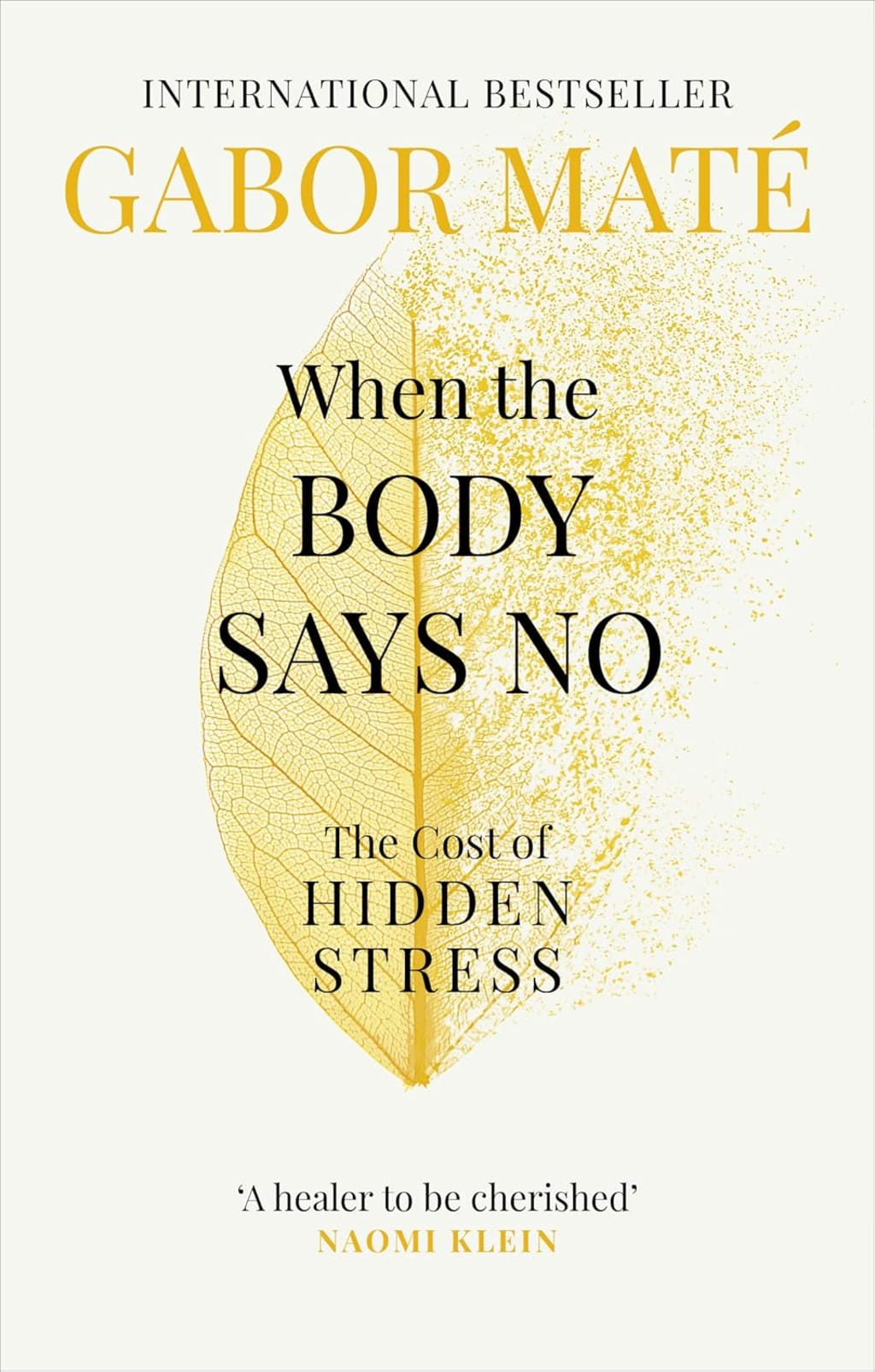
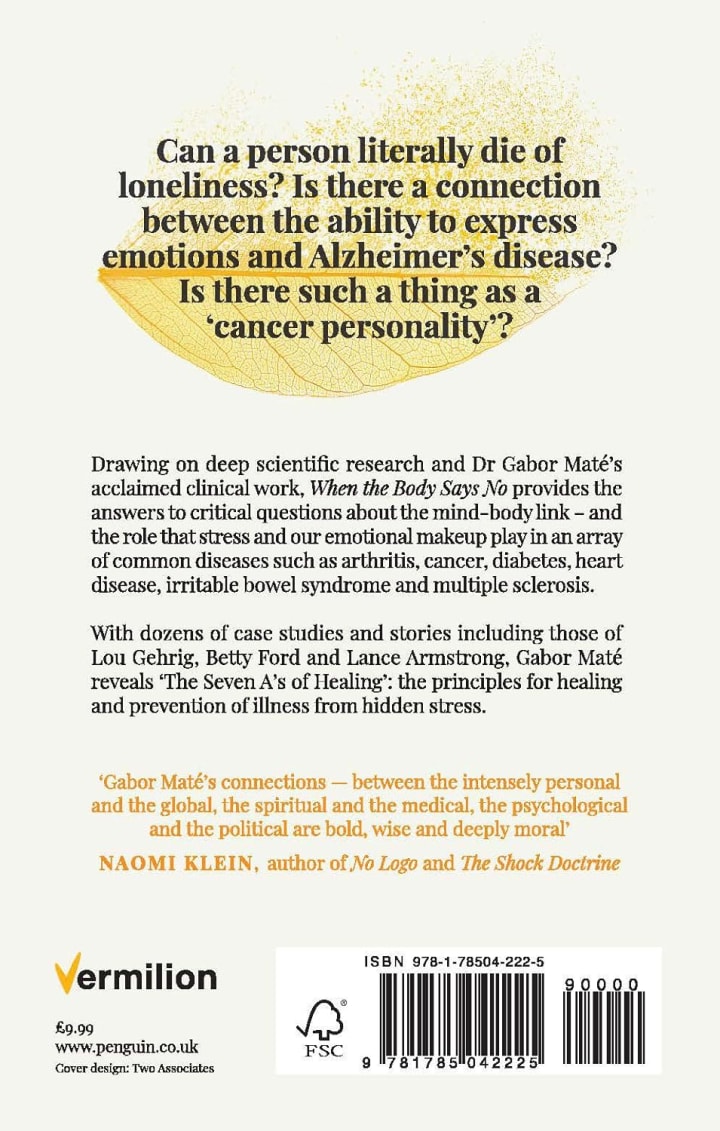
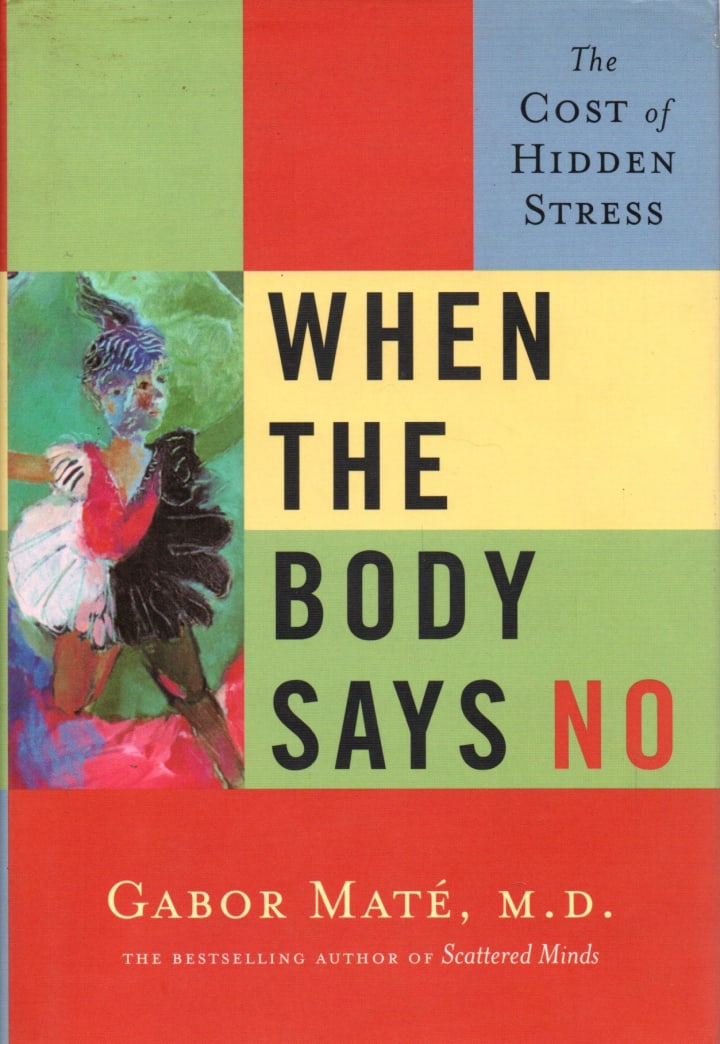
I have read some of this guy before and back then I was sort of in the middle about his arguments. The Myth of Normal is one of them and In the Realm of Hungry Ghosts is another. I understand the argument of psychology being the causation for diseases more than the actual biology of the human being themselves but I think it is a little overwrought and the author might be a bit enthusiastic to suggest it above the idea that diseases are a biological causation. In When the Body Says No, the author investigates whether there are personality types that have a higher rate of suffering certain diseases and what happens in these people's lives to get them there.
Maté argues that the mind and body are deeply interconnected, meaning that emotional and psychological factors play a significant role in physical health. Diseases like cancer, multiple sclerosis (MS), and arthritis, he asserts, are often linked to chronic stress and emotional repression. The body "says no" when it can no longer cope with the accumulated stress, leading to illness. This is all well and good and I think anyone could figure this out. But to state that this is the beginning cause for each or even most of the cases of these illnesses might be a little fantastical.
Chronic emotional repression, especially of anger, sadness, and fear, has harmful consequences on the immune system. Maté describes how individuals who are unable or unwilling to express their emotions may experience autoimmune diseases and cancers as their body's immune response weakens due to prolonged stress. This one scares me because I have commonly been proud of my ability to emotionally repress at work, often to the point where nobody knows what I am feeling - retaining 'poker face' incredibly well. This might not be the way I want to continue but there really aren't very many options.
The author points out that people who often prioritise others' needs above their own—such as caregivers or overly responsible individuals—are at a higher risk of developing illness. This "people-pleasing" behavior can cause them to neglect their own well-being, leading to burnout and illness. He links self-denial to conditions like cancer and ALS (Lou Gehrig’s disease). I think this is important to point out that people who over-care for others might have to put their own health on the back-burner and this can only lead to something bad. This one I feel is common sense more than anything.
Cultural and societal norms often pressure individuals to "keep going" despite stress or emotional distress. Maté argues that our society rewards productivity over emotional well-being, pushing people to ignore their emotional needs. This cultural pressure exacerbates the health risks associated with stress. In the context of me having only slept for a few hours since the stress of my job is mounting into me staring at the ceiling most nights at 2am - this is possibly one of those I need to pay attention to. But with the cherry-picked data, there may be more of argument for staring at the ceiling than the vagueness of 'ignoring emotional needs' - in which the 'needs' are never defined.
He suggests that illnesses may often act as metaphors for the emotional pain or distress that people cannot express. For instance, he discusses cancer as a metaphor for self-neglect or for living under emotional strain. The body uses disease to communicate unresolved psychological and emotional issues. This one really quite got to me because it isn't data driven but instead a thought by the author. I'm not sure that this is the correct thing to do in a book which is trying very hard to give us anecdotes and data. I understand it, but maybe the idea is better suited to a book where you are not being so serious about medical conditions. Metaphors don't happen in real life - please leave something for the fictional worlds.
Maté critiques the idea that maintaining a “positive attitude” can cure or prevent illness. While staying optimistic is not harmful in itself, he argues that superficial positivity can suppress negative emotions, which need to be acknowledged and processed. Denying feelings of fear, sadness, or anger can contribute to illness, as emotions unexpressed manifest in the body. Again, this is all well and good, but not everyone can go through life expressing every emotion they feel when they feel it. In the real world, people (and most people) have to repress their emotions for many hours of the day. So I'm not sure how helpful this idea truly is.
In conclusion, I do actually prefer this book to the others by him I have read and even though there are some good ideas and arguments, there are clear data sets and interesting anecdotes, there are also too many ideas that are just not workable in the real world. But, I think that the author also understands that they vast majority of these ideas he is having are not workable in the real world - or else he would have no need to express their solutions, we would already be doing them.
About the Creator
Annie Kapur
I am:
🙋🏽♀️ Annie
📚 Avid Reader
📝 Reviewer and Commentator
🎓 Post-Grad Millennial (M.A)
***
I have:
📖 280K+ reads on Vocal
🫶🏼 Love for reading & research
🦋/X @AnnieWithBooks
***
🏡 UK
Keep reading
More stories from Annie Kapur and writers in Geeks and other communities.
Book Review: "Saints" by Amy Jeffs
I have read the other books by Amy Jeffs respectably called Storyland and Wild. These books are both absolutely incredible and after reading them, I'm not sure that you would choose not to read her but, I think that instead curiosity would kill the cat and eventually, you will be overcome with that sense of longing for the knowledge that she has. An evocative retelling of the mythology of saints' lives, Amy Jeffs creates a compelling narrative out of fictions and histories from the church and its lesser known dates and folk. Amy Jeffs gives us a passionate and incredible account of these stories that, for some of us, would not have even been realised without her.
By Annie Kapurabout a year ago in Geeks
Silver Screen Magic with Mae West
American actress and singer Mae West became a popular film actress during the Great Depression. She started entertaining in vaudeville, then performed on Broadway, and finally went to Hollywood. She signed up with Paramount Pictures and made her debut in the 1932 film “Night After Night.” She also starred in musicals, comedies, and crime dramas. The American Film Institute named her one of the best classic Hollywood actresses.
By Rasma Raisters8 days ago in Geeks
How to Watch Premier League?
The crown jewel of English football, Premier League soccer is back. The most- watched sports league in the world features 20 of UK’s best football clubs. Here are some of the ways you can watch and stream the 2025-26 season of Premier League. Don’t miss a match day.
By David Cook5 days ago in Geeks



Comments
There are no comments for this story
Be the first to respond and start the conversation.