
Book Review: "What's Your Dream?" by Simon Squibb
3/5 - a book of inspiration rather than action...

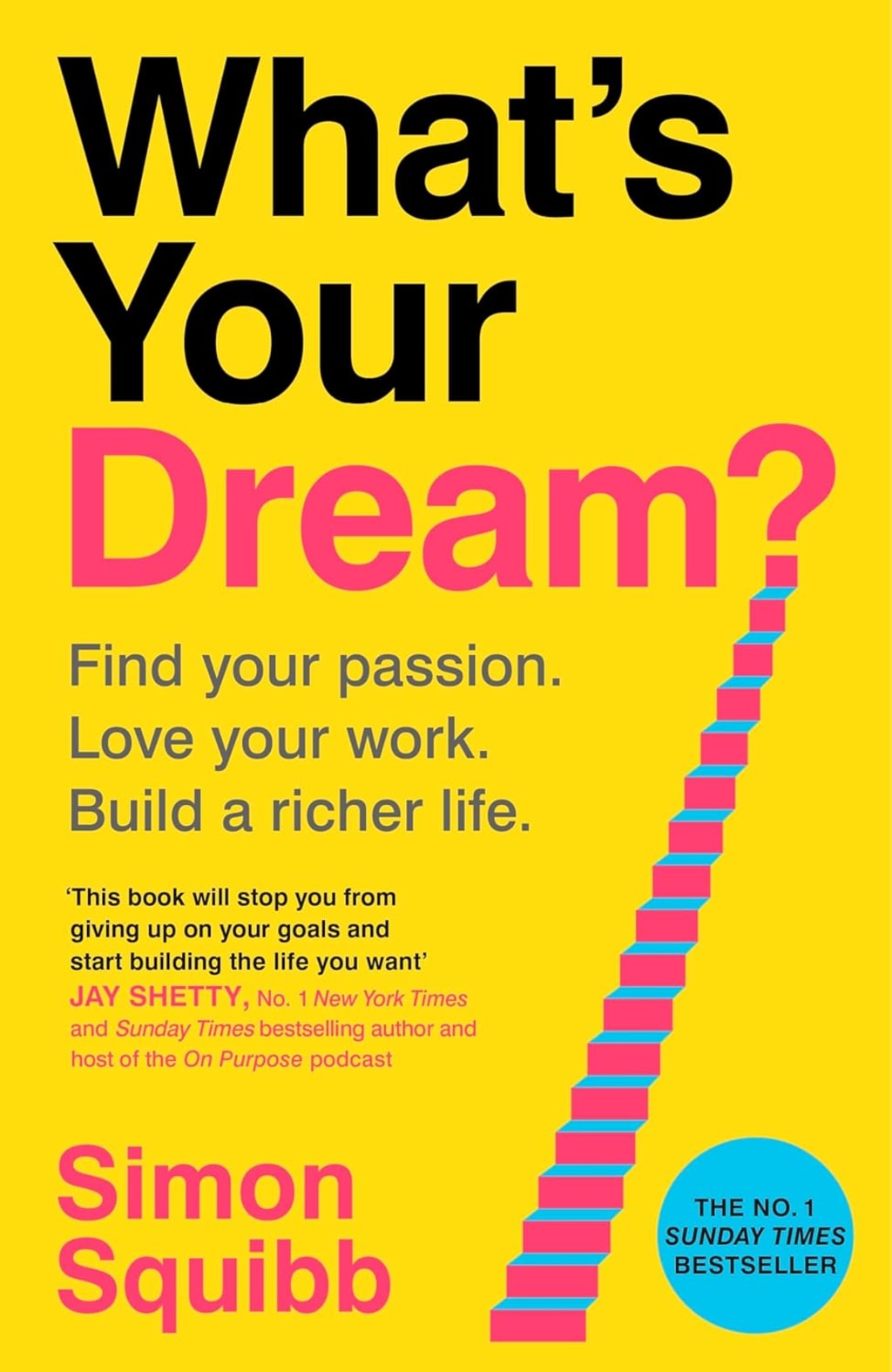
Now, I know I am a bit of a hypocrite when I wrote that scathing rebuke analysis of the self-help industry and this is technically a self-help book. But you'll be glad to know it's not all wonders and greatness. Instead it was a bit of help to organise myself followed by a whole lot of vapidity. But, at least it was well written.
It could have been a lot worse and I mean, a lot worse. What's Your Dream? is less of your typical 'this is the way to do this' book that preys on your personal and cultural fears of failure and instead is a 'you can do this if you care to' book that tries to push you along the road. I actually thought this book was pretty good, even though it was a little bit short lived. It was not really anywhere near as long as I thought it was going to be and in nowhere near enough depth. But it did have some interesting talking points. Let's take a look at them.
At its heart, What’s Your Dream? argues that everyone has an innate dream: something they truly want to do with their lives. But fear, self-doubt, or societal expectations often hold them back. Squibb believes that by identifying and pursuing this dream with conviction, people can lead more fulfilling lives. His message is optimistic and encouraging, but at times, it glosses over the practical difficulties of turning a dream into reality, making it feel more aspirational than actionable. I feel like this is a partial let down for what is overall, a well-intentioned book which has actually got me into writing that book I wanted to write and got me started. Though it has inspired me, I still see these very glaring and obvious problems. They are forgivable even though they are the same problems we encounter over and over again in the genre.
The book draws heavily from Squibb’s own experiences. He recounts his early struggles, failures, and eventual triumphs in business, framing his story as proof that anyone can succeed with the right mindset. His background—leaving school at 15, facing financial struggles, and then building multiple successful businesses makes for an inspiring narrative. However, some readers might find that his story, while engaging, lacks detailed insight into the specific strategies that made him successful, relying more on broad motivational rhetoric. I did notice this weird thing he was doing when telling his story. He told his story and then did not actually identify anything within it that may help the reader. This makes the strategies he does give sound a little far off and the autobiographical section feel a bit separated from the rest of the book.
One of the book’s stronger sections explores how fear holds people back. Squibb encourages readers to reframe failure as a learning experience rather than a dead end. He provides examples of entrepreneurs who faced setbacks before achieving success, reinforcing the idea that resilience is crucial. However, his discussion on overcoming fear often leans on generic self-help language rather than providing deeper psychological insights or actionable techniques. Yes, it goes there. But I will say that this book does focus more on the thinking rather than the actual doing and I think that might be the point. It encourages self-reflection. But I also feel the reason that there are not a lot of actionable strategies is because those would look completely different depending on what the person is doing. It's a wavering situation in the book which also might explain why it is so short.
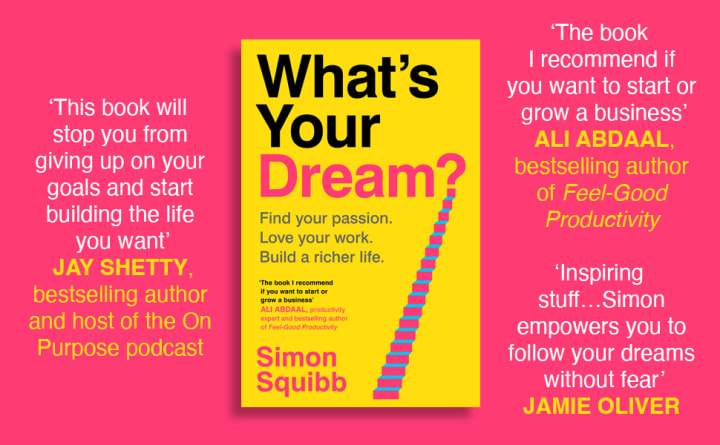
A distinctive aspect of Squibb’s philosophy is his belief in the power of helping others. He argues that by assisting others in achieving their dreams, whether through mentorship, introductions, or simply encouragement, people create opportunities for themselves as well. This aligns with his real-world efforts, such as his free mentorship initiatives. While this perspective is refreshing and altruistic, the book could benefit from more concrete strategies on how to effectively network and build mutually beneficial relationships. Yes, I know it seems to be an obvious point but it would still be nice to learn about the author's own experiences of doing this. It definitely takes me back to that point of the autobiographical section where I said that it felt disjointed and separate from the rest of the book.
All in all, Simon Squibb’s What’s Your Dream? is a passionate call to action, urging readers to identify their true aspirations and chase them without fear. While the book succeeds in motivating readers, its lack of depth and over-simplification of success can make it feel more like a pep talk than a practical guide. It is best suited for those seeking inspiration rather than those who need detailed advice on executing their dreams. I for one, have actually started planning and writing that book - but for more complex dreams that require more action, I don't know exactly how helpful this book will be.
About the Creator
Annie Kapur
I am:
🙋🏽♀️ Annie
📚 Avid Reader
📝 Reviewer and Commentator
🎓 Post-Grad Millennial (M.A)
***
I have:
📖 280K+ reads on Vocal
🫶🏼 Love for reading & research
🦋/X @AnnieWithBooks
***
🏡 UK
Keep reading
More stories from Annie Kapur and writers in Geeks and other communities.
King Arthur
King Arthur is a legendary figure from British folklore, often depicted as a noble and just king who led the Knights of the Round Table. According to the tales, Arthur was the son of Uther Pendragon and was secretly raised by Sir Ector. His true identity was revealed when he successfully drew the sword Excalibur from a stone, a feat that proved his right to rule. Arthur's reign is marked by battles to defend Britain from invaders, particularly the Saxons. His story is filled with themes of chivalry, loyalty, and honour, with many characters, such as his knights Lancelot, Percival, and Gawain, playing central roles in the narratives. Arthur's tragic end comes with betrayal, mainly through the affair between his queen, Guinevere, and his knight, Lancelot, and the rebellion of his illegitimate son, Mordred.
By Annie Kapur10 months ago in Geeks
Marvel Zombie
The last entry into our 2025 superhero projects catalogue is Marvel Zombies. This was a show that was anticipated by absolutely no one and it disappeared from the public consciousness as quickly as it was released. There was nothing special about the project that made it a must see, or a must remember. In fact if anything it's a must forget.
By Alexandrea Callaghan28 days ago in Geeks
David and Victoria Beckham’s Family: Meet Brooklyn, Romeo, Cruz, and Harper
David and Victoria Beckham’s Family: Meet Brooklyn, Romeo, Cruz, and Harper David Beckham and Victoria Beckham are two of the most well-known names in the world. David is a legendary football player, and Victoria is a successful fashion designer and former Spice Girl. Over the years, they have built a strong global reputation not only for their careers but also for their close-knit and stylish family. The Beckham family includes four children: Brooklyn, Romeo, Cruz, and Harper. Each child has grown up in the public eye and developed their own interests and personality. From fashion events to family trips, the Beckhams often appear together, showing a strong family bond that fans admire around the world. Brooklyn Beckham: The Creative Eldest Son Brooklyn Joseph Beckham was born on March 4, 1999. As the oldest child, he has spent much of his life in the spotlight. Brooklyn is known for his interest in photography, fashion, and creative projects. He regularly attends fashion shows and high-profile events and is recognized for his modern and relaxed fashion style. Brooklyn has worked on photography projects and continues to build his own career while sharing moments of his life with fans through social media. Romeo Beckham: Passion for Football and Fashion Romeo James Beckham was born on September 1, 2002. Like his father, Romeo has shown strong interest in football. He has trained seriously in the sport and has received attention for his skills and dedication. Along with sports, Romeo is also involved in fashion. He has appeared in modeling campaigns and often attends fashion shows with his family. His confidence and calm personality have made him popular among fans. Cruz Beckham: Music Lover With Growing Popularity Cruz David Beckham was born on February 20, 2005. Cruz is known for his love of music and performance. He has released songs and enjoys sharing his creative work with his growing audience online. Cruz is also active in the fashion world and frequently joins his family at major events such as Paris Fashion Week. Fans appreciate his fun personality, confidence, and unique style. Harper Beckham: The Youngest and Only Daughter Harper Seven Beckham was born on July 10, 2011, and she is the youngest child in the family. As the only daughter, she shares a special bond with her mother, Victoria Beckham. Harper is often seen attending fashion shows with her parents and has become known for her sweet and elegant style. Whether holding her father’s hand at events or sitting beside her mother at shows, Harper continues to charm fans around the world. A Family Known for Style and Togetherness The Beckham family is frequently seen at major public events, including: Paris Fashion Week British Fashion Awards Victoria Beckham’s fashion shows GQ Men of the Year Awards International travel appearances in cities such as London, Paris, Sydney, and Miami They are also seen enjoying everyday family moments, like traveling together through airports, attending events, and spending time on trips. These appearances show their close family connection and shared support for one another. Why Fans Admire the Beckham Family People around the world admire the Beckham family for more than just fame. Each family member brings something unique: Brooklyn is creative and artistic Romeo shows dedication to football and fashion Cruz expresses himself through music and personality Harper shines with grace and confidence David and Victoria Beckham continue to support their children’s interests while maintaining strong careers of their own. This balance of family life, success, and humility is one of the main reasons fans continue to follow and appreciate them British Fashion Awards Victoria Beckham’s fashion shows GQ Men of the Year Awards International travel appearances in cities such as London, Paris, Sydney, and Miami They are also seen enjoying everyday family moments, like traveling together through airports, attending events, and spending time on trips. These appearances show their close family connection
By Farhan Khan2 days ago in Geeks
The Path to Salvation
The late autumn evening air filled the monk's lungs, but it wasn't the season that chilled his bones. The heavy-handed presence of evil he had sensed upon entering the woods surrounding this mountain village had not bothered to conceal itself from him.
By Made in DNA2 days ago in Fiction


Comments
There are no comments for this story
Be the first to respond and start the conversation.