
Book Review: "Vertigo" by W.G Sebald
4/5 - paroxysms of vertigo in literature...

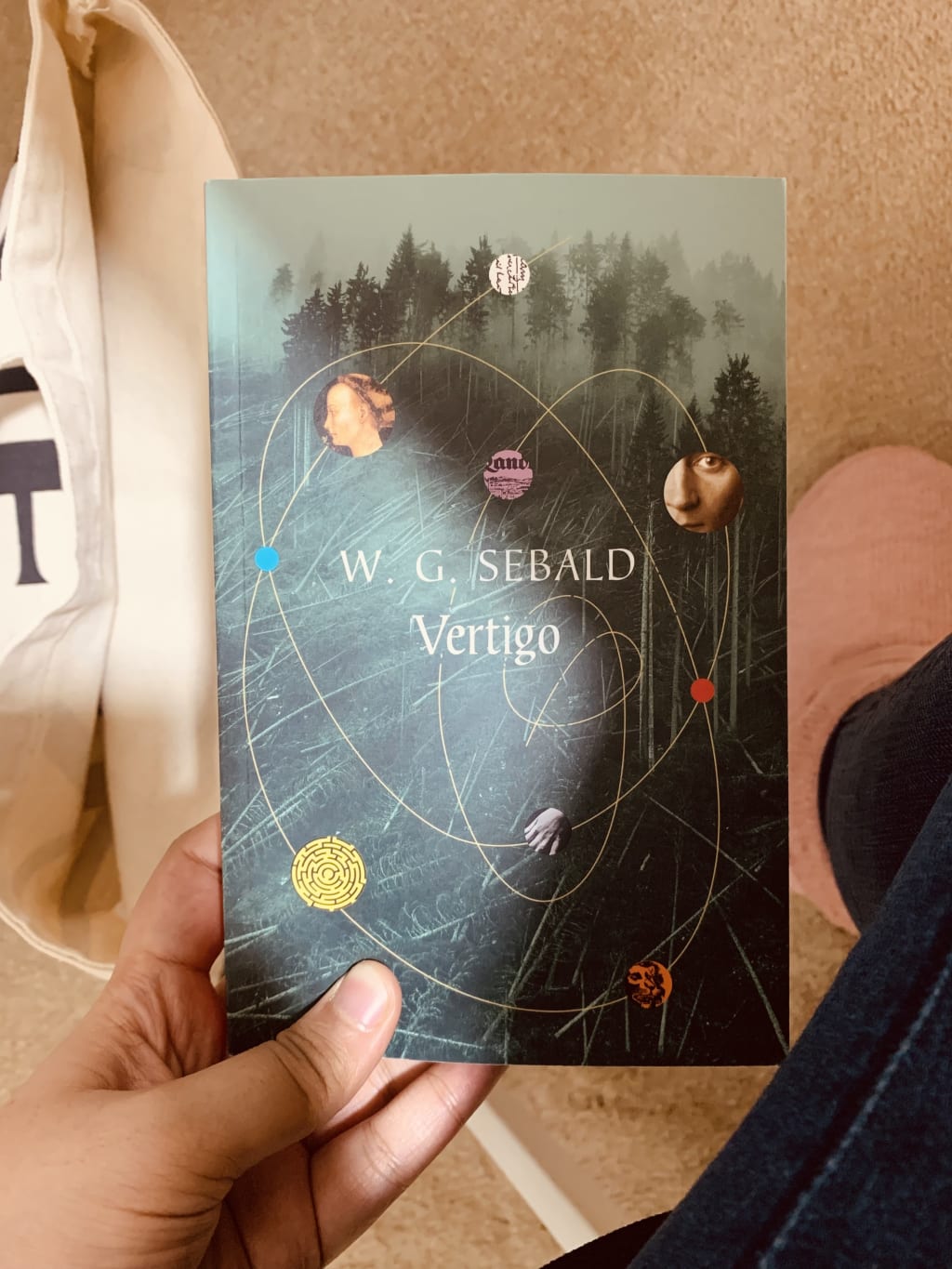
When it comes to WG Sebald, I have to admit I am not very well-versed. I have yet only really read Rings of Saturn and Austerlitz - even those were a while back. So, when it comes to Sebald - I am still fairly new.
WG Sebald was a German author who grew up in the dark wake of the decline and fall of Nazi Germany. This means that post-war Germany actually appears a lot in his work as his father was also a prisoner of war in the final days of World War 2. Vertigo was his 1990 novel and honestly, I found it quite difficult to read, though I enjoyed it.
There are four sections in the book which include people such as Stendhal, Franz Kafka and Casanova. The way in which the story is told is focused on the introspective, a characteristic of WG Sebald's later writing, especially Rings of Saturn. The writing itself may not be as clear as I would have expected and often, it is difficult to decipher the atmosphere - but I will say it is well written because of its attempt to connect various different subjects together with some sort of ease.
The story feels almost like a dream narrative encoded with paroxysms of various kinds - it isn't the kind of book where you would read it with a cup of coffee in bed. Instead, it's a book that, when you start to understand it, haunts you with puzzles and fallacies. It's one of those books that you will end up really scratching your head over, just have a look at this and try to stop yourself becoming puzzled by the narrator being puzzled:
Over the years I had puzzled out a good deal in my own mind, but in spite of that, far from becoming clearer, things now appeared to me more incomprehensible than ever. The more images I gathered from the past, I said, the more unlikely it seemed to me that the past actually happened in this or that way.
The one thing I found a little confusing is his movement between writing styles. Stendhal's section is somewhat more romanticised than the dark, grim terror of Kafka's section and then, as we go on through the book it seems like the author is trying to imitate the writing style of Proust upon his return home in the book In Search of Lost Time. Often I would say that this is too much, but it was only a little confusing - but I sometimes have to enjoy being confused in order to properly pay attention to the text.
I think it is called Vertigo because of the feeling it gives you. A kind of Stendhal Syndrome in which you feel a dizziness that is a result of the puzzles and changes in narrative that occur throughout the book - the inability to pin it down to one particular writing style.
In conclusion, I do not agree with the sentiment that this is WG Sebald's weakest novel. Instead, I would say it is probably his most difficult to read (though I have not read a lot by him) and it requires investment and some real thought to actually 'get it'. The whole extended metaphor of the feeling of vertigo is a strange one and often may not make complete sense as you are going through the book, but it is clear that WG Sebald works hard to get you more and more invested in something that will make your mind hurt and work. All in all, I thought this was a really interesting read.
About the Creator
Annie Kapur
I am:
🙋🏽♀️ Annie
📚 Avid Reader
📝 Reviewer and Commentator
🎓 Post-Grad Millennial (M.A)
***
I have:
📖 280K+ reads on Vocal
🫶🏼 Love for reading & research
🦋/X @AnnieWithBooks
***
🏡 UK
Keep reading
More stories from Annie Kapur and writers in Geeks and other communities.
Book Review: "A Great and Terrible King: Edward I and the Forging of Britain" by Marc Morris
As you already know by now, I am reading one book about each and every English king and queen from Edward the Confessor all the way up to Queen Elizabeth II. So far, I have covered the following monarchs: Edward the Confessor, William the Conqueror, William Rufus (William II), Henry I, King Stephen, Empress Matilda, Henry II, Richard I, King John and Henry III. Finally, I am about to move on to the king that everyone seems to unanimously refer to as one of the most evil kings in English history, a man who legitimately frightens the life out of me and a man who I think should not really be given the title of 'great' anything: Edward I. Now to do a throwback review of Marc Morris's A Great and Terrible King: Edward I and the Forging of Britain as I actually read this book two years' ago (but recently read it once more for reference).
By Annie Kapur4 years ago in Geeks
Silver Screen Magic with Mae West
American actress and singer Mae West became a popular film actress during the Great Depression. She started entertaining in vaudeville, then performed on Broadway, and finally went to Hollywood. She signed up with Paramount Pictures and made her debut in the 1932 film “Night After Night.” She also starred in musicals, comedies, and crime dramas. The American Film Institute named her one of the best classic Hollywood actresses.
By Rasma Raisters11 days ago in Geeks
Can you watch Super Bowl in UK?
Super Bowl, one of the most exciting sporting nights of the year, is now less than a month away and the excitement is already palpable. Scheduled on February 8, 2026 at Levi’s Stadium in Santa Clara, California, this will be the third Super Bowl held in the San Francisco Bay Area.
By David Cook4 days ago in Geeks



Comments
There are no comments for this story
Be the first to respond and start the conversation.