
Book Review: "The Wild Irish Girl" by Sydney Owenson, Lady Morgan
5/5 - a brilliant novel which is far more than just a love story...

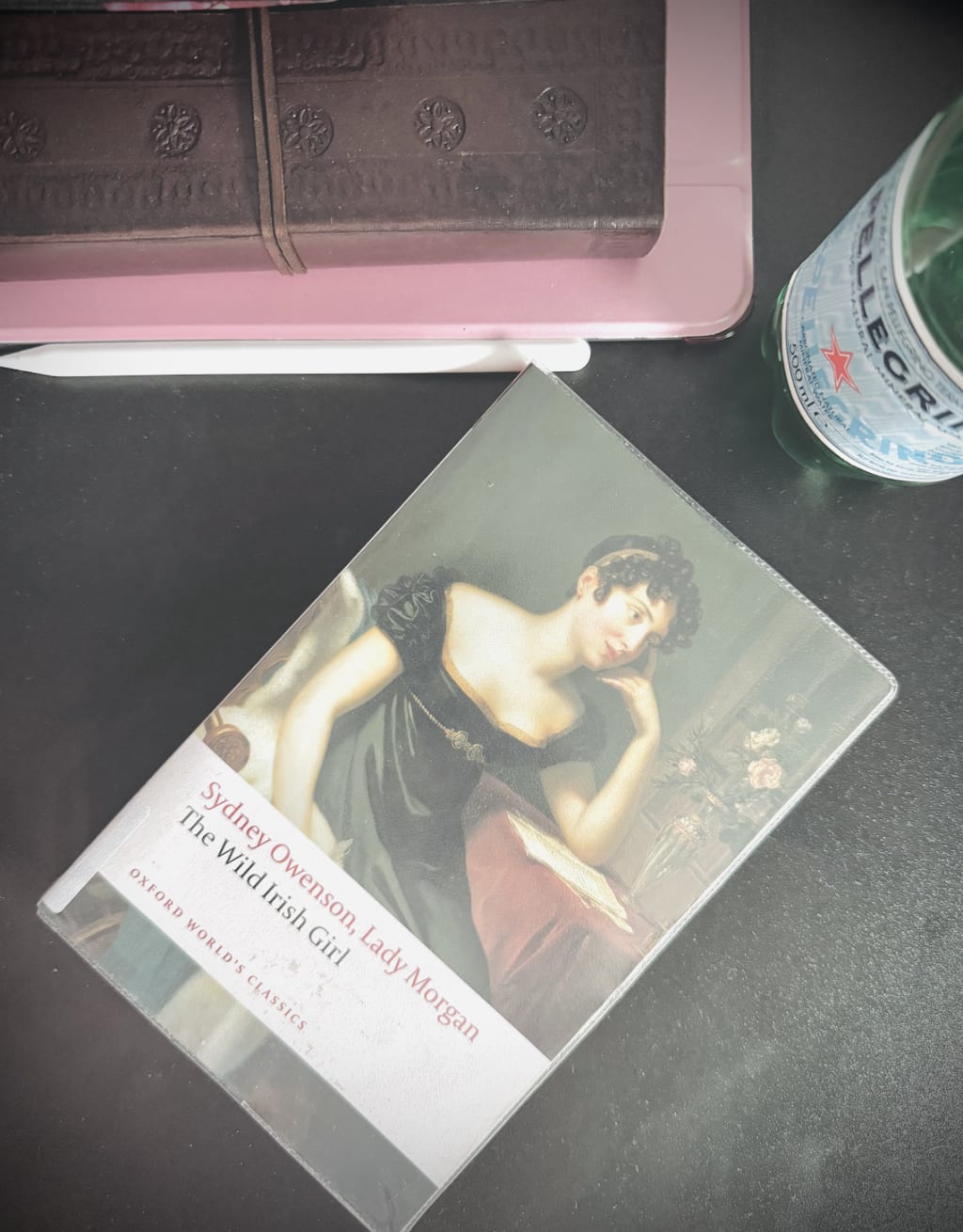
Sydney Owenson, known professionally sometimes as Lady Morgan, was a woman writer of the early 1800s and was born in Ireland in the 1770s or 1780s. Her novel The Wild Irish Girl is known as a feminist masterpiece, publishing under her real name also meant she made some enemies with people who found the intellect of the female character scandalous. But that would only reflect the intellect and wit of Lady Morgan herself. Upon the publication of The Wild Irish Girl, there were also other books in her bibliography being admired by Percy Bysshe Shelley and Lord Byron. Personally, I thought this novel was a blast.
The first thing that happens is a young hedonist who reminds me somewhat of a Byronic figure named Horatio is banished from his family. Written in letters, there are some derogatory terms from the day used to describe him and it is clear that he is no longer welcome in the family home. Sent to County Sligo from London, he disguises himself as a penniless artist. This is mainly to shield himself from the shame, but it is also to do that weird Richard I thing where he thinks nobody will recognise him if he wraps himself in a disguise and goes shuffling about the country.
Horatio sooner or later arrives at a castle inhabited by a prince, his daughter, Glorvina and a priest named Father John. The castle itself is all kind of crumbled and dishevelled, it's overgrown in places and the upkeep of the place has clearly not been the residents' top priority. If Horatio was looking for a historic setting of Ireland even in his own time then he definitely found it. The crumbling of the Gaelic aristocracy is seen in real time in this dilapidated castle. A kind of 'Statis House' of places in which the people inside are definitely mirrored by the outer appearance of their living quarters.

Glorvina teaches Horatio everything he needs to know about the language and folklore surrounding the place he's staying in and of Ireland. It's clear that the history he once dismissed as backward has really come back to interest him. However, it is also clear that Horatio becomes more and more enamoured by Glorvina as her teachings go on. She does represent this form of female agency which was basically unheard of in that day because of the limited amount of female roles. She is also incredibly intelligent, which I have already said - really pissed some people off back in the day as no woman character was supposed to be intelligent in her own right. Lady Morgan has really done something quite unique here.
The more obvious look at their relationship shows that it symbolises the union between Ireland and England. Their relationship is not a conquest for Horatio but rather a relationship built on mutual respect and just being kind to each other. This is yet another thing that would have ground the gears of the readership in the day, especially the men who truly believed it was a woman's place to be beneath and subservient to her lover rather than his equal. But does Lady Morgan care? No, she does not. This book is one where Glorvina isn't exactly left on the back burner. In fact, she comes to shape the world view of Horatio - not quite the other way around.
Further on into the story, there is definitely this moment of discovery for Horatio when he realises it was his own family who displaced Glorvina's but the aftermath of that is still hidden as of yet. Yes, it did force them out, but there is one last nail in the coffin that young Horatio doesn't know about. When it comes to light, there will be a lot to answer for. I'm quite sure that Lady Morgan wanted to make her readership (mostly literate men) as angry as physically possible and with the last quarter of the novel she definitely succeeds. But I do also like how much she was appreciated by some heavy hitters who were men in the literature world as well.
All in all, this book is a deep-dive into the cultures of England and Ireland and how they have been brought back together after a turbulent history of revolution. The female character's intellect is definitely one thing we don't get to see too often in books from this time period. It is so refreshing and such a great read. If you're looking for a lesser known Oxford World's Classic book then definitely give this one a go.
***
Join my unofficial challenge!!!
About the Creator
Annie Kapur
I am:
🙋🏽♀️ Annie
📚 Avid Reader
📝 Reviewer and Commentator
🎓 Post-Grad Millennial (M.A)
***
I have:
📖 280K+ reads on Vocal
🫶🏼 Love for reading & research
🦋/X @AnnieWithBooks
***
🏡 UK
Keep reading
More stories from Annie Kapur and writers in Geeks and other communities.
Marvel Zombie
The last entry into our 2025 superhero projects catalogue is Marvel Zombies. This was a show that was anticipated by absolutely no one and it disappeared from the public consciousness as quickly as it was released. There was nothing special about the project that made it a must see, or a must remember. In fact if anything it's a must forget.
By Alexandrea Callaghan26 days ago in Geeks
As 2016 beauty trends resurface, Kylie Jenner marks 10 years with ‘King Kylie’ return
KUALA LUMPUR, Jan — As 2016 beauty trends make a comeback online, Kylie Jenner is revisiting her defining “King Kylie” era to mark 10 years of Kylie Cosmetics, rolling out a limited-edition anniversary collection that nods to the looks that helped launch her beauty empire.
By Dena Falken Esq2 days ago in Geeks
Thoughts on Vocal and the way the world is
"Death cannot stop true love, only delay it." – Wesley in The Princess Bride. I decided to come back to Vocal on a very cold and dark night at the end of December. I had been, and still am, convalescing from a horrible staph infection that had gone misdiagnosed for months. This, paired with the increasing challenges of being healthy, making the best choices for my co-parented child, being a wife, and being a director at a new job, was a lot to manage.
By Jazzy 3 days ago in Confessions


Comments (2)
Brilliant review! You captured exactly why The Wild Irish Girl still resonates today. Glorvina’s intelligence and agency feel revolutionary even now, and I love how you highlighted the symbolic union between Ireland and England through her relationship with Horatio. You've made me want to revisit this classic with fresh eyes.
Oooo, I really like the name Glorvina and her character. I enjoyed your review!