
Book Review: "The Village of Stepanchikovo" by Fyodor Dostoevsky
5/5 - Dostoevsky seeks to teach us valuable lessons about deference in this enlightening novel...

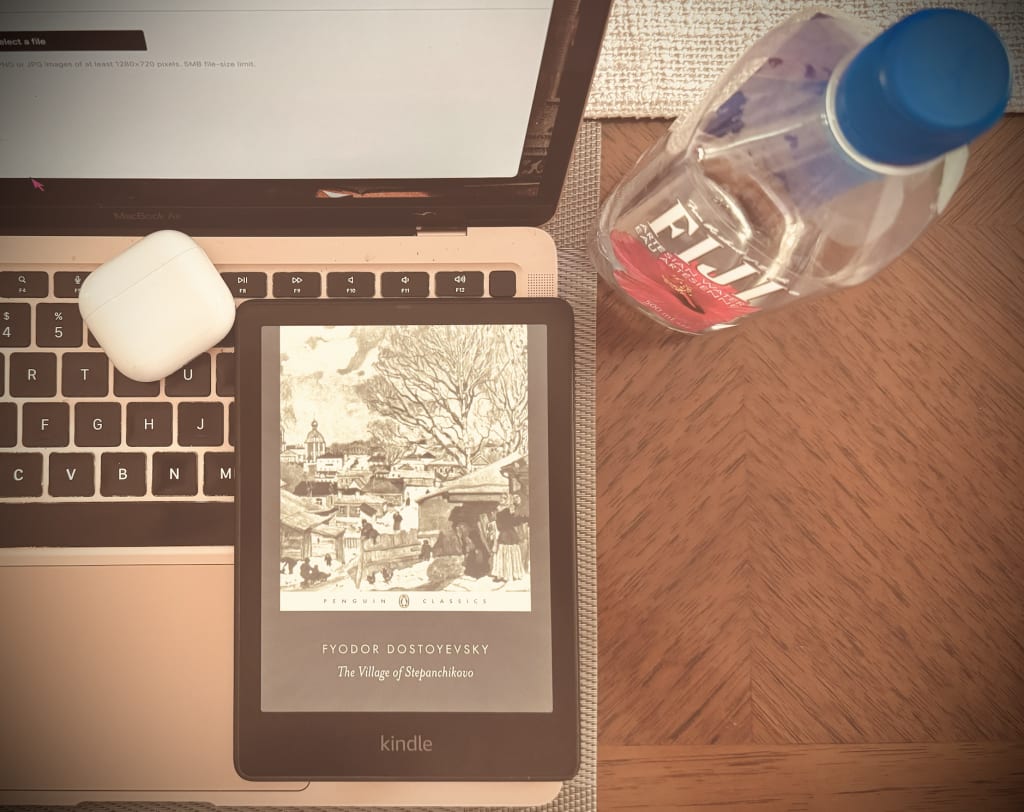
I was practically itching to read some Dostoevsky and seeing as my copy of The Brothers Karamazov, you know that one from years' ago that has all my notes in it, is lost in translation at the moment. So, I'm going to have to settle with a bit of a re-read of The Village of Stepanchikovo. I read this for the first time whilst taking my hiatus a couple of years back and I never reviewed it. I revisited it on my Kindle (again, only the lord will know where my paperback has gone) and all those emotions came rushing back. Dostoevsky just has this way with words that, if you haven't read his works or find them daunting - here is my advice: do it anyway.
A young unnamed narrator receives an urgent letter from his uncle, Colonel Yegor Ilyich Rostanev, inviting him to the Stepanchikovo estate. There's a tone of desperation and confusion running through it. Yet, upon arrival, the narrator discovers a bizarre atmosphere: the once-dignified Colonel now appears timid and anxious, constantly deferring to a pompous ex-clerk named Foma Fomich Opiskin.
This man has gained complete control over the household; from the visitors, to the servants and even to the family, all walk on eggshells around him. Foma goes around spewing sermons that are focused on morals - scaring the crap out of everyone. He had expected to find his uncle preparing to propose to a lovely governess, Nastenka, but instead finds him too frightened to act. Dostoevsky is great at presenting power struggles and I think this one is just incredible. You can really feel the way in which Foma intimidates everyone around him.
As we have already established, Foma is definitely claiming some moral superiority here - which is one of the reasons he feels like he can control the household. He behaves in the way a narcissist would - he's manipulative and egotistical, he is borderline sociopathic and has little actual empathy for others. He humiliates the Colonel in front of guests, berates the servants, and insists on his personal interpretations of virtue and Christian humility - all while displaying none himself. His most devoted followers are comically dim or desperate for purpose. Despite being a figure of ridicule, Foma exerts an almost supernatural control, aided by the social anxiety and deference of his victims.
I feel like this is Dostoevsky trying to send us a social message about deference. If everyone defers everything to everyone else then nobody has to take the blame for what happened. This is a message, in my opinion, regarding collective responsibility especially where power is concerned. It's nobody's fault until we realise it is actually everyone's fault.
This brings us back to the character of the Colonel. He is a patriarch yes, but he is also quite kind and gentle. His misguided sense of gratitude is the initial thing that let Foma run the estate and now that Foma is in power, the Colonel has become spineless to stop him. The Colonel also tolerates Foma’s verbal abuse and public humiliations, believing it noble to endure suffering. Whilst this is the Colonel's predicament, the narrator quickly realises that helping his uncle find his voice (and rid the estate of Foma’s influence) is central to restoring sanity to Stepanchikovo.
Let's have a look at who the Colonel's love is; her name is Nastenka. Both the Colonel and the narrator come to admire her deeply. However, Foma detests her, considering her a threat to his power. He schemes to humiliate her and separate her from the Colonel, even promoting a ridiculous alternative marriage to satisfy his own control over the household. Nastenka, meanwhile, tries to keep peace despite her own suffering. Her and Rostanev’s mutual love is stifled by propriety, manipulation, and indecisiveness. Honestly, she is the ideal Dostoevskian heroine. She's just this quiet, peaceful being whom everyone loves.
There are a whole cast of characters in this village, it doesn't just stop at the estate. Many of the characters are absolutely pitiful and some of them are just plain ridiculous. Even though the servants try to remain grounded, they are still swept up into the absurdity. The narrator starts to realise that ridiculousness is normal here and well, the whole estate and even the village is this strange microcosm of real life. Instead of reason and compassion, ego and fear rule the land.
As the book continues, Foma becomes more cruel as the Colonel tries to grow a spine. Dostoevsky definitely shows us what moral ego looks like - it is a farce of what morals actually are. Dostoevsky tries to teach us a valuable lesson in letting things slide and it is presented to us in a rather claustrophobic representation of society as a whole. I'm not going to lie, I loved revisiting this one. It just felt really familiar.
About the Creator
Annie Kapur
I am:
🙋🏽♀️ Annie
📚 Avid Reader
📝 Reviewer and Commentator
🎓 Post-Grad Millennial (M.A)
***
I have:
📖 280K+ reads on Vocal
🫶🏼 Love for reading & research
🦋/X @AnnieWithBooks
***
🏡 UK
Keep reading
More stories from Annie Kapur and writers in Geeks and other communities.
Book Review: "American Rapture" by CJ Leede
This was brutal. I was seeing this book everywhere and I kept avoiding it. I avoided it and avoided it over and over again until one day I just snapped. It's late-July 2025 and I'm not going to lie when I say I was pulled in by the Amazon Recommendations machine. It would be on my main recommendations list, it would be on my Kindle "recommended for you" lists and then, when I would get a book on my Kindle, it would appear after the 'thank you' screen when you go to the next recommendations page. After a week or so - I just cracked and now here we are. This is what I thought about American Rapture by CJ Leede.
By Annie Kapur6 months ago in Geeks
Silver Screen Magic with Mae West
American actress and singer Mae West became a popular film actress during the Great Depression. She started entertaining in vaudeville, then performed on Broadway, and finally went to Hollywood. She signed up with Paramount Pictures and made her debut in the 1932 film “Night After Night.” She also starred in musicals, comedies, and crime dramas. The American Film Institute named her one of the best classic Hollywood actresses.
By Rasma Raisters8 days ago in Geeks
Smart phones, Humans and Aliens.
WARNING. I will be tapping into one of your favorite creative tensions: The absurdity of humans worshipping their glowing rectangles as if they were tiny oracles. There’s something deliciously poetic about that contradiction, and it lends itself beautifully to an instructive proviso.
By Novel Allen5 days ago in Poets


Comments (2)
Thanks for sharing your thoughts on The Village of Stepanchikovo. Your take on collective responsibility really resonates too. Dostoevsky’s way of showing how power and fear can twist people is something that feels very relevant even now.
Omgggg, Foma is so horrible! Loved your review!