
Book Review: "The Turning" by Tim Winton
5/5 - an anthology of intertwining narratives, all connected, all knee-deep in trauma...

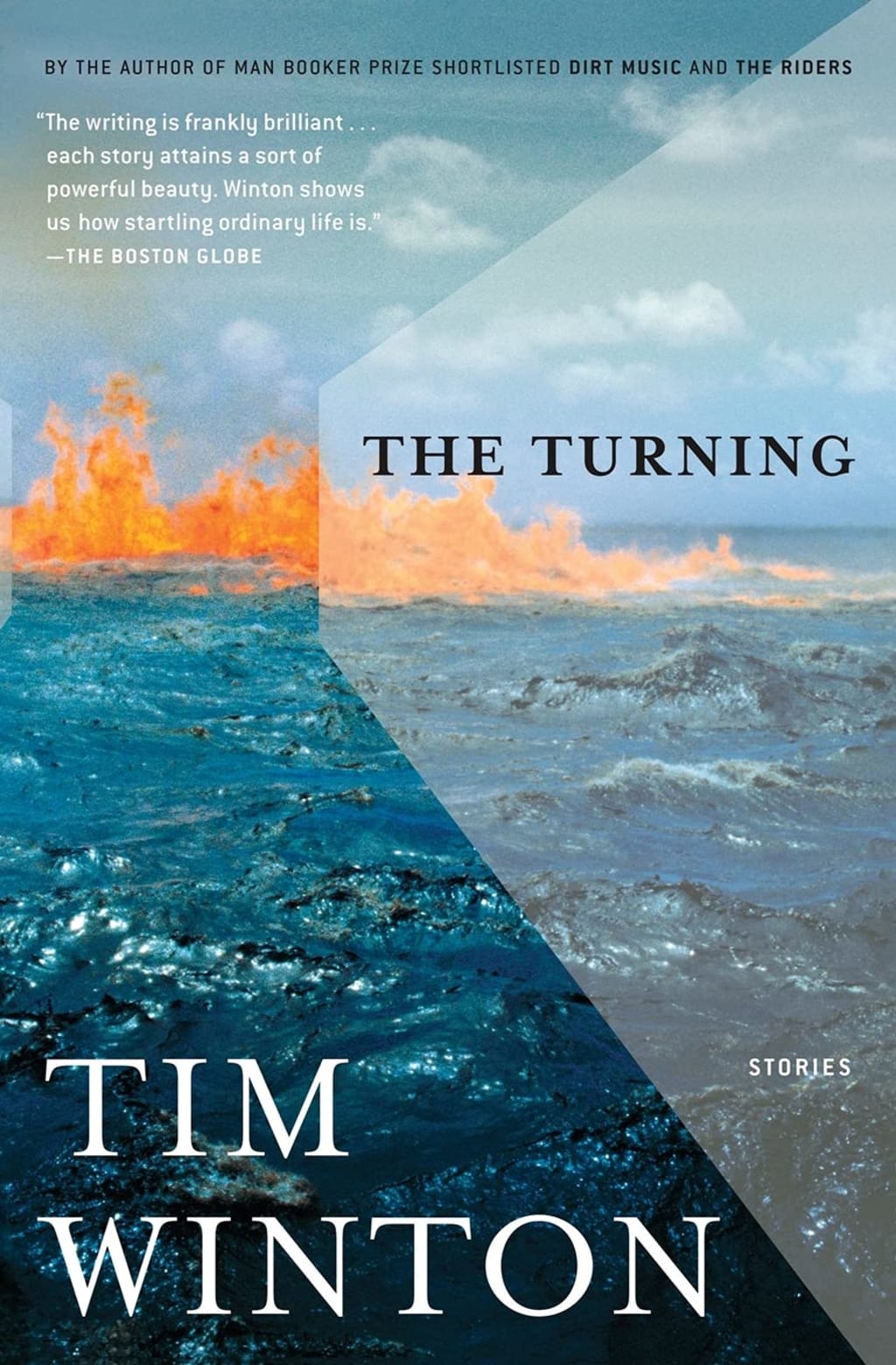
Well, don't be surprised that you're getting more of Tim Winton than ever before. Ever since I read the book Cloudstreet, I have become obsessed with his writing. I went on to read books like Dirt Music and The Riders and now I have read The Turning. Unlike his other books, The Turning did not grab me from the first page and it took me some time to appreciate what was really going on. Slowly, I gained the full picture and I have to admit, Tim Winton has done really well with this one. So without further introduction, I give you Tim Winton's The Turning.
It is not a conventional novel but a collection of seventeen interconnected stories set in the fictional Western Australian towns of Angelus and White Point. The stories, which span decades, feature overlapping characters and explore themes such as family, trauma, redemption, and spirituality. The rural, coastal setting is integral, shaping the characters’ lives with its harsh beauty and isolation. The fragmented structure reflects the disjointed experiences of the characters, offering glimpses into their intertwined lives. This is honestly an unexpected form from Tim Winton and I'm going to be honest, at first I didn't like it at all. But as the stories got underway and the narratives started building - it really grew on me.
Vic Lang is a recurring character whose life and relationships provide a central thread throughout the collection. In Abbreviation, Vic’s childhood is shaped by the fallout from his father Bob Lang’s failure as a policeman, whose corruption led to his disgrace and early death. The young Vic, deeply affected by his father’s betrayal of justice, begins to distrust authority and wrestles with feelings of vulnerability and shame. Vic Lang is a character who is probably one of those slow-character-building studies that you can see often in Tim Winton's novels. I spoke about The Riders in this way as well. There is something about Tim Winton's ability to build a character through a slow-burning portrait that is ever-changing that makes character-centric narratives by him so great to read.
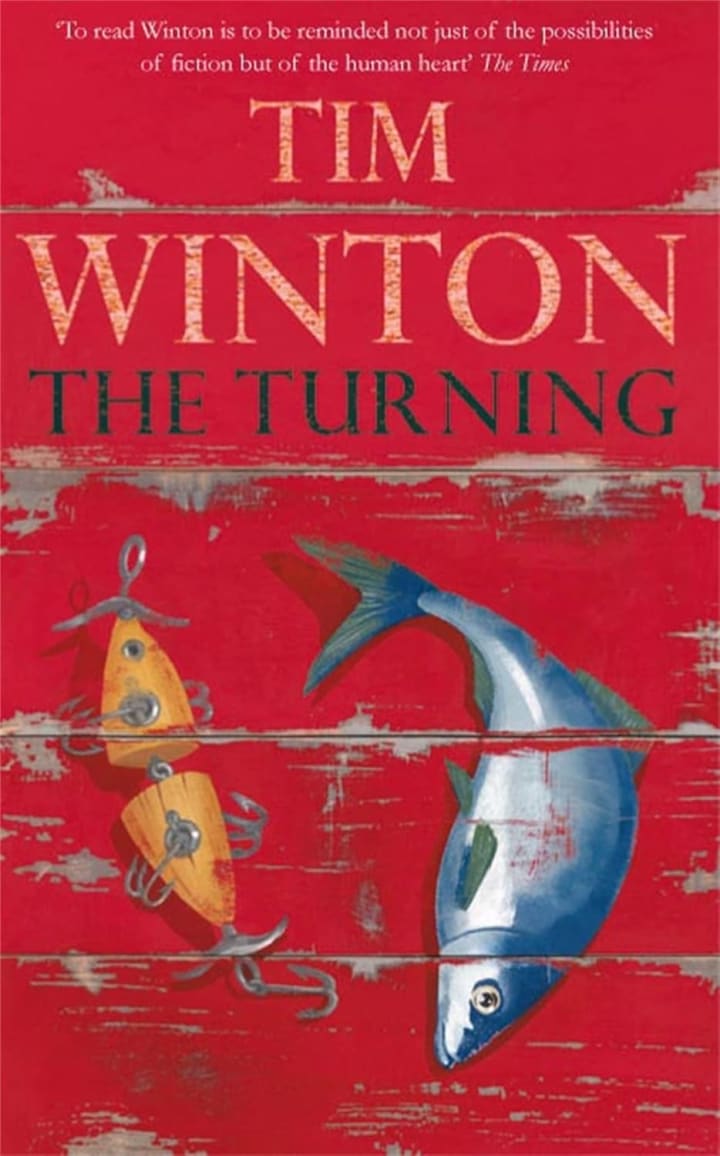
One of the opening stories, Big World, introduces the theme of disillusionment. Two high school graduates, the narrator and his friend Biggie, flee their small town after exams in search of adventure. Their road trip up the coast is filled with fleeting moments of freedom, but the narrator’s growing awareness of life’s disappointments suggests that true escape is impossible. The story’s ending reflects the cycles of stagnation that characterise the broader collection. The ending to this story was so sad, it reminded me of the ending to the novel Less Than Zero where life simply stops and everyone you know is someone else - or worse, they're gone. It's one of those endings you read over and over again. It's definitely an ending, but the protagonist never gets closure.
Trauma and its long-lasting effects are recurring motifs. In Damaged Goods, Vic reflects on his troubled marriage to Gail, haunted by their mutual insecurities and her history of sexual violence. Similarly, in Sand, two brothers on a family holiday face an encounter with an older man that introduces them to fear and mistrust. Both stories explore how formative events leave indelible scars, shaping the way characters perceive relationships and themselves. This is something that I think Tim Winton writes really well: trauma. In books like Cloudstreet, the voice of trauma is haunting and I think this is what he has done in the marriage between Vic and Gail too - there is a ghost that follows them constantly.
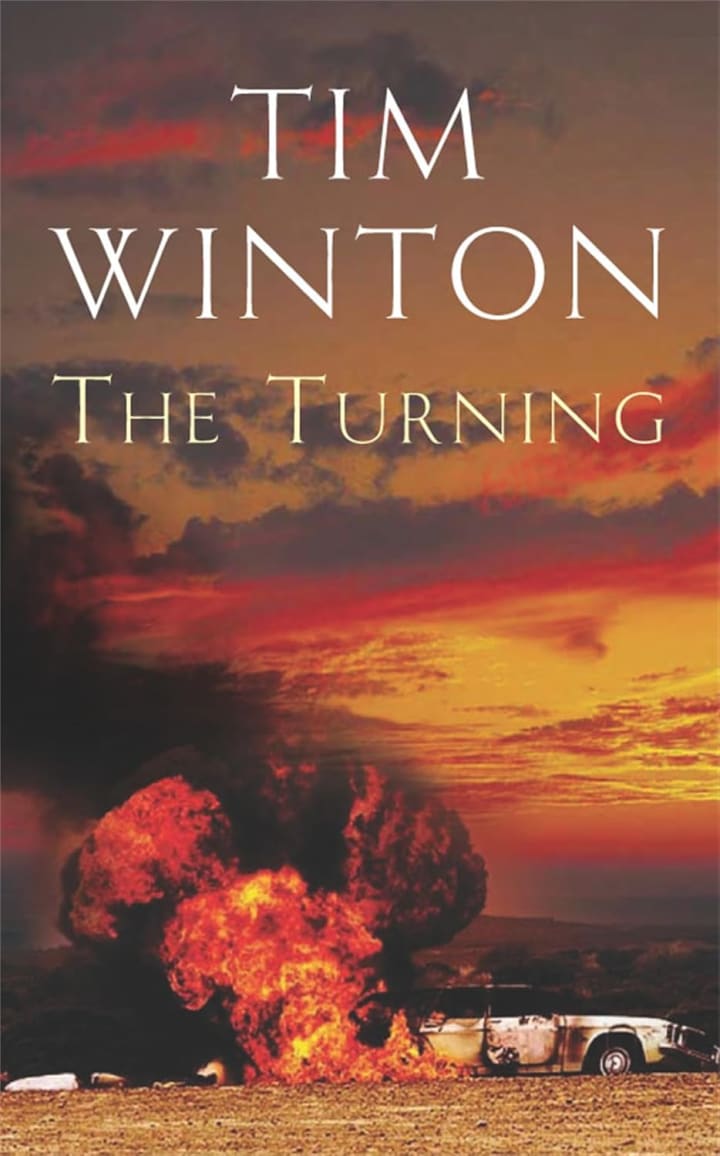
Characters from one story often reappear in others, offering multiple perspectives on key events. For instance, Carol Lang, Vic’s mother, appears in several stories, often struggling with grief and her strained relationship with her son. In Aquifer, the narrator recalls a childhood act of negligence that resulted in tragedy, revealing connections to Vic’s family and the broader community. These overlapping narratives create a mosaic of interconnected lives, deepening the collection’s emotional resonance. I enjoyed this because it teaches us that nothing in life is ever a straight narrative. As Vic gets older, we learn more about the past events of his life that we didn't know about as the stories about his early days only gave us snapshots.
There's so much more to this anthology, (if you can call it an anthology as all the stories connect). We can also assume that the anthology is here to tell us about how life really works. Life is not about living everything every day, but coming back on yourself to confront things about your past that may have led you to your present - even if they are dreadfully uncomfortable. It is about shedding your ghosts even if they scare you to death.
About the Creator
Annie Kapur
I am:
🙋🏽♀️ Annie
📚 Avid Reader
📝 Reviewer and Commentator
🎓 Post-Grad Millennial (M.A)
***
I have:
📖 280K+ reads on Vocal
🫶🏼 Love for reading & research
🦋/X @AnnieWithBooks
***
🏡 UK
Keep reading
More stories from Annie Kapur and writers in Geeks and other communities.
Movie Review: "The Insider" (1999)
Directed by Michael Mann, The Insider (1999) is a masterful exploration of corporate corruption, journalistic integrity, and the personal cost of uncovering the truth. Based on a true story, the film chronicles the experiences of Jeffrey Wigand (Russell Crowe), a whistleblower who exposes the tobacco industry’s dark secrets, and Lowell Bergman (Al Pacino), the investigative journalist from 60 Minutes who helps bring Wigand's revelations to light. With exceptional performances, impeccable direction, and a gripping narrative, The Insider is a cinematic triumph that combines riveting drama with profound moral themes.
By Annie Kapurabout a year ago in Geeks
Silver Screen Magic with Mae West
American actress and singer Mae West became a popular film actress during the Great Depression. She started entertaining in vaudeville, then performed on Broadway, and finally went to Hollywood. She signed up with Paramount Pictures and made her debut in the 1932 film “Night After Night.” She also starred in musicals, comedies, and crime dramas. The American Film Institute named her one of the best classic Hollywood actresses.
By Rasma Raisters6 days ago in Geeks


Comments (1)
Another Winton! I am very curious about this one and may get it on my list next year (so much going on with the holidays)! 🐟