
Book Review: The Memory Police by Yōko Ogawa
5/5 – haunting, tender, and quietly devastating in its exploration of loss and control…

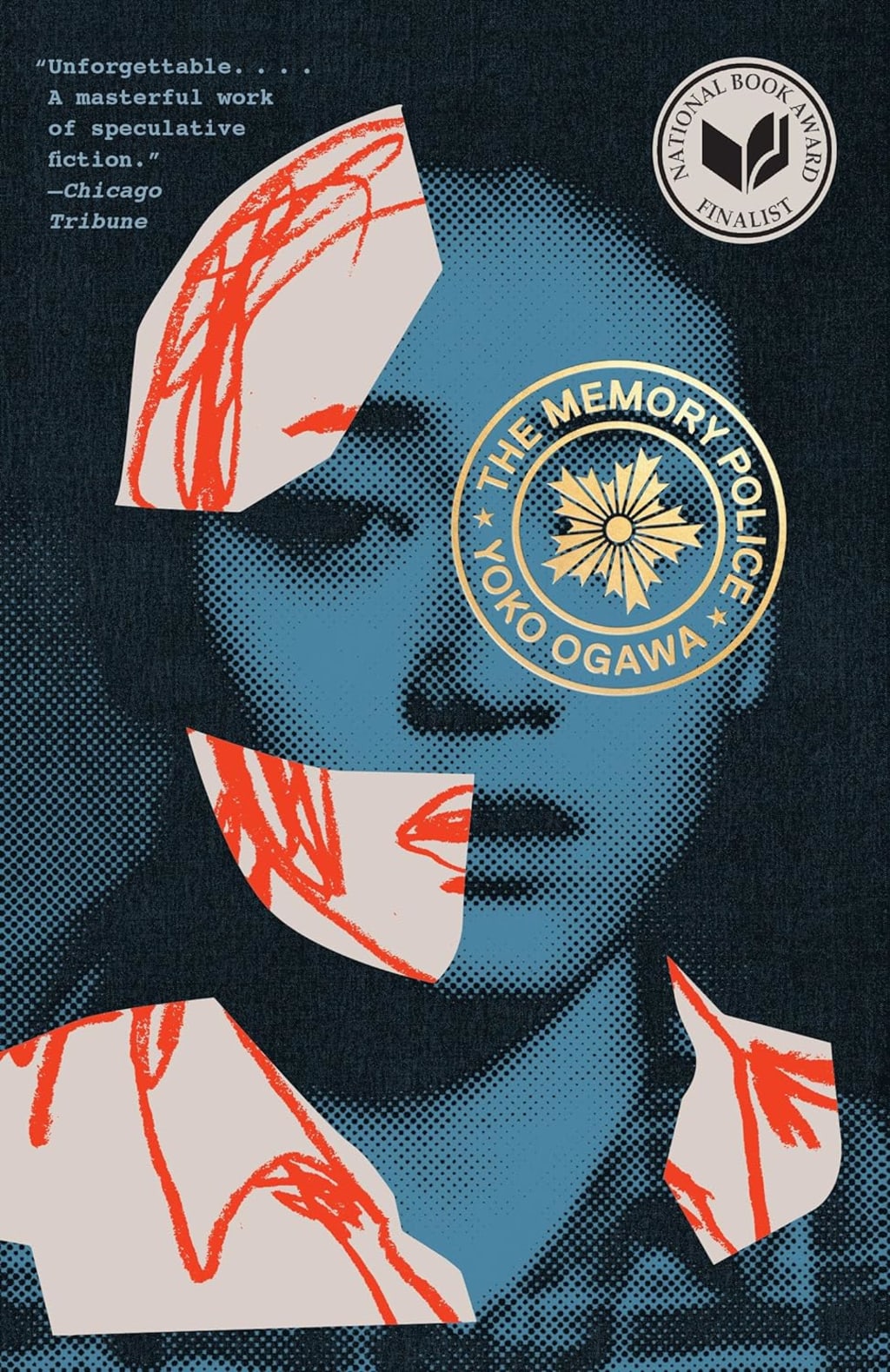
I’d been circling this book for months, watching the price tag stubbornly hold its ground like a sentinel. Every so often, I’d hover over the “Buy Now” button, wondering if I was in the right headspace for something so famously melancholic. Then, one unassuming Tuesday afternoon, the little orange Kindle box whispered: Best Price in 30 Days – £1.99. I didn’t hesitate.
The purchase felt almost ceremonial like I was stepping onto the island Ogawa had created before I’d even read the first sentence. I had heard that The Memory Police lived somewhere between minimalism and dreamscape, that it was an act of both storytelling and slow erasure. What I didn’t expect was how it would move with such quiet inevitability, slipping under my skin in ways I didn’t notice until it was far too late to shake off.
The novel unfolds on an unnamed island where objects and the memories tied to them simply vanish. These disappearances are absolute. When something is “gone,” it’s not merely removed from sight. It is erased from the collective mind of the island’s inhabitants. No one remembers what it was, why it mattered, or what it once meant. A ribbon, a rose, a photograph each one falls into oblivion, and life goes on as if it had never existed.
But the forgetting is not entirely natural. There are those who can still remember, and for them, the Memory Police arrive. Their job is to ensure nothing and no one survives the purge. The threat they pose isn’t loud or cartoonishly villainous; it’s steady, inevitable, and suffocating.
Our narrator, an unnamed novelist, has grown up under this system and is as vulnerable to forgetting as anyone else. When her editor, R, reveals that he retains memories, she is faced with an impossible choice: report him and preserve her own safety, or protect him and risk everything. She chooses the latter, building a hidden room in her home to shield him from discovery.
This decision doesn’t ignite a rebellion. There are no sweeping speeches or cinematic escapes. Instead, Ogawa gives us something quieter and perhaps more unsettling. The narrator observes R like a rare and endangered creature, studying how a man who remembers navigates a world of people who do not. She becomes both protector and archivist, chronicling the changes in his mind, the way memory bends and resists.
One of the most striking aspects of the book is how the protagonist adapts to loss. She feels sadness, yes, but it’s brief followed almost immediately by acceptance. This emotional rhythm is chilling in its normality. There’s no desperate clinging, no loud protest. Loss becomes a rhythm of life: wake, forget, continue.
Ogawa crafts the vanishings with surgical precision. Early losses feel almost benign, as though the island is shedding unneeded skin. But as the disappearances escalate taking away seasons, natural elements, and living creatures the absence becomes heavier, more dangerous. You start to feel the erosion in your own bones.
Winter is where Ogawa’s prose hits its most haunting register. Snow falls across the island, and without remembered springs or anticipated summers, the cold feels endless. It’s not a cycle, it’s a state. Renewal no longer feels possible. You understand, on some deep level, that what’s gone will not return, and what’s left will not stay.
In this atmosphere, the relationship between the narrator and R becomes the emotional core of the novel. Their bond is not romantic in the conventional sense it’s built on shared secrecy, trust, and the silent knowledge that each day together is borrowed time. In protecting him, she is also protecting the fragile thread of memory itself.
The novel also contains a story-within-a-story: the narrator’s own work as a novelist. These embedded chapters are like echoes, offering a distorted reflection of her reality. They remind you that fiction itself is a kind of memory one that can be erased if the storyteller disappears.
Reading The Memory Police feels like being in a dream you can’t fully wake from. Ogawa’s prose is spare yet loaded with emotional gravity. The pacing is deliberate, the silences between events as important as the events themselves. By the time you reach the end, you realize the book has been erasing you in small ways taking away your expectations for resolution, stripping the idea that closure is guaranteed.
This is not a dystopia with a promised uprising. It’s not a cautionary tale that ends with the fall of the system. It’s something far more unsettling: a portrait of living with loss so gradual, so all-encompassing, that resistance feels not only impossible, but irrelevant.
When I closed the final page, I didn’t feel like I’d finished a story. I felt like I’d stepped back into my own life with an uneasy awareness of how easily we accept change, how quickly we forget, and how silence can be just as oppressive as noise.
The Memory Police is not merely read it lingers, haunting the spaces between your own memories, daring you to notice what you’ve already let slip away.
About the Creator
Jawad Ali
Thank you for stepping into my world of words.
I write between silence and scream where truth cuts and beauty bleeds. My stories don’t soothe; they scorch, then heal.
A Knight of the Seven Kingdoms Series Review (Season 1)
As one of the biggest properties in fantasy, A Song of Ice and Fire remains immensely popular with audiences. After reaching far into the past with House of the Dragon, a second spin-off was on the cards. A Knight of the Seven Kingdoms serves up a bite-sized slice of action and drama, but it still claims a spot among the best small-screen titles.
By Robert Cain16 days ago in Geeks
REVIEW - The Redemption of Faust (Directed by Genel Mejia)
The Redemption of Faust, written by Justin Suran (Muse, Visitors, The Screenplay) and Genel Mejia (Visitors, The Screenplay, The Experiment, Normal, Splash Damage, La Mejia, Muse), and also produced and directed by Mejia, is a short film which takes its name from the famous 19th century work 'Faust' by Johann Wolfgang von Goethe.
By MegaFlix Movie Awards6 days ago in Geeks



Comments
There are no comments for this story
Be the first to respond and start the conversation.