
Book Review: "The Man With the Compound Eyes" by Wu Ming-Li
5/5 - a warning to humanity fashioned in a novel about ecological matters...


The Vintage Earth Books have been on my mind for a while, especially after reading Haushofer's The Wall. So I decided to seek out some more and found this strange and fantastical classic entitled: The Man With the Compound Eyes. There was something about the blurb that drew me in. A mixture between an Asian Folklorish atmosphere and a fantasy novel complete with extended metaphors for how humans are quietly destroying the planet, this book offers a great story with writing that reads more like a folk story or fable. I think though, it's biggest strenght was the converging of two very different stories in on themselves to create one.
The novel begins on the remote and mythical island of Wayo Wayo, where tradition dictates that second-born sons are sent out to sea at the age of 15, never to return. Atile’i, one such second son, bids farewell to his family and sets out on his ceremonial journey, believing it to be his destiny to sacrifice himself to the ocean. However, he defies expectations when his raft collides with a massive floating island of rubbish in the Pacific. This collision marks the beginning of Atile’i’s transformation and introduces the novel’s ecological themes. The ecological themes are the most important in the text as the extended metaphor is that we are destroying the planet through wastage. Atile'i is a wonderfully complex character and as we move through his time on this island, we see that he has a whole backstory we were barely aware of. It isn't exposition, but it is woven into his thoughts and feelings whilst we are welcomed into his mind.
In parallel, the story shifts to Alice Shih, a widowed writer and academic living in a coastal village in Taiwan. Still grieving the loss of her husband and son in a tragic accident, Alice has withdrawn from society. Her home, perched precariously on a cliff, becomes a symbol of her emotional fragility. She immerses herself in her late husband’s work on endangered species and contemplates her own existence in a world that seems increasingly alien. We learn all about Alice's backstory, including how she met her husband (Thom) whilst in Europe and the fact that he moved with her back to her homeland. As we learn more about how this unfolded, we begin to feel more and more sympathy for Alice - she is presented to us as the tragic character but she becomes much more than that.

A catastrophic environmental event propels the story forward: a massive trash vortex—an accumulation of plastic and waste from across the globe—crashes into the Taiwanese coastline near Alice’s village. The arrival of this apocalyptic spectacle disrupts the local community, causing widespread fear and confusion. The floating trash island is both a literal and metaphorical representation of humanity’s environmental neglect. It feels like fantasy but I have no doubt that the amount of wastage that there is at the moment means that this could actually happen and I won't be surprised if it does. I mean I hope you've seen the documentary Buy Now! on Netflix.
Atile’i, having survived the collision with the trash vortex, washes ashore near Alice’s home. Their meeting forms the emotional core of the novel. Atile’i, who speaks a language unfamiliar to Alice, initially struggles to communicate, but their mutual curiosity bridges the gap between their worlds. Through their tentative interactions, Atile’i learns about modern society, while Alice begins to rediscover her capacity for connection and hope. This will begin one of the most unlikely friendships in fiction that I have seen since the book One Hundred Years of Lenni and Margot. But, in this book there is a chance of Alice getting the feeling of having a son back again. What we see is the evolution of both of these characters and finally, an act of realisation. It is as much Alice's transformation as it is Atile'i's requirement to go on.
The novel also incorporates the voices of the villagers affected by the arrival of the trash vortex. Through these secondary characters, Wu Ming-Yi examines how environmental disasters exacerbate existing social divides. Some villagers view the trash island as a threat, while others see it as an opportunity to collect and sell salvageable materials. The varying reactions highlight humanity’s conflicting responses to crises, ranging from exploitation to fear to solidarity. I think this is an important aspect of the novel because it is perhaps the one that most reflects real life. Some people care, some people pretend to care, and some people could not care less.
All in all, I thought that this book was a compelling read as a warning to humanity about what is going wrong. First published in 2011 and translated into English by 2013, I can honestly say that we have not come very far in the way of heeding that warning. In fact, things have become so much worse, it feels unstoppable.
About the Creator
Annie Kapur
I am:
🙋🏽♀️ Annie
📚 Avid Reader
📝 Reviewer and Commentator
🎓 Post-Grad Millennial (M.A)
***
I have:
📖 280K+ reads on Vocal
🫶🏼 Love for reading & research
🦋/X @AnnieWithBooks
***
🏡 UK
Keep reading
More stories from Annie Kapur and writers in Geeks and other communities.
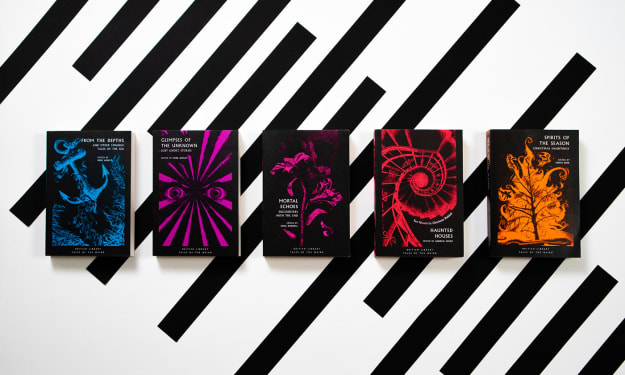
Top 10 British Library "Tales of the Weird" Anthologies
I said I would do this and to be honest, I've been putting it off because of the fact it is so hard to rate these books. First of all, I have noticed the decrease in their quality over the past couple of months and yet, the older ones are so good I had no idea which one would come first. I spent a while thinking about it, cutting them down in my mind and rating them on a system of: which one did I love reading the most? So, if you have an issue with the list please know it is only personal opinion and does not represent an objective reality in any way.
By Annie Kapurabout a year ago in Geeks
Silver Screen Magic with Mae West
American actress and singer Mae West became a popular film actress during the Great Depression. She started entertaining in vaudeville, then performed on Broadway, and finally went to Hollywood. She signed up with Paramount Pictures and made her debut in the 1932 film “Night After Night.” She also starred in musicals, comedies, and crime dramas. The American Film Institute named her one of the best classic Hollywood actresses.
By Rasma Raisters8 days ago in Geeks
Can you watch Super Bowl in UK?
Super Bowl, one of the most exciting sporting nights of the year, is now less than a month away and the excitement is already palpable. Scheduled on February 8, 2026 at Levi’s Stadium in Santa Clara, California, this will be the third Super Bowl held in the San Francisco Bay Area.
By David Cooka day ago in Geeks
How to Succeed at the Benson Directory®
Congratulations and welcome to the Benson Directory® employee #22391! As our newest call handler, you will have the privilege of speaking with dozens of unique and interesting people on a daily basis as well as the opportunity to earn bonuses for high performance. Contained within this handbook you will find a set of ease to follow instructions designed to help you settle in to your new role and begin paving the way to success.
By S. A. Crawford5 days ago in Fiction



Comments (2)
This is right up my street...!
Now I want this book! Great work!