
Book Review: "The Hitler Years" by Frank McDonough (Pt. 1)
5/5 - much better than the first volume so far...

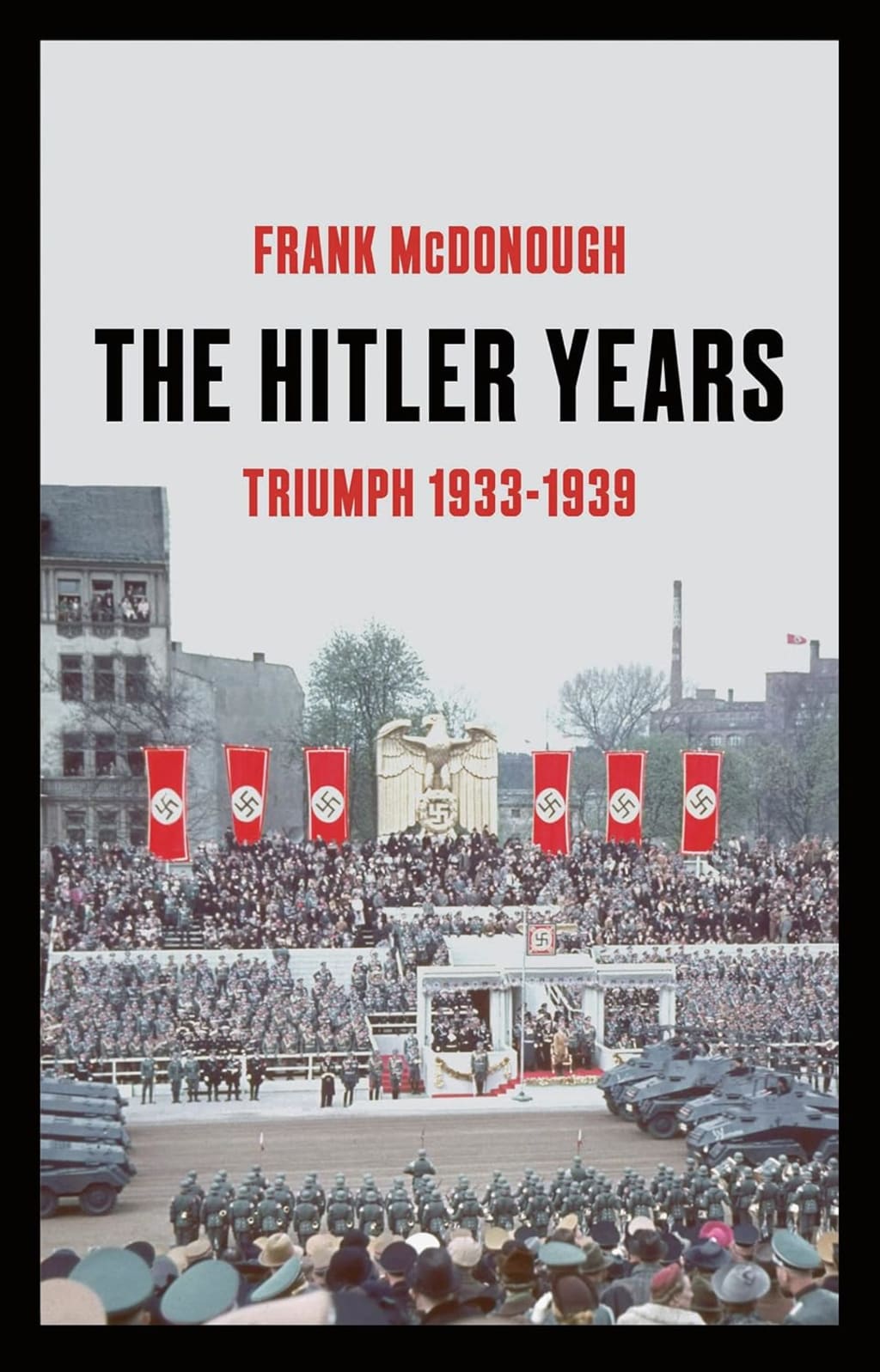
For the previous book in the series entitled The Weimar Years, click the link here.
***
This review covers the introduction to the end of chapter 2.
Full Title: The Hitler Years: Triumph 1933-1939 by Frank McDonough
Frank McDonough has often been described as the professor of the Third Reich and so, I was definitely hoping that this book was a little better than the last one I read in the series. With a 3/5, I felt like there was nothing new and exciting to be gathered from McDonough's analysis of the Weimar era. Be that as it may, it was still an interesting read. This book gets into the meat of the Third Reich. Now, I'm no expert in World War 2 so I am hoping that this one will be a bit more interesting. I know, rating something lower because I already have knowledge of it is biased, but I was more hoping for a different idea, a new perspective or a more in-depth theory. This volume offers just that...
The book begins with an overview of Hitler's rise to power and what that meant for Germany. It separates the idea of totalitarianism from the Hitlerian court, the author stating that totalitarianism is actually closer to Stalin's Russia than Germany during the Third Reich. This was surprising and definitely something new to learn and so, I was automatically interested in everything that the writer had to comment on the way in which politics was moved and formulated during this time. When we move backwards into the year 1933, we learn about the way in which Hitler manipulated the German people, captured the rural working class votes and befriended certain men in power (cutting off others) in order to rise in the ranks towards the role of Chancellor. The Nazis really monopolised power and the Reichstag Fire was definitely a strange event that has left historians puzzled across the ages, but the vitriol and violence of the early Nazi Party definitely reflects on the rippling violence to come. One that would change the very course of the world.
We also get a deep exploration of how Goebbels came into power and what he did. Even though we may think that many people in the media left Germany during this period, that was not entirely the case. Many of them did, yes, but a lot of them stayed because movie-going increased and there were more daily newspapers in Germany than most other places in Europe. Peter Lorre and Fritz Lang are mentioned by name as leaving EM Remarque and Bertolt Brecht also left. Over 2000 writers left Germany and yet, there was no real decline of anything. There was a lot of literature still going on and there were many, many more libraries than before the time of Hitler. This is not the news we want to hear but its important to understand how easy it was for the Nazis to control information this way. There was so much consumption that the majority political party could sway the public by controlling what they saw and read.
When we move on to 1934, the chapter is aptly named Blood Purge and first looks at the rise of the secret police of the Nazi Party. The author covers the relations with Rome in which initially, it seems like things are smooth but at closer look, Rome and Germany are moving apart. Political strains are high and everyone feels threatened as the SA becomes more and more powerful. One thing I quite enjoyed about this section is the way in which the author discusses the political motives of Germany when it comes to Poland. Poland had only been an independent country since 1918 and so, it became a point of interest for Germany to claw back some land after the loses after the First World War. Hitler wanted Poland to become German so that it could help him to go up against the Soviet Union. It is quite incredible to see how far this man would go to basically see that Germany got as much power as physically possible in as little time as possible. It was almost as if he wasn't thinking about those 35 million Polish people at all.
The fact the Hitler explained that the word 'worker' was used in his party's message was to pull that word away from the Communists is hilarious as both of them, in my opinion, are as bad as each other. To say that Hitler was a socialist is a bit of a dodgy opinion and a surface layer one at that. He used socialist systems as a smoke-screen. It was a form of propaganda to get people to like him and perhaps, in the coming violences, get them to look the other way when others were confronted with true evil.
There are many things that we already know about Nazi Germany and the way it was first formed but I think McDonough definitely makes a point of concentrating on the malicious intent behind the Nazi Party. Sometimes we forget how manipulative that government was when they were clawing at all the power, before the horrors began. As we move through the book, I hope we continue to get these in-depth analyses of German politics and how they were essentially broken and rebuilt in the image of a madman. When we cover Anthony Eden's brief visit to Germany, we see how the world sees the Germans with the New York Times making the report that America is already selling to the Germans. And they are selling aircrafts, weapons and so much more.
About the Creator
Annie Kapur
I am:
🙋🏽♀️ Annie
📚 Avid Reader
📝 Reviewer and Commentator
🎓 Post-Grad Millennial (M.A)
***
I have:
📖 300K+ reads on Vocal
🫶🏼 Love for reading & research
🦋/X @AnnieWithBooks
***
🏡 UK
Keep reading
More stories from Annie Kapur and writers in Geeks and other communities.
The Politics of Playing Dress-Up
Well, to start off I'd like to say a happy world book day to all who celebrate. I know I haven't really posted anything on my socials about it but I'm not a jubilant kind of person. I lay low most of the time. Let's start off with a popular anecdote from the vaults...
By Annie Kapura day ago in Geeks
A Knight of the Seven Kingdoms Series Review (Season 1)
As one of the biggest properties in fantasy, A Song of Ice and Fire remains immensely popular with audiences. After reaching far into the past with House of the Dragon, a second spin-off was on the cards. A Knight of the Seven Kingdoms serves up a bite-sized slice of action and drama, but it still claims a spot among the best small-screen titles.
By Robert Cain7 days ago in Geeks
Guard Your Battery
Why are some people so attractive just by standing there? It’s not because they are "likable," but because they don’t need everyone to like them. I realized later that truly charismatic people allow themselves to be criticized, but they never criticize themselves. They never try to please the world; instead, the world stops to watch them.
By Emily Chan - Life and love sharing2 days ago in Poets



Comments
There are no comments for this story
Be the first to respond and start the conversation.