
Book Review: “The Great Wall of China” by Franz Kafka
5/5 - Kafka’s paranoid tales of power, vulnerability and the human psyche…

I read “Amerika” and it made me so sad and existential that I actually cried about it. Franz Kafka is not the author to read when you already feel bad about the world. I have often said that reading Kafka is complex because when you’re happy, it’ll bring you down and if you’re sad it’s not going to do any good and will probably make you even more upset. This is what Kafka ends up doing to me when I’m sad and so, reading something like “Amerika” when I was upset was a huge mistake. But what happens when you read his short works when all you are is exhausted? Let’s find out.
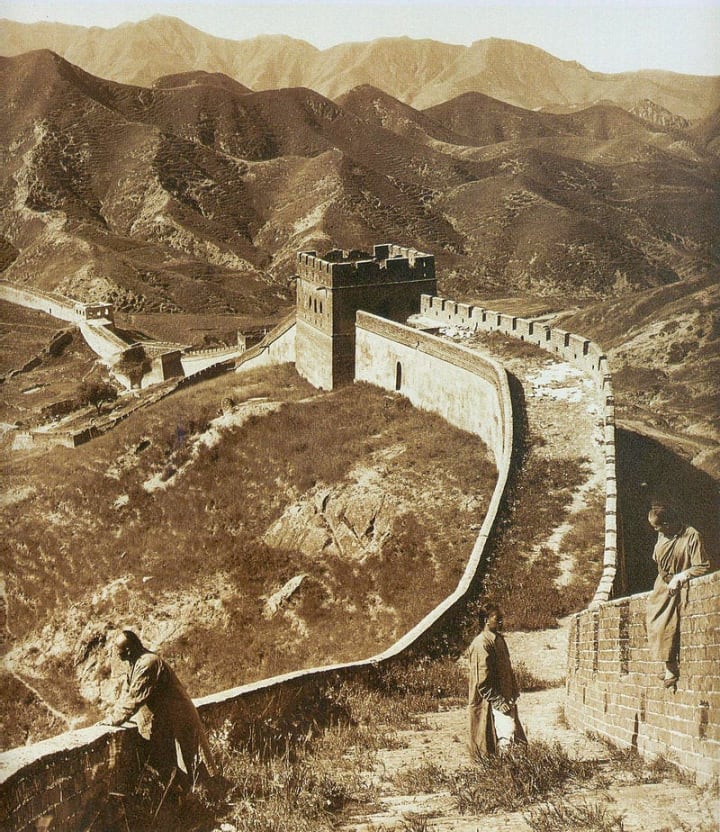
The title story is presented as a first-person reflection on the construction of the Great Wall. The narrator describes how the wall was built in disconnected sections over many years, symbolising the fragmented and often irrational nature of large human projects. He reflects on the bureaucratic decision to leave parts of the wall unfinished and questions the central authority’s decisions. Now, if you thought nobody could make something extraordinary like The Great Wall of China look depressing then think again. This story is really existential in the fact that it kind of berates humanity for being so selfish with its vanity projects, showing people to be generally ill-planned for them. It’s interesting yes, but not your light Sunday night reading.
A story I quite liked was called “The Emperor’s Message” because of the way it depicts such raw pointlessness. Kafka introduces an emperor who, on his deathbed, sends a message to a humble subject living in a distant province. The message is urgent, and the emperor’s messenger embarks on the journey through the sprawling empire. However, despite his best efforts, the messenger is caught up in the overwhelming crowds, the complex palace gates, and the infinite streets of the empire. The message never reaches its destination. Kafka uses this story to critique the inefficiency of large bureaucratic systems, showing how individuals are isolated and disconnected from their rulers, while also commenting on the futility of communication and the gap between power and those who are meant to receive its decrees. It is typical Kafka when it comes to showing us these horrific power dynamics between top and bottom.
I also enjoyed another story (that I have read before) called “The Burrow”. This longer story is narrated by a burrowing creature that has painstakingly created an intricate network of tunnels for protection. The burrow is its entire world, and the creature becomes obsessed with the safety of its home. As time goes on, paranoia takes over, and the creature fears that unseen enemies might be able to penetrate its defenses. It hears a faint sound in the distance and begins to worry that its fortress is vulnerable. The burrow, meant to be a place of security, becomes a source of anxiety and fear, symbolizing the futility of trying to protect oneself from an uncontrollable world. It is such a paranoid story it is unreal. I loved reading this but I also hated it because I felt so attacked. I like my little home with its safety and yet, we can all relate to hearing weird noises and then, we are suddenly not feeling so safe anymore. This delve into the psyche is extremely Kafkaesque (sorry for the cliché, but it is) and it really does play with all of our strange vulnerabilities.
The last story I will talk about from this anthology is called “The Hunter Gracchus”. In this eerie story, Gracchus, a hunter, has been condemned to eternal wandering between life and death. He was meant to die but became trapped in a limbo state, neither alive nor dead, drifting endlessly on a ship that never reaches its destination. He narrates his plight to a town official, expressing his desire for release from his eternal fate. Kafka explores themes of existential limbo, the futility of seeking resolution, and the confusion of fate and existence in a world that offers no clear answers. I also think that this story explains what life is like for a lot of us. We are constantly searching for an answer or an explanation, dedicating our lives to finding one and yet - we never actually receive it. It is depressing but nothing could be more true.
All in all, I enjoyed this book for its bleak and truthful look at the realities of our lives and how we are all just floating through space and time without an answer, how we are all paranoid and how we all work for powers that many of us never actually see. I’m quite certain that I’m going to use some of these stories whilst teaching creative writing. These are clearly some of the best short stories of the 20th century.
About the Creator
Annie Kapur
I am:
🙋🏽♀️ Annie
📚 Avid Reader
📝 Reviewer and Commentator
🎓 Post-Grad Millennial (M.A)
***
I have:
📖 280K+ reads on Vocal
🫶🏼 Love for reading & research
🦋/X @AnnieWithBooks
***
🏡 UK
Reader insights
Nice work
Very well written. Keep up the good work!
Top insights
Compelling and original writing
Creative use of language & vocab
Easy to read and follow
Well-structured & engaging content
Expert insights and opinions
Arguments were carefully researched and presented
Eye opening
Niche topic & fresh perspectives
On-point and relevant
Writing reflected the title & theme
Keep reading
More stories from Annie Kapur and writers in Geeks and other communities.
Book Review: "The Dreams of Bethany Mellmoth" by William Boyd
William Boyd again. Yes, I am going through all the books I have not yet read by him. Recently, I recommended The Romantic to someone and I hope they read it because it has made its way on to my top 20 favourite books of all time. It is the most fantastic reading experience I have had in a long time. I trust William Boyd because his output is constantly good, his writing is constantly top tier and his plot lines are spectacularly simple with characters that have deep interpersonal stories. They are so everyday and yet, they are brilliantly philosophical.
By Annie Kapurabout a year ago in Geeks
Marvel Zombie
The last entry into our 2025 superhero projects catalogue is Marvel Zombies. This was a show that was anticipated by absolutely no one and it disappeared from the public consciousness as quickly as it was released. There was nothing special about the project that made it a must see, or a must remember. In fact if anything it's a must forget.
By Alexandrea Callaghan25 days ago in Geeks




Comments (1)
I first read 'The Metamorphosis', and then moved on to the short stories. I think this is where his real genius resides. Thank you for this...and no more tears!