
Book Review: "The Empty Space" by Peter Brook
4/5 - Brook's theatre of participation, fun and experiments...

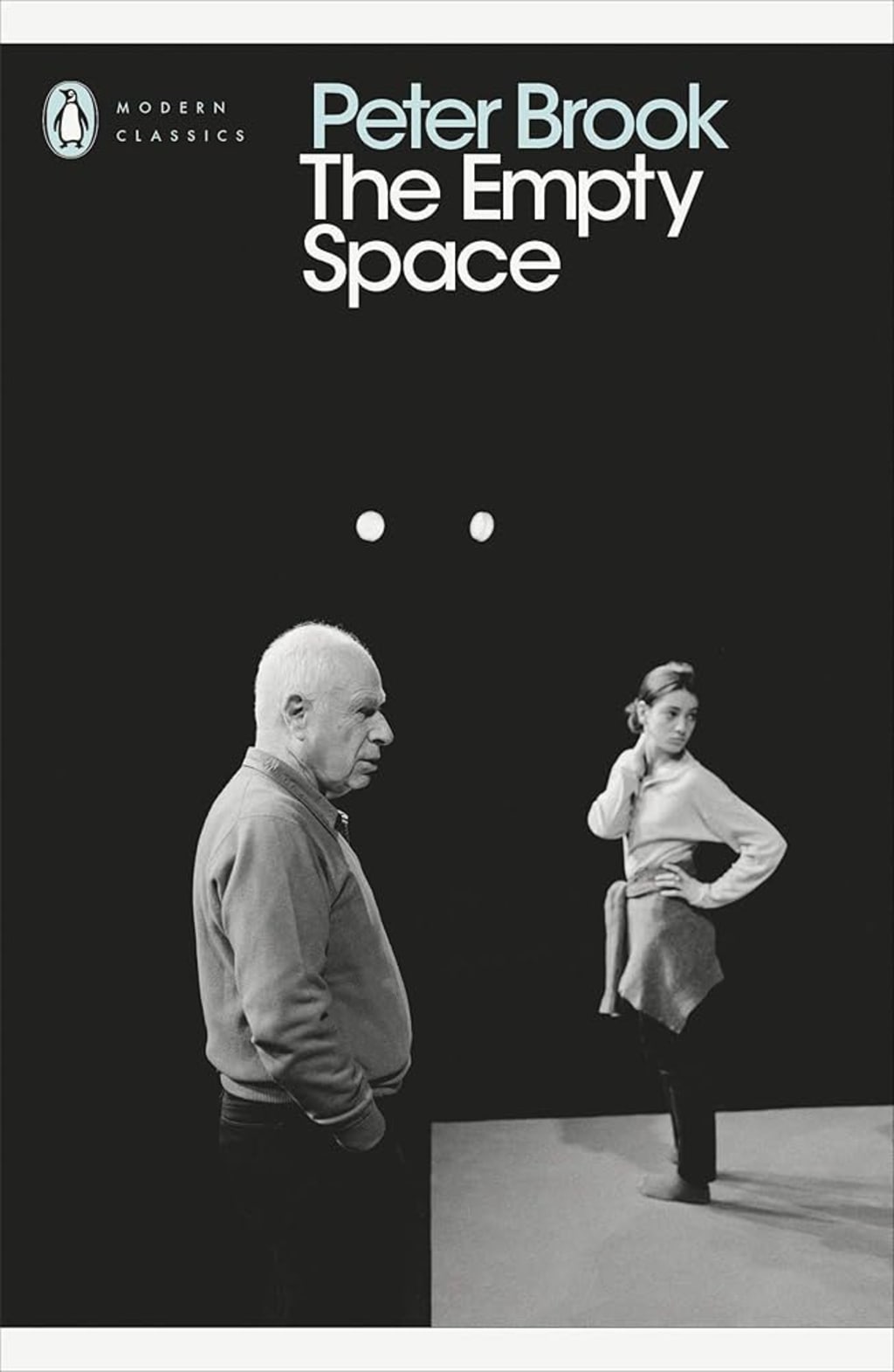
I don't usually request theatre criticism as my next read anymore, especially as I am no longer a student of drama. However, Peter Brook's The Empty Space has actually been on my radar for a lot longer than I care to admit and for some reason, I just never got around to reading the whole thing. When it comes to sections of the book, excerpts for study etc. I have obviously read bits and pieces but, even though it is a short book, this is the first time I am picking up the whole thing.
One of the first ideas this book covers is called 'Deadly Theatre'. I was quite shocked because this is where Shakespeare is mentioned. Deadly Theatre is where the theatre commits itself to convention and thus, becomes absolutely boring and pointless. According to the author, if a play is not innovating then it is not really doing theatre. Shakespeare is mentioned in the way where the author states clearly that traditional Shakespeare has been done already and we need to start using newer methods to do it. This is something I can get behind because I have seen some pretty tired performances of Shakespeare's plays and the more innovative ones that do something different are immediately better because the offer something to watch for someone who has read and studied the play to death. They offer a new thought.
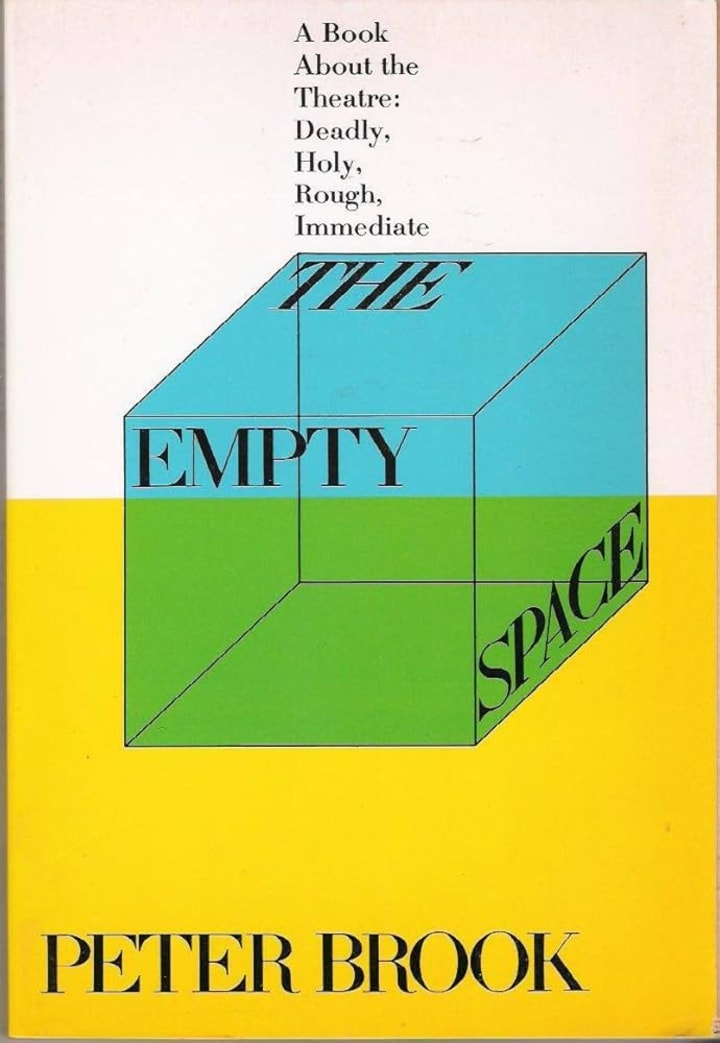
It goes through holy theatre which is a type of theatre that seeks to teach or prove to the audience that a moralistic perspective is actually the truth and/or produces the better outcomes. His opinion of this is mixed, but it is my opinion of his writing that is the point of this review. I find it to be a little bit of a problem: he flip flops from being somewhat positive to being somewhat negative. From being seemingly okay with it to wondering why a theatre would be moralising is one thing I got from it and though I don't normally like this flip-flopping of ideas, the writing seemed often talkative and easy to understand, not overly academic or pedantic. He was clearly trying to have a chat with the audience rather than physically push his own views on to them.
One of the parts is about rough theatre which is more experimental and feels more urgent. It is usually characterised by improvisation and energy. Now, this part is more on the side of positivity in a means that perhaps embracing the improvisation, even with all of its flaws and with the mistakes that may be made during the performance, can actually lead to better theatre. In fact, this part is probably one of the most positive sections of the book. I was quite surprised to read about a theatre critic who was on the side of making mistakes during performance actually building the performance positively.
This is where immediate theatre then comes in which relies on the same urgency and focuses yet on the connection that the actor can make immediately with their audience. A very in-the-moment theory which I have no idea how it would really work if it wasn't for Peter Brook's chapter on it within this book shows us that personal connection between actor and audience not only can happen, but in some instances must happen for the theatre to work. I can only imagine that this would work most effectively in a play like Waiting for Godot or something like that.

He thinks about the concept of empty space. Brook asserts that all that is needed for an act of theatre is an empty space and someone to walk across it. This idea highlights the fundamental and minimalist nature of theatre, stripping it down to its essential elements. I agree with this idea to a certain extent. In his context of splitting theatre into those 4 types, it is possible to state that walking across a space creates theatre because it can fit into something there.
However, if you are trying to create a theatre show that will sell and is predicating on making money, you do unfortunately have to pay attention to trend and so, sometimes you might have to choose to create deadly theatre before you can go on to anything else. The empty space is a great idea for the established director, but it is potentially a disastrous image of utopian theatre for someone who is simply starting out and requires to make their money, name and reputation.

I agree with the ideas surrounding how theatre should search for deep and meaningful human experiences. Why? People who are in the audience need to leave feeling as if there was a connection there. Connections make people feel fulfilled. This I can get on board with - it is the job of such places not to moralise us but to connect with us on a level which is part of a broader human experience or emotion. For example: I love RHPS which fosters a deep connection with its audience through participation, fun and a satire of science fiction.
But it also takes a deeper look to humans; it makes us feel like we are also on a moral threshhold. Do we like the murderous cult leader who is fueled on his own narcissistic interests? Do we like the traitor who purposefully is no longer the 'faithful handyman' but instead becomes a revolutionary and is now responsible for even more death? It becomes internal as an experience, but one that is experienced by anyone.
All in all, I really enjoyed how this book went back and forth about moralising but in the end turns it on its head to instead, make us think about the universal experience, the idea of thought and moment urgency. Peter Brook's style is easily readable and conversational, something you do not usually find in the world of academic criticism. I can highly recommend this for anyone looking deeper into the world of theatrics and why it is so important for entertainment as a whole to create those questions we cannot utter ourselves in conversation because they are too difficult to say aloud.
About the Creator
Annie Kapur
I am:
🙋🏽♀️ Annie
📚 Avid Reader
📝 Reviewer and Commentator
🎓 Post-Grad Millennial (M.A)
***
I have:
📖 280K+ reads on Vocal
🫶🏼 Love for reading & research
🦋/X @AnnieWithBooks
***
🏡 UK
Keep reading
More stories from Annie Kapur and writers in Geeks and other communities.
Book Review: "One of the Good Guys" by Araminta Hall
Now, you know how much I love a 'good for her' novel, right? Well, I can't decide whether what I just read was a 'good for her' novel or a 'good for all of them' novel. There was simply so much going on here and there was such depth that I am absolutely bursting to discuss it with someone. Since nobody I know will listen to me talk about books, let's just say I'm lucky to have somewhere like Vocal to vent about it.
By Annie Kapur2 years ago in Geeks
Silver Screen Magic with Mae West
American actress and singer Mae West became a popular film actress during the Great Depression. She started entertaining in vaudeville, then performed on Broadway, and finally went to Hollywood. She signed up with Paramount Pictures and made her debut in the 1932 film “Night After Night.” She also starred in musicals, comedies, and crime dramas. The American Film Institute named her one of the best classic Hollywood actresses.
By Rasma Raisters6 days ago in Geeks


Comments
There are no comments for this story
Be the first to respond and start the conversation.