
Book Review: "The Age of Diagnosis" by Suzanne O'Sullivan
5/5 - an interesting deep-dive into medicalisation and more importantly...over-medicalisation...

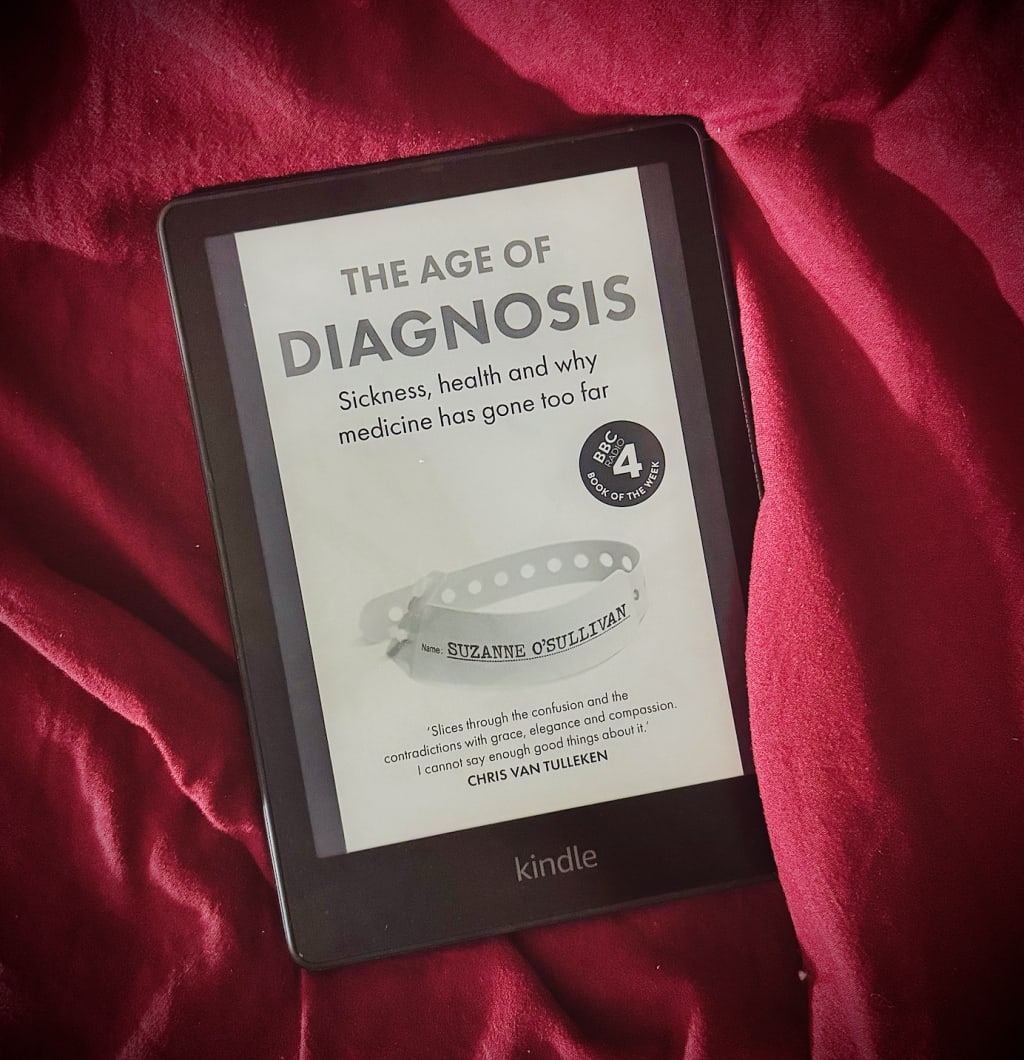
I think the only problem I've ever had with the 'Age of Diagnosis' was the fact that people are definitely starting to diagnose themselves. Those who aren't doctors or mental health professionals should not be diagnosing conditions on themselves such as depression, anxiety and/or autism. When it comes to medical professionals making those diagnoses for themselves, I am on the side of it. I understand that these diagnoses can, at times, be upsetting or cause anxiety in especially younger people. But, I think we know more about these disorders today and so, that is why doctors are diagnosing them more often. Let's have a look at what our author has to say about this...
One of the things that O'Sullivan states that I agree with is that self-research with the age of the internet and information has made it easier for people who are concerned to find some pointers online. This however, presents itself as a paradox in which the more they know about it, the more anxious they become about the symptoms related to the illness they may, or may not have. There is another point that I think is quite important is that the overdiagnosis of everyday problems as medical issues may have caused us to believe we are experiencing something worse than what we actually are. This is something I often think about.
She calls this 'overmedicalisation' - the pathologising of everyday and very normal problems. And I think this is definitely true of our younger generations, particularly Gen Alpha. If we keep teaching them that this is alright, we cannot complain when they are basically scared of doing anything that is remotely difficult. However, I have found a point that I don't agree with - I don't think that this is primarily done by just ourselves, but rather by our institutions. These include government, education and employment. In which medicalising these things can be seen as a virtue but actually doing anything about them is an entirely different thing.
One of the things I quite harshly disagree with is the 'epidemic' label the author puts on the diagnosis of ADHD and Autism. I think it is something far more complicated than people being diagnosed more often. In the past twenty years or so, there has been an increased understanding of these impairments and so, naturally there will be more people being diagnosed. However, again I do believe that the diagnoses of these conditions is being pushed by the state education system in which the school will definitely acquire more money per child that is diagnosed with the impairment. So even though there are few pieces of evidence to support the improvement of wellbeing to the child who has been diagnosed in this new era, there is definitely more money going to places that feel they need more money to cater to these children. That's my theory and comes from basic research on the issue.
The author uses the term 'Nocebo' to refer to the idea that when someone is labelled as ill in some way, it can actually make their condition worse. This includes things like knowing diagnostic terminology, knowing the symptoms and even looking at complications. Each one of these feeds into that effect and honestly, I do actually agree with this to an extent. It only really works on conditions you can understand. If you are diagnosed with a condition you have never heard of and then start looking at the condition, I cannot imagine it has the same impact.
This is also where the author talks about genetic testing to see what the predisposition to certain diseases are. These can be diseases like Huntington's. She states that knowing this can actually have an adverse impact on the mental health of the individual and thus, actually make their health worse in the long run as mental health almost definitely changes physical health. Therefore, the author argues that early intervention of this type can be life-saving but should always be approached with extreme caution. I mean, that is something I think most of us can agree on - even if catching something early is there, it is not for most people and can just put them on edge.
The author gives us the example of Long COVID as one of these strange patient-induced reportage - one which has a terrifying impact on mental and physical health. This is because patients self-report the symptoms and then, expecting they have some COVID complications already, are told they have long COVID (which has some tricky diagnosis anyway) and thus, they are even more worried than before because of the timescale being virtually unknown.
The author highlights some 'watchful waiting' strategies rather than quick diagnoses to make the patients 'feel better' (because as she has argued, it definitely does not make them feel better). The case for 'slow medicine' is something I am quite fond of. I don't believe throwing medicine at people straight away to fix issues will lead to a solution, but something could morph into a whole new problem the doctors were not aware of because they weren't willing to observe and take the time on the patient.
Whilst the author colours the book with stories of real people from both sides of the argument, I still think there is something to be said about the fact that we are more aware of certain conditions now than before. However, I find myself on the side of the author when it comes to watching and waiting rather than throwing shit at the wall and hoping it sticks. There is a lot of information in this book that is very useful, and much of it could be eye-opening to the medical and medicalisation community.
About the Creator
Annie Kapur
I am:
🙋🏽♀️ Annie
📚 Avid Reader
📝 Reviewer and Commentator
🎓 Post-Grad Millennial (M.A)
***
I have:
📖 280K+ reads on Vocal
🫶🏼 Love for reading & research
🦋/X @AnnieWithBooks
***
🏡 UK
Keep reading
More stories from Annie Kapur and writers in Geeks and other communities.
Book Review: "You Invited It In" by Sarah Jules
I was quite surprised to find this on Kindle Unlimited because it looks and feels very similar to a book I read by Sara Gran called Come Closer and that, when I read it, didn't come cheap. You Invited It In is probably not your run-of-the-mill possession horror, but definitely has some familiar tropes to keep the reader involved with the text. One thing Sarah Jules gets right is that, especially with something that is based within folklore, it has to be familiar to the reader - for example: most of us know that vampires suck blood and/or kill people doing it. If you're doing a demonic possession horror and you're planning to be original about it - it is also best to formulate some back-and-forth with the reader so that they don't feel as though you're making it up as you go along. The lore is there to use.
By Annie Kapur6 months ago in Geeks
Marvel Zombie
The last entry into our 2025 superhero projects catalogue is Marvel Zombies. This was a show that was anticipated by absolutely no one and it disappeared from the public consciousness as quickly as it was released. There was nothing special about the project that made it a must see, or a must remember. In fact if anything it's a must forget.
By Alexandrea Callaghan25 days ago in Geeks
British Passports
A British passport is often seen as a simple requirement for international travel, but its significance goes far beyond airport security checks and border stamps. It represents legal identity, citizenship, and a long history shaped by the United Kingdom’s evolving relationship with the world. From its origins to its modern design and practical value, the British passport reflects both tradition and change. In today’s global landscape, where mobility, security, and national identity intersect, the British passport remains an important document with cultural, political, and personal meaning. The Origins of the British Passport Passports in Britain date back several centuries, though they did not resemble the standardized booklets used today. Early versions were letters issued by the Crown, requesting safe passage for travelers. Over time, as international travel increased and borders became more regulated, the need for a formal identification system grew. By the early 20th century, passports had become standardized documents, influenced by international agreements following World War I. These developments laid the foundation for the modern British passport, aligning it with global travel norms while retaining distinct national features. Design and Symbolism The design of a British passport has always carried symbolic weight. Traditionally featuring a deep burgundy cover, the passport displayed the royal coat of arms, reinforcing its connection to the monarchy and the state. This design became widely recognized around the world and associated with European Union membership. In recent years, changes to the passport’s appearance have sparked public discussion. The updated design emphasizes British heritage, featuring historical figures, cultural icons, and technological achievements within its pages. These illustrations serve not only as security features but also as a visual narrative of the nation’s past and present. Beyond aesthetics, modern British passports include advanced biometric technology. Embedded chips store personal data and facial recognition information, enhancing security and reducing the risk of fraud. Citizenship and Eligibility Holding a British passport is a confirmation of citizenship, but eligibility is not always straightforward. British nationality law includes several categories, such as British citizens, British Overseas Territories citizens, and British nationals (overseas). Each status carries different rights and privileges, particularly when it comes to residency and travel. For most applicants, citizenship is acquired by birth, descent, or naturalization. Naturalization involves meeting residency requirements, demonstrating knowledge of life in the UK, and showing proficiency in the English language. The passport, once issued, becomes a tangible recognition of this legal status. Global Mobility and Travel Access One of the most practical aspects of a British passport is the level of international access it provides. British passport holders can travel to a large number of countries without requiring a visa in advance, making it a valuable document for business travelers, tourists, and students alike. While visa-free access can change depending on international relations and policy updates, the British passport has consistently ranked among the stronger passports globally. This mobility reflects the UK’s diplomatic relationships and longstanding ties with many countries around the world. Security, Responsibility, and Renewal With its benefits come responsibilities. British passport holders are expected to safeguard their documents, report loss or theft promptly, and ensure that their passport remains valid for travel. Many countries require passports to have several months of validity remaining, making timely renewal essential. The UK government has modernized the application and renewal process, offering online services that simplify submissions and tracking. Despite these improvements, applicants are encouraged to plan ahead, especially during peak travel seasons when processing times may increase. Passports in a Changing Political Landscape Political changes have influenced how British passports are perceived, both domestically and internationally. Shifts in immigration policy, border control, and international agreements have all played a role in shaping public conversations around citizenship and identity. For some, the British passport represents continuity and heritage. For others, it reflects adaptation to new global realities. Regardless of perspective, the document remains a key link between individuals and the state, symbolizing both rights and obligations. Cultural and Personal Significance Beyond legality and logistics, a British passport often carries deep personal meaning. For first-time applicants, it can symbolize independence or the beginning of global exploration. For naturalized citizens, it may represent years of effort and a sense of belonging. Families often pass down passports through generations, each one holding memories of journeys taken, milestones reached, and connections formed across borders. In this way, the passport becomes more than an administrative tool—it becomes a record of personal history. Looking Ahead As technology advances and global travel evolves, passports will continue to change. Digital verification, enhanced biometrics, and streamlined border processes are likely to shape the future of travel documents. The British passport will adapt alongside these developments, balancing security, convenience, and identity. What remains constant is its role as a bridge between the individual and the wider world. Whether used for travel, identification, or simply stored safely at home, the British passport continues to carry significance beyond its pages. Final Thoughts A British passport is more than a booklet issued by the government. It reflects centuries of history, evolving national identity, and the practical realities of global movement. From its symbolic design to its legal importance, the passport stands as a reminder of how closely personal freedom and national policy are connected. In a world where borders and identities are continually redefined, the British passport remains a powerful symbol of citizenship, responsibility, and opportunity.
By Saboor Brohi 4 days ago in Geeks
Thoughts on Vocal and the way the world is
"Death cannot stop true love, only delay it." – Wesley in The Princess Bride. I decided to come back to Vocal on a very cold and dark night at the end of December. I had been, and still am, convalescing from a horrible staph infection that had gone misdiagnosed for months. This, paired with the increasing challenges of being healthy, making the best choices for my co-parented child, being a wife, and being a director at a new job, was a lot to manage.
By Jazzy 3 days ago in Confessions


Comments (4)
Definitely agree with mental health effecting physical health! Well written review.
My husband used to be a Mental Health Nurse who worked in mental health management, and a variety of other jobs before he became disabled. When he sees a doctor bout mental health, they often tell him that he should know what is wrong with him because he is fully qualified in that area. A person should not have to diagnose themselves, no matter what they are qualified in, because being qualified to look after others doesn't mean that person can always recognise or understand their issues. When it comes to self-diagnosis, I believe that people can use certain advice to help themselves, but the actual diagnosis should always be completed by a doctor because self-diagnosis isn't always right, and one can easily label themselves which can lead to the wrong treatment, and many people believe they can treat it themselves if they diagnose themselves which cn be dangerous.
I would like to give this to a LOT of people right now: one of my best friends is a specialist in general medicine and has said if one more person walks in who has googled themselves to near death symptoms she is going to kill them herself, lol. Seriously, I will make sure my young adult downloads this with her friends who all think they are on the spectrum and know more about weird ailments than anyone should at 21 years old. I worked in hospice and saw death daily, walked with it and the last thing I want to do is diagnose myself with anything but a good dose of having a "funny bone"! Great review Annie!
This sure was eye opening, especially the over medicalisation. I've never heard of that before.